
In my extensive career providing sand casting services, I have consistently focused on addressing quality challenges in aluminum alloy castings. Aluminum alloys are prized in industries such as automotive, aerospace, and marine for their high strength-to-weight ratio, excellent corrosion resistance, and superior castability. Within sand casting services, producing defect-free components is critical, and porosity—specifically gas porosity—remains a prevalent issue that compromises structural integrity and performance. This article delves into the root causes of gas porosity in sand-cast aluminum alloys and outlines a thorough, practical framework for its elimination, emphasizing the integral role of optimized sand casting services in achieving high-quality outcomes.
Gas porosity defects typically appear in thick sections of large castings, near riser roots, or on machined surfaces of smaller parts. The primary gaseous element responsible is hydrogen, constituting 70–90% of the total gas content in aluminum melts. Hydrogen originates from moisture present in the atmosphere, raw materials, fluxes, and mold coatings. At elevated temperatures, moisture decomposes via the reversible reaction: $$ H_2O_{(g)} \rightleftharpoons 2H + O $$ The liberated oxygen reacts with aluminum to form alumina (Al₂O₃): $$ 2Al + \frac{3}{2}O_2 \rightarrow Al_2O_3 $$ This reaction further drives moisture decomposition, facilitating hydrogen diffusion into the melt. In sand casting services, controlling these sources is paramount to minimizing gas defects.
Hydrogen exists in two distinct forms in aluminum melts: dissolved atomic hydrogen (approximately 90% of total hydrogen) and molecular hydrogen bubbles adsorbed on oxide inclusions or particle surfaces. The solubility of hydrogen in liquid aluminum is temperature-dependent, increasing with temperature as described by the solubility curve. During melting and holding, the alloy absorbs significant hydrogen. Upon solidification, the solubility drops sharply, but the increasing viscosity and the formation of a solidified skin trap the hydrogen, leading to pore formation. Prolonged melting times exacerbate hydrogen pickup, making process control essential in sand casting services.
The fundamental relationship governing hydrogen solubility is Sieverts’ Law, expressed as: $$ [H] = K \sqrt{P_{H_2}} $$ where [H] is the dissolved hydrogen concentration (in ml/100g Al), K is the temperature-dependent solubility constant, and P_{H₂} is the partial pressure of hydrogen above the melt. The constant K varies with temperature according to the Arrhenius equation: $$ K = K_0 \exp\left(-\frac{\Delta H}{RT}\right) $$ Here, K₀ is a pre-exponential factor, ΔH is the enthalpy of dissolution, R is the universal gas constant (8.314 J/mol·K), and T is the absolute temperature (K). This highlights that both temperature and environmental humidity (which affects P_{H₂}) critically influence hydrogen absorption in sand casting services.
Alloy composition also modulates hydrogen solubility. Elements like silicon and copper decrease solubility, while magnesium increases it. Hypoeutectic Al-Si alloys exhibit peak hydrogen absorption, necessitating tailored handling. The following table summarizes key factors affecting hydrogen behavior in aluminum alloys, relevant to sand casting services:
| Factor | Effect on Hydrogen Solubility | Practical Implications for Sand Casting Services |
|---|---|---|
| Temperature Increase | Solubility increases exponentially | Limit melting temperature to 700–750°C; use calibrated thermocouples |
| Hydrogen Partial Pressure (PH₂) | Solubility proportional to √PH₂ | Maintain dry melting environment; control atmospheric moisture |
| Alloying Elements (Si, Cu) | Decrease solubility | Adjust melting parameters for Si-rich alloys; monitor gas levels |
| Alloying Elements (Mg) | Increase solubility | Implement enhanced degassing for Mg-containing alloys |
| Melting/Holding Time | Longer time increases total absorption | Optimize furnace schedules to minimize exposure |
| Mold Sand Moisture | High moisture raises PH₂ at interface | Control sand moisture to 4–6%; use dry venting techniques |
To eliminate porosity defects in sand casting services, a systematic approach encompassing material preparation, melting control, mold design, and process management is required. Below, I elaborate on each aspect, integrating best practices derived from industry experience.
1. Raw Material and Tool Preparation: All charge materials (primary ingots, returns, alloys) must be cleaned of rust, oil, and debris. Returns like gates and risers should be limited to 30–40% of the charge to avoid impurity buildup. Crucibles, ladles, skimmers, and thermocouple sheaths must be preheated to 500–600°C (dull red) to eliminate adsorbed and crystalline water. In sand casting services, dedicated drying ovens are used to ensure tools reach optimal temperatures. For fluxes and grain refiners, storage in dry, sealed containers is mandatory. The following equation estimates the drying time for tools: $$ t = \frac{m \cdot C_p \cdot \Delta T}{Q} $$ where t is time, m is mass, C_p is specific heat, ΔT is temperature change, and Q is heat input rate. Proper drying reduces hydrogen sources by over 50%.
2. Controlled Melting and Degassing Practices: Melting should be conducted in electric or gas-fired furnaces with temperature control, preferably below 750°C. Use of protective atmospheres (e.g., argon cover) can reduce hydrogen pickup. Degassing is critical; rotary impeller degassing with inert gases (argon or nitrogen) for 10–15 minutes effectively reduces hydrogen to safe levels (<0.1 ml/100g Al). The efficiency of degassing can be modeled by: $$ \frac{d[H]}{dt} = -k \cdot ([H] – [H]_e) $$ where k is the mass transfer coefficient, [H] is current concentration, and [H]_e is equilibrium concentration. For sand casting services, online hydrogen measurement devices (e.g., Telegas) allow real-time monitoring. Modification and grain refinement should be performed at lower temperatures (720–740°C) to minimize gas absorption.
3. Sand Mold and Core Optimization: Mold sand properties must balance permeability and strength. A typical sand mixture for aluminum sand casting services includes silica sand (85–90%), bentonite clay (6–8%), water (4–6%), and additives like coal dust (2–3%). Permeability numbers should range 70–100 for backing sand and 30–50 for facing sand. Moisture content is critical; excess water leads to steam formation and gas defects. Venting is essential: vent holes of 3–5 mm diameter should be placed every 100–150 mm in the cope and drag, spaced 5–10 mm from the cavity surface. For cores, internal venting via wax strings or perforated ceramic tubes ensures gas escape. Core binder selection matters; phenolic urethane or oil-based binders with low gas evolution (≤15 ml/g) are preferred. The table below summarizes mold and core guidelines:
| Parameter | Optimal Range | Measurement Method |
|---|---|---|
| Sand Permeability (Backing) | 70–100 | |
| Sand Permeability (Facing) | 30–50 | |
| Moisture Content | 4–6% | |
| Green Compression Strength | 120–180 kPa | |
| Core Binder Content (Oil) | 2–3% by weight | |
| Vent Hole Density | 4–6 holes per 100 cm² | |
| Core Baking Temperature/Time | 200–250°C for 2–4 hours |
4. Gating, Risering, and Pouring Techniques: Gating systems should be designed to minimize turbulence and air entrainment. Choke areas and sprue well dimensions can be calculated using Bernoulli’s principle: $$ v = \sqrt{2gh} $$ where v is flow velocity, g is gravity, and h is head height. Pouring basins and filters help reduce turbulence. Risering based on modulus principles ensures feeding without gas entrapment. For cylindrical risers, the diameter D can be estimated as: $$ D = 1.2 \times T $$ where T is section thickness (mm). Pouring temperature should be maintained between 680–720°C for thick sections; too high temperatures increase hydrogen solubility, while too low temperatures impair fluidity. In sand casting services, automated pouring systems enhance consistency. Post-pouring, riser necks may be heated or insulated to prolong feeding.
5. Use of Chills and Enhanced Cooling: Chills accelerate solidification in thick regions, reducing gas pore formation. However, chills can impede gas escape if not vented. Grooved chills with coatings (e.g., zirconia wash) improve permeability. The chill size can be determined by: $$ A_c = \frac{V \cdot \rho \cdot L}{k \cdot (T_m – T_c)} $$ where A_c is chill surface area, V is volume of hot spot, ρ is density, L is latent heat, k is thermal conductivity, T_m is melting point, and T_c is chill temperature. In sand casting services, computer simulations (e.g., MAGMAsoft) optimize chill placement and design.
6. Process Control and Quality Assurance: Implementing statistical process control (SPC) in sand casting services involves monitoring key variables: hydrogen concentration via Reduced Pressure Test (RPT), sand properties hourly, and pouring temperature per cast. Control charts track deviations, enabling corrective actions. Regular training for operators on gas defect prevention is vital. Non-destructive testing (NDT) like X-ray radiography or ultrasound identifies internal porosity, feeding back into process refinement.
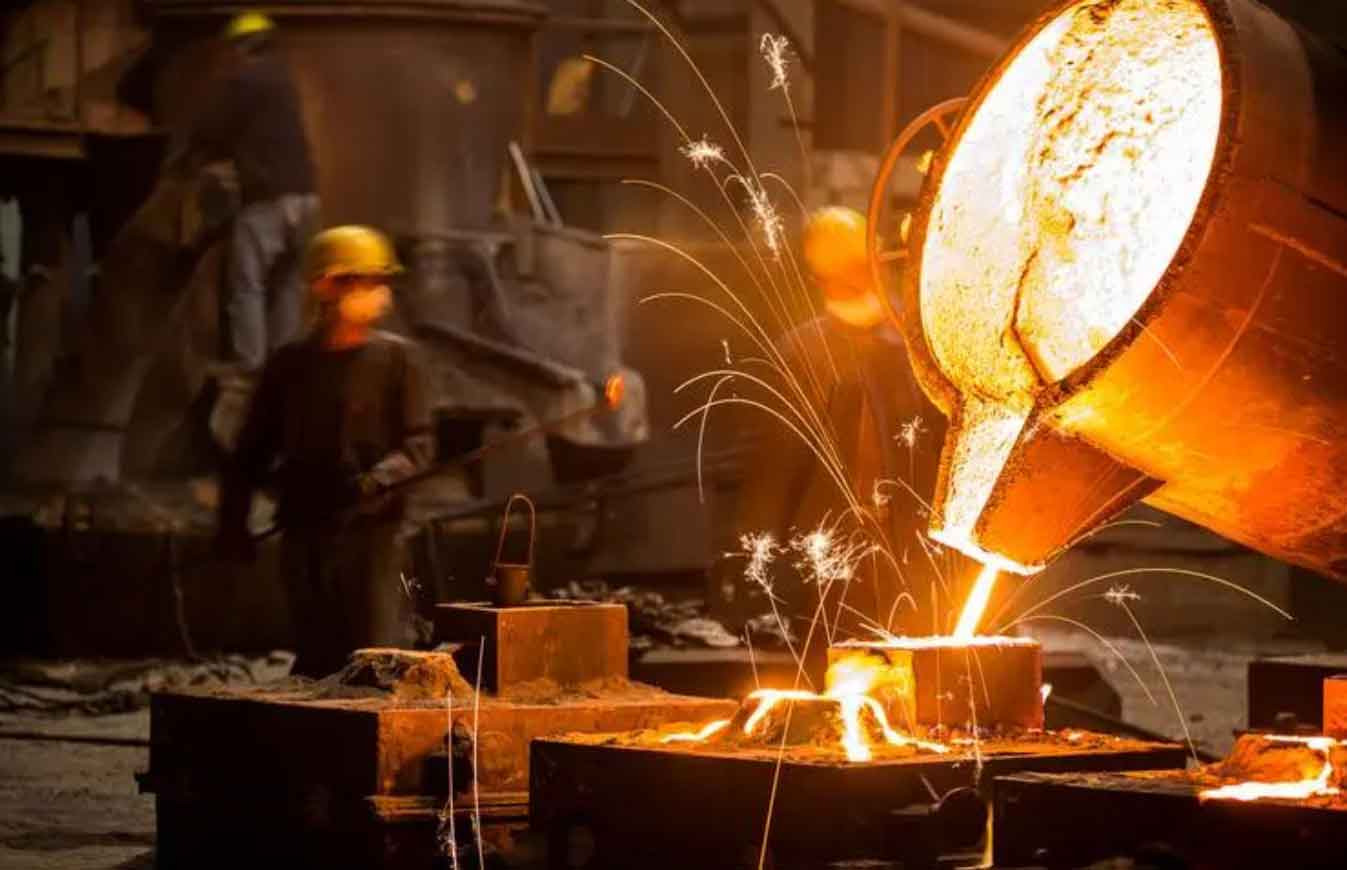
To illustrate the effectiveness of integrated measures in sand casting services, consider a production case: a marine-grade aluminum alloy (AlSi7Mg) propeller housing cast via green sand molding. Initially, porosity rejection rates exceeded 20% in thick flange areas. After implementing a holistic strategy—including raw material drying (600°C for 2 hours), rotary degassing (argon, 12 minutes), sand moisture control at 5%, and optimized venting with ceramic filters—rejection dropped below 2%. Hydrogen levels reduced from 0.25 to 0.08 ml/100g Al, and casting yield improved to 78%. This success underscores how meticulous sand casting services can transform quality outcomes.
Furthermore, ongoing advancements in sand casting services, such as additive manufacturing of sand molds, enable complex venting geometries that were previously unattainable. Simulation tools predict gas flow during solidification, allowing pre-emptive design adjustments. The integration of Industry 4.0 technologies, like IoT sensors for real-time sand moisture monitoring, further elevates consistency. In high-performance sectors like aerospace, where aluminum castings must meet stringent ASTM or MIL specifications, these innovations in sand casting services are indispensable.
In conclusion, eliminating gas porosity in aluminum alloy sand castings demands a multifaceted strategy rooted in metallurgical principles and practical foundry techniques. From controlling hydrogen sources through rigorous material preparation to optimizing mold design and employing advanced degassing, each step contributes to defect reduction. As sand casting services evolve, embracing technology and continuous improvement will ensure the production of reliable, high-integrity castings. Through dedicated application of these measures, foundries can achieve near-zero porosity rates, reinforcing the value of sand casting services in modern manufacturing ecosystems.
For sustained excellence in sand casting services, I recommend regular audits of melting practices, investment in hydrogen analysis equipment, and collaboration with material suppliers to ensure low-moisture raw materials. Research into eco-friendly binders with lower gas evolution also holds promise. Ultimately, the journey toward porosity-free castings is iterative, blending science with artisan skill—a hallmark of superior sand casting services worldwide.