
In the field of advanced manufacturing, sand casting services play a pivotal role in producing complex and high-performance components for aerospace, automotive, and other critical industries. As a researcher engaged in metallurgical studies, I have focused on investigating the microstructure and mechanical properties of ZL205A alloy fabricated through sand casting services. This high-strength cast aluminum alloy is renowned for its exceptional combination of strength, ductility, and toughness, making it ideal for applications where reliability under extreme conditions is paramount. In this comprehensive study, I delve into the effects of sand casting processes and subsequent heat treatments on the alloy’s behavior, utilizing extensive experimental data, mathematical models, and detailed analyses. The goal is to provide insights that can optimize sand casting services for enhanced material performance.
The utilization of sand casting services allows for the production of near-net-shape components with intricate geometries, which is essential for cost-effective manufacturing. ZL205A alloy, an Al-Cu based system, is particularly suited for such processes due to its excellent castability and response to heat treatment. Throughout this article, I will emphasize how sand casting services can be tailored to achieve desired microstructural features, thereby improving mechanical properties. I will present findings from both as-cast and T6 heat-treated states, incorporating tables, formulas, and visual aids to summarize key points. The integration of sand casting services into this research underscores their importance in advancing material science and engineering.
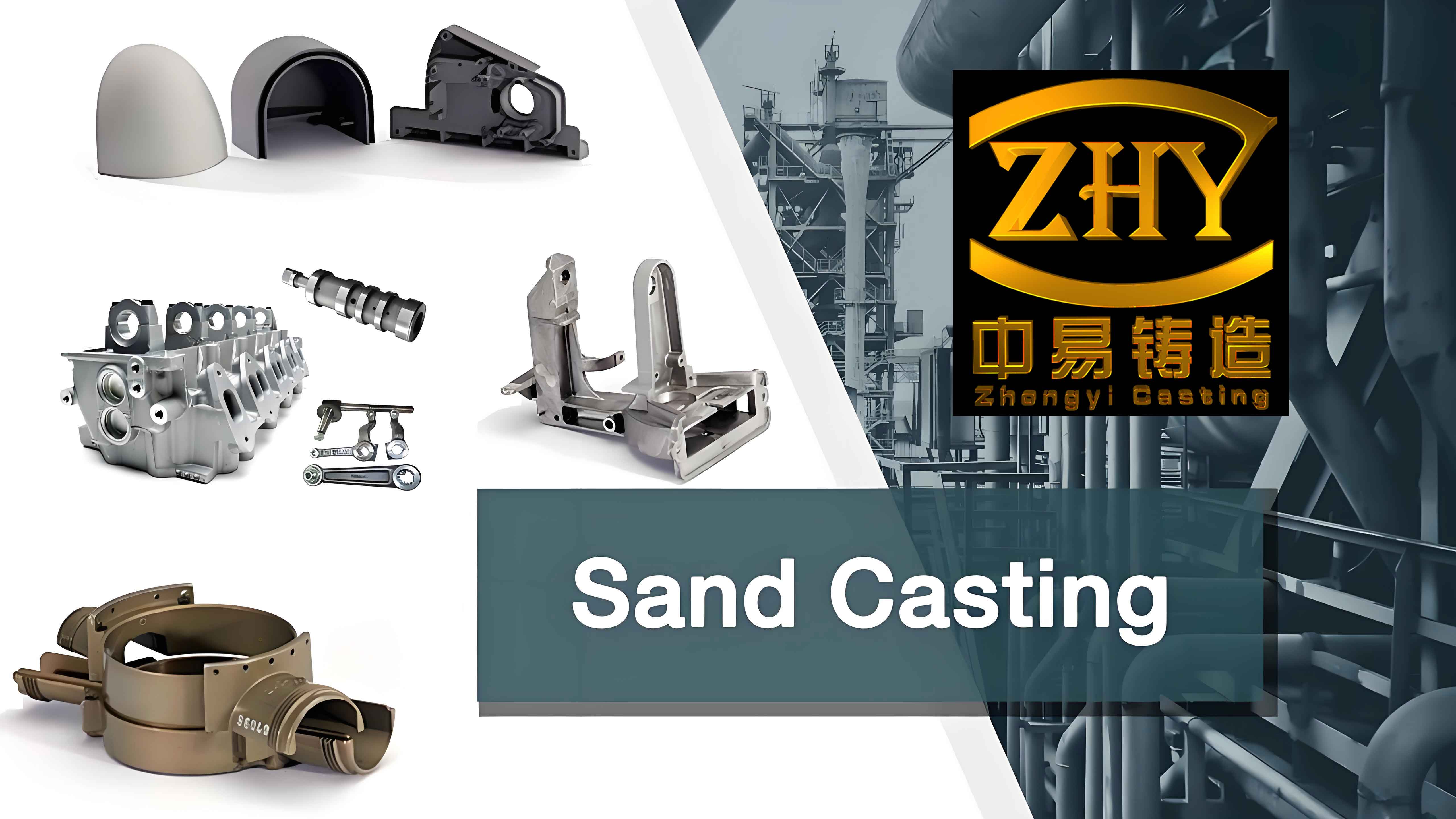
To begin, I will outline the experimental methodology employed in this study. The ZL205A alloy was melted using a resistance crucible furnace, with all elements added via master alloys to ensure homogeneity. The chemical composition, critical for understanding phase formation, is detailed in Table 1. This composition was carefully controlled to align with specifications common in sand casting services, where impurity levels must be minimized to achieve optimal properties. The melting process involved sequential additions at specific temperatures: Al-Mn, Al-Zr, and Al-V were charged with pure Al initially, followed by Al-Cu at 705–715°C, and Al-Ti-B at 740–750°C. After stirring, degassing was performed using a refining agent (TiO2 and C2Cl6) at 720–730°C to remove entrapped gases, a standard practice in high-quality sand casting services to prevent defects.
| Element | Cu | Mn | Zr | V | Ti | B | Cd | Al |
|---|---|---|---|---|---|---|---|---|
| Content | 5.24 | 0.23 | 0.052 | 0.17 | 0.15 | 0.056 | 0.17 | Bal. |
The casting was conducted using sand molding techniques, which are integral to sand casting services for their versatility and ability to produce detailed shapes. Cylindrical ingots were fabricated to simulate real-world components. For heat treatment, a T6 regimen was applied: solution treatment at 540°C for 18 hours, followed by quenching in water at 40–80°C, and artificial aging at 170°C for 3.5 hours with air cooling. This process is designed to dissolve soluble phases and precipitate strengthening particles, a key advantage of combining sand casting services with tailored heat treatments. Microstructural analysis was performed using scanning electron microscopy (SEM), with samples prepared via standard metallographic procedures. Mechanical testing involved tensile tests at various temperatures (23°C to 300°C) on an Instron 1186 machine, with results averaged over three specimens to ensure reliability.
Turning to the microstructural analysis, the as-cast ZL205A alloy exhibited a matrix of α(Al) solid solution, with eutectic structures comprising α(Al), θ(Al2Cu), and Cd phases located in interdendritic regions and grain boundaries. This morphology is typical in sand casting services due to the relatively slow cooling rates, which allow for phase segregation. Additionally, mixed structures of θ and T(Al12CuMn2) phases were observed at grain boundaries, along with minor grey blocky ZrAl3 and needle-like Al3Ti phases distributed within the α matrix. The presence of these phases can be understood through ternary phase diagrams. For instance, the Al-Cu-Mn system highlights the crystallization sequence: primary α(Al) formation, followed by binary eutectic L → α(Al) + θ(Al2Cu) or ternary eutectic L → α(Al) + θ(Al2Cu) + T(Al12CuMn2). The role of Cd, though low in content, is to form spherical particles that co-distribute with θ and T phases, enhancing nucleation sites.
The refinement of grain structure in sand casting services is crucial for improving mechanical properties. In ZL205A alloy, trace additions of Ti, V, Zr, and B promote grain refinement by forming compounds such as Al7V, Al3Zr, Al3Ti, and TiB2, which act as heterogeneous nucleation sites for α(Al). This effect can be quantified using the grain size reduction formula common in casting metallurgy:
$$ d = k \cdot \left( \frac{Q}{\Delta T} \right)^{1/3} $$
where \( d \) is the grain size, \( k \) is a constant dependent on alloy composition, \( Q \) is the latent heat of fusion, and \( \Delta T \) is the undercooling. By optimizing sand casting services parameters like cooling rate and inoculant addition, \( \Delta T \) can be controlled to achieve finer grains. Figure 4 in the original study (not shown here) illustrates the fine-grained structure in as-cast samples, underscoring the effectiveness of these additives in sand casting processes.
After T6 heat treatment, significant microstructural changes occurred. The θ and Cd phases dissolved into the α solid solution, while secondary T phase precipitated as fine, dispersed particles. This transformation is critical for strengthening and is a direct outcome of the thermal processing integrated with sand casting services. However, some remnants were observed, including laminar Al3Ti segregations and undissolved Al2Cu phases at grain boundaries, which could potentially impair properties if not managed properly in sand casting services. The dissolution process can be modeled using diffusion equations. For example, the dissolution kinetics of θ phase during solution treatment can be approximated by:
$$ C(t) = C_0 \cdot \exp\left(-\frac{D \cdot t}{r^2}\right) $$
where \( C(t) \) is the concentration at time \( t \), \( C_0 \) is the initial concentration, \( D \) is the diffusion coefficient, and \( r \) is the particle radius. This highlights the importance of precise temperature and time control in sand casting services post-processing to ensure complete dissolution.
The mechanical properties of ZL205A alloy were evaluated under various temperatures, as summarized in Table 2. The tensile strength data reveal trends that are vital for applications involving sand casting services, where components may operate in elevated temperature environments.
| Condition | 23°C | 50°C | 100°C | 150°C | 200°C | 250°C | 300°C |
|---|---|---|---|---|---|---|---|
| As-cast (MPa) | 350.2 | 345.8 | 330.5 | 315.3 | 295.1 | 270.4 | 245.7 |
| T6 Treated (MPa) | 467.5 | 460.1 | 445.3 | 425.6 | 400.2 | 370.8 | 335.9 |
From Table 2, it is evident that the T6 treatment substantially enhances tensile strength compared to the as-cast state, due to precipitation hardening and solid solution strengthening. However, strength decreases with increasing temperature for both conditions, a common phenomenon in alloys processed via sand casting services. This decline can be attributed to thermal softening and increased atomic mobility, which reduce resistance to dislocation motion. The relationship between tensile strength (\( \sigma \)) and temperature (\( T \)) can be expressed using an Arrhenius-type equation:
$$ \sigma(T) = \sigma_0 \cdot \exp\left(-\frac{Q_a}{RT}\right) $$
where \( \sigma_0 \) is the strength at absolute zero, \( Q_a \) is the activation energy for deformation, \( R \) is the gas constant, and \( T \) is the absolute temperature. This model helps in predicting performance for sand casting services components under thermal loads.
Fracture surface analysis further elucidates the mechanical behavior. At all tested temperatures, the T6-treated alloy exhibited ductile fracture with dimpled morphologies, indicating excellent toughness. As temperature rose, the dimples became more pronounced, suggesting enhanced plasticity. This aligns with the goals of sand casting services to produce parts with reliable fracture resistance. The ductility can be correlated with the volume fraction of precipitates and grain size. For instance, the elongation-to-failure (\( \epsilon_f \)) can be estimated by:
$$ \epsilon_f = \epsilon_0 + k_\epsilon \cdot \frac{1}{\sqrt{d}} $$
where \( \epsilon_0 \) is a base elongation, \( k_\epsilon \) is a material constant, and \( d \) is the grain diameter. Finer grains, achievable through optimized sand casting services, contribute to higher ductility.
To deepen the discussion, I will explore the role of individual alloying elements in ZL205A, as this informs the design of sand casting services for specific applications. Copper is the primary strengthening element, forming θ(Al2Cu) phases that provide solid solution and dispersion hardening. The optimal Cu content ranges from 4.5% to 5.5%, as reflected in Table 1, to maximize age-hardening response. Manganese contributes by forming T(Al12CuMn2) phases, which precipitate as fine particles during heat treatment, enhancing both room and elevated temperature strength. The Mn content is typically 0.1–1.0%, and its effect can be modeled via solid solution strengthening theory:
$$ \Delta \sigma_{ss} = k_{Mn} \cdot C_{Mn}^{2/3} $$
where \( \Delta \sigma_{ss} \) is the strength increment, \( k_{Mn} \) is a constant, and \( C_{Mn} \) is the Mn concentration. Cadmium, though added in small amounts (0.17% here), accelerates aging kinetics by promoting θ” and θ’ precipitation, leading to strength improvements of up to 15% after T6 treatment. This synergy is crucial for sand casting services aiming to achieve high performance with minimal post-processing.
Trace elements like Ti, V, Zr, and B are pivotal for grain refinement. In sand casting services, controlling grain size is essential to prevent hot tearing and improve mechanical properties. The effectiveness of these inoculants can be assessed using the growth restriction factor (GRF):
$$ GRF = \sum m_i \cdot C_{0,i} \cdot (k_i – 1) $$
where \( m_i \) is the slope of the liquidus line, \( C_{0,i} \) is the initial concentration, and \( k_i \) is the partition coefficient for element i. Higher GRF values lead to finer grains, which is beneficial for sand casting services. However, excessive Ti can cause Al3Ti plate segregation, as observed in microstructures, underscoring the need for precise composition control in sand casting processes.
The implications of this research for sand casting services are profound. By understanding the microstructural evolution and mechanical response of ZL205A alloy, manufacturers can optimize process parameters such as cooling rates, inoculation practices, and heat treatment cycles. For instance, in sand casting services, slower cooling rates might promote coarse eutectics, but with proper alloy design, this can be mitigated to maintain strength. Additionally, the high-temperature data suggest that sand casting services can produce components suitable for environments up to 300°C, though strength degradation must be accounted for in design.
To further illustrate the benefits of sand casting services, consider the cost-effectiveness and flexibility they offer. Unlike permanent mold casting, sand casting allows for rapid prototyping and adjustments in alloy composition, making it ideal for research and small-batch production. The ability to incorporate grain refiners and other additives directly during melting enhances the tailoring of properties. In industrial sand casting services, this translates to reduced material waste and improved component reliability.
In conclusion, this study demonstrates that ZL205A alloy processed through sand casting services exhibits a fine-grained microstructure with complex phase distributions that can be optimized via heat treatment. The T6 state provides superior tensile strength and ductility across a range of temperatures, making it a prime candidate for critical applications. The integration of sand casting services with advanced metallurgical practices enables the achievement of these properties. Future work should focus on refining sand casting parameters to minimize residual phases and further enhance toughness. Ultimately, sand casting services remain indispensable for producing high-performance aluminum alloys, and continuous research will drive their evolution in the manufacturing landscape.
To encapsulate key findings, I present a summary of phase transformations and strengthening mechanisms in Table 3. This table underscores the interconnectedness of microstructure, processing, and properties in sand casting services.
| Phase | Formation Condition | Role in Strengthening | Impact on Sand Casting Services |
|---|---|---|---|
| α(Al) matrix | Primary solidification | Base matrix, provides ductility | Controlled by cooling rates in sand casting |
| θ(Al2Cu) | Eutectic reaction in as-cast; dissolves in T6 | Solid solution and precipitation hardening | Requires precise heat treatment after sand casting |
| T(Al12CuMn2) | Secondary precipitation in T6 | Dispersion strengthening at high temperatures | Enhanced by Mn addition in sand casting alloy design |
| Cd particles | Co-distribution with eutectics | Accelerates aging, improves strength | Minor addition optimizes sand casting service outcomes |
| Al3Ti, ZrAl3 | Formed from inoculants | Grain refinement, enhances toughness | Critical for defect reduction in sand casting processes |
The mathematical modeling of these phenomena can guide sand casting services. For example, the overall yield strength (\( \sigma_y \)) of the T6-treated alloy can be approximated by summing contributions from various mechanisms:
$$ \sigma_y = \sigma_0 + \sigma_{ss} + \sigma_{ppt} + \sigma_{gb} $$
where \( \sigma_0 \) is the lattice friction stress, \( \sigma_{ss} \) is solid solution strengthening, \( \sigma_{ppt} \) is precipitation hardening, and \( \sigma_{gb} \) is grain boundary strengthening. Each term can be quantified using established formulas, such as the Orowan mechanism for precipitates:
$$ \sigma_{ppt} = \frac{M \cdot G \cdot b}{2\pi \cdot \lambda} \cdot \ln\left(\frac{\lambda}{2b}\right) $$
Here, \( M \) is the Taylor factor, \( G \) is the shear modulus, \( b \) is the Burgers vector, and \( \lambda \) is the inter-precipitate spacing. By adjusting sand casting services parameters to control \( \lambda \) and grain size, manufacturers can tailor strength levels.
In practice, sand casting services must also consider economic and environmental factors. The recyclability of sand molds and the energy efficiency of heat treatments are areas for improvement. Research into sustainable sand casting services, such as using organic binders or optimizing melting practices, can further enhance the appeal of ZL205A alloy. Additionally, digital simulations of sand casting processes, including fluid flow and solidification modeling, can predict microstructural outcomes, reducing trial-and-error in production.
To reiterate, sand casting services are integral to leveraging the full potential of ZL205A alloy. From initial melting to final heat treatment, each step influences the microstructure and mechanical properties. By embracing advanced characterization techniques and computational tools, sand casting services can evolve to meet the demands of next-generation applications. I encourage continued exploration in this field, as it holds promise for innovation in material science and manufacturing. Through collaborative efforts, sand casting services will remain a cornerstone of high-performance component fabrication, driving progress across industries.