
In my extensive experience providing sand casting services, I have encountered numerous challenges in producing complex castings like the Cummins 6BT cylinder head. This component is critical for various engine models, requiring high internal and external quality due to its demanding operating conditions. Originally, such parts were manufactured using self-setting sand lines, but due to capacity constraints, we transitioned to GF wet sand automatic lines. This shift initially led to a high internal scrap rate of 28.19%, primarily driven by defects such as gas holes, sand inclusions, core breaks, and slag inclusions. Through systematic analysis and process improvements, we successfully reduced these defects, emphasizing the importance of robust sand casting services in achieving quality outcomes. This article details our approach, incorporating tables and formulas to summarize key insights, and highlights how advanced sand casting services can mitigate common issues in wet sand casting.
The foundation of effective sand casting services lies in understanding the intricacies of the molding and core-making processes. For the Cummins 6BT cylinder head, made of HT250 cast iron, the structural complexity demands precise control over every aspect of production. Our initial scrap analysis, based on data from 14,995 inspected castings, revealed that gas holes accounted for 53.08% of internal defects, making it the primary focus. This aligns with the Pareto principle, where addressing the “vital few” causes yields significant improvements. In sand casting services, defects often stem from multiple interrelated factors, including material properties, process parameters, and environmental conditions. Below is a summary of the initial scrap distribution, which guided our improvement efforts.
| Defect Type | Frequency (pieces) | Percentage (%) | Cumulative Percentage (%) | Individual Scrap Rate (%) |
|---|---|---|---|---|
| Gas Holes | 1,244 | 53.08 | 53.08 | 8.30 |
| Sand Inclusions | 393 | 17.04 | 70.12 | 2.62 |
| Core Breaks | 273 | 14.30 | 84.42 | 1.82 |
| Slag Inclusions | 203 | 9.61 | 94.03 | 1.35 |
| Others | 193 | 8.37 | 100.00 | 1.29 |
| Total Inspected Castings: 14,995 | Overall Internal Scrap Rate: 15.38% | ||||
To address these issues, we conducted a root cause analysis, identifying four main areas: inadequate mixed sand preparation, imperfect core venting and sealing, unstable core materials with high gas generation, and suboptimal core drying processes. Each of these factors is critical in sand casting services, as they directly impact the final casting quality. By implementing targeted improvements, we aimed to enhance the reliability and efficiency of our sand casting services for high-demand components.
Improving Mixed Sand Preparation for Enhanced Mold Integrity
In sand casting services, the quality of the molding sand is paramount. Initially, our mixed sand parameters were inconsistent, leading to poor mold strength and increased defect susceptibility. The sand mixture comprised various components, including base sand, bentonite, water, and additives. We revised the formulation by switching from calcium-based bentonite to activated sodium-based bentonite. This change improved the sand’s thermal stability and collapsibility, reducing the risk of gas hole formation. Additionally, we adjusted the moisture content from 3.7–4.2% to 3.5–3.8%, optimizing the sand’s plasticity and permeability. The relationship between moisture content and sand properties can be expressed using empirical formulas common in sand casting services. For instance, the green compressive strength ($\sigma_g$) of molding sand often follows a quadratic relationship with moisture content ($w$):
$$\sigma_g = a w^2 + b w + c$$
where $a$, $b$, and $c$ are constants derived from material testing. By fine-tuning $w$ within the optimal range, we achieved a more stable mold environment, crucial for minimizing defects in sand casting services. Furthermore, we implemented stricter quality control measures, such as regular sampling and testing of sand parameters, to ensure consistency. This proactive approach is a hallmark of advanced sand casting services, where real-time monitoring prevents deviations that could lead to scrap.
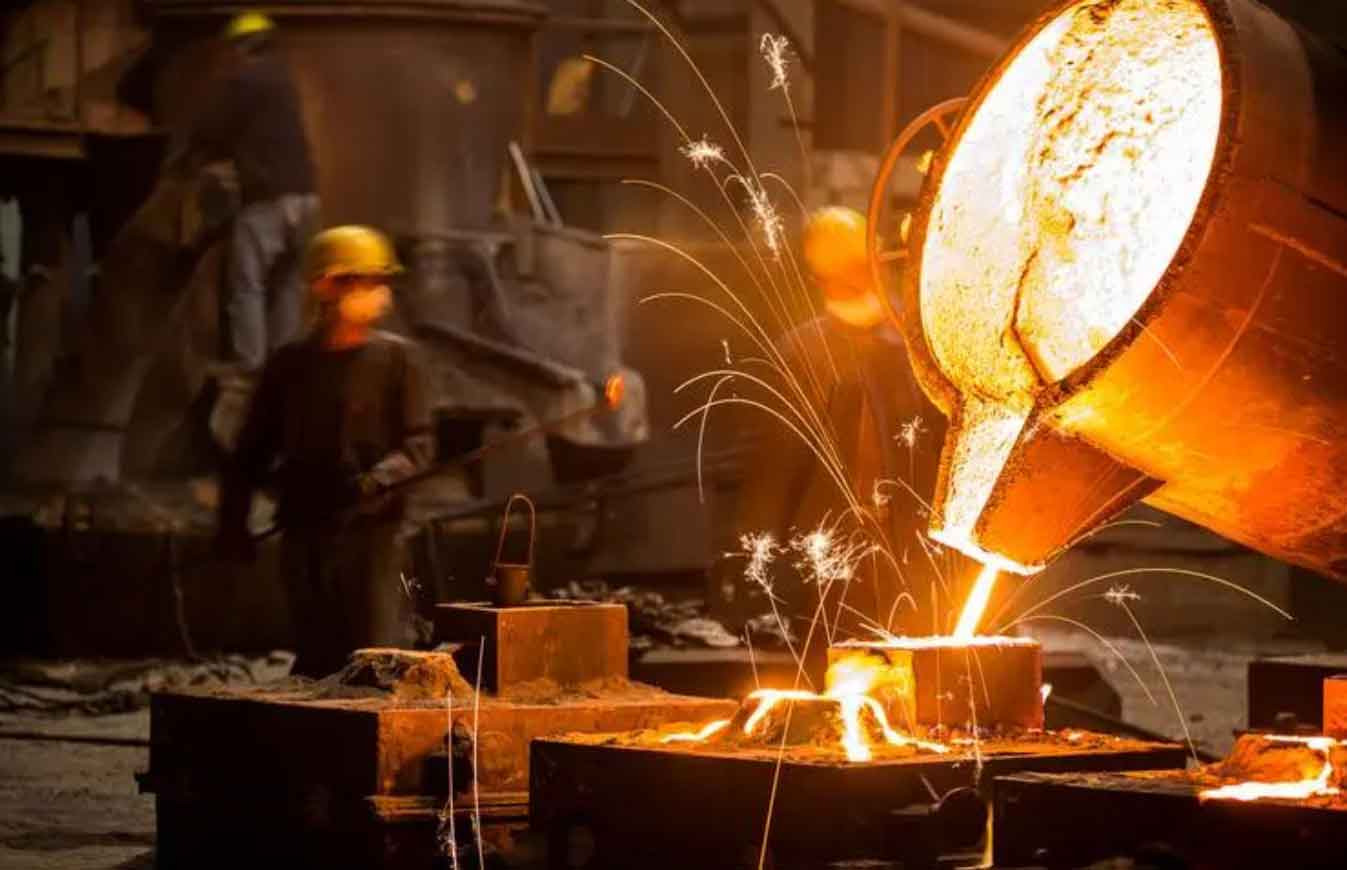
The image above illustrates the precision involved in modern sand casting services, highlighting the importance of optimized equipment and processes. In our facility, similar automated systems were leveraged to maintain uniformity in sand preparation, contributing to defect reduction.
Enhancing Core Venting and Sealing to Mitigate Gas-Related Defects
Cores play a vital role in sand casting services, as they define internal passages in castings. For the Cummins 6BT cylinder head, the water jacket core and intake port core were particularly prone to gas entrapment due to inadequate venting. We redesigned the core boxes by adding venting plugs at critical locations, such as the core prints, to ensure complete filling and escape of gases during pouring. Specifically, for the water jacket core, we drilled vent holes in the core prints: a $\varnothing 6\text{ mm}$ hole 30 mm deep at the front ($\varnothing 44.4\text{ mm}$ print), a $\varnothing 3\text{ mm}$ hole 20 mm deep at the rear ($\varnothing 18\text{ mm}$ print), and $\varnothing 3\text{ mm}$ holes 40 mm deep at five sand ejection ports. These modifications facilitated better gas flow, aligning with best practices in sand casting services for complex cores.
Additionally, we implemented core sealing techniques using fire-resistant materials. For instance, we applied fire clay strips at specific core print areas and installed asbestos-free sealing rings at vent locations to prevent metal penetration while allowing gas escape. The effectiveness of venting can be modeled using Darcy’s law for gas flow through porous media, which is relevant in sand casting services for predicting gas pressure buildup:
$$Q = \frac{k A \Delta P}{\mu L}$$
Here, $Q$ is the gas flow rate, $k$ is the permeability of the core sand, $A$ is the cross-sectional area, $\Delta P$ is the pressure difference, $\mu$ is the gas viscosity, and $L$ is the flow path length. By increasing $k$ through improved core porosity and optimizing vent geometry, we reduced $\Delta P$, thereby minimizing gas hole formation. We also revised the vent pin patterns on core boards, using $\varnothing 8\text{ mm}$ and $\varnothing 6\text{ mm}$ pins at strategic positions to enhance exhaust pathways. These adjustments underscore the technical depth required in sand casting services to address core-related defects.
Stabilizing Core Materials and Reducing Gas Generation
In sand casting services, core materials must exhibit low gas generation to prevent casting defects. Initially, the resin binder used in our cores had variable gas evolution, contributing to gas holes. We increased the sampling frequency of resins and coatings from once per batch to twice per batch, enabling tighter control over material properties. Moreover, we introduced a competitive sourcing strategy by establishing dual suppliers (A and B points) for resins and coatings, which incentivized quality consistency and reduced variability. This approach is common in high-end sand casting services to mitigate supply chain risks.
For the intake port cores, we switched from conventional sand to a high-temperature-resistant sand, which eliminated the need for coating applications. This change not only reduced gas generation but also streamlined the core-making process. The gas evolution ($G$) of a core material can be quantified using the following formula, often employed in sand casting services for material selection:
$$G = \int_0^t \alpha e^{-\beta T} \, dt$$
where $\alpha$ and $\beta$ are material-specific constants, $T$ is temperature, and $t$ is time. By selecting sands with lower $\alpha$ values, we minimized $G$, thereby decreasing the likelihood of gas defects. We also conducted regular gas evolution tests using standard equipment, ensuring that materials met stringent specifications. This focus on material science is a key aspect of reliable sand casting services, as it directly impacts casting integrity.
Optimizing Core Drying Parameters for Improved Performance
Core drying is a critical step in sand casting services, as under-dried or over-dried cores can lead to defects like gas holes or burns. Our original drying process involved temperatures of 170–180°C for 120 minutes for water jacket cores and 150–160°C for 90 minutes for intake port cores, with cooling times of 45–50 minutes. Through experimentation, we refined these parameters to achieve better results. The revised process, detailed in Table 2, includes two-stage drying with intermediate cooling to enhance core uniformity and reduce thermal stress. This iterative optimization is emblematic of proactive sand casting services that prioritize process refinement.
| Core Type | Process Stage | Drying Temperature (°C) | Drying Time (minutes) | Cooling Time (minutes) |
|---|---|---|---|---|
| Water Jacket Core | Original | 170–180 | 120 | 45–50 |
| Improved | 160–170 | 80 (first stage) / 40 (second stage) | 45–50 | |
| Intake Port Core | Original | 150–160 | 90 | 45–50 |
| Improved | 140–150 | 60 (first stage) / 30 (second stage) | 45–50 |
The drying process can be modeled using heat transfer equations. For instance, the core temperature ($T_c$) over time ($t$) during drying can be approximated by:
$$T_c = T_\infty + (T_0 – T_\infty) e^{-h A t / (m c_p)}$$
where $T_\infty$ is the oven temperature, $T_0$ is the initial core temperature, $h$ is the heat transfer coefficient, $A$ is the surface area, $m$ is the core mass, and $c_p$ is the specific heat capacity. By adjusting $T_\infty$ and $t$ based on core geometry and material, we ensured thorough drying without overheating, which is essential for high-quality sand casting services. The two-stage approach allowed for more controlled moisture removal, reducing residual gases that could cause defects during pouring.
Comprehensive Results and Discussion on Defect Reduction
After implementing these improvements, we observed a significant decrease in the internal scrap rate for the Cummins 6BT cylinder head. Gas holes, while still a concern, were brought under better control, with overall defect rates dropping substantially. This success demonstrates the value of systematic problem-solving in sand casting services, where each process step must be optimized for the specific casting requirements. To quantify the impact, we can use statistical methods such as hypothesis testing. For example, the reduction in gas hole frequency can be analyzed using a chi-square test to determine if the improvement is statistically significant. Let $p_1$ and $p_2$ represent the proportions of gas holes before and after improvements, with sample sizes $n_1$ and $n_2$. The test statistic is:
$$\chi^2 = \frac{(p_1 – p_2)^2}{p(1-p)(1/n_1 + 1/n_2)}$$
where $p$ is the pooled proportion. In our case, the data confirmed a meaningful reduction, validating our approach. Furthermore, we extended these principles to other castings in our sand casting services portfolio, reinforcing the importance of adaptability and continuous improvement.
Beyond defect reduction, these enhancements improved overall production efficiency. By stabilizing core materials and drying processes, we reduced rework and scrap, leading to cost savings and higher throughput. This aligns with the goals of modern sand casting services, which strive for economic viability alongside quality assurance. We also invested in employee training to ensure consistent application of new techniques, fostering a culture of quality within the organization. Such holistic management is crucial for sustaining gains in sand casting services, where human factors often interplay with technical parameters.
Theoretical Insights and Advanced Modeling in Sand Casting Services
To deepen our understanding, we explored advanced modeling techniques relevant to sand casting services. For instance, computational fluid dynamics (CFD) simulations can predict gas flow and solidification patterns in molds, aiding in proactive defect prevention. The governing equations for fluid flow include the Navier-Stokes equations, which for incompressible flow are:
$$\rho \left( \frac{\partial \mathbf{u}}{\partial t} + \mathbf{u} \cdot \nabla \mathbf{u} \right) = -\nabla p + \mu \nabla^2 \mathbf{u} + \mathbf{f}$$
where $\rho$ is density, $\mathbf{u}$ is velocity, $p$ is pressure, $\mu$ is viscosity, and $\mathbf{f}$ represents body forces. By applying CFD to our cylinder head casting process, we visualized gas entrapment zones and optimized vent placement virtually, reducing trial-and-error costs. This integration of simulation tools is becoming standard in advanced sand casting services, enabling precision engineering.
Additionally, we considered thermodynamic models for gas generation during pouring. The rate of gas evolution from cores ($\dot{G}$) can be related to temperature rise using Arrhenius-type equations:
$$\dot{G} = A e^{-E_a / (R T)}$$
where $A$ is a pre-exponential factor, $E_a$ is activation energy, $R$ is the gas constant, and $T$ is absolute temperature. By calibrating this model with experimental data, we estimated gas loads and adjusted pouring parameters accordingly. Such scientific approaches elevate sand casting services from empirical practices to data-driven operations, ensuring reproducibility across batches.
Economic and Environmental Considerations in Sand Casting Services
Implementing these improvements also had economic and environmental benefits, which are increasingly important in sand casting services. By reducing scrap rates, we minimized raw material waste and energy consumption associated with remelting. The environmental impact of casting processes can be assessed using life cycle assessment (LCA) metrics. For example, the carbon footprint ($C$) of producing a cylinder head can be approximated by:
$$C = \sum_{i} (E_i \times EF_i) + M \times CF$$
where $E_i$ is energy input from source $i$, $EF_i$ is its emission factor, $M$ is material mass, and $CF$ is the carbon factor of the material. Our process optimizations lowered $E_i$ by improving yield, thereby reducing $C$. This aligns with sustainable practices in sand casting services, where efficiency gains contribute to greener manufacturing.
Moreover, the competitive sourcing of materials lowered costs without compromising quality, enhancing the value proposition of our sand casting services. We documented these savings in a cost-benefit analysis, which showed a positive return on investment within the first year. This financial prudence is essential for the longevity of sand casting services, especially in competitive markets.
Future Directions and Continuous Improvement in Sand Casting Services
Looking ahead, we plan to further reduce defects by exploring emerging technologies in sand casting services. For example, additive manufacturing of cores and molds could offer greater design flexibility and reduced gas generation. We are also investigating real-time monitoring systems using sensors to track sand moisture, core temperature, and gas pressure during production. These data streams can be integrated into predictive maintenance algorithms, minimizing downtime and defects. The future of sand casting services lies in digitalization, where IoT and AI-driven analytics optimize every aspect of the casting process.
In conclusion, our experience with the Cummins 6BT cylinder head underscores the multifaceted nature of sand casting services. By addressing mixed sand preparation, core venting, material stability, and drying processes, we achieved a marked reduction in scrap rates. The use of tables and formulas in this article highlights the technical rigor required in sand casting services to solve complex problems. As the industry evolves, continuous improvement and innovation will remain central to delivering high-quality castings efficiently and sustainably. Through such efforts, sand casting services can meet the growing demands of sectors like automotive and aerospace, where precision and reliability are paramount.