
In the realm of metal casting, particularly for automotive components, green sand mold casting remains a predominant method due to its cost-effectiveness, flexibility, and efficiency. As someone deeply involved in the production of sand casting products, I have witnessed firsthand how the quality of these products hinges on numerous factors, with the additives used in the sand mixture playing a pivotal role. Among these additives, coal dust is a critical component in iron castings, as it significantly influences surface finish, defect reduction, and overall productivity. This article delves into the technical evaluation of coal dust for green sand mold casting, its application in automotive sand casting products, and the transformative impact of selecting premium-grade coal dust. Through detailed analysis, tables, and formulas, I aim to provide a comprehensive guide that underscores the importance of meticulous coal dust selection for enhancing sand casting products.
Green sand mold casting involves using moist silica sand mixed with clay (typically bentonite) and other additives to form molds. For iron castings, coal dust is added to the sand mixture to prevent defects such as veining, expansion defects, and metal penetration, which can mar the surface of sand casting products. When molten metal is poured into the mold, the coal dust undergoes thermal decomposition, releasing reducing gases that inhibit the formation of iron oxide (FeO). Simultaneously, it precipitates a lustrous carbon film on the mold surface, acting as a barrier against sand adhesion and improving the surface smoothness of sand casting products. However, not all coal dust is created equal; its efficacy varies widely based on its chemical and physical properties. Therefore, a systematic assessment of coal dust technical indicators is essential for optimizing the production of high-integrity sand casting products.
The key technical indicators for coal dust in green sand mold casting include moisture content, ash content, volatile matter, lustrous carbon content, sulfur content, and cinder type. Each of these parameters directly affects the performance of the sand mixture and the quality of sand casting products. Moisture content, for instance, influences the sand’s workability and drying behavior. High moisture can lead to excessive gas generation, causing porosity in sand casting products. Ash content represents the inorganic residue after combustion; lower ash is desirable as it reduces the amount of non-combustible material that can contaminate the sand system. Volatile matter indicates the fraction of coal that vaporizes upon heating, contributing to the reducing atmosphere. Lustrous carbon content is perhaps the most critical metric, as it determines the formation of the protective carbon layer. Sulfur content must be minimized to prevent sulfur-related defects and environmental emissions. Cinder type reflects the coking characteristics, affecting sand stability.
To quantify these indicators, standard testing methods are employed. For example, moisture content is determined by drying a sample at 105–110°C until constant weight, following the formula: $$ M = \frac{W_i – W_f}{W_i} \times 100\% $$ where \( M \) is moisture percentage, \( W_i \) is initial weight, and \( W_f \) is final weight after drying. Ash content is measured by incinerating the coal dust in a muffle furnace at 815°C, calculated as: $$ A = \frac{W_{ash}}{W_{dry}} \times 100\% $$ where \( A \) is ash percentage, \( W_{ash} \) is weight of ash, and \( W_{dry} \) is dry sample weight. Volatile matter is assessed by heating the sample in a covered crucible at 950°C for 7 minutes, with the loss in weight excluding moisture representing volatiles. Lustrous carbon content is evaluated using specialized equipment that simulates casting conditions, often expressed as a percentage of the carbon film formed. Sulfur content is determined via combustion analysis, and cinder type is classified based on the physical appearance of the residue after coking tests.
In my experience, I have evaluated multiple coal dust varieties to identify the optimal choice for producing automotive sand casting products. The table below summarizes the technical indicators of four coal dust types, including a premium grade, based on actual measurements in a production setting. These sand casting products include critical components like differential housings, brake discs, and pump covers, where surface roughness requirements are stringent (often 2.5–12.5 μm for non-machined surfaces).
| Coal Dust Type | Moisture (%) | Ash (%) | Volatile Matter (%) | Lustrous Carbon (%) | Sulfur (%) | Cinder Type |
|---|---|---|---|---|---|---|
| Standard SMF-1 (Reference) | ≤4.0 | ≤7.0 | ≥30 | ≥12 | ≤0.6 | 4–6 |
| Premium SMFZ-1 (Measured) | 3.6–4.0 | 5.7–6.5 | 34–36 | 14–16.6 | 0.42–0.48 | 4–5 |
| Type A (Measured) | 6.5–9.0 | 7.5–11.5 | 30–34 | 9–12 | 0.65–0.75 | 4–5 |
| Type B (Measured) | 5.5–8.5 | 7.2–10.5 | 32–35 | 9–12 | 0.60–0.70 | 4–5 |
| Type C (Measured) | 8–12 | 9–13 | 30–32 | 4.0–9.6 | 1.0–1.3 | 4–6 |
As evident, the premium SMFZ-1 coal dust exhibits superior characteristics: low moisture, low ash, high volatile matter, high lustrous carbon, low sulfur, and a consistent cinder type. These attributes align with the industry standard JB/T9222-2008 but exceed it in key areas, making it ideal for high-quality sand casting products. In contrast, Types A, B, and C show deficiencies such as elevated moisture and sulfur, reduced lustrous carbon, and higher ash, which can compromise sand performance and lead to defects in sand casting products. The implications of these differences are profound in actual production.
The application of coal dust in green sand molds involves precise sand formulation. For automotive sand casting products, the typical sand mixture comprises recycled sand, new sand, bentonite, coal dust, and sometimes starch as an auxiliary binder. The table below outlines the sand ratios used with different coal dust types, highlighting how premium coal dust allows for reduced addition rates while maintaining or improving properties.
| Component | Standard Process Requirement (%) | With Type A (%) | With Type B (%) | With Type C (%) | With Premium SMFZ-1 (%) |
|---|---|---|---|---|---|
| Recycled Sand | 97–99 | 97–99 | 97–99 | 97–99 | 97–99 |
| New Sand | 1–3 | 1–3 | 1–3 | 1–3 | 1–3 |
| Bentonite | 0.9–1.2 | 0.9–1.2 | 0.9–1.2 | 0.9–1.2 | 0.9–1.2 |
| Coal Dust | 0.4–0.6 | 0.46–0.6 | 0.46–0.6 | 0.5–0.65 | 0.3–0.5 |
| Starch | 0.01–0.07 | 0.01–0.07 | 0.01–0.07 | 0.01–0.07 | 0.01–0.07 |
With premium coal dust, the addition rate decreases by approximately 12% compared to the standard requirement and 15–25% compared to other types. This reduction is possible due to the high efficiency of premium coal dust in generating lustrous carbon and volatile gases. The underlying mechanism can be modeled using a formula for lustrous carbon yield: $$ L_y = k \cdot V_m \cdot (1 – A) $$ where \( L_y \) is lustrous carbon yield, \( k \) is a constant dependent on coal type, \( V_m \) is volatile matter percentage, and \( A \) is ash percentage. For premium coal dust, higher \( V_m \) and lower \( A \) result in greater \( L_y \), meaning less coal dust is needed to achieve the desired protective effect in sand casting products.
The performance of the sand mixture is critical for producing defect-free sand casting products. Key sand properties include moisture content, compactability, green compression strength, permeability, effective clay content, loss on ignition, total clay content, and AFS grain fineness number. The table below compares these properties when using different coal dust types, based on routine testing in a production environment focused on automotive sand casting products.
| Property | Standard Process Target | With Type A | With Type B | With Type C | With Premium SMFZ-1 |
|---|---|---|---|---|---|
| Moisture (%) | 3.2–3.6 | 3.3–3.8 | 3.3–3.8 | 3.5–4.0 | 3.2–3.5 |
| Compactability (%) | 34–39 | 33–35 | 32–35 | 32–36 | 34–36 |
| Green Compression Strength (kPa) | 160–180 | 160–175 | 160–175 | 160–170 | 165–185 |
| Permeability (Pa) | 100–130 | 95–115 | 90–120 | 90–120 | 100–135 |
| Effective Clay (%) | 7.5–9.5 | 7.5–9.5 | 7.2–9.2 | 7.0–9.5 | 7.0–8.5 |
| Loss on Ignition (%) | 3.0–4.0 | 3.0–3.55 | 3.0–3.55 | 3.0–3.30 | 3.5–3.80 |
| Total Clay (%) | 10.5–12.5 | 11.0–13.0 | 11.0–12.5 | 11.5–14.0 | 10.5–12.0 |
| AFS Grain Fineness | 58–63 | 58–63 | 58–63 | 58–63 | 58–63 |
The premium coal dust consistently maintains sand properties within or better than the target ranges. Notably, the loss on ignition is higher, indicating more combustible material that contributes to the reducing atmosphere, while moisture is lower, reducing gas-related defects. The green strength and permeability are optimized, ensuring mold integrity during pouring for sand casting products. This stability translates directly to enhanced quality in sand casting products.
The impact on sand casting products is multifaceted. Surface finish is a primary concern for automotive components, where aesthetics and functionality require smooth surfaces. With premium coal dust, the lustrous carbon film forms more uniformly, reducing metal penetration and veining. This results in sand casting products that require less post-casting finishing. For instance, shot blasting time—a key cleaning step—is significantly reduced. Previously, with inferior coal dust types, initial blasting times ranged from 10 to 20 minutes, but with premium coal dust, this drops to 5–15 minutes. Moreover, fine blasting time is cut by 30–50%, and for some sand casting products with moderate surface requirements, fine blasting can be eliminated altogether. This efficiency gain reduces energy consumption and production costs while improving throughput for sand casting products.
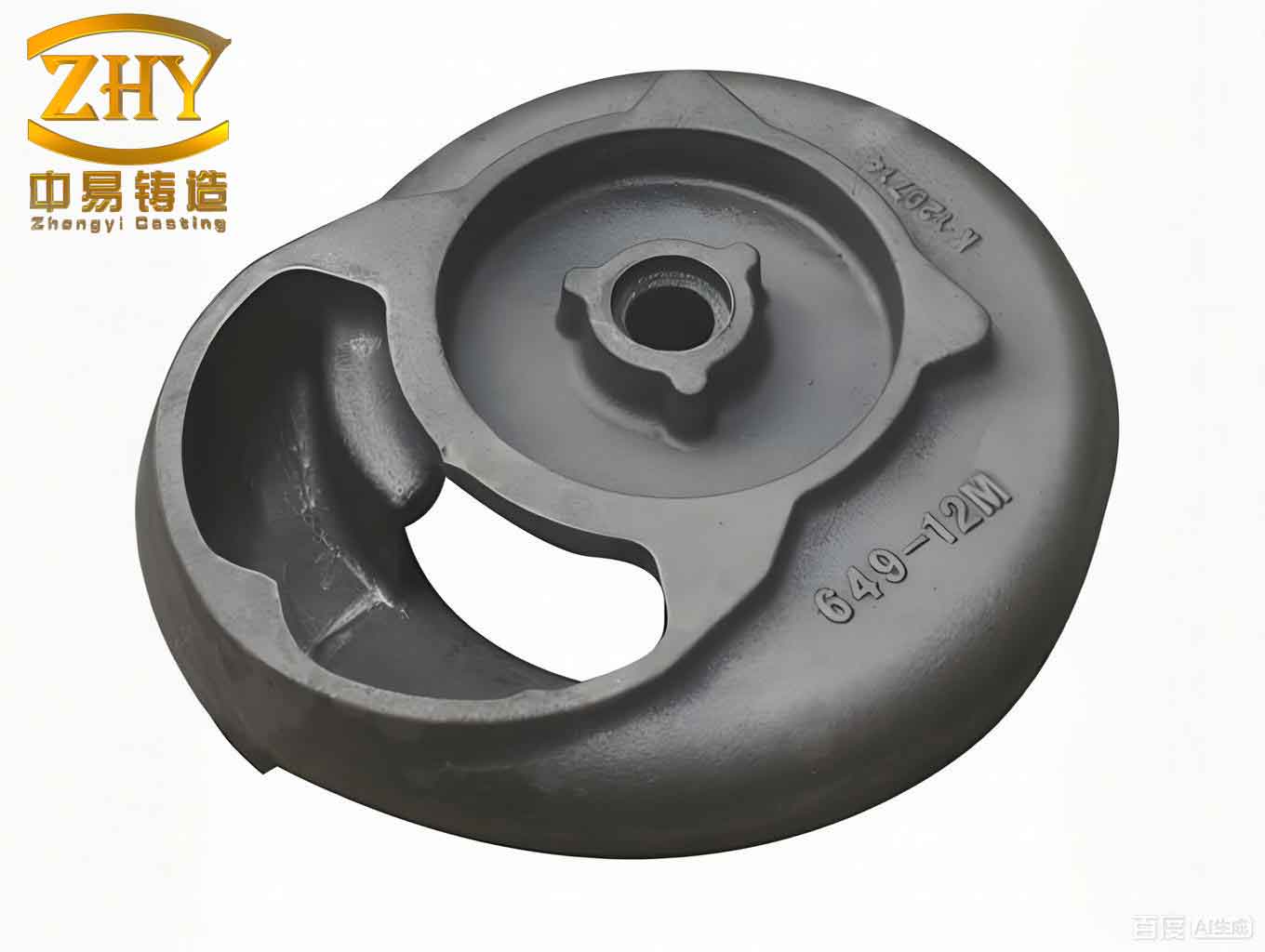
Defect reduction is another critical benefit. Common defects in sand casting products include sand inclusions, gas porosity, and metal adhesion (burn-on). By using premium coal dust, these defects are markedly diminished. The table below illustrates the annual defect distribution for sand casting products over several years, highlighting the improvement after adopting premium coal dust.
| Year | Sand Inclusions (%) | Gas Porosity (%) | Metal Adhesion (%) |
|---|---|---|---|
| 2014 (Before Change) | 1.18 | 0.45 | 0.86 |
| 2015 (After Change) | 0.76 | 0.29 | 0.07 |
| 2016 | 0.82 | 0.26 | 0.26 |
| 2017 (First Half) | 0.72 | 0.20 | 0.04 |
Severe metal adhesion is virtually eliminated, and surface roughness improves by nearly two grades. This enhancement is crucial for sand casting products like differential housings and balance shafts, where non-machined surfaces must meet tight specifications. Additionally, the internal quality of sand casting products improves; nondestructive testing reveals fewer shrinkage cavities, porosity, and subsurface gas holes, increasing the reliability and safety of sand casting products. For ductile iron sand casting products, nodularity also sees a boost, further enhancing mechanical properties.
Beyond performance, premium coal dust addresses a longstanding issue: self-ignition during storage and handling. Conventional coal dust, including so-called “high-efficiency” varieties, often exhibits spontaneous combustion, especially in hot and humid conditions. This poses safety hazards and economic losses. Premium coal dust mitigates this risk through its production process. It is sourced from low-oxygen coal seams, processed with low-temperature, prolonged drying, and ground in open-circuit mills to minimize heat generation. The final product is vacuum-packed, reducing exposure to air. These steps lower the oxidation kinetics, effectively preventing self-ignition. In practice, since switching to premium coal dust, no self-ignition incidents have occurred, even during extreme summer temperatures where warehouse conditions exceeded 40–60°C. This reliability ensures a safer working environment and uninterrupted supply for producing sand casting products.
The environmental aspect cannot be overlooked. Premium coal dust is manufactured from natural, high-quality coal without additives like tar or pitch, which are sometimes used in inferior coal dust to boost lustrous carbon artificially. This absence of harmful substances reduces toxic emissions during casting, aligning with green manufacturing goals for sand casting products. The reduced coal dust addition rate also means less overall consumption, contributing to sustainability. Furthermore, the improved sand stability leads to less waste sand generation, as the sand system remains usable for longer periods. This holistic approach benefits both the quality of sand casting products and the ecological footprint of the foundry.
In terms of economic impact, the use of premium coal dust yields significant cost savings. While the unit price may be higher, the reduced addition rate (0.3–0.5% vs. 0.5–0.65% for inferior types) offsets this. Additionally, lower defect rates decrease scrap and rework costs. The shortened cleaning times reduce labor and energy expenses. For high-volume production of automotive sand casting products, these savings accumulate substantially. A simple cost-benefit analysis can be expressed as: $$ C_{total} = C_{coal} + C_{defects} + C_{cleaning} $$ where \( C_{total} \) is total cost per ton of sand casting products, \( C_{coal} \) is coal dust cost, \( C_{defects} \) is defect-related costs, and \( C_{cleaning} \) is cleaning costs. With premium coal dust, \( C_{coal} \) may increase slightly, but \( C_{defects} \) and \( C_{cleaning} \) decrease markedly, lowering \( C_{total} \). This makes premium coal dust a financially sound choice for sand casting products.
Looking ahead, the selection of coal dust should be integrated into a broader quality management system for sand casting products. Regular monitoring of coal dust indicators, coupled with sand testing, ensures consistent performance. Advanced foundries may employ statistical process control (SPC) to track parameters like lustrous carbon and volatile matter, using control charts to detect deviations. The relationship between coal dust properties and sand casting product quality can be modeled with regression analysis, for example: $$ Q = \alpha + \beta_1 L_c + \beta_2 V_m + \beta_3 S + \epsilon $$ where \( Q \) is a quality metric (e.g., surface roughness), \( L_c \) is lustrous carbon content, \( V_m \) is volatile matter, \( S \) is sulfur content, \( \alpha \) and \( \beta \) are coefficients, and \( \epsilon \) is error term. Such models help optimize coal dust selection for specific sand casting products.
In conclusion, the technical evaluation and application of coal dust in green sand mold casting are pivotal for producing high-quality automotive sand casting products. Premium coal dust, characterized by low moisture, low ash, high volatile matter, high lustrous carbon, low sulfur, and non-self-igniting properties, delivers superior results compared to conventional varieties. It reduces addition rates, enhances sand performance, minimizes defects, improves surface finish, and eliminates safety risks like self-ignition. Through rigorous testing and systematic implementation, foundries can leverage premium coal dust to achieve excellence in sand casting products. As the demand for precision and sustainability in manufacturing grows, the choice of coal dust will continue to be a cornerstone in the quest for flawless sand casting products. This case study underscores the transformative power of material selection in foundry operations, offering a replicable framework for others in the industry to elevate their sand casting products.