
In my investigation into sand casting products, particularly engine cylinder blocks, surface bonding sand defects have been a critical issue affecting product quality and production efficiency. As sand casting products are widely used in automotive industries due to their cost-effectiveness and versatility, understanding the factors influencing surface defects like sand sticking is essential. This research focuses on analyzing the causes of surface bonding sand in thin-walled cylinder blocks produced via sand casting, with the aim of optimizing process parameters to reduce scrap rates. Through experimental studies on molding sand composition, additives, and coating techniques, I have developed strategies to improve the surface quality of sand casting products, ultimately enhancing their performance in engine applications.
The significance of this work lies in the high demand for reliable sand casting products in the automotive sector. Engine cylinder blocks, as key components, require excellent surface finish to prevent machining issues and ensure longevity. However, in sand casting processes, factors such as high pouring temperatures and complex geometries often lead to mechanical and chemical sand sticking, resulting in increased rejection rates. My research addresses these challenges by systematically evaluating the impact of molding sand properties, including grain size, binder content, and additive types, on the surface integrity of sand casting products. By incorporating tables and formulas, I summarize key findings to provide a comprehensive guide for industry practitioners.
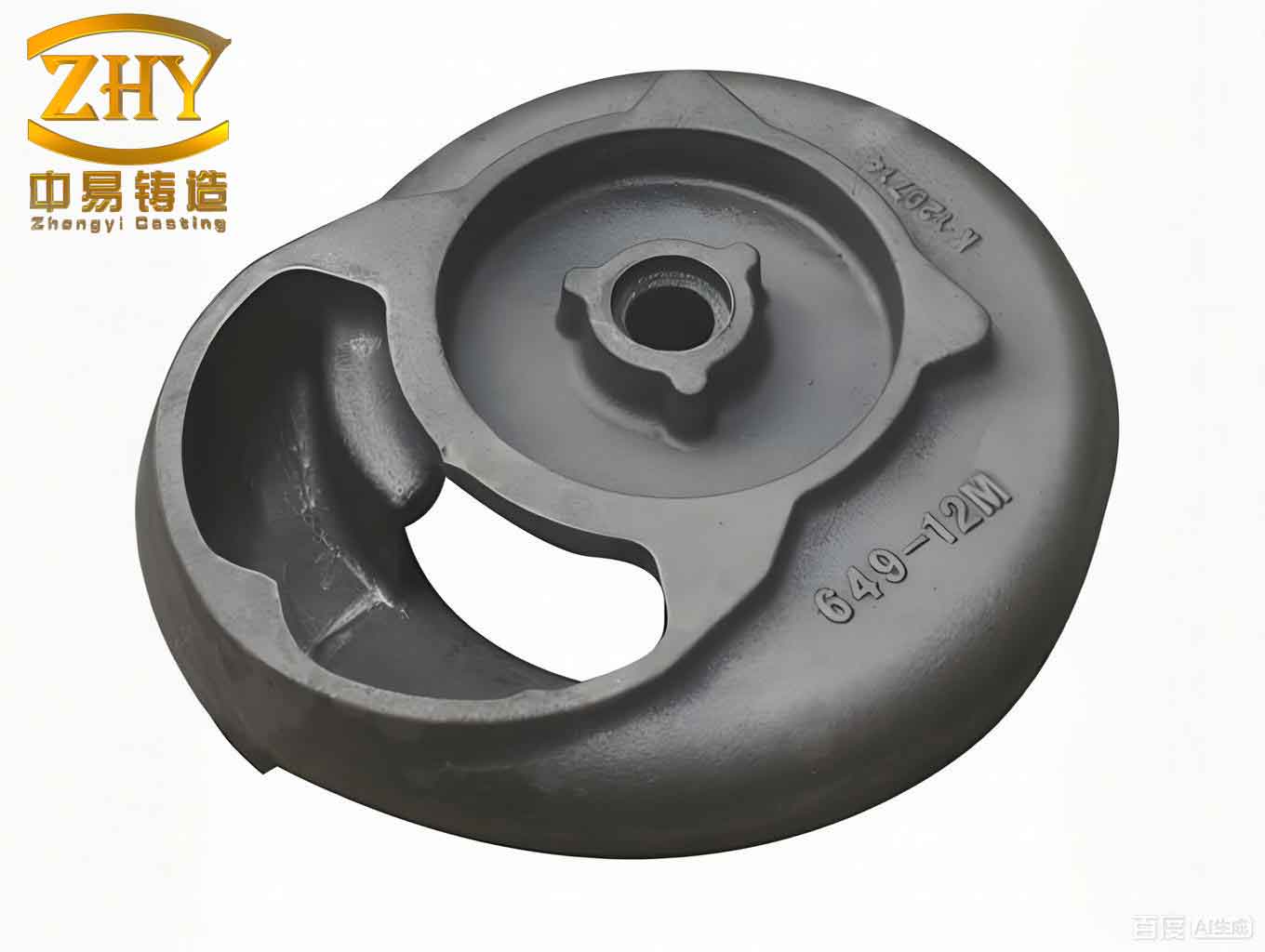
In the experimental phase, I utilized various materials to simulate industrial conditions for sand casting products. The molding sand was primarily composed of silica sand with specific grain distributions, and additives such as MCS and FS powders were tested as replacements for traditional coal dust to reduce moisture and gas evolution. Binders like sodium bentonite were evaluated for their swelling value and methylene blue absorption, which directly affect sand mold strength and thermal stability. The coating processes involved graphite, zircon, and corundum-based paints applied through spraying or dipping methods. By measuring parameters like sand hardness, permeability, and thermal expansion, I correlated these factors with the occurrence of surface defects in sand casting products.
To quantify the effects, I developed several tables summarizing the experimental data. For instance, Table 1 outlines the key properties of molding sand used in the study, highlighting how variations in grain size and additive content influence surface quality in sand casting products.
| Parameter | Range | Impact on Surface Bonding Sand |
|---|---|---|
| Grain Size (mesh) | 50/100 to 140/70 | Finer grains reduce sand sticking by decreasing permeability |
| Moisture Content (%) | 2.0–3.5 | Lower moisture minimizes gas defects and improves surface finish |
| Effective Bentonite (%) | 5.4–6.4 | Higher content enhances mold strength but may increase thermal expansion |
| Additive Content (MCS/FS, %) | 3–6 | Optimal range reduces sand sticking without excessive gas generation |
| Sand Hardness (g/mm²) | 85–90 | Moderate hardness balances mold integrity and defect prevention |
From this data, it is evident that controlling grain size is crucial for producing high-quality sand casting products. In my tests, using finer sand (e.g., 140/70 mesh) resulted in significantly less surface bonding sand compared to coarser grades, as the reduced pore size limits metal penetration. This can be expressed through a permeability formula related to sand casting products:
$$ P = k \cdot \frac{d^2}{\eta} $$
where \( P \) is the permeability, \( d \) is the average grain diameter, \( k \) is a constant, and \( \eta \) is the viscosity of the gas phase. For sand casting products, lower permeability (achieved with finer grains) decreases the likelihood of mechanical sand sticking, as molten metal cannot easily infiltrate the mold matrix.
Another critical aspect is the role of additives in sand casting products. Traditional coal dust was replaced with MCS and FS powders, which contain soluble starch and carbonaceous materials. These additives improve the collapsibility of the sand mold while generating protective gases during pouring. The optimal additive content was determined to be 3–6%, as higher levels led to excessive gas evolution and porosity in sand casting products. This relationship can be modeled using a gas generation equation:
$$ G = A \cdot e^{-E/(RT)} $$
where \( G \) is the gas volume produced per unit mass, \( A \) is a pre-exponential factor, \( E \) is the activation energy, \( R \) is the gas constant, and \( T \) is the temperature. For sand casting products, controlling \( G \) through additive selection helps prevent sand sticking by creating a reducing atmosphere at the mold-metal interface.
Bentonite quality also plays a vital role in sand casting products. I tested both natural and artificially activated sodium bentonite, finding that natural bentonite with a swelling value above 95 mL/3g and high methylene blue absorption (above 35 mL/5g) provided better thermal stability. This reduces sand expansion and vein defects in sand casting products. The thermal expansion coefficient \( \alpha \) of sand can be linked to defect formation:
$$ \Delta L = L_0 \cdot \alpha \cdot \Delta T $$
where \( \Delta L \) is the change in length, \( L_0 \) is the initial length, and \( \Delta T \) is the temperature change. For sand casting products, lower \( \alpha \) values (e.g., using modified sands) minimize mold cracking and sand sticking, as shown in Table 2 comparing different sand types.
| Sand Type | Thermal Expansion Coefficient (α, /°C) | Observed Sand Sticking Level |
|---|---|---|
| High-Silica Sand | 3.03 × 10⁻⁶ | Severe (Grade I) |
| Standard Quartz Sand | 2.57 × 10⁻⁶ | Moderate (Grade II) |
| Calcined Sand + Ceramic Sand | 2.31 × 10⁻⁶ | Mild (Grade III) |
| Anti-veining Sand | 0.27 × 10⁻⁶ | Negligible (Grade IV) |
Coating processes are another key factor for enhancing sand casting products. I evaluated various coatings, including graphite, zircon, and corundum-based paints, applied via spraying or dipping. The results indicated that all three coatings provided similar anti-sticking effects, but the application method significantly influenced outcomes. For sand casting products, spraying a zircon-based coating followed by dipping in an anti-veining paint and then respraying with zircon paint yielded the best surface quality. The effectiveness of coatings can be described by a thickness-dependent model:
$$ Q = \int_0^t \kappa \cdot C(x) \, dx $$
where \( Q \) is the total barrier effect against metal penetration, \( \kappa \) is the coating’s thermal resistance coefficient, \( C(x) \) is the coating concentration as a function of depth \( x \), and \( t \) is the coating thickness. In sand casting products, optimizing \( Q \) through multi-layer coatings reduces both mechanical and chemical sand sticking.
To integrate these findings, I developed a comprehensive process optimization for sand casting products. By combining fine-grained sand (140/70 mesh), MCS additives at 4.5%, natural bentonite with high swelling value, and a multi-step coating process, the rejection rate due to surface defects dropped below 1%. This demonstrates the importance of a holistic approach in manufacturing sand casting products. The economic benefits are substantial, as reduced scrap rates lower production costs and shorten lead times for automotive components like engine cylinder blocks.
In conclusion, my research highlights the multifaceted nature of surface bonding sand in sand casting products. Through detailed experiments and analysis, I have shown that grain size reduction, additive optimization, bentonite quality control, and advanced coating techniques are essential for improving surface quality. The formulas and tables presented here provide a framework for predicting and mitigating defects in sand casting products. Future work could explore digital simulations to further refine these parameters, ensuring that sand casting products remain competitive in high-performance applications. By continuously advancing these processes, the sand casting industry can achieve higher efficiency and reliability in producing critical components like engine cylinder blocks.
Throughout this study, the term “sand casting products” has been emphasized to underscore the broader applicability of these findings. Whether for automotive or other industrial uses, the principles discussed here can guide the production of defect-free sand casting products. As demand for lightweight and durable components grows, optimizing sand casting processes will be crucial, and this research contributes valuable insights into overcoming surface quality challenges. By implementing the recommended strategies, manufacturers can enhance the performance and longevity of sand casting products, ultimately benefiting end-users in various sectors.