
The production of large, complex, and high-integrity sand casting products presents a persistent challenge in foundry operations, demanding a meticulous balance between material science, design, and process engineering. This challenge is amplified when the alloy in question is high-chromium white iron, renowned for its exceptional wear resistance but also for its sensitivity to thermal stresses during solidification and cooling. The following narrative details our systematic investigation and resolution of a critical cracking defect encountered during the initial production of a large, thin-walled four-way pipe casting—a quintessential example of demanding sand casting products used in severe abrasion environments.
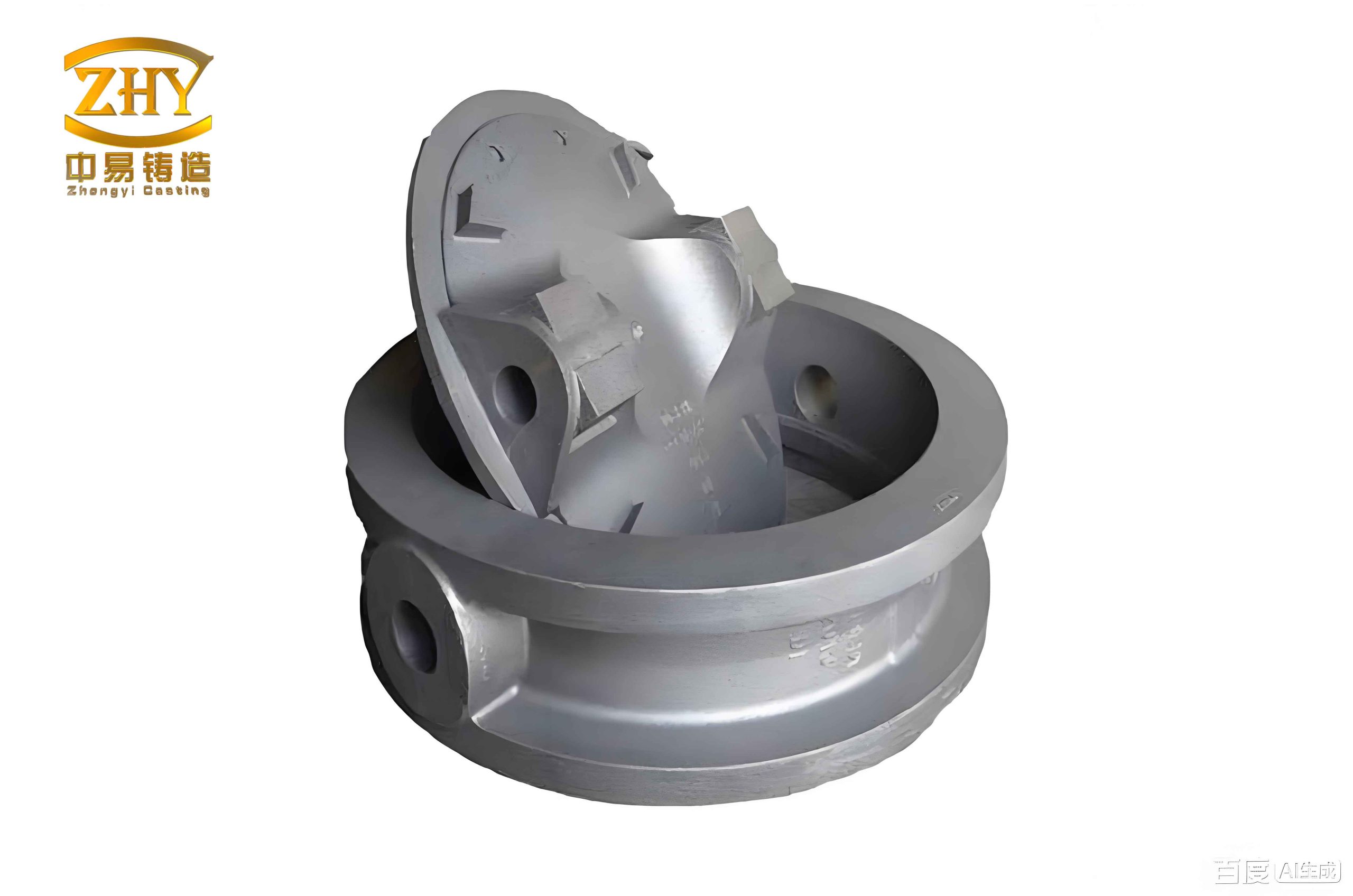
The component in question was a high-chromium iron (nominally KmTBCr26) four-way pipe, destined for dredging vessel slurry systems. As critical sand casting products for material handling, such components mandate not only superior metallurgical resistance to abrasion and corrosion but also impeccable geometric integrity: uniform wall thickness, high dimensional accuracy, a smooth internal surface, and crucially, freedom from defects like gas holes, inclusions, and cracks. The initial manufacturing campaign utilized the conventional CO2-sodium silicate (water glass) sand molding process. Despite adherence to standard procedures, both castings produced exhibited catastrophic cracking at specific junction points upon knockout, which occurred at temperatures below 100°C with no mechanical impact. The identical location and morphology of the cracks indicated a flaw genesis during the earlier stages of solidification and cooling, categorizing it as a thermal crack. This failure prompted a root-cause analysis and the development of a comprehensive, multi-faceted solution strategy.
1. Root Cause Analysis: A Multifactorial Problem
The formation of thermal cracks in high-chromium iron sand casting products is seldom attributable to a single cause. Our analysis identified three interconnected primary factors: the intrinsic properties of the alloy, the geometric design of the casting, and the characteristics of the molding media.
1.1 Alloy Characteristics and Solidification Behavior
High-chromium irons solidify over a broad temperature range, typically between approximately 1210°C and 1280°C. Thermal cracking susceptibility is intrinsically linked to an alloy’s “brittle temperature range” (BTR)—the interval where sufficient solid skeleton has formed to transmit tensile stresses, but the material’s ductility remains extremely low. The wide solidification interval of high-chromium iron means the coherent solid endures significant linear contraction while still possessing minimal strength at grain boundaries, where low-melting-point eutectics and segregates concentrate. The thermal strain \( \epsilon_{th} \) accumulated during cooling through this range can be expressed as:
$$ \epsilon_{th} = \alpha \cdot \Delta T $$
where \( \alpha \) is the coefficient of linear contraction and \( \Delta T \) is the temperature drop through the BTR. When this inherent contraction is hindered by the mold or core, a tensile stress \( \sigma \) develops:
$$ \sigma = E(T) \cdot \epsilon_{th} $$
Here, \( E(T) \) is the temperature-dependent elastic modulus, which increases rapidly as temperature decreases. If \( \sigma \) exceeds the high-temperature strength (more accurately, the fracture strength) of the alloy at that specific temperature and microstructure, a crack initiates and propagates.
1.2 Casting Geometry and Stress Concentration
The four-way pipe, while having nominally uniform wall thickness, features junctions where multiple pipes of differing diameters and angles converge. These intersections act as natural thermal centers or “hot spots,” as shown in the conceptual diagram. The smaller the fillet radius at these junctions, the more pronounced the hot spot becomes. During cooling, the entire casting contracts uniformly, but the contraction at these massive, rigid junctions is constrained not only by the external mold but, more critically, by the internal sand core. This multi-axial restraint leads to a complex state of stress, with tensile principal stresses focusing on the junction’s inner fillet regions. The stress concentration factor \( K_t \) at such a geometry further exacerbates the applied stress:
$$ \sigma_{local} = K_t \cdot \sigma_{nominal} $$
This localized stress amplification, combined with the material’s low ductility in the BTR, made the pipe junctions the inevitable failure sites.
1.3 Mold/Core Restraint and Sand System Limitations
The CO2-sodium silicate process produces strong, rigid molds with poor high-temperature collapsibility or “yield.” For thick-section sand casting products with extensive internal cores, like our four-way pipe, the problem is acute. While the outer surface of the core may sinter and lose some strength, its bulk interior remains mechanically robust throughout the critical cooling period when the casting is contracting. Although loose fillers (like wood chips or coke) were placed in the core center in the initial process to improve yield, their effect was insufficient for the significant contraction demands of the high-chromium iron. The core’s resistance created the primary mechanical hindrance to the free contraction of the casting’s internal geometry.
2. Development and Implementation of Corrective Measures
Our solution strategy attacked the problem on all three fronts simultaneously: enhancing the material’s intrinsic crack resistance, modifying the casting’s local geometry to manage stress, and fundamentally improving the mold system’s yield.
2.1 Material Enhancement Through Advanced Inoculation
To refine the as-cast microstructure and improve high-temperature strength/ductility, we moved beyond simple rare-earth silicon ferroalloy inoculation. A proprietary multi-component inoculant containing carefully balanced amounts of Al, Mg, and other active elements was introduced. The synergistic effect of these elements provides potent grain refinement and profound purification of the melt. Finer grains increase the number of grain boundaries and make their path more tortuous, which offers several benefits for sand casting products prone to hot tearing:
- Dispersed Strain: Applied strain is distributed over a greater number of grains, reducing local stress concentration.
- Enhanced Boundary Strength: Purification reduces the volume of weak, low-melting-point phases at boundaries.
- Crack Propagation Resistance: A tortuous grain boundary path increases the energy required for a crack to propagate.
The target microstructure shift is summarized in Table 1.
| Microstructural Feature | Standard Inoculation | Multi-Component Inoculation | Benefit for Crack Resistance |
|---|---|---|---|
| Primary Austenite Grain Size | Coarse | Fine | Higher grain boundary area distributes stress |
| Eutectic Carbide Network | Continuous, coarse | Discontinuous, refined | Reduces easy crack propagation paths |
| Interdendritic/Intergranular Phases | Substantial low-melting-point films | Minimized and modified | Improves high-temperature cohesion |
2.2 Local Geometry Modification: Strategic Use of Chills and Reinforcement
Altering the overall component design was not an option. Instead, we modified the local geometry at the critical junctions using two complementary techniques:
- Controlled Cooling via External Chills: High-conductivity iron chills were placed on the mold at the outer surfaces of the pipe junctions. This promotes directional solidification away from the junction and, more importantly, accelerates cooling through the BTR at the hot spot, effectively shortening the time window during which the material is vulnerable. The chilling power can be related to the rate of heat extraction.
- Application of “Anti-Crack” Ribs (Soft Reinforcement): Small, triangular-section ribs were added as extensions to the casting at the junction fillets (on the external surface). These ribs are designed to solidify and gain strength before the main body of the junction. As the thicker junction section then contracts, the already-solid rib acts as a “soft” reinforcement, carrying a portion of the tensile load. Crucially, their design ensures they are not integrated as stress-raising features in the final part; they are easily removed during subsequent machining. Their effectiveness relies on their cross-sectional area \( A_r \) and solidification time \( t_{f,r} \) relative to the junction \( t_{f,j} \):
$$ t_{f,r} < t_{f,j} \quad \text{and} \quad \sigma_{rib} = \frac{F}{A_r} < S_{rib}(T) $$
where \( F \) is the contraction force, and \( S_{rib}(T) \) is the temperature-dependent strength of the rib material.
2.3 Revolutionizing Core Yield: The Engineered Loose-Fill System
The most significant process innovation was the complete redesign of the core-making procedure to maximize high-temperature yield. We abandoned the method of simply placing loose fillers in a cavity. Instead, we developed a “semi-rigid” core structure by uniformly blending a specially formulated, high-yield particulate material directly into the CO2-sand mixture used for the core’s entire central volume. This engineered fill material is designed to compress, sinter, or decompose predictably under heat, creating a controlled, uniform collapse.
The improvement in yield \( Y \) can be conceptualized. For a traditional core, yield is low and stress transmission \( \sigma_{core} \) to the casting is high. For our modified core, the blended fill creates a compressible zone, increasing effective yield and reducing transmitted stress. A simplified comparison of core behavior is presented in Table 2.
| Core Characteristic | Traditional CO2-Sand Core with Central Cavity | Engineered Semi-Rigid Core with Blended Fill |
|---|---|---|
| High-Temperature Strength Profile | High strength in central bulk, weak sintered shell | Gradually decreasing strength from surface to center |
| Mode of Yielding | Unpredictable; relies on shell fracture | Predictable, uniform compression of core matrix |
| Estimated Yield Improvement | Baseline (0%) | 25% – 40% |
| Stress Transmission to Casting | High and localized | Substantially reduced and distributed |
The fundamental principle is to reduce the elastic modulus \( E_{core}(T) \) of the core material at elevated temperatures, thereby reducing the reaction force \( F_{core} \) it exerts on the contracting casting:
$$ F_{core} \propto E_{core}(T) \cdot A_{contact} \cdot \delta $$
where \( A_{contact} \) is the area of contact and \( \delta \) is the displacement (contraction) of the casting. By lowering \( E_{core}(T) \) through the blended fill, \( F_{core} \) is minimized.
3. Integrated Process Implementation and Results
The revised process integrated all three corrective measures in a single, coordinated production protocol for these high-value sand casting products. The sequence was as follows:
- Metal Preparation: The high-chromium iron was melted and superheated according to specification. The multi-component inoculant was added during tapping into the treatment ladle, ensuring effective dispersion and reaction.
- Mold and Core Making: The mold was produced with strategic placement of iron chills at all pipe junctions. The core was fabricated using the new sand blend containing the engineered yield-enhancing material, ensuring homogeneous distribution.
- Pouring and Solidification: The casting was poured at a controlled temperature. The chills promoted rapid initial solidification at the junctions, while the semi-rigid core offered minimal restraint.
- Cooling and Knockout: The casting was allowed to cool in the mold for a prescribed duration sufficient to allow the core to collapse fully before the casting entered the lower-temperature, high-strength regime where residual stresses could still cause cold cracking.
The outcome was unequivocal. Subsequent castings produced using this optimized methodology were completely free of the cracking defect that plagued the initial trials. The internal and external surfaces of the junctions were sound, requiring only standard finishing operations. This success validated the systemic approach, proving that the thermal cracking in these complex sand casting products was not an inevitable flaw but a solvable engineering problem.
4. Conclusions and Broader Implications
The investigation into the failure of the high-chromium iron four-way pipe castings underscores a fundamental principle in foundry engineering: defects like thermal cracking are typically systemic, arising from the interaction of material properties, product design, and process mechanics. Our successful resolution demonstrates that a holistic, multi-pronged strategy is essential for producing reliable, high-integrity sand casting products from challenging alloys.
The key takeaways from this study are:
- Material Optimization is Foundational: Enhancing the intrinsic high-temperature performance of the alloy through advanced inoculation directly raises the threshold for crack initiation.
- Design for Manufacturability is Critical: Even without changing functional geometry, local features like chills and temporary reinforcement ribs can be powerful tools to manage thermal gradients and stresses during solidification.
- Process Innovation Drives Reliability: Moving beyond traditional sand formulations to engineer specific properties like high-temperature yield can be the decisive factor in eliminating casting defects. The developed semi-rigid core technology represents a significant advance for boxless or thick-core sand casting products.
This case study has provided a validated technical framework that has since been successfully applied to other large, thin-walled high-chromium and alloy steel sand casting products, significantly improving the overall yield and reliability of such components in our production facility. It highlights that in the realm of advanced sand casting, continuous process analysis and integrated problem-solving remain paramount to achieving quality and consistency.