
The pursuit of high-integrity, lightweight components has positioned magnesium alloys at the forefront of advanced manufacturing for aerospace, automotive, and electronics sectors. Their low density, favorable strength-to-weight ratio, and good damping characteristics make them ideal for a wide range of applications. Among the various fabrication techniques, sand casting remains a cornerstone due to its unparalleled flexibility, capability for producing large and complex geometries, and cost-effectiveness for low to medium volume production. The quality of the final sand casting products is intrinsically linked to the properties of the mold and core materials used. In modern practice, chemically bonded sands, particularly furan resin sands, have largely replaced traditional green sand for precision applications involving magnesium, owing to their superior dimensional accuracy, excellent surface finish, and reduced cleaning effort.
However, the casting of magnesium alloys presents unique challenges, primarily due to the metal’s high chemical reactivity and low density, which predispose it to defects like oxidation, shrinkage, and particularly, gas porosity. The latter is often exacerbated by the decomposition of organic binders during metal pouring. In furan resin systems, the resin and acid catalyst (curing agent) are necessary for achieving adequate mold strength, but their decomposition can be a significant source of hydrogen and other gases that may become entrapped in the solidifying metal, compromising the mechanical properties and pressure tightness of the sand casting products. Furthermore, environmental and economic pressures demand the minimization of resin usage to reduce emissions, volatile organic compound (VOC) release, and raw material costs. Therefore, the central challenge is to formulate a resin sand that delivers the necessary bench strength, strip time, and high-temperature stability while operating at the lowest possible levels of resin and catalyst, thereby minimizing the potential for gas generation. This study investigates the systematic modification of a standard furan resin sand through the adjustment of primary binder ratios and the incorporation of functional additives like flame retardants and silane coupling agents, with the goal of optimizing overall performance for magnesium alloy sand casting.
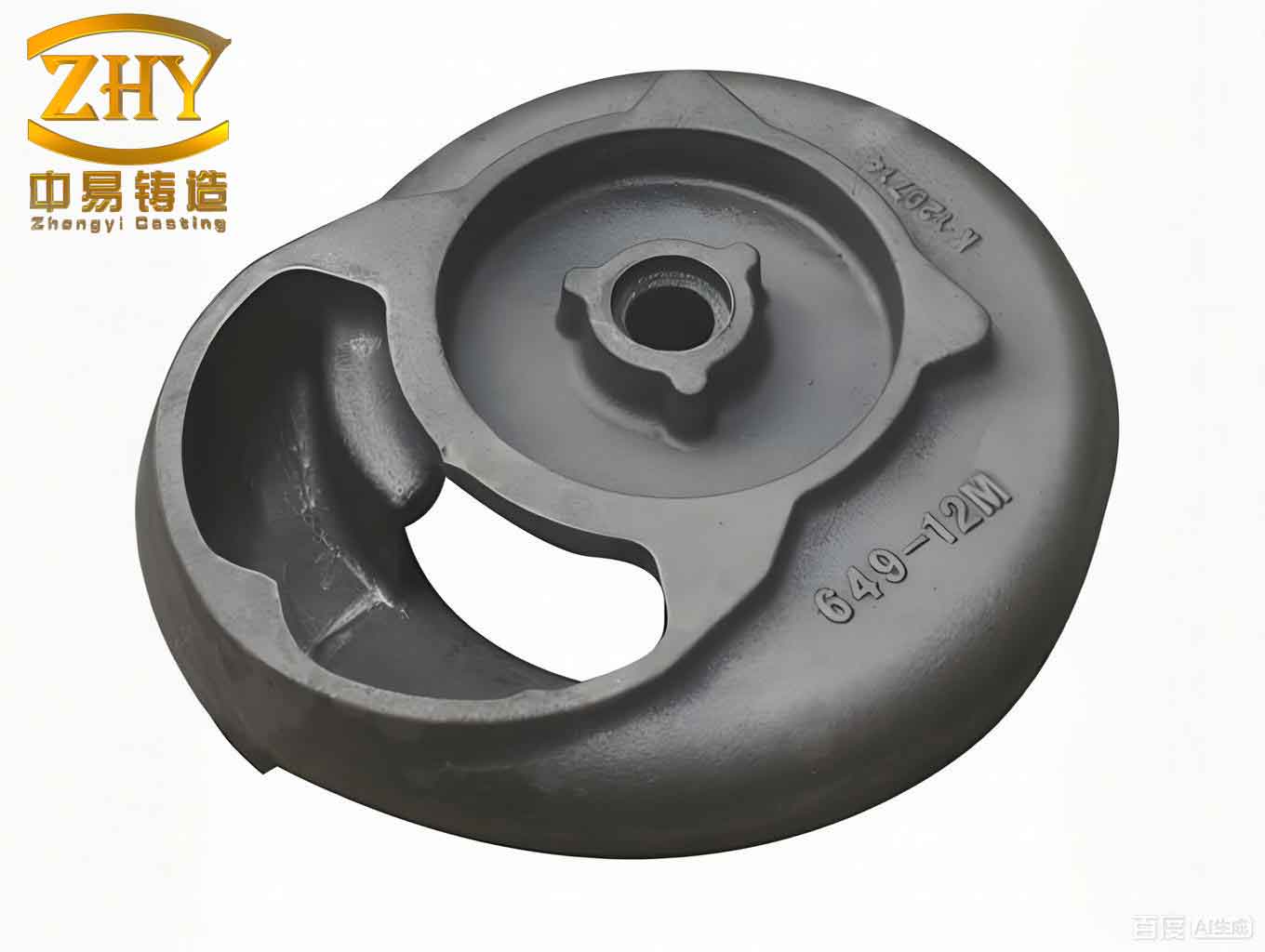
The foundational material for all sand mixtures was high-purity silica sand, representing the refractory skeleton. The binding system consisted of a commercially available furan resin and a sulfonic acid-based liquid catalyst. To address magnesium’s propensity for violent oxidation, a boron-based flame retardant powder was incorporated. Finally, an organofunctional silane coupling agent was evaluated as a performance modifier. The experimental matrix was designed to isolate and understand the effects of each component. A baseline formulation was established, and variables were altered one at a time or in combination to assess their impact.
| Experiment Set | Silica Sand (kg) | Furan Resin (% by sand wt.) | Catalyst (% by resin wt.) | Flame Retardant (% by sand wt.) | Silane (% by resin wt.) | Primary Objective |
|---|---|---|---|---|---|---|
| Baseline (Ref.) | 100 | 1.5 | 40 | 2.0 | 0 | Establish reference properties |
| Resin/Catalyst Variation | 100 | 1.0 – 2.0 | 30 – 50 | 2.0 | 0 | Determine minimum viable binder level |
| Flame Retardant Study | 100 | 1.5 | 40 | 1.0 – 3.0 | 0 | Optimize for cost/performance |
| Silane Addition | 100 | 1.2 – 1.5 | 35 – 40 | 2.0 | 0.5 – 2.0 | Enhance strength & thermal stability |
The sand was mixed using a laboratory-scale mixer according to a strict sequence: silica sand and flame retardant were blended first for 30 seconds to ensure uniform distribution. The acid catalyst was added and mixed for 20 seconds, followed by the resin (and silane, if used) for an additional 40 seconds before discharging. The primary parameters evaluated to characterize the sand’s workability and structural integrity were:
- Workability Time (or “Bench Life”): The period after mixing during which the sand remains pliable enough to form a sharp, detailed mold or core. It is quantitatively defined as the time elapsed until the compressive strength reaches 0.07 MPa. A longer workability time is desirable for complex molding operations.
- Strip Time: The time required after compacting the sand in a pattern for the cured sand to develop sufficient strength to allow the pattern to be removed without distortion or damage to the mold. This is defined as the time to reach a compressive strength of 0.14 MPa. It directly impacts production cycle times.
- Strength Development: The progression of tensile and compressive strength over time. “Hour strengths” (e.g., at 1, 2, 4 hours) indicate early handling capability, while the “24-hour strength” represents the final cured strength available for pouring. High final strength is crucial for resisting metallostatic pressure and erosion during pouring, ensuring dimensional accuracy of the sand casting products.
Standard specimens (dog-bone for tensile, cylindrical for compressive) were prepared immediately after mixing and tested at predetermined intervals using a universal strength testing machine. The resulting data was plotted to generate strength-versus-time curves for each formulation.
The data from the Resin/Catalyst Variation set revealed a critical nonlinear relationship. While increasing resin content from 1.0% to 2.0% predictably increased the 24-hour tensile strength, the gain was not linear. More importantly, the gas evolution potential, estimated from the organic content, increased linearly. A key finding was that reducing the resin from the baseline 1.5% to 1.2%, coupled with an optimized catalyst ratio of 35%, yielded a 24-hour tensile strength reduction of only about 15% but a calculated gas potential reduction of 20%. This represents a highly favorable trade-off for magnesium casting where gas defects are a primary concern. The strip time was also affected, generally shortening with higher catalyst levels. The strength development can be modeled by a simplified exponential growth function:
$$S(t) = S_{\infty} (1 – e^{-k(t-t_0)})$$
Where \(S(t)\) is the strength at time \(t\), \(S_{\infty}\) is the asymptotic final strength, \(k\) is a rate constant dependent on catalyst type and amount, and \(t_0}\) is an initial induction period. Lower resin levels reduced \(S_{\infty}\), while increased catalyst raised \(k\), shortening both workability and strip times. The optimal mix aimed for a minimum acceptable \(S_{\infty}\) with a moderated \(k\) to maintain adequate workability for producing complex sand casting products.
The flame retardant (boric acid) showed a dual effect. At 1.0% addition, its protective effect during magnesium pouring was insufficient. At 3.0%, it began to interfere with the acid-catalyzed curing reaction, noticeably extending strip times and slightly reducing ultimate strength. The 2.0% level offered the best compromise, providing adequate protection against magnesium oxidation without severely impacting curing kinetics. Its presence is considered essential for the reliable production of sound magnesium sand casting products, acting as a sacrificial layer that forms a protective glassy barrier at the metal-mold interface.
The most significant performance enhancements came from the inclusion of the silane coupling agent. Silanes act as molecular bridges at the interface between the inorganic silica sand surface and the organic resin matrix. The organofunctional group covalently bonds with the resin during curing, while the alkoxy groups hydrolyze and condense with hydroxyl groups on the sand surface. This dramatically improves the interfacial adhesion. The experimental results confirmed a substantial increase in both early and final strengths when 1.0% silane (by resin weight) was added to a low-resin (1.2%) formulation. The 24-hour tensile strength recovered to nearly match the baseline high-resin mix, while the gas evolution potential remained low. This can be expressed as a strengthening efficiency factor:
$$\Delta S_{\infty} = \beta \cdot [Si]$$
Where \(\Delta S_{\infty}\) is the increase in final strength, \([Si]\) is the silane concentration, and \(\beta\) is a positive constant representing the efficacy of the specific silane-resin-sand system. Furthermore, thermal stability tests, where cured specimens were heated to 600°C and their residual strength measured, showed that silane-modified sands retained 40-50% more strength than unmodified sands. This enhanced high-temperature strength is vital for maintaining mold shape integrity during the pouring and solidification of magnesium alloys, directly reducing the risk of mold wall movement and related defects in the final sand casting products. The improved thermal performance can be linked to the more robust, thermally resistant siloxane (Si-O-Si) networks formed at the interface.
The interplay between these factors dictates the overall quality and cost of the mold system. A holistic optimization model must balance mechanical performance, gas generation, and cost. The following equation frames this multi-objective optimization:
$$ \text{Minimize: } Z = w_1 \cdot (C_r R + C_c C + C_{si} S_i) + w_2 \cdot G(R, C) – w_3 \cdot P(S_{\infty}(R,C,S_i), R_{HT}(S_i)) $$
Where:
\(Z\) is the overall objective function to minimize.
\(R, C, S_i\) are the percentages of resin, catalyst, and silane, respectively.
\(C_r, C_c, C_{si}\) are their respective unit costs.
\(G(R,C)\) is a function modeling gas evolution potential, increasing with \(R\) and influenced by \(C\).
\(P\) is a performance function increasing with final strength \(S_{\infty}\) and high-temperature retention \(R_{HT}\).
\(w_1, w_2, w_3\) are weighting factors reflecting the relative importance of cost, gas control, and performance for a specific class of sand casting products.
The experimental data allows for the construction of response surfaces for \(S_{\infty}\), strip time, and workability time as functions of \(R\) and \(C\). The optimal region is identified where the strip time is acceptably short (e.g., 60-90 minutes), workability time is sufficient for the molding process (>30 minutes), and \(S_{\infty}\) meets the minimum required value, all while minimizing \(R\) and \(C\). The introduction of silane shifts this optimal region, allowing for lower \(R\) and \(C\) while maintaining or even improving \(S_{\infty}\) and \(R_{HT}\), thus minimizing \(Z\).
Based on the comprehensive analysis, the following optimized formulation and practice guidelines are proposed for magnesium alloy resin sand casting:
| Component | Recommended Range | Rationale & Effect |
|---|---|---|
| Silica Sand | Base (100%) | Use high-purity, washed sand to minimize impurities that can affect curing or react with magnesium. |
| Furan Resin | 1.1% – 1.3% (by sand weight) | Minimized level to drastically reduce gas-forming potential while providing sufficient resin for bonding. |
| Acid Catalyst | 35% – 38% (by resin weight) | Optimized to ensure complete curing at low resin levels without excessively shortening workability time. |
| Flame Retardant (Boric Acid) | 1.8% – 2.2% (by sand weight) | Essential for safety and defect prevention; this range offers protection without severely hindering cure. |
| Silane Coupling Agent | 0.8% – 1.2% (by resin weight) | Critical modifier. Restores and enhances strength, significantly improves thermal stability, and allows for the reduced resin usage. It is the key to achieving high performance at low binder levels. |
To implement this optimized system effectively, process control is paramount:
- Precise Metering and Mixing: Automated, calibrated dispensers for resin, catalyst, and additives are necessary to ensure batch-to-batch consistency. The mixing sequence and time must be strictly adhered to.
- Environmental Control: Temperature and humidity significantly affect workability and strip times. The foundry environment should be controlled, or sand temperatures managed, to stabilize process windows.
- Pattern Design and Gating: While improved sand properties reduce defect susceptibility, good casting practice remains essential. Patterns should have appropriate drafts, and gating systems should be designed to fill molds with minimal turbulence to prevent air entrainment and reaction with the binder, further safeguarding the quality of the sand casting products.
This research demonstrates that the traditional paradigm of simply increasing binder content to achieve strength is counterproductive for quality-critical magnesium sand casting products. A scientifically guided approach focusing on the synergistic use of minimized binder systems enhanced with interfacial modifiers like silane offers a superior path forward. The key conclusions are:
- The resin and catalyst content can be significantly reduced below conventional levels (to approximately 1.2% and 35% respectively) without compromising the necessary handling and casting strengths, provided the formulation is precisely balanced. This primary action directly reduces the source of gas porosity defects.
- The incorporation of a silane coupling agent is a transformative strategy. It mitigates the strength loss associated with low-resin formulations and, more importantly, confers exceptional thermal stability to the sand mold. This results in more dimensionally stable molds during pouring, yielding sand casting products with improved geometric accuracy and surface integrity.
- Flame retardants like boric acid are non-negotiable for magnesium but must be dosed within an optimal window (∼2%) to balance protective efficacy with minimal interference in the sand curing process.
- The overall outcome is a resin sand system that enables the production of higher-integrity magnesium alloy castings with reduced defect rates, alongside tangible benefits in material cost savings and lower environmental impact from reduced organic emissions. This optimized methodology provides a robust technical foundation for foundries aiming to enhance their competitiveness in the market for precision magnesium sand casting products. Future work may explore the integration of other advanced additives, such as nano-reinforcements, and the development of digital twins for real-time sand property prediction and control.