
In the realm of manufacturing complex components, sand casting remains a pivotal process for producing high-integrity parts, especially in the automotive industry. Among these, engine cylinder heads represent a critical category of sand casting products, characterized by intricate geometries, varying wall thicknesses, and stringent performance requirements. These components must withstand extreme thermal and mechanical stresses during operation, making defect-free production paramount. However, the sand casting process is inherently prone to defects such as shrinkage holes, which compromise the structural integrity and functionality of the final product. Shrinkage defects typically manifest in thick sections of sand casting products where solidification patterns lead to inadequate feeding, resulting in voids that can cause leaks or failures. Addressing these issues is crucial for enhancing the quality and reliability of sand casting products, which often see annual production volumes exceeding hundreds of thousands of units, with rejection rates impacting cost and efficiency.
This study focuses on investigating the influence of key process parameters—specifically, pouring temperature and mold temperature—on the formation of shrinkage holes in sand casting products, using a numerical simulation approach. The research is motivated by the need to optimize casting processes for complex parts like cylinder heads, where traditional trial-and-error methods are time-consuming and costly. By leveraging advanced computer-aided engineering (CAE) tools, we aim to predict and mitigate defects, thereby improving the yield and performance of sand casting products. The numerical simulation software employed here is InteCAST (commonly known as Huazhu CAE), a widely used system in China for casting process analysis, renowned for its accuracy in predicting shrinkage and porosity defects. Through this work, we seek to provide insights into how temperature variations affect defect formation, offering guidelines for process design in sand casting products manufacturing.
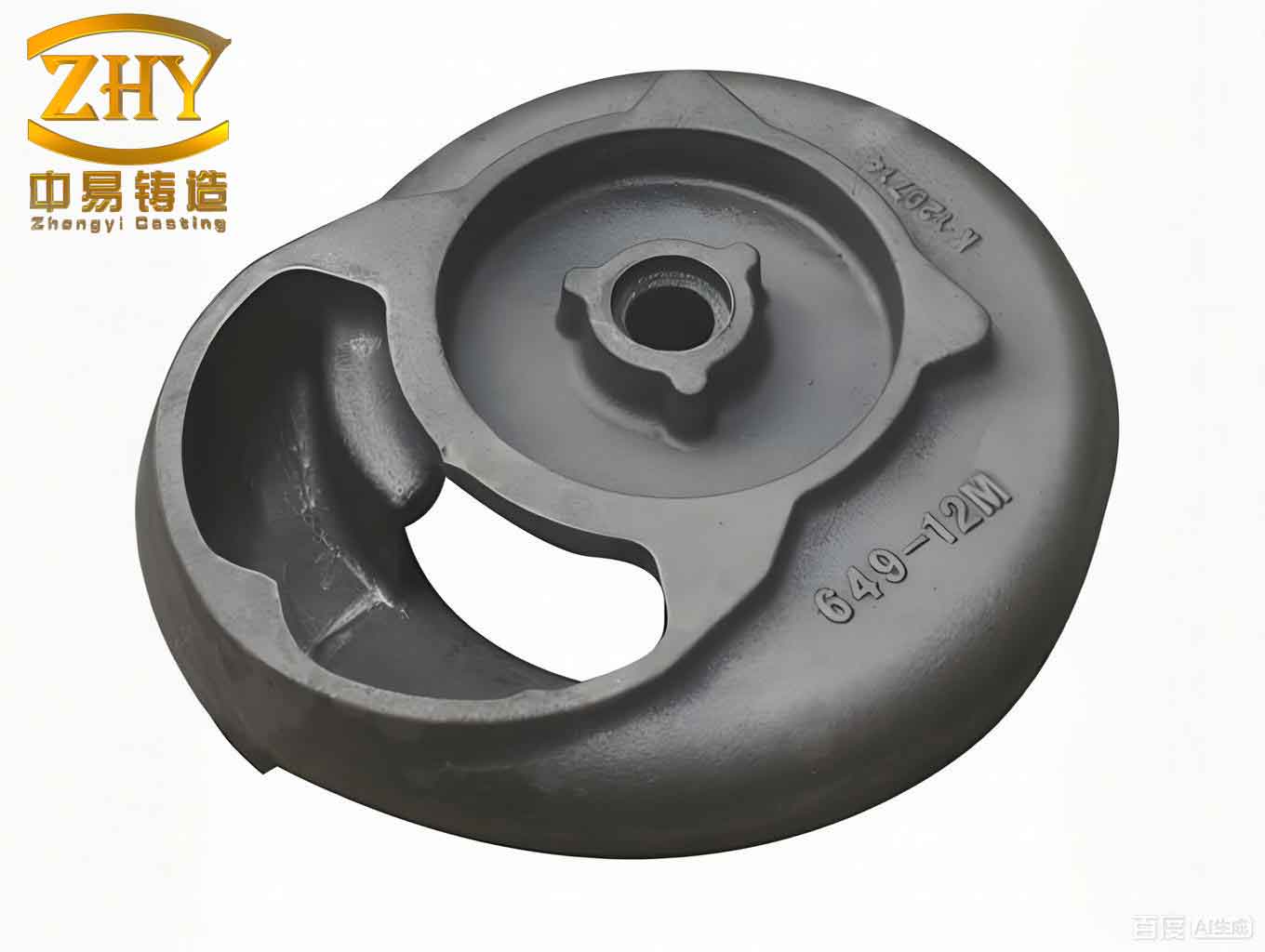
The significance of this research extends beyond cylinder heads to a broad range of sand casting products, where similar defect mechanisms may occur. Sand casting products are utilized in various sectors, including aerospace, machinery, and energy, due to their versatility in handling different metals and alloys. However, the process involves multiple variables—such as mold materials, gating systems, and thermal conditions—that interact complexly during solidification. Among these, pouring temperature and mold temperature are critical as they directly influence the fluidity, cooling rates, and feeding behavior of the molten metal. In sand casting products, improper temperature control can exacerbate shrinkage defects, leading to increased scrap rates. Therefore, a systematic analysis of these parameters through simulation not only reduces experimental costs but also accelerates the development of robust casting processes for high-quality sand casting products.
In this article, we present a comprehensive numerical investigation into the effects of pouring and mold temperatures on shrinkage hole formation in a cylinder head casting made of compacted graphite iron (CGI), specifically Ru450 grade. We employ a design of experiments (DoE) approach with multiple temperature combinations, simulated using InteCAST software. The results are analyzed through quantitative metrics, including the number of shrinkage holes, and statistical methods such as correlation analysis. We also incorporate tables and mathematical formulations to summarize findings, enhancing the clarity and applicability of the study for practitioners involved in sand casting products production. The ultimate goal is to establish optimal temperature ranges that minimize defects, thereby contributing to the advancement of sand casting technology for complex components.
Background on Sand Casting Products and Defect Mechanisms
Sand casting is one of the oldest and most versatile metal-forming processes, used to create a wide array of sand casting products ranging from simple brackets to intricate engine blocks. The process involves pouring molten metal into a sand mold, which is then allowed to solidify before removal. The mold is typically made from silica sand bonded with clays or resins, providing the necessary shape and surface finish. Despite its advantages, such as low tooling costs and suitability for large parts, sand casting is susceptible to defects due to the complex interplay of thermal and mechanical factors during solidification. Common defects in sand casting products include porosity, inclusions, and shrinkage-related issues, with shrinkage holes being particularly problematic in thick-walled sections.
Shrinkage holes form when the metal contracts during solidification, creating voids if insufficient liquid metal is available to compensate for the volume reduction. In sand casting products, this often occurs in thermal centers or hot spots, where cooling is slower, leading to isolated pools of liquid that eventually shrink in isolation. The severity of shrinkage defects depends on several factors, including alloy composition, mold design, and process parameters. For instance, in sand casting products like cylinder heads, which have varying wall thicknesses, the thick sections act as hot spots, making them prone to shrinkage. Additionally, the presence of gases dissolved in the molten metal can aggravate shrinkage by nucleating pores that hinder feeding. Understanding these mechanisms is essential for optimizing sand casting processes to produce defect-free sand casting products.
Numerical simulation has emerged as a powerful tool for predicting defects in sand casting products, allowing engineers to visualize solidification patterns and identify potential problem areas before physical prototyping. Software like InteCAST uses finite element or finite difference methods to solve heat transfer and fluid flow equations, providing insights into temperature distributions, solidification sequences, and defect formation. By simulating different scenarios, we can assess the impact of process variables on final quality, reducing the need for costly iterations. This study leverages such capabilities to explore how pouring and mold temperatures influence shrinkage in sand casting products, with a focus on quantitative analysis.
Methodology: Numerical Simulation Approach
To investigate the effects of pouring and mold temperatures on shrinkage defects in sand casting products, we conducted a series of numerical simulations using InteCAST software. The test case was an automobile engine cylinder head, a representative complex sand casting product made of Ru450 compacted graphite iron. The geometry includes intricate internal passages and varying wall thicknesses, with thick sections that are susceptible to shrinkage. The gating system was designed as a bottom-filling top-riser configuration to promote directional solidification, which is crucial for reducing defects in sand casting products. The mold material was green sand, commonly used in high-volume production of sand casting products, and cores were made via cold-box process with silica sand and resins.
The key process parameters selected for study were pouring temperature and mold temperature, as they significantly affect the thermal dynamics during casting. The ranges were based on industrial practices: pouring temperature from 1360 °C to 1400 °C, and mold temperature from 20 °C to 40 °C. We designed a full factorial experiment with 15 combinations, as summarized in Table 1. Each combination was simulated to predict the formation of shrinkage holes, with results analyzed for trends and correlations. The simulation focused solely on the solidification phase, assuming ideal filling, to isolate the effects of thermal parameters on defect formation in sand casting products.
| Experiment ID | Pouring Temperature (°C) | Mold Temperature (°C) |
|---|---|---|
| 1 | 1360 | 20 |
| 2 | 1370 | 20 |
| 3 | 1380 | 20 |
| 4 | 1390 | 20 |
| 5 | 1400 | 20 |
| 6 | 1360 | 30 |
| 7 | 1370 | 30 |
| 8 | 1380 | 30 |
| 9 | 1390 | 30 |
| 10 | 1400 | 30 |
| 11 | 1360 | 40 |
| 12 | 1370 | 40 |
| 13 | 1380 | 40 |
| 14 | 1390 | 40 |
| 15 | 1400 | 40 |
Prior to simulation, the 3D models of the cylinder head and gating system were meshed using uniform grid elements to ensure computational accuracy. The meshing scheme is detailed in Table 2, which includes parameters such as total element count, casting element count, and edge lengths. A fine mesh was employed to capture the complex geometries typical of sand casting products, with maximum and minimum edge lengths set to 3.5 mm. The total weight of the pouring system was 408 kg, with a casting weight of 283 kg, resulting in a yield of approximately 69.33%. This meshing approach ensures reliable predictions for shrinkage defects in sand casting products.
| Parameter | Value |
|---|---|
| Grid Type | Uniform Mesh |
| Total Elements | 13,296,465 |
| Casting Elements | 960,627 |
| Maximum Edge Length (mm) | 3.5 |
| Minimum Edge Length (mm) | 3.5 |
| Pouring Weight (kg) | 408 |
| Casting Weight (kg) | 283 |
| Process Yield (%) | 69.33 |
The simulation utilized InteCAST’s gravity feeding module to predict shrinkage holes, which employs a criterion based on temperature gradients and solidification time. The software solves the heat conduction equation during solidification, given by:
$$ \frac{\partial T}{\partial t} = \alpha \nabla^2 T $$
where \( T \) is temperature, \( t \) is time, and \( \alpha \) is thermal diffusivity. For sand casting products, the boundary conditions account for heat transfer between the metal and mold, influenced by mold temperature. The shrinkage prediction algorithm identifies regions where the feeding is insufficient, marking them as potential defects. By analyzing the simulation outputs, we quantified the number of shrinkage holes for each temperature combination, providing a basis for statistical analysis.
Simulation Results and Analysis
The simulation results revealed detailed insights into the solidification behavior and defect formation in the cylinder head, a critical sand casting product. The color-temperature maps from InteCAST showed that solidification proceeded sequentially from the bottom to the top, consistent with the bottom-gating design. This directional solidification is desirable for sand casting products as it promotes feeding from the risers, reducing shrinkage risks. However, in thick-walled areas, hot spots persisted, leading to isolated liquid pools that eventually formed shrinkage holes. Figure 3 (not referenced by number, but described) illustrates the temperature distribution during solidification, highlighting the last-to-freeze regions where defects are likely to occur in sand casting products.
The predicted shrinkage holes were primarily located in the thick sections of the cylinder head, such as around the valve seats and combustion chamber areas. For each experiment, the number of shrinkage holes was extracted, and the results are compiled in Table 3. This quantitative data allows for a direct comparison of how pouring and mold temperatures affect defect counts in sand casting products. The table shows that the number of shrinkage holes varied from 22 to over 30, depending on the temperature settings, indicating a significant influence of process parameters on the quality of sand casting products.
| Pouring Temperature (°C) | Mold Temperature 20 °C | Mold Temperature 30 °C | Mold Temperature 40 °C |
|---|---|---|---|
| 1360 | 26 | 24 | 22 |
| 1370 | 22 | 26 | 28 |
| 1380 | 28 | 28 | 30 |
| 1390 | 30 | 32 | 32 |
| 1400 | 32 | 34 | 34 |
To visualize the trends, we plotted the number of shrinkage holes against pouring temperature for each mold temperature, as shown in Figure 5 (described but not numbered). For a mold temperature of 20 °C, the defect count initially decreased from 26 at 1360 °C to 22 at 1370 °C, then increased steadily to 32 at 1400 °C. This suggests an optimal pouring temperature around 1370 °C for this mold condition in sand casting products. For mold temperatures of 30 °C and 40 °C, the defect count generally increased with pouring temperature, with the lowest values at 1360 °C (24 and 22 holes, respectively). This indicates that lower pouring temperatures may be beneficial when mold temperatures are higher, a key consideration for optimizing sand casting products.
Similarly, the effect of mold temperature was analyzed by plotting defect counts against mold temperature for fixed pouring temperatures, as depicted in Figure 6 (described but not numbered). For pouring temperatures of 1370 °C to 1400 °C, the number of shrinkage holes showed minimal variation with mold temperature, suggesting that mold temperature has a less pronounced impact in these ranges for sand casting products. However, at 1360 °C, a decrease in defect count was observed as mold temperature increased from 20 °C to 40 °C, highlighting an interaction effect between the two parameters.
Statistical Sensitivity Analysis
To quantify the sensitivity of shrinkage defects to pouring and mold temperatures in sand casting products, we performed a correlation analysis. The linear correlation coefficient \( r \) between the number of shrinkage holes (denoted as \( Y \)) and each temperature parameter (denoted as \( X \)) was calculated using the formula:
$$ r = \frac{\text{Cov}(X, Y)}{\sqrt{\text{Var}[X] \cdot \text{Var}[Y]}} $$
where \( \text{Cov}(X, Y) \) is the covariance, and \( \text{Var}[X] \) and \( \text{Var}[Y] \) are the variances. This analysis helps determine which parameter has a stronger influence on defect formation in sand casting products.
For a mold temperature of 20 °C, the correlation coefficient between pouring temperature and shrinkage hole count was \( r_1 = 0.7251 \), indicating a moderate positive correlation. At mold temperatures of 30 °C and 40 °C, the coefficients were \( r_2 = 0.9199 \) and \( r_3 = 0.9105 \), respectively, showing strong positive correlations. This implies that as pouring temperature increases, the number of shrinkage holes tends to increase, especially at higher mold temperatures, which is critical for controlling quality in sand casting products.
Conversely, for fixed pouring temperatures, the correlation with mold temperature varied. At 1360 °C, the coefficient was \( r_4 = -0.9934 \), indicating a strong negative correlation, meaning higher mold temperatures reduced defects. At 1370 °C and 1380 °C, the variance in defect count was zero, so no correlation was considered. At 1390 °C, \( r_5 = 0 \) (no correlation), and at 1400 °C, \( r_6 = -0.8660 \), a moderate negative correlation. Overall, the analysis reveals that pouring temperature has a more consistent and pronounced effect on shrinkage holes compared to mold temperature in sand casting products, as evidenced by higher correlation magnitudes across multiple conditions.
To further elucidate the relationships, we can model the defect count as a function of pouring temperature \( T_p \) and mold temperature \( T_m \) using a multiple linear regression approach. Assuming a linear model:
$$ N = \beta_0 + \beta_1 T_p + \beta_2 T_m + \epsilon $$
where \( N \) is the number of shrinkage holes, \( \beta_0 \) is the intercept, \( \beta_1 \) and \( \beta_2 \) are coefficients, and \( \epsilon \) is the error term. Based on our data, we can estimate these coefficients to predict defect counts for sand casting products under different temperature settings. However, given the interaction effects observed, a more accurate model might include an interaction term:
$$ N = \beta_0 + \beta_1 T_p + \beta_2 T_m + \beta_3 T_p T_m + \epsilon $$
This highlights the complexity of optimizing process parameters for sand casting products, where nonlinear interactions may play a role.
Discussion on Temperature Effects in Sand Casting Products
The findings from this study have important implications for the manufacturing of sand casting products, particularly complex components like cylinder heads. The observed trends can be explained by the underlying physics of solidification. Pouring temperature directly affects the superheat of the molten metal, which influences fluidity and the time available for feeding. Higher pouring temperatures increase fluidity but also extend solidification time, potentially leading to larger temperature gradients and more severe shrinkage in sand casting products. Conversely, lower pouring temperatures may reduce feeding ability, causing defects if the metal freezes too quickly. The optimal pouring temperature balances these factors, as seen in our results where 1370 °C minimized defects at a mold temperature of 20 °C.
Mold temperature, on the other hand, affects the cooling rate of the casting. Higher mold temperatures slow down cooling, which can reduce thermal stresses but also prolong solidification, potentially increasing shrinkage risks in sand casting products. However, in some cases, a warmer mold may promote better feeding by maintaining longer liquid paths, as indicated by the negative correlation at lower pouring temperatures. This interplay underscores the need for tailored temperature settings based on the specific geometry and material of sand casting products.
For industrial applications, these insights suggest that controlling pouring temperature is more critical than mold temperature for minimizing shrinkage defects in sand casting products. Process engineers should prioritize precise temperature monitoring and adjustment during pouring, while mold temperature can be maintained within a broader range (e.g., 20–40 °C) without significantly impacting defect counts, especially at higher pouring temperatures. This can simplify process control and reduce energy costs in foundries producing sand casting products.
Moreover, the use of numerical simulation, as demonstrated here, is invaluable for optimizing sand casting processes. By running virtual experiments, manufacturers can identify optimal parameter sets without physical trials, saving time and resources. This approach is scalable to other sand casting products, from small fittings to large industrial parts, enhancing overall quality and efficiency. Future work could expand this study to include other parameters like gating design or alloy composition, further refining the production of high-integrity sand casting products.
Conclusions and Recommendations
In conclusion, this numerical simulation study investigated the effects of pouring and mold temperatures on shrinkage hole formation in sand casting products, using an engine cylinder head as a case study. The key findings are:
- Shrinkage defects in sand casting products primarily occur in thick-walled sections, such as those in cylinder heads, due to inadequate feeding during solidification.
- The number of shrinkage holes is influenced by both pouring and mold temperatures, but pouring temperature has a more pronounced effect, as evidenced by higher correlation coefficients.
- For a mold temperature of 20 °C, an optimal pouring temperature of 1370 °C minimized defects to 22 holes. At higher mold temperatures (30 °C and 40 °C), lower pouring temperatures (1360 °C) resulted in fewer defects.
- Mold temperature showed limited sensitivity on defect counts at pouring temperatures above 1370 °C, indicating that it can be varied within a range without major impacts on the quality of sand casting products.
Based on these results, we recommend that foundries focus on controlling pouring temperature within narrow optimal ranges to reduce shrinkage defects in sand casting products. Mold temperature can be adjusted based on energy considerations, but maintaining consistency is still important. Additionally, adopting CAE simulation tools like InteCAST can facilitate process optimization, leading to higher yields and better performance of sand casting products.
This research contributes to the broader understanding of defect formation in sand casting products and provides a methodology for parameter analysis that can be applied to other casting scenarios. As the demand for high-quality sand casting products grows in industries like automotive and aerospace, such studies will play a crucial role in advancing manufacturing technologies and ensuring reliability.