
As I reflect on the casting industry, my thoughts often drift not to the ancient weapons of battle, the historic bronze artifacts, or the fiery molten metal, but to the thick black smoke that has symbolized environmental neglect after years of smog. Sand casting, a cornerstone of manufacturing, is inherently a high-energy-consumption and heavily polluting sector. With rapid development over decades, environmental issues have become increasingly prominent. While sand casting products are ubiquitous in various industries, from automotive to machinery, the pollution control technologies and facilities in many foundries remain落后. Investments in environmental protection in casting plants are often only a fraction of those in developed countries, highlighting an urgent need to reconcile this industry with green mountains and clear waters. In this article, I will explore comprehensive solutions to mitigate pollution in sand casting, emphasizing the role of green foundry materials and innovative practices, with a focus on enhancing the sustainability of sand casting products.
The pollution in sand casting primarily stems from several key production stages: metal melting; sand mixing and mold making; core making; pouring, solidification cooling, and shakeout; and subsequent processing like cleaning and grinding. Due to the dispersed nature of pollution sources, relying solely on end-of-pipe treatments is often ineffective. Instead, adopting cleaner raw materials to replace traditional high-pollution ones can significantly reduce air pollutants at the source. This approach is pivotal for achieving harmony between the casting industry and the environment. Thus, green casting materials have emerged and gained prominence. To address environmental concerns, green sand casting must tackle three core issues, all intrinsically linked to green casting materials: energy conservation and consumption reduction; reduction of dust and harmful gas emissions; and recycling of waste materials generated during production. The solutions are multifaceted and require a holistic integration into the manufacturing of sand casting products.
| Production Stage | Primary Pollutants | Impact on Environment |
|---|---|---|
| Metal Melting | Particulate matter, SO₂, NOₓ, CO | Air pollution, greenhouse gas emissions |
| Sand Mixing & Mold Making | Dust, volatile organic compounds (VOCs) | Respiratory issues, smog formation |
| Core Making | VOCs, formaldehyde, phenolic compounds | Toxic air pollutants, health hazards |
| Pouring & Shakeout | Dust, fumes, heat emissions | Air quality degradation, thermal pollution |
| Cleaning & Grinding | Dust, noise, waste abrasives | Landfill waste, occupational hazards |
Energy conservation and consumption reduction in sand casting are most critical in metal melting and heat treatment processes. By utilizing exothermic insulating risers, metal treatment agents, ceramic filters, and optimizing production techniques, the yield and quality of sand casting products can be improved, leading to significant energy savings. The energy efficiency can be modeled using the following formula for yield improvement: $$E_{saved} = (Y_{new} – Y_{old}) \times E_{unit} \times P_{total}$$ where \(E_{saved}\) is the energy saved, \(Y_{new}\) and \(Y_{old}\) are the new and old yield rates, \(E_{unit}\) is the energy per unit product, and \(P_{total}\) is the total production of sand casting products. For instance, increasing the yield from 70% to 85% can reduce energy consumption by over 15%, directly lowering the carbon footprint of sand casting products.
Dust and harmful gas emissions are prevalent in molding, core making, pouring, shakeout, shot blasting, and welding repair. The binder used in molding and core making is a key material, influencing process design, facility layout, and equipment investment. However, most casting binders are organic chemicals, which are major sources of harmful emissions. Substituting organic binders with inorganic alternatives, improving binder performance to reduce usage, and expanding binder types to phase out toxic systems are long-standing goals for researchers. The emission reduction can be quantified as: $$E_{reduction} = C_{old} \times EF_{old} – C_{new} \times EF_{new}$$ where \(E_{reduction}\) is the reduction in emissions, \(C\) is the binder concentration, and \(EF\) is the emission factor. By switching to inorganic binders, emissions of VOCs can drop by up to 90%, enhancing the environmental profile of sand casting products. This shift is crucial for producing high-integrity sand casting products with minimal ecological impact.
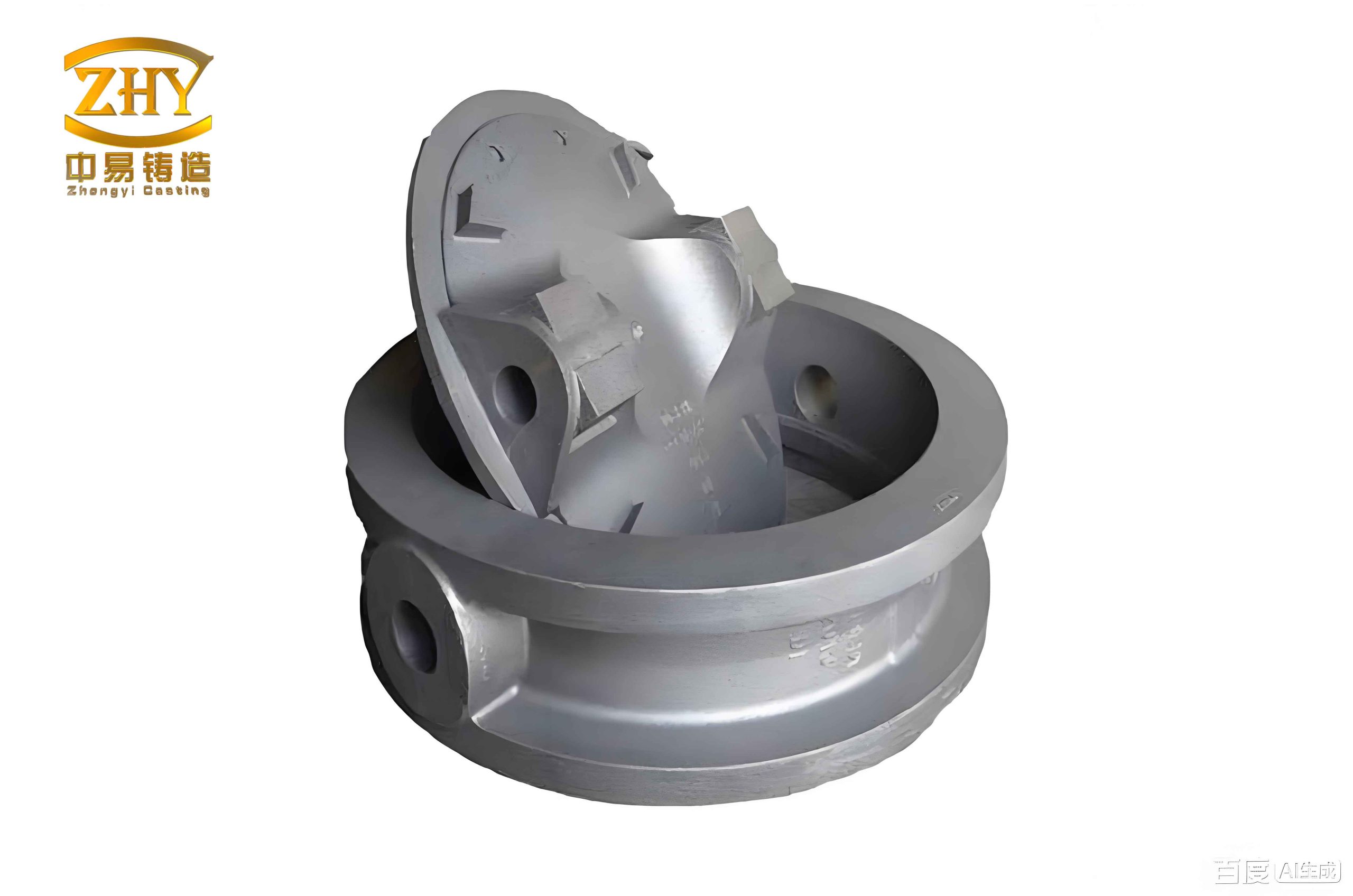
The recycling of waste materials, aside from scrap metal处理, primarily involves non-metallic materials, with used sand reclamation being a central aspect. Currently, there are three main methods for silica sand regeneration: mechanical, thermal, and wet regeneration. Each method has its efficiency and cost implications, impacting the overall sustainability of sand casting products. The regeneration rate can be expressed as: $$R_{reg} = \frac{M_{reclaimed}}{M_{total}} \times 100\%$$ where \(R_{reg}\) is the regeneration rate, \(M_{reclaimed}\) is the mass of reclaimed sand, and \(M_{total}\) is the total sand used. Optimizing this rate reduces raw material consumption and waste disposal, making sand casting products more eco-friendly. Below is a comparison of these methods:
| Method | Process Description | Efficiency (%) | Energy Consumption | Suitability for Sand Casting Products |
|---|---|---|---|---|
| Mechanical Regeneration | Crushing and sieving to remove binders | 70-80 | Low | Ideal for high-volume production of standard sand casting products |
| Thermal Regeneration | Heating to burn off organic residues | 85-95 | High | Best for precision sand casting products with strict quality requirements |
| Wet Regeneration | Washing with water to dissolve contaminants | 75-85 | Medium | Effective for complex sand casting products with residual binders |
Green sand casting production is inextricably linked to casting materials. Without high-quality, environmentally friendly materials, achieving green casting goals is nearly impossible. The adoption of green materials not only reduces pollution but also enhances the mechanical properties and durability of sand casting products. For example, using advanced binders can improve surface finish and dimensional accuracy, critical for automotive and aerospace sand casting products. Moreover, industry events and forums have played a pivotal role in sharing insights on green technologies. At recent exhibitions, companies dedicated to green casting materials showcased innovations that align with sustainable practices, driving the evolution of sand casting products toward greater environmental responsibility.
In the context of stringent environmental regulations and the shift away from traditional粗放型 practices, specialized sessions on green casting material applications and equipment have gained traction. These forums emphasize practical solutions, from waste sand recycling to the use of novel环保 materials and equipment upgrades, addressing the root causes of high energy consumption and pollution in sand casting. By integrating these technologies, foundries can produce sand casting products that meet both performance and environmental standards. The transition is essential for the long-term viability of the industry, ensuring that sand casting products remain competitive in a green economy.
To illustrate the broader industrial trends, let’s consider production data from the machine tool sector, which is closely related to casting. For instance, in a recent period, metal-cutting machine tools saw growth, while casting machinery experienced declines, reflecting the dynamic nature of manufacturing. The data underscores the need for innovation in sand casting to maintain relevance. Below is a summary table based on generalized statistics:
| Product Category | Monthly Production Growth (%) | Cumulative Production Change (%) | Implication for Sand Casting Products |
|---|---|---|---|
| Metal-Cutting Machine Tools | +6.1 | +5.5 | Increased demand for precision sand casting products in machinery |
| CNC Metal-Cutting Machines | +5.6 | +5.1 | Highlights need for quality sand casting products in automated systems |
| Metal-Forming Machine Tools | 0.0 | +0.9 | Stable market for sand casting products used in forming equipment |
| Casting Machinery | -8.9 | -13.1 | Indicates pressure to innovate for greener sand casting products |
The integration of green practices in sand casting can be further analyzed through mathematical models. For example, the total environmental impact \(I_{total}\) of producing sand casting products can be expressed as: $$I_{total} = \sum_{i=1}^{n} (E_i \times w_E + D_i \times w_D + W_i \times w_W)$$ where \(E_i\), \(D_i\), and \(W_i\) represent energy consumption, dust emissions, and waste generation at each production stage \(i\), and \(w\) are weighting factors based on environmental priorities. By minimizing these terms through green materials, the overall impact is reduced, making sand casting products more sustainable. Additionally, the cost-benefit analysis of adopting green technologies can be modeled as: $$C_{net} = C_{initial} + \sum_{t=1}^{T} \frac{C_{operational} – S_{savings}}{(1+r)^t}$$ where \(C_{net}\) is the net cost, \(C_{initial}\) is upfront investment, \(C_{operational}\) is ongoing costs, \(S_{savings}\) are savings from energy and waste reduction, \(r\) is the discount rate, and \(T\) is the time horizon. Over time, the production of sand casting products using green methods often proves economically viable due to lower operational expenses and regulatory compliance.
In conclusion, the path to mitigating pollution in sand casting lies in a comprehensive embrace of green casting materials and processes. From energy-efficient melting techniques to low-emission binders and effective sand reclamation, each step contributes to a cleaner production cycle. As I have discussed, the repeated emphasis on sand casting products throughout this journey underscores their central role in this transformation. By prioritizing sustainability, the casting industry can not only reduce its environmental footprint but also enhance the quality and marketability of sand casting products. The future of sand casting depends on our collective commitment to innovation and ecological stewardship, ensuring that this ancient craft evolves in harmony with modern environmental demands. Through continuous research and collaboration, we can achieve a balance where sand casting products are synonymous with both excellence and sustainability.