
In the evolving landscape of global manufacturing, the demand for rapid, cost-effective, and customizable sand casting products has intensified. As a researcher deeply involved in advanced manufacturing technologies, I have witnessed firsthand the limitations of traditional sand casting, which relies on physical patterns and molds, leading to long lead times and high costs for small-batch production. The emergence of patternless sand casting, particularly through subtractive manufacturing like high-speed milling, presents a transformative opportunity. However, a critical challenge persists: the efficient removal of sand chips during the dry machining of sand molds. Without proper chip evacuation, tool life diminishes, and the quality of the sand mold—and consequently the final sand casting products—is compromised. My work, therefore, has centered on developing and optimizing a novel hollow end mill with aerodynamic sand removal capabilities to enable efficient, high-quality machining of patternless sand molds for diverse sand casting products.
The core innovation lies in the hollow end mill’s design, which integrates an internal channel for compressed air. The principle is straightforward yet effective: high-pressure gas is delivered through a sealed chamber and a special tool holder into the hollow core of the end mill. It then exits through small orifices near the cutting edges, creating a high-velocity jet that displaces and evacuates sand chips from the machining zone, especially within deep cavities. This process is continuous during milling, preventing chip accumulation. The effectiveness of this method hinges on achieving a gas flow velocity sufficient to lift and remove sand particles against gravity. To determine this, a fundamental analysis based on pneumatic conveying principles is essential.
Consider a single, idealized spherical sand particle within a vertical cavity during milling. In a sparse, dilute phase and at the critical state of suspension, the primary forces acting on it are gravity ($G$), buoyancy ($F_b$), the pressure gradient force ($F_p$), and the aerodynamic drag force ($F_d$). By applying Newton’s second law at equilibrium (acceleration $a=0$), we derive the condition for critical sand removal. The forces are expressed as follows:
$$G = -\frac{1}{6} \pi d_p^3 \rho_p g$$
$$F_b = \frac{1}{6} \pi d_p^3 \rho_f g$$
$$F_p = -\frac{1}{6} \pi d_p^3 \frac{dP}{dz}$$
$$F_d = \frac{1}{8} C_D \pi d_p^2 \rho_f |u_f – u_p| (u_f – u_p)$$
Where $d_p$ is the particle diameter, $\rho_p$ is the particle density, $\rho_f$ is the fluid (air) density, $g$ is gravitational acceleration, $P$ is gas pressure, $z$ is the vertical coordinate, $C_D$ is the drag coefficient, $u_f$ is the fluid velocity, and $u_p$ is the particle velocity. At the critical suspension point where $u_p = 0$, and assuming the pressure gradient force is negligible for this initial analysis ($F_p \approx 0$), the equilibrium simplifies to $F_d + F_b + G = 0$. Solving for the critical fluid velocity $u_c$ yields:
$$u_c = \sqrt{\frac{4 d_p g (\rho_p – \rho_f)}{3 C_D \rho_f}}$$
For typical sand particles used in sand molds for sand casting products, with $d_p = 0.2 \text{ mm}$, $\rho_p = 2650 \text{ kg/m}^3$, $\rho_f = 1.293 \text{ kg/m}^3$, $g = 9.8 \text{ m/s}^2$, and $C_D = 0.5$ for a sphere, the calculation gives:
$$u_c = \sqrt{\frac{4 \times 0.0002 \times 9.8 \times (2650 – 1.293)}{3 \times 0.5 \times 1.293}} \approx 3.3 \text{ m/s}$$
Thus, a minimum average gas velocity of approximately 3.3 m/s at the cavity outlet is required to ensure sand chip evacuation. This foundational parameter guides all subsequent process optimization for manufacturing sand casting products.
To translate this theory into practical guidelines, computational fluid dynamics (CFD) simulations were conducted to analyze the internal gas flow field within a sand mold cavity during milling with the hollow end mill. The model assumed a cylindrical cavity with a diameter of 100 mm and varying depths. The tool was positioned at the cavity bottom, centered, with a spindle speed of 6000 rpm. The inlet pressure at the sealed chamber ($P_{in}$) was varied, and the cavity outlet was set to atmospheric pressure (0 MPa gauge). The simulations revealed a consistent flow pattern: gas pressure decreased from the bottom near the tool to the top outlet, while the gas velocity was highest near the injection points and decreased towards the outlet. The key insight was that to ensure the outlet velocity meets or exceeds $u_c$, the inlet gas pressure must be adjusted based on cavity depth. Supplying excessive pressure is wasteful and can cause erosion of the sand mold, adversely affecting the dimensional accuracy of the intended sand casting products.
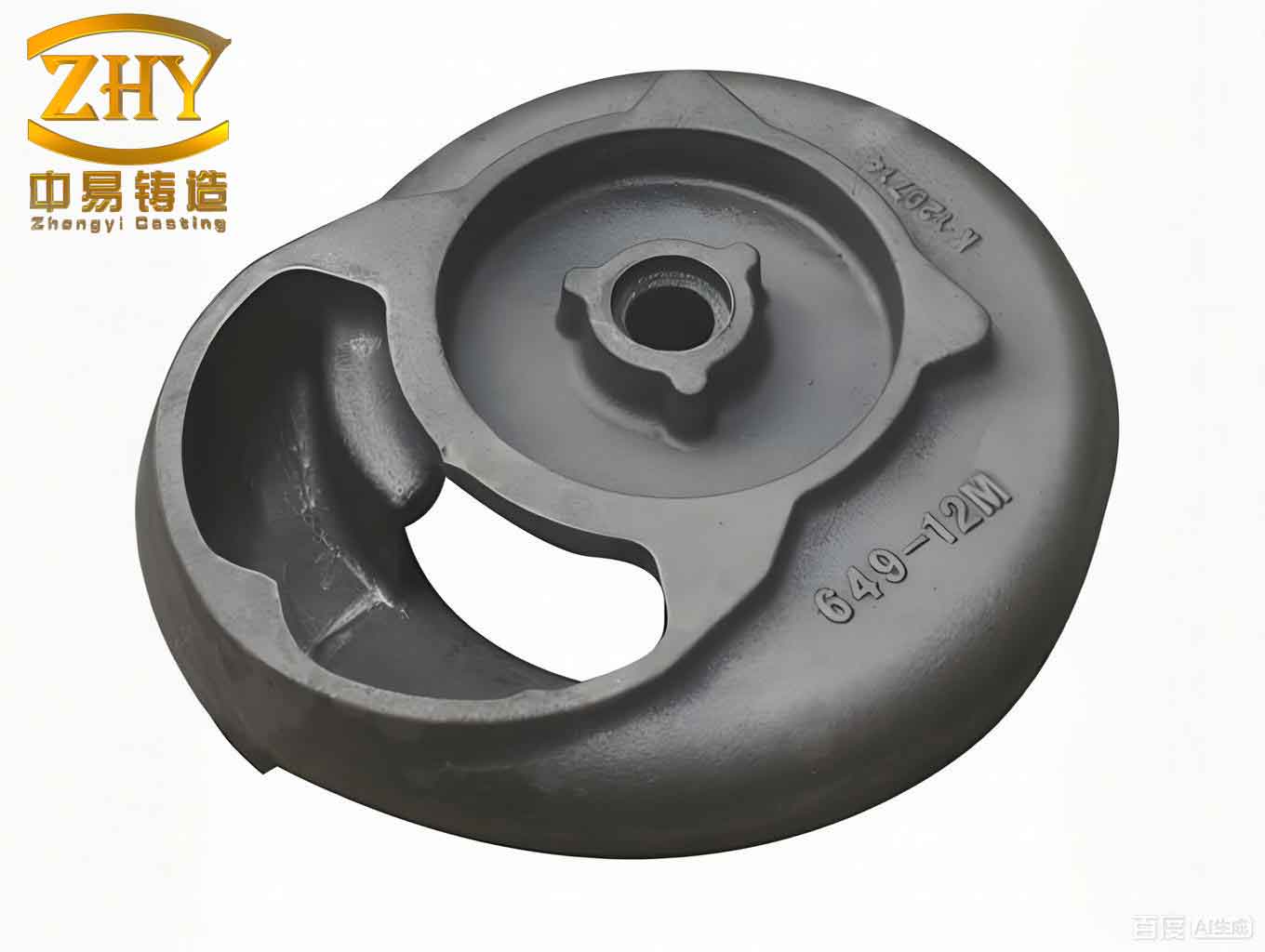
The image above exemplifies the complex geometries achievable through patternless sand milling, leading to high-quality sand casting products. Ensuring clean cavities during machining is paramount for such outcomes. Based on multiple simulation runs, the following relationship between cavity depth and the required inlet pressure to maintain an outlet velocity >3.3 m/s was established and summarized in the table below. This table serves as a crucial reference for process planning.
| Cavity Depth (mm) | Simulated Required Inlet Pressure, $P_{in}$ (MPa, gauge) | Simulated Average Outlet Velocity (m/s) | Exceeds Critical Velocity ($u_c = 3.3$ m/s)? |
|---|---|---|---|
| 20 | 0.10 | 5.8 | Yes |
| 40 | 0.18 | 4.5 | Yes |
| 60 | 0.26 | 4.0 | Yes |
| 80 | 0.35 | 3.7 | Yes |
| 100 | 0.45 | 3.5 | Yes |
The data clearly indicates that a depth-dependent pressure regulation strategy is both feasible and necessary. The general trend can be approximated by a linear relationship for quick estimation: $P_{in}(h) \approx 0.004h + 0.02$, where $h$ is depth in mm. However, for precise control, especially for critical sand casting products with tight tolerances, direct simulation or experimental calibration for specific cavity geometries is recommended.
Experimental validation was performed on a digital patternless casting precision forming machine. The performance of the hollow end mill with adaptive pressure supply was compared against a conventional solid end mill under identical cutting parameters (spindle speed, feed rate, depth of cut). The metric for comparison was the mass of residual sand chips left in the cavity after machining. Cavities with diameters of 100 mm and depths as per the simulation table were machined. For the hollow end mill, the inlet pressure was adjusted in real-time according to the depth using the values from the table above. The results were starkly different, as quantified in the following table.
| Cavity Depth (mm) | Residual Sand Mass – Conventional Mill (g) | Residual Sand Mass – Hollow Mill (g) | Visual Chip Accumulation (Conventional Mill) |
|---|---|---|---|
| 20 | 15.2 | 1.1 | Moderate |
| 40 | 38.7 | 1.8 | Significant |
| 60 | 72.5 | 2.5 | Severe, requiring pauses |
| 80 | N/A (Process failed) | 3.0 | Cavity clogged before completion |
| 100 | N/A (Process failed) | 3.5 | Cavity clogged before completion |
The hollow end mill successfully completed all machining operations with minimal chip residue, while the conventional tool failed at depths beyond 60 mm due to catastrophic chip accumulation. This demonstrates the practical necessity of active sand removal for deep cavity machining in patternless sand mold production. The slight increase in residual mass with depth for the hollow mill is attributed to increased flow path resistance, but it remained negligible for practical purposes. The process stability directly contributes to the reliability of producing defect-free molds for sand casting products.
The real-world application of this technology was tested on a geometrically complex sand mold intended for a cast component with thin walls and small-diameter cylindrical features—a common but challenging class of sand casting products. Using the hollow end mill and the depth-pressure regulation strategy, the entire sand mold was machined successfully in a single setup. The gas pressure was programmed to increase gradually from 0.1 MPa to 0.45 MPa as the tool engaged deeper sections of the mold. This ensured consistent chip evacuation without unnecessary gas consumption or risk of sand erosion in shallow areas. The final cast component produced from this mold exhibited excellent surface finish and dimensional accuracy, validating the entire approach. This application underscores the technology’s readiness for producing high-value, complex sand casting products on demand.
From a broader perspective, the integration of this sand removal technology enhances the sustainability of foundry operations. By eliminating the need for physical patterns, it reduces material waste and energy consumption associated with pattern storage and handling. The dry process with optimized gas usage minimizes environmental impact compared to wet machining or traditional methods. Furthermore, the ability to rapidly machine sand molds accelerates prototyping and small-batch production cycles for sand casting products, making foundries more responsive to market demands. The economic benefits are clear: reduced tooling costs, shorter lead times, and lower inventory requirements for patterns.
In conclusion, my investigation into the sand removal process for patternless sand milling has yielded a robust, simulation-informed methodology. The critical sand removal velocity was established theoretically as $u_c \approx 3.3 \text{ m/s}$. CFD simulations illuminated the internal flow dynamics, leading to a pragmatic depth-dependent pressure regulation scheme to achieve this velocity efficiently. Experimental results conclusively proved the superiority of the actively vented hollow end mill over conventional tools, especially for deep cavities. The successful application to a complex mold demonstrates its immediate industrial relevance for manufacturing a wide variety of sand casting products. Future work will focus on refining the adaptive control algorithms, exploring multi-phase flow models for denser chip loads, and extending the technology to other difficult-to-machine mold materials. The ultimate goal remains to empower foundries with agile, cost-effective, and high-precision manufacturing capabilities for the next generation of sand casting products.