
As someone deeply involved in the foundry industry, I observe the production of sand casting products at a pivotal juncture. The industry’s evolution from labor-intensive practices toward intelligent, automated manufacturing is not merely a trend but a necessity for global competitiveness. This journey hinges on transformative advancements in key areas of foundry equipment and process control. The trajectory for these technologies, particularly concerning the mass production of high-quality sand casting products, can be mapped through their current state, inherent challenges, and defined future goals.
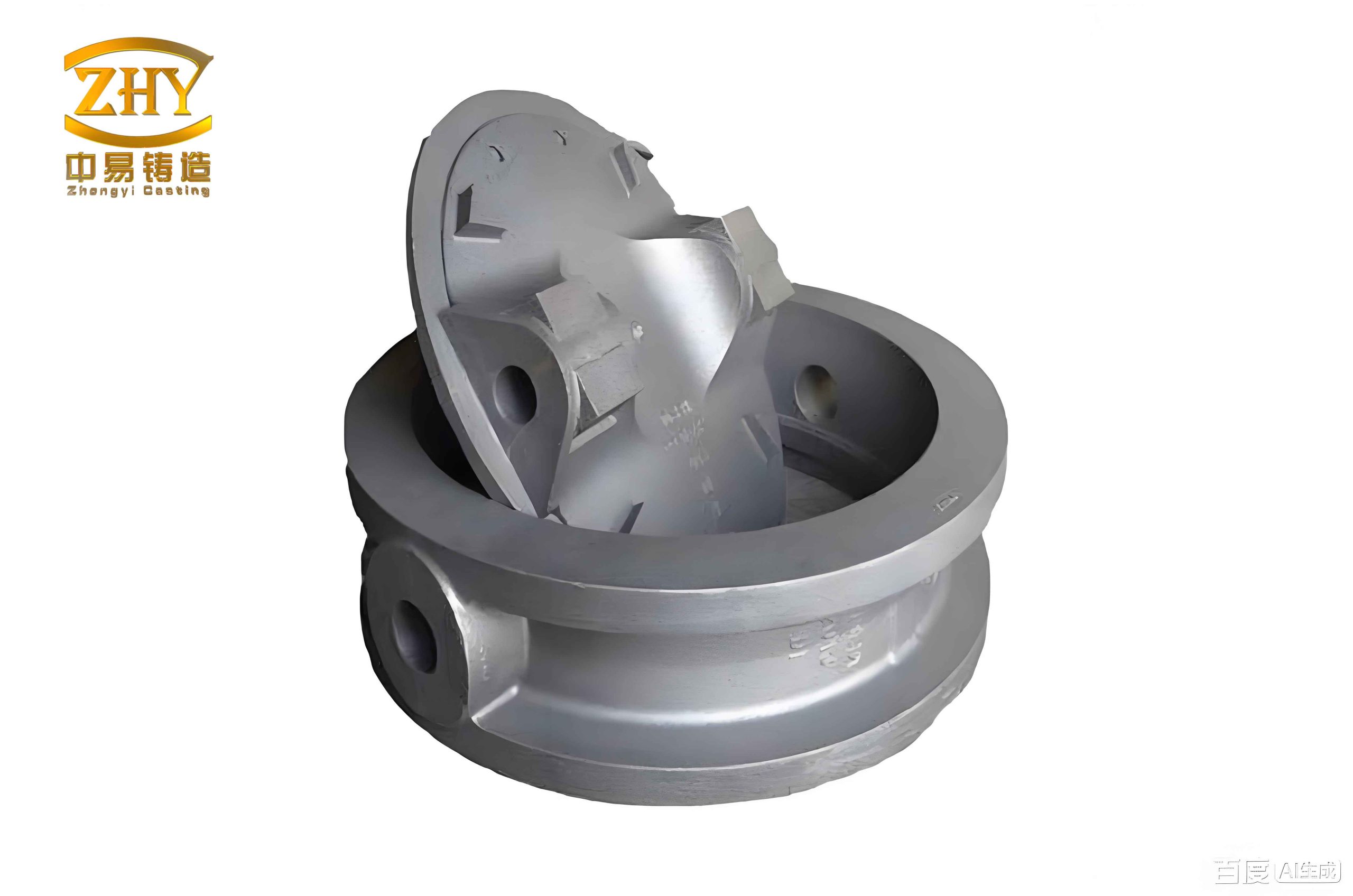
The broad spectrum of sand casting products, from intricate engine blocks to massive machine bases, demands a correspondingly sophisticated suite of post-casting and quality assurance technologies. The path forward is structured around overcoming specific technical bottlenecks to achieve integrated, smart production lines that ensure consistency, efficiency, and excellence in every batch of sand casting products.
1. Cleaning and Fettling Equipment and Technology
The cleaning and fettling stage, which involves removing gates, risers, flash, and sand residue from sand casting products, remains a significant bottleneck. It is often characterized by manual labor, poor working conditions, and low overall efficiency, directly impacting the cost and throughput of finished sand casting products.
1.1 High-Efficiency Online Shot Blasting Technology
Current Status: The prevalent use of offline, standalone shot blasting machines leads to discrete processing, high space occupancy, and considerable maintenance downtime. The wear on the equipment itself during the cleaning of sand casting products exacerbates operational costs.
Challenges: The transition faces the dual challenge of developing robust, continuous online systems that integrate seamlessly with molding lines and overcoming a fragmented domestic equipment manufacturing landscape prone to homogeneous, low-level competition.
Goals:
- By 2020: Develop and proliferate high-efficiency online shot blasting systems to form a domestic stronghold for cleaning sand casting products.
- By 2030: Cultivate leading enterprises with international competitiveness in shot blasting equipment manufacturing.
| Technology Type | Integration Level | Typical Efficiency (Pieces/hr)* | Flexibility for Product Mix | Maintenance Intensity |
|---|---|---|---|---|
| Traditional Offline Standalone | Low (Discrete Cell) | 10 – 30 | High | High |
| High-Efficiency Online | High (In-Line) | 60 – 120+ | Medium (Dedicated Lines) | Medium |
| Future Intelligent System | Very High (Fully Integrated) | 120+ (with adaptive control) | High (with recognition) | Low (Predictive) |
| *Efficiency is highly dependent on the size and complexity of the sand casting products. | ||||
1.2 Sensing and Near-Net-Shape Machining Technology
Current Status: Automated fettling and grinding struggle with the inherent dimensional variability of raw sand casting products. The human ability to perceive and adapt to variations in parting lines, flash thickness, and grinding allowance remains largely unmatched by rigid automation.
Challenges: The core challenge is developing integrated systems that combine machine vision for positional and geometric recognition with force-feedback control for adaptive material removal. This creates a “sensing-acting” loop for finishing sand casting products.
Goals:
- By 2020 (Version 2.0): Implement CNC-based precise positioning systems programmed to handle multiple part geometries on a single fixture.
- By 2030 (Version 3.0): Deploy intelligent grinding systems that utilize real-time sensor feedback (vision, force) to dynamically adjust machining parameters, truly automating the fettling of variable sand casting products.
The required precision for removing a gate can be modeled by an adaptive control equation. Let the target finished surface be defined, and the system detects the actual flash profile. The tool path P(t) must adapt in real-time:
$$ P(t) = P_{programmed}(t) + \Delta P(V(x,y), F(t)) $$
where $\Delta P$ is the path correction based on vision data $V(x,y)$ of the casting’s edge and real-time force feedback $F(t)$ from the grinding tool.
1.3 Complete System Integration Technology
Current Status: The cleaning/fettling department is often a collection of isolated operations. The lack of automated material handling between processes (e.g., from shakeout to cutting to grinding to blasting) creates significant logistical inefficiencies for the flow of sand casting products.
Challenges: Integrating disparate equipment—conveyors, shot blast machines, cutting stations, grinding robots—into a coherent, automated flow requires sophisticated plant-wide logistics, identification, and control software tailored to the diverse shapes and batches of sand casting products.
Goals:
- By 2020: Provide holistic process solutions, selecting and designing成套 equipment for target families of sand casting products produced on a shared line.
- By 2030: Implement full logistics automation solutions, including automatic conveying, storage, identification, sorting, and loading/unloading for one or more types of sand casting products.
2. Pouring Equipment and Technology
Precise and reliable pouring is critical for determining the internal quality and yield of sand casting products. The evolution here is from manual control to fully automated, closed-loop intelligent pouring systems.
2.1 Independent Single-Coil Design for Induction Pouring Furnaces
Current Status: Traditional induction pouring furnaces often use a single, continuous coil, leading to uneven heating. This causes cold spots, particularly in the spout and charging areas, resulting in slag buildup and requiring a constant “heel” of molten metal, which is inefficient for certain sand casting products production schedules.
Challenges: Adopting a modular design with multiple independent, interchangeable coils allows for zone-controlled heating. The challenge lies in the engineering of reliable electrical connections, independent cooling circuits, and control systems for each coil segment.
Goals:
- By 2020: Design and manufacture furnace coils comprising multiple independent, bridge-connected segments, each with its own control, cooling, and temperature monitoring.
- By 2030: Widespread adoption of induction pouring furnaces featuring this interchangeable, independently controlled coil technology to improve thermal uniformity and efficiency for producing sand casting products.
| Design Feature | Traditional Single Coil | Modular Independent Coils |
|---|---|---|
| Heating Uniformity | Low (Gradient along axis) | High (Zone-controlled) |
| Temperature Control | Global (One zone) | Localized (Multiple zones) |
| Maintenance | Difficult (Full coil replacement) | Easier (Individual segment swap) |
| Required Metal “Heel” | Large | Potentially Smaller |
| Energy Efficiency for a given batch of sand casting products | Lower | Higher (Reduced standby losses) |
2.2 Intelligent Control Systems for the Pouring Process
Current Status: Many automated pouring systems lack precise, real-time control over key parameters. Maintaining a constant pouring cup level or dynamically adjusting flow based on mold conditions is not standard, affecting the consistency of sand casting products.
Challenges: Developing robust sensor systems (e.g., optical cameras for cup level, float sensors for launder level) and reliable algorithms to control furnace pressure or pump speed in a foundry environment filled with heat, dust, and electromagnetic interference.
Goals:
- By 2020: Research and develop high-precision, high-reliability pouring control systems based on optical monitoring and float probe units.
- By 2030: Promote the application of these and other smart pouring control systems to ensure repeatable quality for sand casting products.
The core control logic for maintaining a constant pouring cup level can be described as a feedback loop. The furnace pressure $P_f$ is adjusted based on the error $e(t)$ between the desired cup level $h_d$ and the measured level $h_m(t)$:
$$ P_f(t) = K_p \cdot e(t) + K_i \int e(t) dt + K_d \frac{de(t)}{dt} $$
where $e(t) = h_d – h_m(t)$, and $K_p$, $K_i$, $K_d$ are controller tuning constants. This ensures a consistent fill for each mold producing sand casting products.
3. Inspection Technology and Equipment
The drive toward “smart foundries” for sand casting products is fundamentally underpinned by advanced inspection technologies, moving from post-mortem analysis to real-time, in-process monitoring and control.
3.1 Comprehensive On-the-Spot Melt Quality Assessment
Current Status: Melt quality checks are often fragmented—separate tests for chemistry, temperature, and thermal analysis. A lack of integrated assessment leads to conservative and sometimes wasteful practices, like over-inoculation, which can degrade the final properties of sand casting products.
Challenges: The variability of raw materials, especially for smaller foundries, demands robust evaluation models that can adapt. The challenge is to create systems that provide a holistic, rapid assessment of metallurgical state, cleanliness, and inoculability specific to the alloy for sand casting products.
Goals:
- By 2020: Systematically design evaluation frameworks and develop technologies/devices for on-the-spot assessment of melt properties, purity, and inoculability.
- By 2030: Construct dynamic melt adjustment systems based on real-time assessment data.
3.2 Online Monitoring of Molding and Core-Making Quality
Current Status: Online monitoring, where it exists, is often limited to basic green sand properties like moisture and compactability. Critical parameters for other sand systems or core dimensions are rarely monitored in-process, posing a risk to the dimensional accuracy of sand casting products.
Challenges: Expanding the monitored parameters to include effective clay, gas evolution, core geometry, and binder distribution requires novel, rugged sensors and a systems approach to data integration.
Goals:
- By 2020: Design comprehensive monitoring systems and develop devices for sand composition, performance parameters, and core shape/size.
- By 2030: Build and apply integrated sand quality monitoring systems based on multiple sensing units.
3.3 Online Monitoring of Pouring and Solidification Processes
Current Status: These critical phases are largely “black boxes” in production. Few foundries monitor dynamic pouring parameters or track solidification in real-time to predict shrinkage or stress in sand casting products.
Challenges: Developing non-invasive, reliable sensors to track fast-moving molten metal during pouring and to internally monitor cooling curves and stress development within a solidifying sand mold.
Goals:
- By 2020: Develop online monitoring technologies for pouring speed, temperature, and mold fill level to pair with automatic pouring equipment.
- By 2030: Research and develop “through-mold” online monitoring technologies for the solidification process of sand casting products.
3.4 Online Defect Inspection for Castings
Current Status: Inspection is primarily offline, relying on sampling or post-cleaning NDT for critical sand casting products. 100% online inspection of hot, as-cast parts is virtually non-existent, representing a significant quality control gap.
Challenges: The high temperature, scale, and uneven surfaces of freshly shaken-out castings render many conventional NDT methods (like liquid penetrant or standard ultrasound) unusable. New physical principles and methods are required.
Goals:
- By 2020: Conduct foundational research into new methods and principles for online non-destructive defect inspection.
- By 2030: Develop and apply grouped technologies and equipment for online defect inspection of sand casting products.
| Inspection Area | 2020 Goal (Development/Initial Application) | 2030 Goal (Advanced Integration & Systemization) | Key Impact on Sand Casting Products |
|---|---|---|---|
| Melt Quality (Lab) | Develop intelligent thermal analysis, thermophysical & solidification characteristic analyzers. | Build integrated lab systems (Spectrometer, Analyzers, Microscopy). | Predicts & controls microstructure and mechanical properties. |
| Molding Sand Quality (Lab) | Upgrade traditional sand testers; develop new devices via industry-academia collaboration. | Establish smart lab systems for green & chemical sand properties (ambient & high-temp). | Ensures mold stability, reduces defects related to sand (e.g., veining, erosion). |
| Casting Quality (Lab) | Select and apply appropriate NDT methods (UT, RT, MT, PT). | Co-develop lab-based comprehensive casting quality prediction & evaluation systems. | Provides definitive quality certification and failure analysis capability. |
The analysis of cooling curve data from thermal analysis is fundamental for predicting the quality of sand casting products. Key parameters are derived from the first derivative of the temperature-time curve $T(t)$:
$$ \frac{dT}{dt} = f(T) $$
Critical points like the liquidus temperature $T_L$, eutectic recalescence $\Delta T_{eu}$, and solidus temperature $T_S$ are extracted. For ductile iron, the growth potential of graphite nodules, crucial for the durability of sand casting products, can be estimated from:
$$ \text{Growth Potential} \propto \frac{\Delta T_{eu}}{t_{eu}} $$
where $t_{eu}$ is the eutectic freezing time.
4. Consolidated Technology Roadmap
Synthesizing the goals across all domains provides a clear, unified trajectory for the equipment and technology enabling the future production of premium sand casting products. This integrated roadmap charts the progression from automation to full system intelligence.
| Technology Domain | Phase 1 (By 2020) | Transition Phase | Phase 2 (By 2030) | Ultimate Objective for Sand Casting Products |
|---|---|---|---|---|
| Cleaning & Fettling | Adopt online shot blasting; Implement programmable CNC/robot stations. | Integrate material handling; Develop sensor prototypes (vision/force). | Full line logistics automation; Deploy sensor-driven adaptive machining (Smart 3.0). | Fully automated, flexible finishing lines with zero manual intervention. |
| Pouring | Develop modular coil furnaces; Research optical/float control systems. | Commercialize advanced furnace designs; Test closed-loop control in production. | Widespread use of intelligent pouring systems with real-time adaptive control. | Precise, consistent, and efficient pour for every mold, maximizing yield and quality. |
| Inspection & Control | Develop comprehensive on-site melt & sand testers; Research new online defect detection methods. | Deploy multi-parameter sand monitors; Integrate pouring process sensors. | Implement full-process digital twin with real-time monitoring & predictive control for melt, mold, pour, and solidification. | 100% real-time quality assurance, predictive defect prevention, and data-driven process optimization. |
| Overall System | Island automation; Siloed data collection. | Connected equipment; Centralized data lakes. | Cyber-Physical Production System; AI-driven optimization. | The autonomous, smart foundry producing high-integrity sand casting products with minimal human oversight. |
This journey from today’s state to the 2030 vision represents a comprehensive industrial upgrade. It requires sustained investment in R&D, collaboration across industry and academia, and a strategic focus on developing the core common technologies highlighted. The successful execution of this roadmap will not only solve long-standing bottlenecks but will fundamentally redefine the efficiency, quality, and sustainability of manufacturing sand casting products, securing a competitive edge in the era of advanced manufacturing.