
In modern manufacturing, the production of complex components like casings for aerospace applications presents significant challenges due to intricate internal cavities, thin walls, and stringent performance requirements. Traditional methods, such as manual mold assembly, often lead to poor quality, low efficiency, and high resource waste, making it difficult to achieve rapid prototyping and validation. As a result, there is a growing need to integrate advanced technologies like numerical simulation and additive manufacturing to revolutionize the casting process. In this study, I explore an integrated gravity casting approach for a helicopter transmission intermediate casing, leveraging ProCAST simulation software and sand mold 3D printing. This combination aims to enhance the efficiency, accuracy, and reliability of producing high-quality sand casting products, ultimately reducing development cycles and improving competitiveness in high-tech industries.
The casing under investigation serves as a critical load-bearing structure in helicopter transmitters, located between the fan casing and high-pressure compressor. It operates under extreme conditions, including temperature fluctuations, vibration, and high pressure, necessitating exceptional casting quality. Historically, manufacturing such components relied on labor-intensive techniques that were prone to defects and inconsistencies. However, by merging the material versatility and established quality systems of traditional casting with the speed, flexibility, and complexity-handling capabilities of 3D printing, a new production paradigm emerges. This approach not only automates processes but also promotes sustainability by minimizing waste. My research focuses on optimizing the entire gravity casting process through simulation-driven design and rapid sand mold fabrication, with a particular emphasis on achieving defect-free sand casting products for demanding applications.
The methodology adopted in this study involves a systematic workflow: first, designing the 3D model and gating system using CAD software; second, conducting numerical simulations with ProCAST to analyze filling and solidification behavior; third, optimizing the process parameters based on simulation outcomes; fourth, fabricating sand molds via 3D printing; and finally, performing actual gravity casting and quality inspections. This iterative process ensures that the final sand casting products meet the required standards while significantly shortening lead times. By incorporating simulation early in the design phase, I can predict and mitigate potential issues, such as shrinkage porosity or turbulence, which are common pitfalls in sand casting products. The integration of 3D printing allows for the direct production of complex sand molds without the need for patterns, further accelerating production and enabling the creation of intricate geometries that are challenging with conventional methods.
To begin, I developed a detailed 3D model of the casing using UG software, as illustrated in the design phase. The component features dimensions of 343 mm × 337 mm × 480 mm, with wall thicknesses ranging from 6 mm to 37 mm, and includes numerous oil passages and cooling channels within its structure. This complexity underscores the importance of a robust casting process to ensure integrity and performance. The initial gating system was designed as a two-tiered runner and riser configuration, complemented by chills in critical areas to promote directional solidification. The casting material selected was ZL114A aluminum alloy, known for its excellent castability and mechanical properties, commonly used in aerospace sand casting products. The gating system was calculated using principles like the “large hole outflow” theory, which governs metal flow dynamics in gravity casting. The cross-sectional area ratios for the gating system were established as follows:
$$A_{\text{sprue}} : A_{\text{runner}} : A_{\text{ingate}} = 1 : (2 \sim 4) : (2 \sim 4)$$
This ratio helps determine the pressure head at the ingate, which is crucial for controlling filling velocity and minimizing defects. The ingate area can be computed using the formula:
$$A_{\text{ingate}} = \frac{G_L}{\rho_L \cdot \mu \cdot t \cdot (2g h_p)^{1/2}}$$
where \(G_L\) is the mass of molten metal flowing through the lowest cross-section, \(\rho_L\) is the density of the metal, \(\mu\) is the flow loss coefficient, \(t\) is the pouring time, \(g\) is gravitational acceleration, and \(h_p\) is the pressure head at the ingate. For a four-unit gating system, \(h_p\) is derived from:
$$h_p = \frac{k_2^2 \cdot H_p}{1 + k_1^2 + k_2^2}$$
with \(k_1\) and \(k_2\) representing area ratios, and \(H_p\) as the static head height, calculated as \(H_p = H_0 – 0.5h_c\), where \(H_0\) is the total sprue height and \(h_c\) is the casting height. Based on these calculations, the sprue diameter was set to 25 mm initially to reduce turbulence and ensure complete filling. To account for sand mold 3D printing tolerances, a shrinkage allowance of 0.1% was incorporated into the model.
The simulation phase involved importing the model into ProCAST for meshing and parameter setup. A tetrahedral gradient mesh was employed, with element sizes of 4 mm for the casting and 20 mm for the sand mold, resulting in 9,761,367 volume elements. Material properties were assigned: ZL114A for the casting and gating system, furan resin sand (CBFMS-M) for the mold, gray iron for chills, and a high filter for the filter screen. Boundary conditions included interfacial heat transfer coefficients: 500 W/(m²·°C) between casting and sand, 2000 W/(m²·°C) between casting and chills, and 500 W/(m²·°C) between chills and sand. The mold was preheated to 170°C and cooled to ambient temperature before pouring, with vents set as pipes containing air at 20°C. Pouring parameters were an initial temperature of 730°C and a time of 6 seconds, followed by air cooling. The simulation outcomes revealed that filling was smooth and sequential, but solidification exhibited uneven rates, leading to shrinkage defects in the original design. This highlighted the need for optimization to achieve consistent solidification and high-quality sand casting products.
Through iterative simulations, I optimized the process by adjusting several key factors. The chills were redesigned to conform to the casing’s internal contours, ensuring uniform heat dissipation and eliminating isolated liquid regions. The riser dimensions were increased to enhance feeding capacity, and the sprue diameter was enlarged to 30 mm with an added height of 100 mm to boost pouring pressure. The pouring temperature was lowered to 720°C, and the time extended to 8 seconds to promote better mold filling and solidification control. These changes resulted in a more synchronized solidification process, with the casting body solidifying at 45.9% overall solidification in 233.09 seconds, compared to 72.1% in 335.08 seconds for the initial design. The reduction in solidification time by 102 seconds significantly minimized shrinkage porosity, confining defects primarily to non-critical areas like risers and runners. This optimization demonstrates how simulation can refine parameters for producing superior sand casting products, as summarized in Table 1 below.
| Parameter | Original Design | Optimized Design |
|---|---|---|
| Pouring Temperature (°C) | 730 | 720 |
| Pouring Time (s) | 6 | 8 |
| Sprue Diameter (mm) | 25 | 30 |
| Chill Layout | Loosely arranged | Conformal to contours |
| Solidification Time (s) | 335.08 | 233.09 |
| Overall Solidification at Casting Completion (%) | 72.1 | 45.9 |
| Defect Concentration | Widespread in casting | Limited to non-critical areas |
The optimized simulation results indicated that the filling process remained stable, with minimal turbulence, and solidification approached simultaneity across the casting body. This is crucial for avoiding defects like shrinkage cavities, which are common failures in sand casting products. The mathematical representation of heat transfer during solidification can be expressed using Fourier’s law, modified for casting conditions:
$$q = -k \frac{\partial T}{\partial x}$$
where \(q\) is the heat flux, \(k\) is the thermal conductivity, and \(\frac{\partial T}{\partial x}\) is the temperature gradient. In this case, the improved chill design enhanced heat extraction, reducing thermal gradients and promoting uniform cooling. Additionally, the Niyama criterion, often used to predict shrinkage porosity, can be applied:
$$Ny = \frac{G}{\sqrt{T}}$$
where \(G\) is the temperature gradient and \(T\) is the local solidification time. Lower Niyama values indicate a higher risk of porosity; by optimizing chills and pouring parameters, I achieved higher \(G\) values, thus reducing porosity risks in the final sand casting products. These insights underscore the value of numerical simulation in advancing sand casting technology.
Following simulation, the optimized model was prepared for sand mold 3D printing. The mold fabrication utilized a binder jetting process with CB sand (70-140 mesh) and a furan resin binder. The printer parameters included a layer thickness of 0.3 mm and a build volume of 800 mm × 600 mm × 500 mm, enabling the production of intricate mold cavities without manual intervention. This step exemplifies how additive manufacturing transforms traditional sand casting by enabling rapid, precise mold creation for complex sand casting products. The printed sand molds were then assembled, and gravity casting was performed using the optimized parameters: molten ZL114A alloy at 720°C poured over 8 seconds. After cooling and shakeout, the casting was inspected for quality. The results showed a smooth surface finish, complete filling, and no visible defects, confirming the simulation predictions. Non-destructive testing via X-ray revealed no porosity in critical zones like oil ports and assembly holes, as depicted in the inspection phase. Dimensional accuracy met specified tolerances, validating the process for high-precision sand casting products.
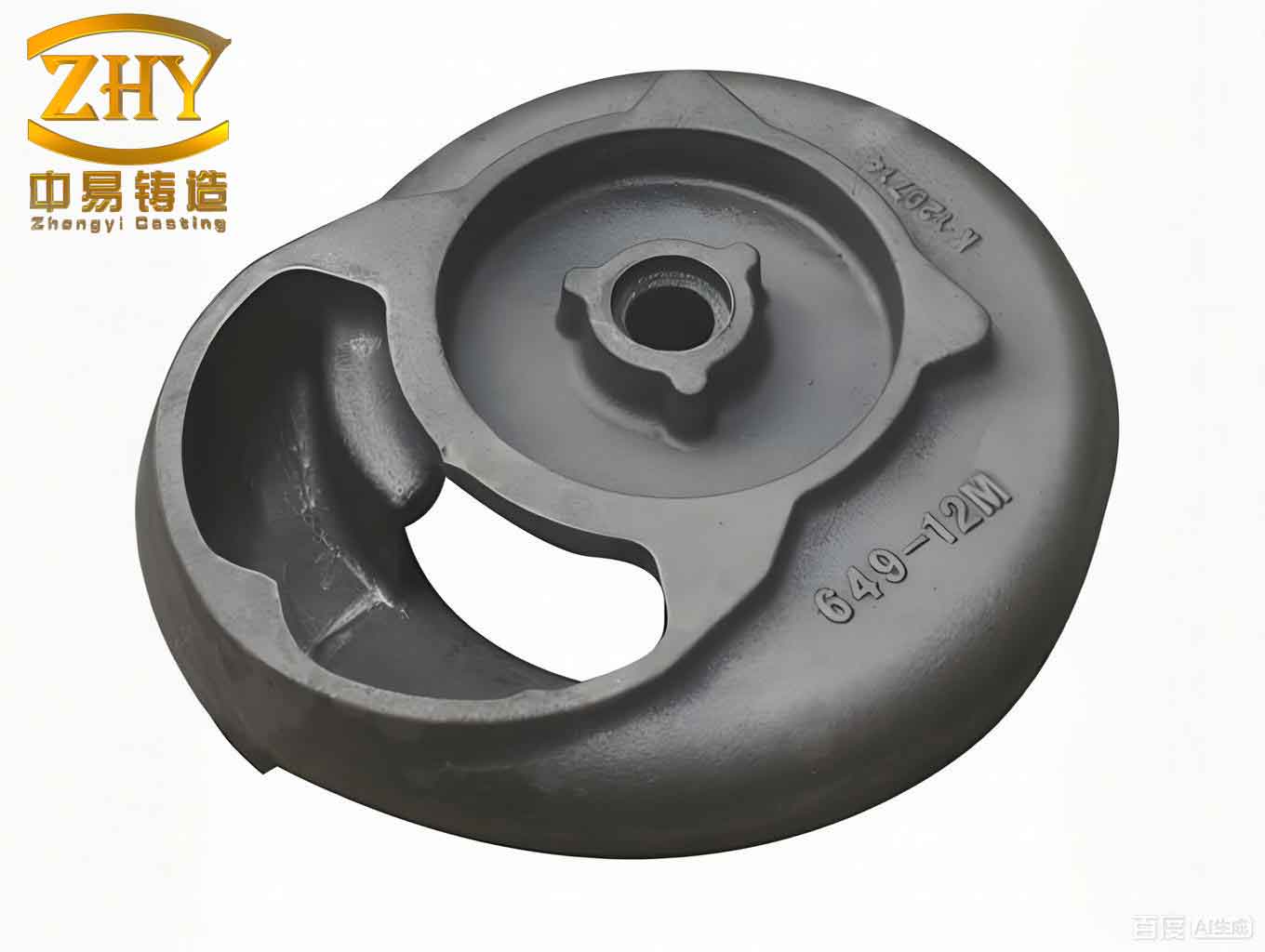
The integration of simulation and 3D printing not only accelerated the prototyping cycle—reducing it to one-quarter of the traditional time—but also ensured higher quality and consistency. This approach is particularly beneficial for low-volume or custom sand casting products, where rapid iteration and validation are essential. By eliminating the need for physical patterns and enabling digital tweaks based on simulation feedback, manufacturers can achieve significant cost savings and faster time-to-market. Moreover, the environmental benefits are notable, as 3D printing reduces sand waste and energy consumption compared to conventional mold-making. In the broader context, this methodology paves the way for functional-driven design, where components are optimized for performance rather than manufacturability constraints, leading to integrated, lightweight sand casting products for advanced applications.
To further illustrate the process efficiency, I have summarized key performance metrics in Table 2, which compares traditional and integrated methods for producing sand casting products. This highlights the transformative impact of combining simulation and 3D printing.
| Aspect | Traditional Method | Integrated Method (Simulation + 3D Printing) |
|---|---|---|
| Design to Prototype Time | Weeks to months | Days to weeks |
| Mold Fabrication Time | High (manual labor) | Low (automated printing) |
| Material Waste | Significant (pattern making) | Minimal (direct printing) |
| Defect Rate | High (trial-and-error) | Low (simulation-optimized) |
| Flexibility for Complex Geometries | Limited | High |
| Overall Cost for Small Batches | High | Reduced |
In conclusion, this study demonstrates the effectiveness of using numerical simulation and sand mold 3D printing for the gravity casting of complex casings. The optimized process parameters—720°C pouring temperature, 8-second pouring time, and conformal chills—yielded castings with excellent integrity and minimal defects. The simulation accurately predicted outcomes, validating its role in process design. The rapid mold fabrication via 3D printing slashed development time, making it feasible to produce high-quality sand casting products efficiently. This integrated approach not only addresses the limitations of traditional casting but also opens new avenues for innovation in manufacturing. Future work could explore other alloys, larger components, or hybrid processes to further enhance the capabilities for sand casting products. As industries demand more complex and reliable components, the synergy of simulation and additive manufacturing will undoubtedly play a pivotal role in shaping the future of sand casting technology.
From a practical standpoint, the lessons learned here can be applied to various sand casting products beyond aerospace, such as automotive parts or industrial machinery. The key takeaway is that digital tools like ProCAST and 3D printing empower manufacturers to iterate quickly, reduce waste, and achieve superior quality. By embracing these technologies, the sand casting industry can transition towards more sustainable and competitive production models. Ultimately, this research contributes to the ongoing evolution of manufacturing, where digitalization and automation converge to create better sand casting products for a wide range of applications.