
In my extensive work with sand casting products, particularly for marine applications, I have encountered numerous challenges associated with producing pressure-tight components. One of the most demanding projects involved a special-shaped triple valve body for a ship’s seawater pipeline system. This sand casting product, with its highly disparate wall thicknesses and a stringent 4.5 MPa hydraulic pressure test requirement, presented a significant manufacturing hurdle. The original design specified tin bronze ZCuSn10Zn2, a material historically associated with leak rates exceeding 60% in sand casting production. This experience prompted a deep dive into material science and process engineering to develop a reliable manufacturing solution for such critical sand casting products.
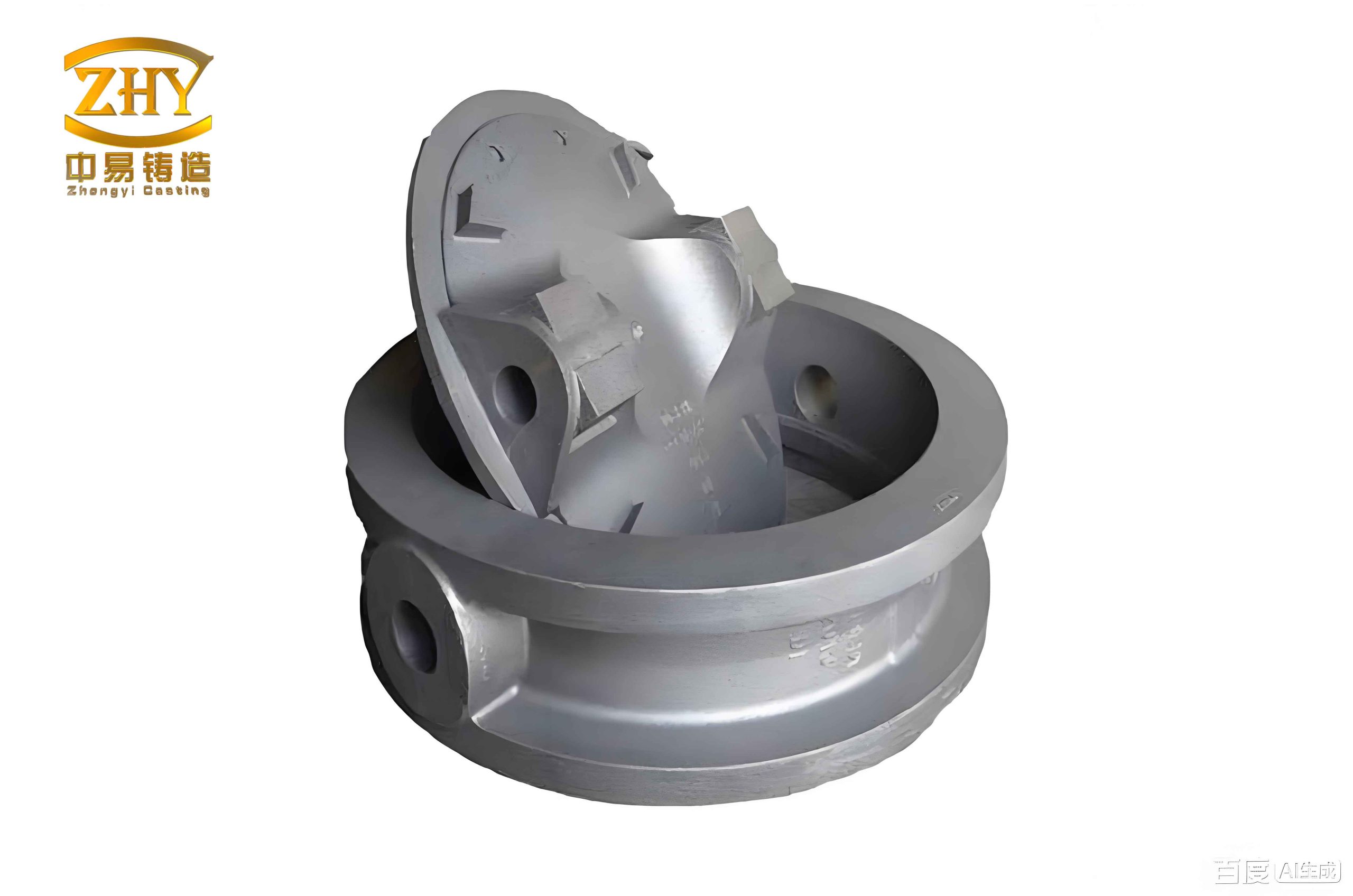
The core issue with the original valve body lay in its geometry. As a quintessential example of complex sand casting products, it featured three flanges: a large conical flange (230 mm OD, 34 mm thick), a square flange (115×115 mm, 14 mm thick), and a smaller circular flange (135 mm OD, 14 mm thick). The main valve shell had a wall thickness of 10 mm, while connecting pipes were only 6 mm thick. This design created drastic thermal gradients during solidification. The conical flange, with a thickness over four times greater than its adjacent sections, acted as a massive hot spot. In alloys with a wide freezing range, like tin bronze, this leads to severe micro-shrinkage (porosity) and hot tearing at the junctions, creating paths for leakage under pressure. Similarly, a triangular block connecting two flanges, with a local thickness of 40 mm, presented another prone area for defects. Successfully producing such sand casting products requires not just skillful patternmaking but a holistic approach to material and method.
The pursuit of quality in sand casting products often begins with a critical evaluation of the specified material. Tin bronze ZCuSn10Zn2 is renowned for its wear resistance and good corrosion resistance in static or low-velocity seawater. However, its fundamental solidification characteristic is “mushy” or pasty freezing, due to a very wide crystallization temperature range. This mode of solidification makes it extremely susceptible to dispersed microporosity and inverse segregation, leading to poor density and low pressure tightness. For sand casting products meant to withstand high pressure, this is a critical flaw. The allowable pressure for ZCuSn10Zn2 sand castings is typically limited to 1.2-1.5 MPa, far below the 4.5 MPa requirement. A comparative analysis of potential alternative materials was essential.
I turned my attention to silicon brass, specifically ZCuZn16Si4. The rationale was its significantly different solidification behavior. Silicon brasses solidify with a more directional, skin-forming mode, resulting in a denser, more sound casting structure better suited for pressure applications. The following table summarizes the key property differences between the two alloys relevant for sand casting products.
| Property / Alloy | ZCuSn10Zn2 (Tin Bronze) | ZCuZn16Si4 (Silicon Brass) |
|---|---|---|
| Primary Solidification Mode | Mushy (Pasty) | Directional (Skin-forming) |
| Typical Max Pressure for Sand Castings | 1.2 – 1.5 MPa | Up to 5.0 MPa |
| Tensile Strength (min, MPa) | 240 | 345 |
| Elongation (min, %) | 12 | 15 |
| Brinell Hardness (HB) | 70 | 90 |
| Shrinkage & Hot Tearing Tendency | High | Moderate to Low |
| Oxidation & Gas Absorption Tendency | Low | Moderate (requires careful melting) |
The superior mechanical properties of ZCuZn16Si4 were clear. However, the perceived barrier was corrosion resistance in seawater. A detailed review of corrosion data revealed an important insight. The corrosion rate of copper-zinc alloys in seawater is strongly influenced by zinc content. While data for ZCuZn16Si4 is scarce, its very high copper content (79-81%) and consequently low zinc content (~16.5%) compared to other brasses suggest excellent performance. For instance, common brass ZCuZn38 corrodes at about 0.258 mm/year, while complex brushes like ZCuZn40Pb2 corrode at 0.0148 mm/year. It can be reasonably estimated that ZCuZn16Si4 would exhibit a corrosion rate (CR) on the order of:
$$ CR_{ZCuZn16Si4} \leq 0.015 \, \text{mm/year} $$
This implies that over a 30-year service life, the maximum wall thickness loss for our sand casting product would be:
$$ \Delta t = CR \times T = 0.015 \, \text{mm/year} \times 30 \, \text{years} = 0.45 \, \text{mm} $$
Given the minimum wall thickness of the valve body is 8 mm (after machining), this constitutes a loss of only about 5.6%. In practice, dimensional variations from the sand casting process itself (e.g., mold wall movement) often exceed this value. Therefore, the corrosion resistance of ZCuZn16Si4 is more than adequate for this application, and its vastly superior castability and pressure tightness make it the materially superior choice for such demanding sand casting products. This technical argument ultimately led to the official material substitution.
With the material finalized, the next phase was designing a robust sand casting process tailored for ZCuZn16Si4. The goal was to manage solidification to prevent shrinkage porosity in thick sections, minimize thermal stress to avoid hot tears, and control melt quality to prevent oxide inclusions—a known risk with silicon brasses. The process design for these sand casting products revolves around several interlocked parameters: pattern allowances, gating and feeding, chilling, and pouring temperature.
Pattern Design and Process Parameters: For sand casting products with complex geometries, allowances must account for both shrinkage and potential core shifts. The outer mold used green sand for faster cooling of the external surfaces, while cores were made from chromite sand to chill the interior. Differential shrinkage was applied: a patternmaker’s shrinkage allowance of 1.5% for the green sand mold and 0.8% for the chromite sand cores. Machining allowances were strategically placed: 6 mm on the conical face of the large flange, 5 mm on other flange peripheries, and 5 mm on critical internal surfaces to accommodate any core deflection.
Gating and Feeding System Design: The feeding system is the heart of producing sound sand casting products. A horizontal parting line was chosen. To effectively feed the massive conical flange (44 mm thick after machining) and the triangular block, three risers were deployed:
- A large side riser (Ø100 mm x 160 mm) adjacent to the conical flange, with a pad (feed aid) on the flange.
- A smaller side riser (Ø80 mm x 120 mm) by the small circular flange.
- An open top riser (140x45x160 mm) above the square flange.
This arrangement provided balanced feeding to the three major thermal centers. The gating system was designed to be “pressurized” (choke at the sprue base) but incorporated a critical feature for melt cleanliness: a ceramic foam filter. The sprue diameter was 30 mm. The filter was placed vertically in the runner, with the runner cross-section enlarged to 2.5-3 times its normal area on both sides of the filter to facilitate metal flow. The system was therefore a “pressurized-with-filter” type, where metal flows: Pouring Basin → Sprue → Enlarged Runner → Ceramic Filter → Enlarged Runner → Risers → Casting. This design significantly reduces turbulent entry and filters out oxide bi-films, a common defect source in copper alloy sand casting products. The yield was approximately 52%.
The use of ceramic filters in copper alloy sand casting products has specific constraints. Due to the lower pouring temperature of copper alloys compared to steel or iron, their flow-through capability is limited. A general rule derived from practice for sand casting products is:
- For pouring weights > 60 kg, only porous sand filters should be used, as ceramic filters may cause mis-runs.
- For pouring weights ≤ 60 kg (like this valve body at 52 kg), ceramic filters can be used for critical castings to achieve superior inclusion control.
Chill Design: Riser alone is insufficient for very thick sections in sand casting products; chilling is required to promote directional solidification towards the riser. Graphite chills were strategically placed:
- A full ring chill (4 segments, 25 mm thick) on the outer face of the conical flange.
- A partial chill (15 mm thick) on the lower outer face of the square flange.
- Internal ring chills (25 mm thick) in the valve cavity adjacent to the square and circular flange entries.
The placement and size of chills can be estimated using modulus calculations. The modulus (M) of a section is its volume (V) divided by its cooling surface area (Ac): $$ M = \frac{V}{A_c} $$. For the conical flange, the modulus was high, necessitating both a large riser and a significant chill to reduce its effective modulus and establish a solidification gradient towards the riser.
Pouring Temperature and Melt Quality Control: For this medium-section sand casting product, a pouring temperature of 960-980°C was selected. This is high enough to ensure fluidity for thin sections but low enough to minimize gas solubility and overall shrinkage volume. Melt quality for ZCuZn16Si4 is paramount due to its tendency to absorb hydrogen and form oxides. Standard degassing practices were employed. A simple test for gas content involves observing a solidified sample in a small test mold: a slightly concave surface indicates acceptable gas levels, while a flat or convex surface signals high gas content requiring further treatment before pouring. This step is non-negotiable for high-integrity sand casting products.
The interplay of these factors—material, feeding, chilling, and pouring—defines the success of manufacturing complex sand casting products. To summarize the key process parameters for this valve body, the following table provides an overview:
| Process Parameter | Specification / Value | Rationale |
|---|---|---|
| Alloy | ZCuZn16Si4 (Silicon Brass) | Superior pressure tightness and adequate seawater corrosion resistance for sand casting products. |
| Mold Type | Green Sand (Mold), Chromite Sand (Cores) | Faster cooling for external and internal surfaces to refine grain structure. |
| Pattern Shrinkage | 1.5% (Mold), 0.8% (Core) | Accounts for differential contraction between mold and core materials. |
| Riser System | 3 Risers (2 side, 1 top) | Balanced feeding for three major thermal centers in the sand casting product. |
| Gating System | Pressurized, with Ceramic Filter | Controls fill velocity and filters oxides to improve integrity of sand casting products. |
| Chill Material & Placement | Graphite chills on thick flange faces and internal hot spots | Promotes directional solidification, prevents isolated hot spots and shrinkage. |
| Pouring Temperature | 960 – 980 °C | Optimal for fluidity while minimizing gas pickup and shrinkage. |
| Shakeout | At dull red heat (~600°C) | Early shakeout for faster cooling promotes a denser surface layer on sand casting products. |
The implementation of this optimized process for producing these specific sand casting products yielded transformative results. Over multiple production runs, the leak rate under the 4.5 MPa pressure test plummeted from the historical high of over 60% with tin bronze to a consistent rate below 8% with silicon brass. This dramatic improvement underscores the profound impact of integrated material and process optimization in sand casting. The successful batch production validated all technical decisions: the material substitution was chemically sound, the gating system effectively minimized inclusions, and the combined riser-chill system successfully controlled solidification in the problematic thick sections. Each of these sand casting products now reliably meets the stringent performance criteria.
This case study offers several generalized conclusions for engineers and foundry specialists working on demanding sand casting products. First, material selection must go beyond traditional handbooks and consider the specific manufacturing process and performance requirement. An alloy with marginally better corrosion resistance but poor castability can be a poor choice for high-pressure sand casting products. Second, for complex geometries with varying sections, a multi-pronged approach to solidification control is essential—relying solely on risers is often insufficient. The strategic use of chills is critical for managing solidification in sand casting products. Third, melt quality and filling control are paramount, especially for alloys prone to oxidation. The incorporation of filters, while requiring careful design to avoid mis-runs, can significantly enhance the reliability of sand casting products. Finally, the economic and quality benefits of such optimization are substantial, reducing scrap rates, rework, and warranty claims.
The principles demonstrated here—analytical material comparison, systematic feeding and chilling design, and controlled melting and pouring—are universally applicable to enhancing the quality of sand casting products. Whether for marine valves, pump casings, or other complex components, a scientific approach to sand casting process design is the key to achieving consistent, high-integrity results. The journey from a 60% failure rate to under 8% was not merely a change of metal; it was a testament to the depth of understanding required to master the art and science of producing reliable sand casting products.