
The railway coupler is a critical safety component responsible for linking rail vehicles and transmitting massive traction and buffering forces. Its operational reliability under extreme dynamic loads and harsh environmental conditions necessitates exceptional mechanical properties, including high strength, superior toughness, and excellent fatigue resistance. Any internal flaw, such as shrinkage porosity, gas pores, or particularly hot tears, can act as a stress concentrator and lead to catastrophic failure. Therefore, achieving a sound, dense, and defect-free internal structure is paramount in coupler manufacturing. Traditional sand casting methods can struggle with the geometric complexity and stringent quality requirements of modern couplers. This is where the investment casting process demonstrates significant advantages, offering the capability to produce near-net-shape components with excellent surface finish, dimensional accuracy, and the potential for superior metallurgical integrity.
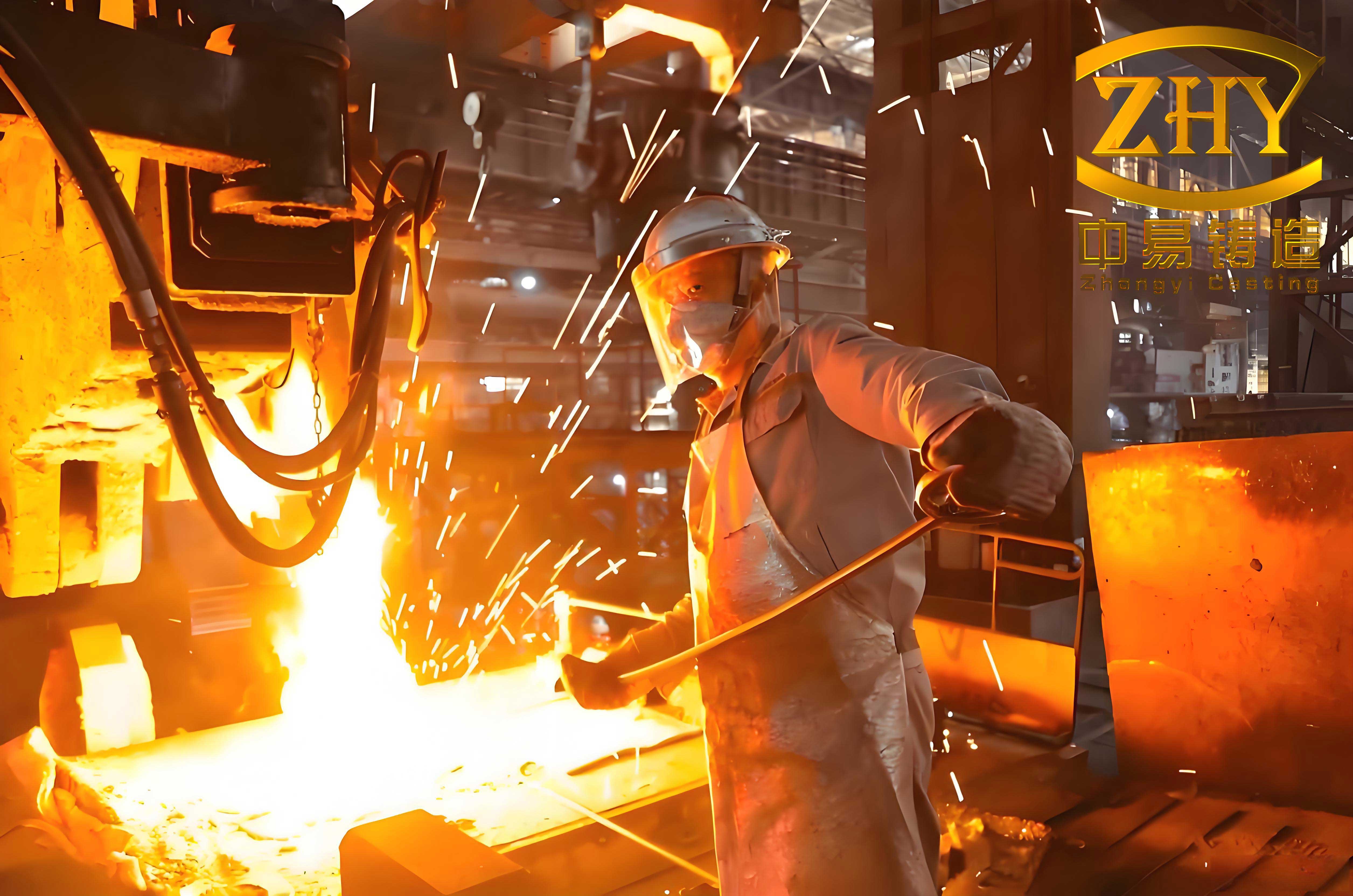
The investment casting process, however, is governed by a complex interplay of thermal and physical phenomena. For a high-value, safety-critical component like a coupler made from high-strength low-alloy steel (such as ZG25MnCrNiMo), the selection of process parameters is not trivial. Inappropriate parameters can easily lead to defects. For instance, a low pouring temperature might cause misruns, while an excessively high temperature increases the total heat content, promoting coarse grains and shrinkage. An unoptimized shell preheat temperature can lead to high thermal gradients and stress. Similarly, improper filling time affects the thermal history of the metal as it enters the mold. The core challenge lies in finding the optimal set of parameters that simultaneously minimize shrinkage porosity and residual stress to prevent hot tearing, while also promoting a favorable solidification microstructure. This study details a systematic methodology combining numerical simulation, statistical design of experiments, and physical validation to optimize the investment casting process for a heavy-duty steel coupler.
Methodology: Integrated Simulation and Experimental Design
The coupler in question features a complex hollow structure with significant variation in wall thickness, as shown in its key sections. Its overall dimensions are approximately 594 mm x 370 mm x 350 mm, with a final casting weight of about 70 kg. The material is ZG25MnCrNiMo (E-grade cast steel), with a nominal composition crucial for its strength and low-temperature impact properties. A vertical gating system with top pouring and side runners was designed, supplemented with an open riser at the top of the coupler head to aid feeding.
Numerical Simulation Framework
A comprehensive simulation model was established using ProCAST software to virtually replicate the investment casting process. The model incorporates several critical sub-models:
1. Thermal and Fluid Flow Model: The filling and solidification stages were simulated by solving the conservation equations of mass, momentum, and energy. The thermophysical properties of ZG25MnCrNiMo, including thermal conductivity, density, enthalpy, and viscosity as functions of temperature, were calculated using the software’s thermodynamic database.
2. Stress and Hot Tearing Model: Thermal stress development was simulated using a thermo-elastoplastic constitutive model. Since hot tearing is most likely to initiate in the mushy zone during the final stages of solidification, stress analysis was focused on this critical region. The material’s mechanical behavior was described by a bilinear isotropic hardening model:
$$ \sigma = \begin{cases} E_1 \varepsilon & (\varepsilon \leq \varepsilon_s) \\ \sigma_{0.2} + E_2 (\varepsilon – \varepsilon_s) & (\varepsilon > \varepsilon_s) \end{cases} $$
where $\sigma$ is the stress, $\sigma_{0.2}$ is the yield strength, $\varepsilon$ is the strain, $\varepsilon_s$ is the yield strain, and $E_1$, $E_2$ are the elastic moduli.
3. Microstructure Simulation Model (CAFE): To predict the as-cast grain structure, a Cellular Automaton – Finite Element (CAFE) coupled model was employed. This model integrates macroscopic heat transfer calculations with mesoscopic grain growth. Nucleation is described by a continuous Gaussian distribution model:
$$ \frac{dn}{d(\Delta T)} = \frac{n_{max}}{\sqrt{2\pi} \cdot \Delta T_\sigma} \exp\left[-\frac{1}{2}\left(\frac{\Delta T – \Delta T_{max}}{\Delta T_\sigma}\right)^2\right] $$
where $dn/d(\Delta T)$ is the nucleation density distribution, $n_{max}$ is the maximum nucleation density, $\Delta T$ is the undercooling, $\Delta T_{max}$ is the mean nucleation undercooling, and $\Delta T_\sigma$ is the standard deviation of the undercooling.
Dendrite tip growth kinetics were governed by the KGT (Kurz-Giovanola-Trivedi) model, which calculates the growth velocity as a function of local undercooling and alloy composition. The key material parameters for ZG25MnCrNiMo used in the simulations are summarized below.
| Element | Content (wt.%) | Liquidus Slope, $m$ (K/wt.%) | Partition Coefficient, $k$ |
|---|---|---|---|
| C | 0.26 | -83.0242 | 0.1664 |
| Mn | 1.40 | -5.1728 | 0.7372 |
| Cr | 0.55 | -1.8370 | 0.9073 |
| Ni | 0.45 | -3.8722 | 0.8032 |
| Mo | 0.25 | -2.6133 | 0.7816 |
Note: Gibbs-Thomson coefficient $\Gamma = 3\times10^{-7}$ K·m; Liquid diffusion coefficient $D_l = 3\times10^{-9}$ m²/s; Nucleation parameters: $n_{s,max}=1\times10^9$ m⁻³, $n_{v,max}=1\times10^{11}$ m⁻³, $\Delta T_{s,max}=\Delta T_{v,max}=8$ K, $\Delta T_{S,\sigma}=\Delta T_{V,\sigma}=2$ K (s=surface, v=volume).
Orthogonal Experimental Design for Process Optimization
To systematically optimize the investment casting process, three key parameters with the most significant influence on casting quality were identified: Pouring Temperature (A), Shell Preheat Temperature (B), and Pouring Time (C). Based on preliminary experience and theoretical ranges, four levels were selected for each factor. A Taguchi L16(4³) orthogonal array was designed to efficiently explore the parameter space with a minimal number of simulation runs. The primary objectives were to minimize the predicted volume of shrinkage porosity (VSP) and the maximum residual stress ($\sigma$) at critical, failure-prone nodes in the coupler body.
| Run No. | Pouring Temp., A (°C) | Shell Temp., B (°C) | Pouring Time, C (s) | Shrinkage Vol., VSP (cm³) | Max Stress, $\sigma$ (MPa) |
|---|---|---|---|---|---|
| 1 | 1530 | 350 | 28 | 1.048 | 346.1 |
| 2 | 1530 | 400 | 30 | 0.887 | 344.1 |
| 3 | 1530 | 450 | 32 | 0.910 | 345.2 |
| 4 | 1530 | 500 | 34 | 1.082 | 347.6 |
| 5 | 1550 | 350 | 30 | 0.894 | 344.9 |
| 6 | 1550 | 400 | 32 | 1.021 | 347.0 |
| 7 | 1550 | 450 | 34 | 1.054 | 346.6 |
| 8 | 1550 | 500 | 28 | 1.089 | 343.4 |
| 9 | 1570 | 350 | 32 | 1.108 | 353.0 |
| 10 | 1570 | 400 | 34 | 0.990 | 350.0 |
| 11 | 1570 | 450 | 28 | 1.124 | 352.6 |
| 12 | 1570 | 500 | 30 | 1.252 | 352.6 |
| 13 | 1590 | 350 | 34 | 0.897 | 345.1 |
| 14 | 1590 | 400 | 28 | 1.125 | 352.2 |
| 15 | 1590 | 450 | 30 | 1.074 | 347.7 |
| 16 | 1590 | 500 | 32 | 0.900 | 346.0 |
The Signal-to-Noise (S/N) ratio analysis, following the “smaller-is-better” characteristic for both defect volume and stress, was performed on the simulation results. The analysis of mean S/N ratios and subsequent ANOVA (Analysis of Variance) revealed the influence hierarchy of the parameters. For minimizing shrinkage porosity (VSP), the factor influence order was A (Pouring Temperature) > C (Pouring Time) > B (Shell Temperature). For minimizing residual stress ($\sigma$), the order was A > C > B, with factor B having a relatively minor statistical significance. The optimal level combinations derived from the separate analyses were A₃B₄C₁ for VSP and A₃B₁C₂ for $\sigma$. A compromised optimum, balancing both objectives, was determined to be the average of these two combinations.
| Optimization Objective | Optimal Combination | Derived Compromise Optimum |
|---|---|---|
| Minimize Shrinkage Porosity (VSP) | A₃B₄C₁: 1570°C, 500°C, 28s | A₃B₂.₅C₁.₅: 1570°C, 425°C, 29s |
| Minimize Residual Stress ($\sigma$) | A₃B₁C₂: 1570°C, 350°C, 30s |
Thus, the final recommended parameters for the coupler investment casting process were set as: Pouring Temperature = 1570 °C, Shell Preheat Temperature = 425 °C, and Pouring Time = 29 seconds.
Simulation Analysis Under Optimized Investment Casting Process Parameters
Temperature Field and Solidification Sequence
Simulation with the optimized parameters shows a favorable solidification pattern. The temperature field evolution indicates that solidification initiates from the central and lower base regions of the coupler, which are relatively thinner sections. The solidification front then progresses towards the surrounding areas, and finally, the thick sections like the shoulder and the gating system itself solidify last. This is a desirable directional solidification sequence, facilitated by the gating design, where the heavier sections (acting as thermal hubs) solidify after the thinner walls, allowing molten metal from the riser and feeders to effectively compensate for shrinkage. The controlled thermal gradient helps in reducing the risk of isolated hot spots that could lead to macro-shrinkage.
Prediction of Shrinkage Defects
The porosity prediction module, using the Niyama criterion and feeding logic, was applied post-solidification. Under the optimized investment casting process parameters, the predicted shrinkage porosity is highly localized and minimal. The only significant areas predicted are in the top of the coupler head (within the riser feed zone) and a small region in the thick abdomen of the unlocking cylinder. The total predicted shrinkage volume is only 0.879 cm³. Crucially, no shrinkage porosity is predicted in any of the critical, high-stress areas of the coupler body, such as the hook throat, shoulder, or the connection points between major sections. This confirms the effectiveness of the parameter optimization and gating design in promoting sound feeding.
Stress Evolution and Hot Tearing Susceptibility
The evolution of thermal stress at five critical nodes was tracked throughout the simulation. The results show that stress development is closely tied to the local solidification history. Nodes in thinner sections (like the internal hook tongue) solidify quickly, generating stress early. Nodes in thicker sections or near the gates (like the shoulder) solidify much later. The maximum principal stress peaks during the later stages of solidification and cooldown, with a peak value of approximately 470 MPa observed at a node in the coupler base. While this is a significant stress level, it remains substantially below the high-temperature yield and tensile strength of the steel during solidification and the room-temperature tensile strength of the alloy (over 830 MPa). The hot tearing index, which maps areas where thermal strain accumulation exceeds the material’s ductility in the mushy state, shows elevated susceptibility only at geometric discontinuities where stress concentration is inherent, such as the junction between the shoulder and the unlocking cylinder. However, the overall stress levels suggest a low probability of actual hot tear formation under the optimized investment casting process cycle.
Microstructure Simulation Results
The CAFE simulation provides a visual and quantitative prediction of the as-cast grain structure. The results clearly show the classic three-zone structure of a cast ingot/macro-casting:
- Chill Zone: A very fine, equiaxed grain layer at the casting-shell interface due to rapid heat extraction and high undercooling.
- Columnar Zone: Grains growing preferentially in the direction opposite to the heat flow (often perpendicular to the mold wall). This zone is prominent in sections with directional cooling.
- Equiaxed Zone: Isotropic, randomly oriented grains in the thermal center of thicker sections, formed from free crystals nucleated in the supercooled melt.
For the coupler, the simulation reveals that thinner wall sections (like parts of the hook head) exhibit a larger proportion of columnar grains due to steeper thermal gradients. In contrast, the thermal centers of thicker sections (like the shoulder and the junction between the hook head and tongue) show developed equiaxed grain regions, albeit with slightly larger grain size due to slower cooling. The overall prediction indicates a relatively fine and uniform grain structure in the critical load-bearing areas, which is a positive indicator for mechanical properties and provides a good starting microstructure for subsequent heat treatment. The simulated grain size in key zones corresponds to ASTM grain size numbers between 1 and 3 for the as-cast condition.
| Aspect | Simulation Prediction | Implication for Quality |
|---|---|---|
| Solidification Sequence | Directional: Thin walls → Thick sections/Riser last. | Promotes effective feeding, reduces shrinkage risk in the casting body. |
| Shrinkage Porosity Volume | 0.879 cm³, located only in riser and a non-critical thick zone. | Defects are minimal and confined to non-structural areas; casting body is predicted sound. |
| Maximum Residual Stress | ~470 MPa (peak during cooldown). | Stress is below material strength limits; low risk of hot tearing or cold cracking. |
| Predominant Grain Structure | Mixed columnar-equiaxed; finer grains in thin sections/chill zones. | Favorable for mechanical properties. Equiaxed zones in cores are manageable for heat treatment. |
Physical Validation and Results
To validate the simulation-based optimization, actual couplers were produced using the recommended investment casting process parameters: 1570°C pouring temperature, 425°C shell preheat, and a 29-second pour.
Defect Inspection
The as-cast couplers were first inspected visually and then using X-ray nondestructive testing (NDT). Visual inspection revealed smooth surfaces free from obvious defects like cracks or surface holes. X-ray radiography was performed on critical sections, including the hook head, the hook tongue connection area, and the base. The radiographs confirmed the simulation predictions: no internal cracks, hot tears, or significant shrinkage cavities were detected in the structural body of the casting. Any minor porosity was contained within the feeder head areas, which are subsequently removed during machining. This directly validates the effectiveness of the optimized investment casting process in preventing major internal defects.
Metallographic and Microstructural Analysis
Samples were extracted from the as-cast coupler shoulder area for microstructural examination. The as-cast microstructure consisted of proeutectoid ferrite (forming along prior austenite grain boundaries and within grains) and a pearlite matrix. The structure was relatively uniform for an as-cast state, with no severe macro-segregation observed. Energy Dispersive Spectroscopy (EDS) mapping confirmed a homogeneous distribution of key alloying elements like Mn and Cr. This observed uniformity aligns with the CAFE simulation’s prediction of a reasonably uniform solidification structure without gross defects.
The castings then underwent a standard quench and temper heat treatment (Austenitizing at 910°C, quenching, and tempering at 590°C) to achieve the required mechanical properties. The final microstructure was a fine, homogeneous tempering sorbite (tempered martensite). The prior austenite grain size was refined, and the carbide dispersion was uniform. The presence of alloying elements like Cr, Mo, and Ni ensured good hardenability and tempered stability, preventing excessive grain growth during heat treatment.
| Condition | Primary Constituents | Grain Size / Morphology | Key Characteristics |
|---|---|---|---|
| As-Cast | Proeutectoid Ferrite + Pearlite | Ferrite network (~10-100 µm); Pearlite colonies. | Typical cast structure; no major segregation; provides a sound base for heat treatment. |
| Heat-Treated (Quenched & Tempered) | Tempering Sorbite (Ferrite + Fine Carbides) | Very fine, sub-micron equiaxed grains. | High strength and toughness; uniform carbide dispersion due to alloying elements. |
Mechanical Properties
Tensile test specimens were machined from the heat-treated couplers, taken from both the shoulder (A) and other critical zones (B). The results demonstrate that the investment casting process, followed by proper heat treatment, successfully produces material meeting and exceeding the stringent requirements for railway couplers.
| Property | Standard Requirement (E-Grade Steel) | Average Measured Value | Status |
|---|---|---|---|
| Tensile Strength, $\sigma_b$ | ≥ 830 MPa | 1020 MPa | Exceeds |
| Yield Strength, $\sigma_{0.2}$ | ≥ 590 MPa | 810 MPa | Exceeds |
| Elongation, $\delta$ | ≥ 14 % | 14.5 % | Meets |
| Reduction of Area, $\psi$ | ≥ 30 % | 34.5 % | Exceeds |
| Hardness (HBW) | 241 – 311 | 315 | Within/Exceeds (upper range) |
The average tensile strength of 1020 MPa represents a significant margin over the 830 MPa minimum standard. The combination of high strength, good ductility (14.5% elongation), and toughness confirms that the optimized investment casting process parameters, combined with the subsequent heat treatment, yield a component with an excellent balance of mechanical properties, fully suitable for demanding heavy-haul railway service.
Conclusion
This comprehensive study successfully demonstrates a rigorous methodology for optimizing and validating the investment casting process for a complex, high-integrity steel component. By integrating advanced numerical simulation (encompassing fluid flow, solidification, stress, and microstructure prediction) with a structured Taguchi orthogonal experimental design, the critical process parameters were systematically optimized. The key findings are:
- The optimal parameters for the ZG25MnCrNiMo steel coupler were determined as: Pouring Temperature = 1570 °C, Shell Preheat Temperature = 425 °C, and Pouring Time = 29 seconds. This set balances the dual objectives of minimizing shrinkage porosity and controlling residual stress.
- Simulation under these optimized conditions predicted a sound casting with a favorable directional solidification pattern, negligible shrinkage in the structural body, stress levels below the hot tearing threshold, and a fine, mixed columnar-equiaxed grain structure.
- Physical validation through actual investment casting process production confirmed the simulations. X-ray inspection revealed no internal cracks or pores in critical areas. The microstructure was sound and uniform.
- After standard quench and temper heat treatment, the investment cast couplers exhibited superior mechanical properties, with an average tensile strength of 1020 MPa and good ductility, comfortably exceeding the relevant railway standards.
The successful outcome underscores the power of virtual prototyping and statistical optimization in modern foundry practice. It provides a validated, robust investment casting process window for manufacturing high-performance steel couplers, ensuring reliability, reducing developmental scrap, and establishing a framework that can be adapted for other critical cast components. The synergy between simulation-led design and empirical validation paves the way for more efficient and reliable production of complex safety-critical parts through the investment casting process.