
Against the backdrop of rapid economic growth and swift urbanization in our country, a host of pressing challenges has emerged, including surging energy demands, significant wastage of energy and resources, increased pollutant emissions, and deteriorating ecological environments. In recent years, a series of pivotal policies and regulations, such as the “Decision on Strengthening Energy Conservation Work” and the “Comprehensive Work Plan for Energy Conservation and Emissions Reduction,” have been promulgated. These directives impose clear requirements and outline concrete measures for industrial enterprises to curtail energy consumption and reduce emissions. Aligning with the national guiding principles of “building a resource-conserving and environment-friendly society” and pursuing “sustainable development,” various industries across the nation have vigorously embarked on enterprise-level energy-saving and emission-reduction initiatives.
The foundry industry, as a cornerstone of modern manufacturing, finds itself at a critical juncture. Statistical data reveals that China’s total casting output reached 28.09 million tons in 2006 and exceeded 30 million tons in 2007, securing the top global position for eight consecutive years. This output constitutes over 30% of the world’s total, surpassing the combined production of Japan, the United States, and Germany. While these figures cement China’s status as a major global casting producer, they do not equate to being a casting powerhouse. A substantial gap persists in overall technological and operational standards compared to international leaders, manifesting in high energy consumption and significant environmental pollution during production processes. Therefore, advancing energy conservation and emissions reduction within the casting sector and fostering resource-efficient, environmentally friendly enterprises represent a formidable and urgent mission for China’s foundry industry.
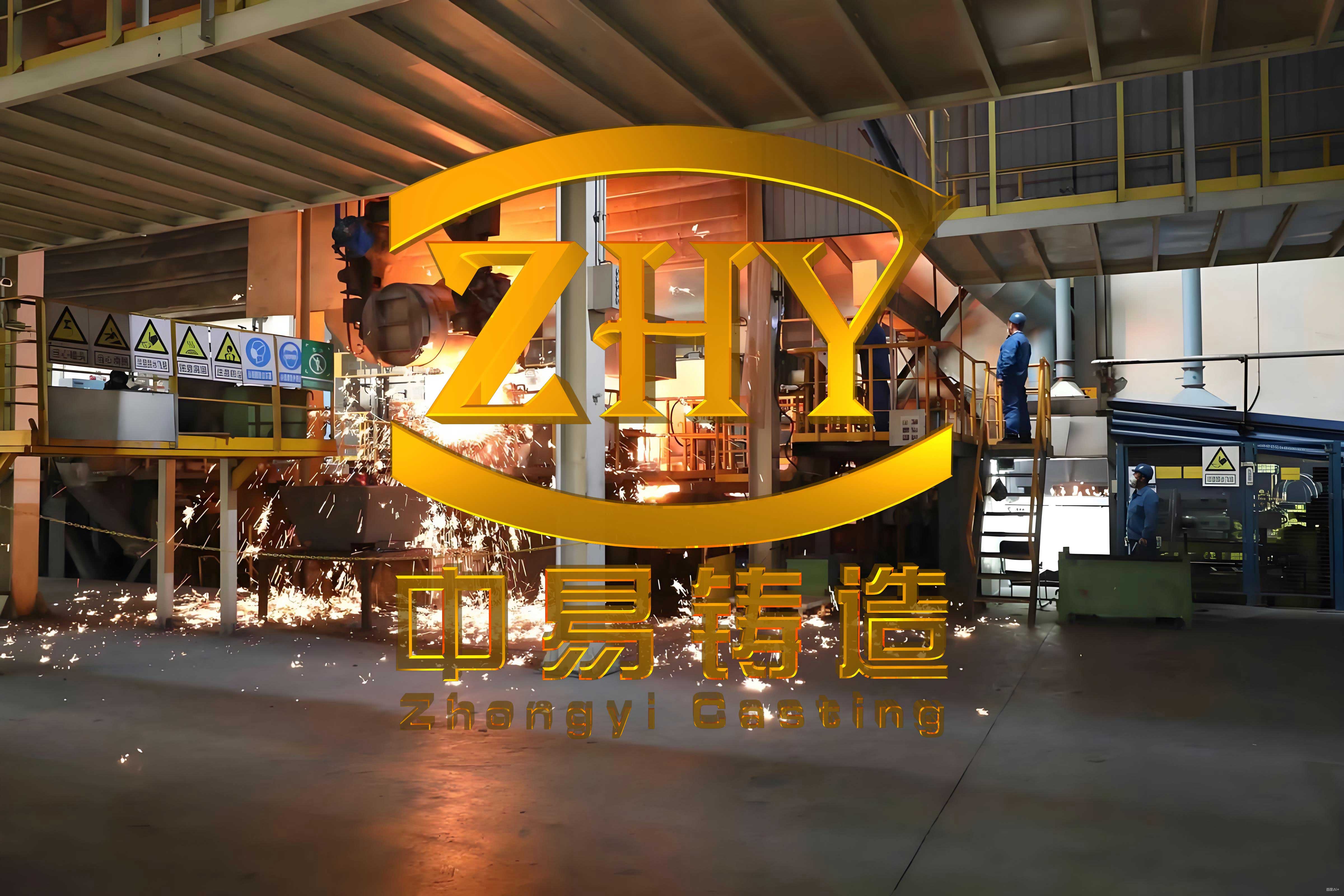
1. Foundational Status and Prevailing Challenges
When benchmarked against leading industrial nations, the overall level of China’s foundry industry is characterized by lower product quality, diminished economic efficiency, higher material consumption, and severe environmental pollution. The core issues can be summarized as follows:
- Fragmented Industry Structure: A vast number of foundries operate at a non-economical scale. For instance, in Henan Province, over 90% of its 1,700-plus foundries have an annual output below 3,000 tons.
- Technological Obsolescence: Widespread use of outdated production processes and equipment.
- Low Labor Productivity: Inefficient production systems leading to high human resource input per unit output.
- Low Value-Added Products: The selling price of castings is often only one-half to one-third of comparable products on the international market, indicating low technological content.
- Excessive Energy Intensity: The average energy consumed per ton of casting produced is approximately 2-3 times that of industrially developed countries.
- Severe Air Pollution: Emissions from metal melting equipment at most foundries exceed standards for harmful substances.
- Poor Working Conditions: The on-site operational environment in numerous foundries fails to meet occupational health and safety regulatory requirements.
The industry is not only vast in number but also dominated by small-scale operations. With approximately 30,000 foundry enterprises, the average annual output per plant is about 1,057 tons, merely one-fourth to one-ninth of that in developed industrial countries. Investment in environmental protection constitutes 20% to 30% of total equipment investment in foundries within developed nations, whereas in China, this figure hovers around a mere 5% to 8%, with only some large-scale or backbone enterprises achieving this level. A significant portion of enterprises invest even less, often below 3%. While some large Chinese enterprises boast process equipment levels comparable to internationally advanced foundries, a considerable number still rely on backward, even rudimentary, technology.
Quality standards for castings at most Chinese foundries are lower than those in developed countries. Many small-scale foundries lack essential laboratory facilities and testing capabilities, resulting in scrap rates ranging from 6% to 16%, with rates in Shanghai-area foundries reaching 6%-8%. Scrap rates at some domestic plants even exceed 20%, representing a severe waste of resources. Another manifestation of low technological prowess is the weak capacity for independent innovation; many enterprises can only manage current production demands, lacking the capability for further product enhancement and new product development. For a forward-thinking steel castings manufacturer, overcoming these limitations is fundamental to achieving sustainable growth.
2. Analysis of Energy Consumption Status
The comprehensive energy consumption of the foundry industry accounts for 25% to 30% of the total energy consumption within the mechanical industry. The primary energy sources for foundries include coke, electricity, oil, and natural gas. The approximate distribution is: coke 50%, electricity 32%, oil and natural gas 18%. The main processes and equipment responsible for energy consumption in casting production are metal melting, heat treatment, mold/core baking furnaces, and hot core-making processes. Among these, metal melting alone consumes about 70% of the total energy, with cupolas—the primary melting equipment for iron—being the “top energy consumer.” Currently, about 70% of the cupolas in use in China have a melting capacity of less than 5 tons per hour, and their thermal efficiency is generally low, leading to severe energy waste.
The energy cost for producing one ton of qualified iron castings in China constitutes about 15% of the production cost, compared to merely 4.3% in Japan. The energy required to produce one ton of qualified steel castings in China ranges from 800 to 1,000 kg of standard coal equivalent, whereas in other countries, it is only 500 to 800 kg. A comparative analysis of energy consumption per ton of casting across major nations is presented below:
| Country | Energy Consumption (kg Standard Coal Equivalent / ton casting) |
|---|---|
| China | 830 |
| Japan | 334 |
| Germany | 356 |
| United States | 364 |
| United Kingdom | 536 |
This stark disparity underscores the immense potential for energy savings. For a steel castings manufacturer aiming for international competitiveness, reducing the specific energy consumption, represented by $E_{spec} = \frac{E_{total}}{M_{casting}}$, where $E_{total}$ is total energy input and $M_{casting}$ is mass of qualified castings, is a direct path to lower costs and enhanced sustainability.
3. Pollutant Emission Profiles and Environmental Impact
The primary waste streams from the foundry industry include waste sand, slag, dust, and exhaust gases. Estimates indicate that producing one ton of qualified casting in China results in the emission of approximately 50 kg of dust (from non-melting processes), plus 6-15 kg of dust from melting one ton of molten iron. This sums to 56-65 kg of dust per ton of casting. Additionally, it generates 1,000-2,000 m³ of waste gas, 1-1.3 tons of waste sand, and 300 kg of slag. Extrapolating to the industry’s 2006 output, the total pollutant emissions were staggering: approximately 1.5 million tons of dust, 300-600 billion cubic meters of exhaust gas, 30 million tons of waste sand, and 9 million tons of slag. These volumes are roughly ten times the waste emissions of some industrialized nations. Notably, dust emissions have seen little improvement over decades, a fact demanding urgent attention.
Foundry exhaust gases contain significant amounts of harmful substances originating from various stages of production. Key sources include:
- Cupola Melting: Emissions containing dust, CO₂, CO, NOX, and SO₂. In 2004, melting and heat treatment processes emitted about 22,000 tons of SO₂, 4.38 million tons of CO₂, and 350,000 tons of CO.
- Organic Binder Systems: Processes using organic binders for core-making or molding release gases like free formaldehyde, free phenol, and triethylamine.
- Pouring: Sand molds (including green sand with coal dust, lost foam, and resin-bonded sand) emit CO, CO₂, toluene, and other harmful gases upon pouring.
Cupola melting also generates slag, typically 5%-10% of the molten iron weight for acid linings, 1%-3% for large water-cooled cupolas, and 15%-30% for basic linings. The dust in cupola off-gas mainly comprises metallurgical fume, carbonaceous soot, and ash. The clay sand processing system (including shakeout areas) is another major pollution source within foundries, primarily contributing to dust pollution. The uncontrolled handling and transportation of used sand create high-dust environments, posing severe health risks like silicosis to workers, especially in small enterprises lacking any dust collection equipment.
The total annual pollutant load $P_{total}$ can be modeled as:
$$ P_{total} = M_{output} \times (e_{dust} + e_{gas} + e_{sand} + e_{slag}) $$
Where $M_{output}$ is annual casting output, and $e$ represents specific emission factors for each pollutant. Reducing these $e$ factors is the core challenge for any responsible steel castings manufacturer.
4. Strategic Countermeasures for Energy Saving and Emission Reduction
Addressing these systemic challenges requires a multi-pronged strategic approach:
- Accelerating Industrial Restructuring: Establish a “Foundry Industry Access System” to set thresholds, particularly concerning energy-saving and emission-reduction standards. New foundry projects must face stricter准入 conditions. The goal should be to rationalize the industry, reducing the number of enterprises from around 30,000 to 10,000 or fewer by 2020.
- Implementing Incentive Policies: Create preferential policies, such as tax benefits (e.g., VAT refunds), to encourage foundries to increase investment in energy-saving and emission-reduction technologies. These benefits should be contingent upon demonstrable technological advancement and environmental performance, ensuring they support progressive enterprises and phase out backward ones.
- Utilizing Fiscal Policies for Elimination: Employ tax measures to accelerate the retirement of energy-intensive and heavily polluting equipment. This could include corporate income tax reductions for energy-saving and environmental projects, tax deductions for investments in dedicated energy-saving and environmental protection equipment, and VAT credit policies for such investments.
- Establishing a Comprehensive Standard System: Promptly develop and implement industry-specific standards, such as “Foundry Industry Energy Evaluation Standards,” “Foundry Industry Pollutant Emission Standards,” “Foundry Industry Waste Discharge Standards,” and “Foundry Industry Cleaner Production Evaluation Standards.” These standards are crucial for promoting circular economy practices, accelerating cleaner production, and strengthening waste management.
- Building a Monitoring Mechanism: Establish a robust system for monitoring energy, water, electricity, and material consumption, as well as pollutant emissions across the foundry industry. Data transparency is key to managing performance.
5. Technical Measures for Process-Level Conservation and Reduction
5.1 Melting Technology
As melting accounts for ~50% of total energy use and ~50% of defects, it is the primary focus. Over 90% of iron casting production in China uses cupolas, but most are small, cold-blast, short-campaign furnaces. Key upgrade paths include:
- Promoting long-campaign, hot-blast cupolas.
- Adopting cupola + electric furnace duplex melting.
- Implementing cupola oxygen enrichment and dehumidified blast.
- Applying computer control technology for cupolas.
- Using high-pressure, energy-saving dedicated fans.
- Exploring short-process routes like direct use of blast furnace hot metal.
- Utilizing formed furnace lining technology for electric arc furnaces in steel casting.
For a steel castings manufacturer, transitioning to more efficient electric arc furnaces with optimized linings and power management can dramatically lower $E_{spec}$ for melting.
5.2 Industrial Furnaces and Kilns
Accounting for ~20% of energy use, furnaces for heat treatment, drying, and baking offer significant savings through:
- Mechanical coal feeding (saves ~20% vs. manual).
- Upgrading coal-fired drying furnaces to upward-fired designs (saves 15%-30%).
- Retrofitting furnace linings with ceramic fiber insulation (saves 20%-40%).
- Applying high-temperature infrared radiation coatings on linings to enhance emissivity and protect refractory, saving 10%-30% and extending lining life.
5.3 Enhancing Casting Quality
Improving yield is perhaps the most effective form of energy saving. A 1% increase in yield can save 10-15 kWh per ton of steel or 6-8 kg of coke per ton of iron. Key technologies include metal filtration, insulating feeder sleeves and covers, and wash coatings to improve surface finish. Lightweight design, reducing casting weight by 1%, can lower energy use by 1%-2%. High-quality production is the hallmark of a competitive steel castings manufacturer.
5.4 Heat Treatment of Castings
Eliminating or optimizing heat treatment saves substantial energy.
- Producing low-stress gray iron castings (e.g., for engine blocks) using thin-wall, high-strength, or high-Si/C ratio iron to eliminate stress relieving.
- Producing as-cast ductile iron to avoid annealing/normalizing.
- Using vibration stress relief for large castings instead of thermal treatment (saves >80%).
- Applying zinc atmosphere rapid annealing for malleable iron (saves >50%).
5.5 Molding and Core-Making
The choice of process greatly impacts energy use and waste generation. The relative energy consumption ratio is roughly: Lost Foam : Green Sand : Chemically Bonded Sand : Dry Clay Sand = 0.8 : 1 : (1.2-1.4) : 3.5. Dry clay sand, being most energy-intensive, should be淘汰. Promoting processes with high sand reclamation rates is critical to reducing the ~30 million tons of waste sand annually.
- Advanced Binder Systems: Ester-cured sodium silicate sand (low binder addition, ≥80% dry reclamation), protein-based binders (excellent reusability), phosphate-bonded sand (good collapsibility).
- Process Innovations: Dry sand vacuum casting (V-process) and Lost Foam Casting are effective for节能减排.
5.6 Casting Cleaning
Optimizing cleaning operations can yield significant energy savings:
- Using rotary drum shakeouts instead of vibrating grids.
- Employing shot blasting instead of sand blasting (saves ~60%).
- Choosing continuous shot blast machines over batch types (saves 20%-30%).
- Implementing casting salvage/repair engineering to reclaim defective parts.
5.7 Recycling and Reuse of Waste Materials
Embracing circular economy principles is essential:
- Sand reclamation and regeneration.
- Briquetting and reusing coke fines and iron chips.
- Resource recovery: using waste sand/slag in road construction, compost, or for making sewer covers; using spent refractory and baghouse dust in cement/brick making; reinjecting cupola dust (rich in carbon) back into the furnace.
- Recovering waste heat from furnace flue gases for space heating, mold drying, or domestic hot water.
The recycling efficiency $R$ can be defined for a material stream as:
$$ R = \frac{M_{reused}}{M_{total\ waste}} \times 100\% $$
Maximizing $R$ for all waste streams is a key goal for a green steel castings manufacturer.
| Process Area | Key Technical Measures | Primary Impact | Estimated Energy Saving / Benefit |
|---|---|---|---|
| Melting | Hot-blast Cupola, Duplex Melting | Reduces specific melting energy | 20-40% potential reduction |
| Furnaces | Ceramic Fiber Insulation, IR Coatings | Reduces furnace heat loss | 20-40% savings |
| Quality | Filtration, Insulating Feeders | Increases yield, reduces remelts | 1% yield increase saves 1-2% energy |
| Heat Treatment | As-Cast Ductile Iron, Vibration Stress Relief | Eliminates or reduces thermal cycles | 50% to >80% savings |
| Molding | High-Reclamation Binders, Lost Foam | Reduces waste sand, process energy | Varies by process; sand use reduction 50-80% |
| Cleaning | Shot Blasting over Sand Blasting | Reduces cleaning energy | ~60% savings |
| Waste Management | Sand Reclamation, Waste Heat Recovery | Reduces virgin material/energy input | Heat recovery can provide 10-30% of thermal needs |
6. Technical Measures for Utility and Support Facilities
- Dust Control Compliance: Strictly implement standards like GB 8959 (Casting Dust Control Technical Specification) to ensure indoor/outdoor dust meets regulations. Strengthen enforcement and supervision.
- Rational Environmental Equipment Design: Ensure dust collection hoods, ductwork, and collectors (baghouses, cartridges, etc.) are properly designed, selected based on particle size and concentration, installed with quality, and well-maintained. Avoid over- or under-sizing systems.
- Optimized Plant Ventilation: In high-heat-load buildings, prioritize local exhaust for polluted sources, then utilize well-designed natural ventilation for residual heat removal. This avoids the energy waste of excessive roof fan use while controlling dust dispersion.
- Efficient Space Heating: In cold regions, consider radiant heating for foundry buildings to reduce the energy needed to heat massive amounts of makeup air. Organize direct supply of tempered makeup air strategically to prevent cold drafts in work zones.
- Energy-Efficient Auxiliaries: Employ high-efficiency fans, pumps, cooling towers, and heat exchangers, ensuring they operate near their best efficiency point. Promote variable frequency drive (VFD) fans for ventilation systems over damper control.
- Waste Heat Recovery: Install heat recovery systems on cupola, furnace, and kiln exhaust streams to capture energy for process use, space heating, or domestic purposes.
- Rational Pollution Control: Base decisions on实测 data. For instance, SO₂ from cupolas may not always warrant costly scrubbing systems, which themselves add energy burden.
7. The Vision: Creating a Green Foundry
The core concept of “green” is inextricably linked to “sustainable development.” A “Green Building” is defined as one that, throughout its life cycle, maximizes resource conservation (energy, land, water, materials), protects the environment, reduces pollution, and provides healthy, suitable, and efficient space for people, in harmony with nature. A “Green Factory” encompasses a broader and more complex scope, integrating three fundamental pillars:
- “Green Product” or “Green Casting”: A product whose entire life cycle—from material extraction to end-of-life—minimizes environmental impact, maximizes resource efficiency, has low energy consumption in use, and facilitates recycling with minimal waste. Standards for evaluating green castings need development.
- “Green Foundry Process”: Manufacturing processes, equipment, and operations that, across their own life cycle (supply, operation, maintenance, disposal), exhibit superior performance in energy, water, and material consumption while minimizing environmental impact. China’s “Cleaner Production” standards for various industries provide a model; a dedicated standard for the foundry sector is urgently needed.
- “Green Industrial Building”: The physical facility that houses the process. It should maximize resource savings and environmental protection while providing a healthy, safe, and efficient space for both the production process and the personnel. Crucially, a building cannot be truly “green” if it houses a non-green process. Therefore, the evaluation of a green industrial building must consider its synergy with the production system it contains.
A true Green Foundry, therefore, must excel in all three dimensions: Product, Process, and Building. An integrated evaluation framework $G_{foundry}$ could be conceptualized as:
$$ G_{foundry} = f(P_{green}, R_{green}, B_{green}) $$
Where $P_{green}$ scores product sustainability, $R_{green}$ scores process (cleaner production) performance, and $B_{green}$ scores the industrial building’s environmental performance. Only a high composite score represents a genuine transformation.
While several foundries in China have made commendable strides in specific areas like waste sand recycling or installing modern melting equipment, a comprehensive, holistic approach aligned with the “four savings and one environmental protection” principle is still evolving. To systematically guide and evaluate this transformation, the industry must expedite the development of standards such as the “Green Foundry Evaluation Standard,” “Green Foundry Process Evaluation Standard,” and “Green Foundry Industrial Building Evaluation Standard.” For a modern steel castings manufacturer, embracing this holistic green factory paradigm is no longer an option but a strategic imperative for long-term resilience, competitiveness, and license to operate in an increasingly eco-conscious global market. The journey from a major producer to a sustainable powerhouse hinges on this critical evolution.