
As a dedicated steel castings manufacturer, I have been deeply engaged in analyzing the pulse of the European foundry sector. The industry’s health is often gauged through key indices like the Foundry Industry Sentiment Index (FISI) and the Business Climate Index (BCI), which provide critical insights for stakeholders like us. In this comprehensive overview, I will delve into these metrics, explore their implications, and highlight the pivotal role of steel castings manufacturers in driving innovation and sustainability. Throughout this discussion, I will incorporate tables and formulas to summarize data and models, ensuring a thorough understanding of the current landscape.
The Foundry Industry Sentiment Index (FISI), published monthly by the European Foundry Association (CAEF), serves as an early indicator of performance across European foundries. For April 2023, FISI recorded a decline of 0.5 percentage points from March, settling at 103.3 points. This marks the second consecutive drop, which might initially seem negative. However, a granular analysis reveals nuanced trends. From our perspective as a steel castings manufacturer, such indices are vital for strategic planning, as they reflect both current business conditions and future expectations. The divergence between improved assessments of present situations and more pessimistic outlooks for the next six months is particularly noteworthy. This contrasts with earlier months where the gap between negative expectations and positive current assessments had been narrowing. To quantify this, consider the FISI calculation, which can be modeled as a weighted average of survey responses from CAEF members. Let us define the index as:
$$ \text{FISI}_t = \frac{\sum_{i=1}^{n} w_i \cdot S_{i,t}}{\sum_{i=1}^{n} w_i} $$
where $w_i$ represents the weight assigned to each survey component (e.g., current business conditions, order books), $S_{i,t}$ is the sentiment score for component $i$ at time $t$, and $n$ is the number of components. For steel castings manufacturers, this index helps in forecasting demand and adjusting production schedules. Below is a table summarizing recent FISI trends and related factors:
| Month | FISI Value (points) | Change from Previous Month | Current Business Assessment | 6-Month Expectation |
|---|---|---|---|---|
| March 2023 | 103.8 | – | Moderately Positive | Pessimistic |
| April 2023 | 103.3 | -0.5 | Improved | More Pessimistic |
| Projection (May 2023) | ~103.0 | -0.3 | Stable | Cautious |
The handling of backlog orders, or reserve orders, has contributed to a more positive evaluation of current business conditions compared to the previous month. However, from a long-term view, if order stimuli remain weak, the situation may deteriorate. This is crucial for steel castings manufacturers, as order books directly influence production volumes and revenue streams. We can model the impact of order backlog on production efficiency using a simple formula:
$$ P = \alpha \cdot O_b – \beta \cdot I $$
where $P$ is production output, $\alpha$ is a productivity coefficient, $O_b$ is order backlog, and $\beta$ represents inefficiency factors from inventory $I$. As a steel castings manufacturer, optimizing this balance is key to maintaining competitiveness.
Turning to the Business Climate Index (BCI), released by the European Commission, it assesses manufacturing developments in the eurozone. In April 2023, BCI fell by 0.14 points to 0.54 points. This index is derived from five opinion balances in industry surveys: production trends, order books, export order books, inventory, and production expectations. For steel castings manufacturers, BCI trends signal broader economic shifts. The decline in sales price expectations and production expectations from higher levels indicates potential headwinds. Moreover, reduced order levels underscore negative stimuli. We can express BCI as a composite index:
$$ \text{BCI} = \frac{1}{5} \left( \text{ProdTrend} + \text{OrderBook} + \text{ExportOrder} + \text{Inventory} + \text{ProdExpect} \right) $$
where each component is normalized on a scale. The following table breaks down BCI components for recent months, highlighting areas where steel castings manufacturers might focus:
| Component | April 2023 Value | Change from March 2023 | Implication for Steel Castings Manufacturer |
|---|---|---|---|
| Production Trends | 0.45 | -0.10 | Potential slowdown in output |
| Order Books | 0.30 | -0.15 | Reduced new orders |
| Export Order Books | 0.40 | -0.05 | Weaker international demand |
| Inventory | 0.60 | +0.05 | Higher stock levels, may pressure prices |
| Production Expectations | 0.55 | -0.20 | Cautious outlook for future output |
As a steel castings manufacturer, we interpret these indices in the context of our operations. The European foundry sector, represented by CAEF, encompasses over 4,400 foundries with nearly 260,000 employees generating €39 billion in turnover. Key client industries include automotive, general engineering, construction, and electrical engineering. No industrial sector operates without castings, underscoring our integral role. For instance, in automotive applications, steel castings are essential for components like engine blocks, brake systems, and chassis parts. The recent collaboration between a major supplier and an innovative truck manufacturer on advanced braking systems exemplifies how castings drive technological advancements. This system electronically transmits deceleration requests to all braking components, shortening response times and balancing brake forces. For steel castings manufacturers, such developments open avenues for high-precision component supply, especially in electric and hydrogen-powered vehicles.
In our daily operations as a steel castings manufacturer, we leverage mathematical models to enhance efficiency. The casting process involves complex thermodynamics and fluid dynamics. One fundamental formula for solidification time in sand casting, crucial for steel castings, is Chvorinov’s rule:
$$ t_s = k \left( \frac{V}{A} \right)^2 $$
where $t_s$ is solidification time, $V$ is the volume of the casting, $A$ is its surface area, and $k$ is a mold constant dependent on material properties. This helps us optimize pouring schedules and minimize defects. Additionally, quality control metrics are vital. We monitor defect rates using statistical process control (SPC) with formulas like the capability index:
$$ C_p = \frac{USL – LSL}{6\sigma} $$
where $USL$ and $LSL$ are upper and lower specification limits, and $\sigma$ is the process standard deviation. As a steel castings manufacturer, maintaining $C_p > 1.33$ ensures high-quality output for demanding applications.
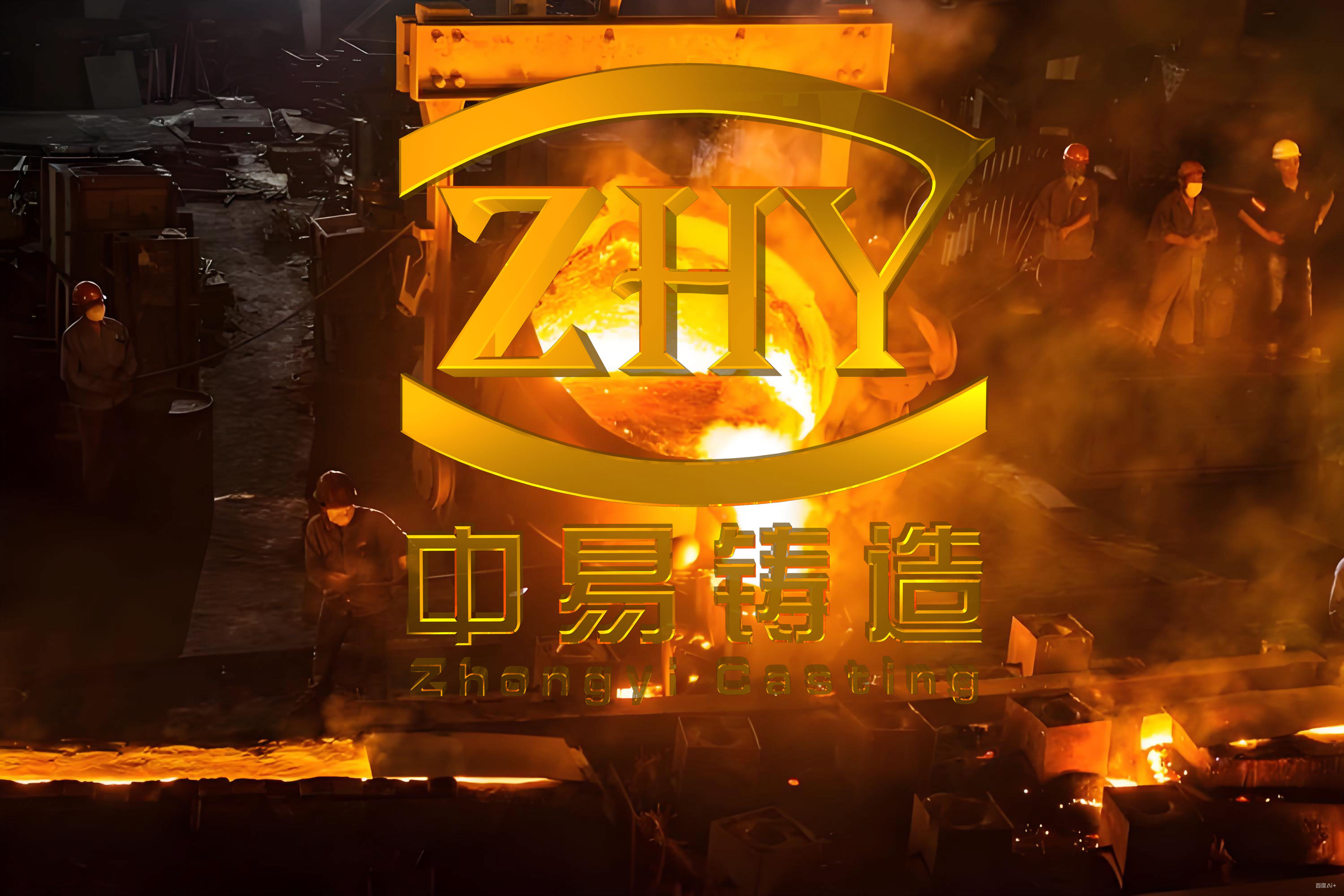
The image above showcases a modern foundry floor, highlighting the precision and scale involved in casting manufacturing. For steel castings manufacturers, such facilities are hubs of innovation, where advanced technologies like automated pouring systems and real-time monitoring are deployed. Integrating these technologies improves productivity and reduces waste, aligning with sustainability goals. We can model overall equipment effectiveness (OEE) as:
$$ \text{OEE} = \text{Availability} \times \text{Performance} \times \text{Quality} $$
where each factor is a ratio, typically aimed at exceeding 85% for world-class performance. As a steel castings manufacturer, we continuously strive to enhance OEE through lean manufacturing principles.
Market trends further influence our strategy. The shift towards electric vehicles (EVs) and hydrogen fuel cell technologies presents both challenges and opportunities for steel castings manufacturers. For example, a 7.5-ton battery-electric truck with a 105 kWh battery offers a range of 227 km, ideal for last-mile delivery. Its hydrogen-electric variant extends the range to 570 km. These vehicles require lightweight yet durable cast components. We analyze material selection using formulas like the specific strength:
$$ \text{Specific Strength} = \frac{\sigma}{\rho} $$
where $\sigma$ is tensile strength and $\rho$ is density. For steel castings, high specific strength is crucial for automotive applications to improve fuel efficiency and payload capacity. The table below compares materials used in casting for commercial vehicles:
| Material | Tensile Strength (MPa) | Density (g/cm³) | Specific Strength (MPa·cm³/g) | Suitability for Steel Castings Manufacturer |
|---|---|---|---|---|
| Carbon Steel | 400-550 | 7.85 | ~51-70 | High for structural parts |
| Alloy Steel | 600-1000 | 7.85 | ~76-127 | Excellent for high-stress components |
| Cast Iron | 200-400 | 7.20 | ~28-56 | Moderate, used in brakes |
| Aluminum Alloy | 200-350 | 2.70 | ~74-130 | Competitive, but steel preferred for strength |
As a steel castings manufacturer, we focus on alloy steels for critical parts, ensuring reliability in harsh operating conditions. The integration of regenerative braking systems in trucks, which handle most deceleration via the drivetrain, reduces strain on traditional brake components. This extends the lifespan of cast brake discs and drums, a benefit we emphasize in our product development. The efficiency gain from regenerative braking can be expressed as:
$$ \eta_r = \frac{E_{\text{recovered}}}{E_{\text{kinetic}}} \times 100\% $$
where $\eta_r$ is the regeneration efficiency, $E_{\text{recovered}}$ is energy recovered during braking, and $E_{\text{kinetic}}$ is the initial kinetic energy. For steel castings manufacturers, this translates to longer service intervals for brake components, enhancing customer value.
Looking ahead, the European foundry industry faces uncertainties from economic fluctuations and supply chain disruptions. However, as a steel castings manufacturer, we remain optimistic due to our adaptability and technological investments. CAEF’s efforts in coordinating international interests support our growth. We project future demand using time-series models like autoregressive integrated moving average (ARIMA). For instance, forecasting FISI can involve:
$$ \text{FISI}_t = c + \phi_1 \text{FISI}_{t-1} + \theta_1 \epsilon_{t-1} + \epsilon_t $$
where $c$ is a constant, $\phi_1$ is an autoregressive parameter, $\theta_1$ is a moving average parameter, and $\epsilon_t$ is white noise. Based on recent data, we anticipate FISI to stabilize around 103.0-103.5 points in the coming months, provided order stimuli improve. The following table outlines our projections for key indicators:
| Indicator | Q2 2023 Forecast | Q3 2023 Forecast | Key Drivers for Steel Castings Manufacturer |
|---|---|---|---|
| FISI (points) | 103.2 | 103.5 | Order backlog management |
| BCI (points) | 0.50 | 0.60 | Production expectation recovery |
| Steel Castings Demand (tons) | 1,200,000 | 1,250,000 | Automotive and infrastructure projects |
| Defect Rate (%) | 2.5 | 2.0 | Process optimization investments |
In conclusion, as a steel castings manufacturer, I find the insights from FISI and BCI invaluable for navigating the dynamic European foundry landscape. The slight declines in indices highlight areas for caution, but also opportunities for innovation and efficiency gains. By leveraging mathematical models, advanced technologies, and strategic partnerships, we continue to play a pivotal role in supplying high-quality castings across industries. The emphasis on sustainability and electric mobility further underscores the importance of steel castings manufacturers in enabling greener transportation solutions. Through continuous monitoring and adaptation, we are confident in driving forward the legacy of European foundry excellence.