
The landscape of modern manufacturing, particularly for sand casting manufacturers, is defined by an imperative to balance operational efficiency with environmental stewardship and economic viability. The relentless pressure of global competition and rising energy costs necessitates a continuous pursuit of innovation. For sand casting manufacturers, whose processes are inherently energy-intensive, this pursuit often centers on the melting, holding, and handling of molten metal. My experience spearheading a multi-year capital improvement initiative has provided profound insights into the tangible benefits of strategic energy management. This journey, supported by collaborative partnerships, has not only enhanced our competitiveness but also fundamentally redefined our approach to resource utilization. As a dedicated supplier and a growing commercial entity, we stand as a testament to how traditional sand casting manufacturers can evolve into models of industrial sustainability.
The foundation of our transformation was a comprehensive energy audit and the establishment of a strategic energy management (SEM) system. Partnering with a state-funded program provided us with an expert consultant who guided us through the initial assessment. We formed a cross-functional team that met monthly to track progress, identify opportunities, and manage projects. The initial phase involved creating a master list of potential improvements, which we then systematically prioritized based on payback period, energy savings potential, and implementation complexity. This structured approach was crucial for securing internal buy-in and managing capital allocation effectively. A key tool provided by our partners was advanced sub-metering, which allowed us to move from a single utility bill to a granular understanding of energy consumption at the equipment level. For any sand casting manufacturers looking to embark on a similar path, this data-driven baseline is indispensable. The relationship between total energy cost (C) and the sum of individual processes can be conceptualized as:
$$ C = \sum_{i=1}^{n} (P_i \cdot t_i \cdot r_e) + (V_j \cdot r_g) $$
where \( P_i \) is the power of electrical equipment \( i \), \( t_i \) is its operating time, \( r_e \) is the electricity rate, \( V_j \) is the volume of natural gas consumed by process \( j \), and \( r_g \) is the natural gas rate. Before metering, we only knew \( C \); afterward, we could optimize each term in the summation.
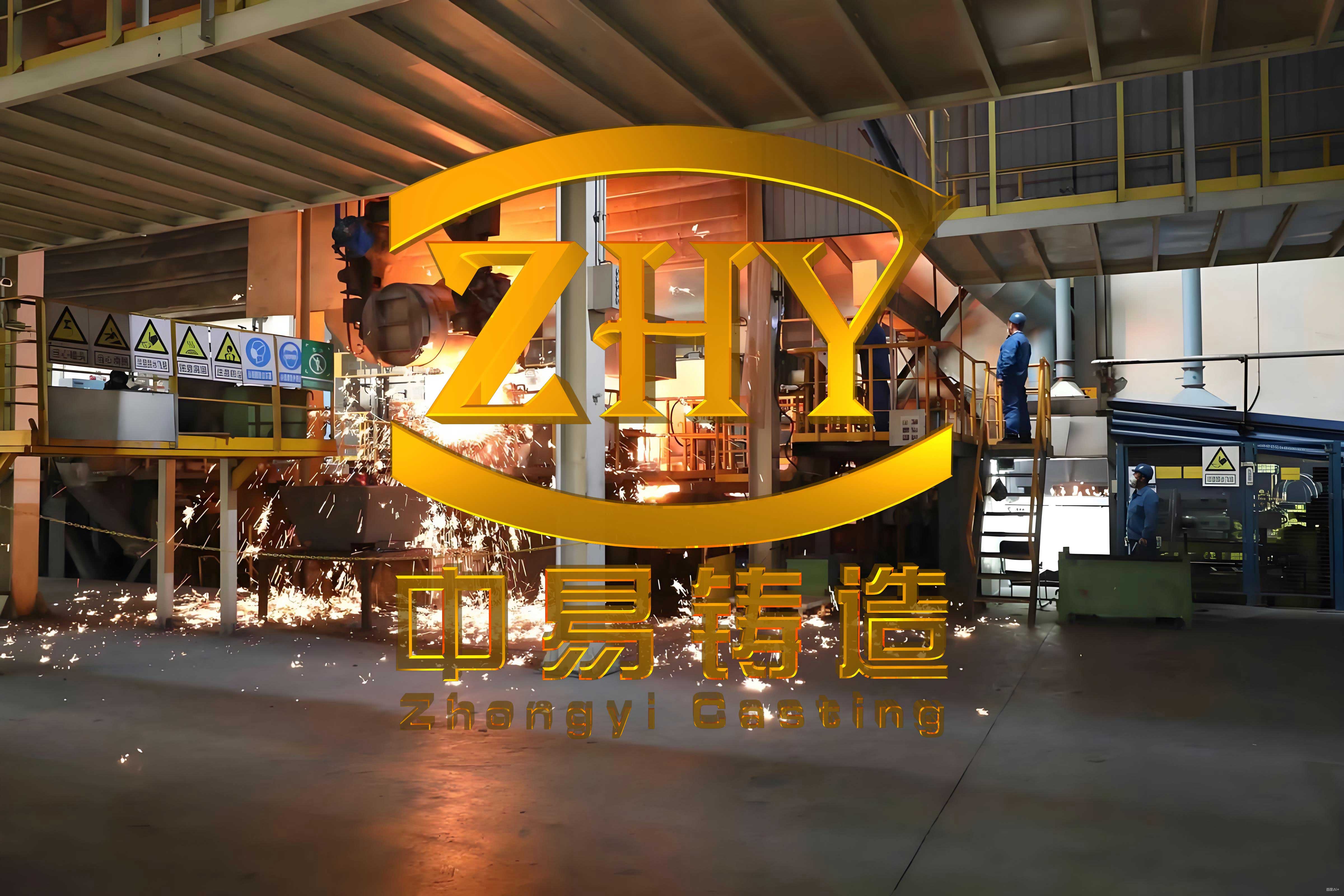
The most significant capital project was the complete overhaul of our melting department. We replaced five aging, 40-year-old 35-ton channel induction furnaces with four new state-of-the-art coreless induction furnaces. The impact was immediate and substantial. The newer technology offers superior thermal efficiency and faster melting cycles. For sand casting manufacturers, melting is typically the largest energy consumer, and this upgrade yielded a dramatic 37% reduction in kilowatt-hours consumed per ton of iron melted. The efficiency gain \( \eta \) can be expressed as the ratio of useful energy (melting the metal) to total input energy. The improvement is clear:
$$ \eta_{new} = \frac{E_{useful}}{E_{input, new}} > \frac{E_{useful}}{E_{input, old}} = \eta_{old} $$
$$ \text{Percentage Improvement} = \left(1 – \frac{E_{input, new}}{E_{input, old}}\right) \times 100\% \approx 37\% $$
Beyond the furnaces, we systematically addressed auxiliary systems. We retrofitted over 800 fluorescent fixtures with high-efficiency LED lighting from our industrial division. This project alone reduced annual electricity consumption by 557 MWh. The payback period was remarkably short, demonstrating that low-hanging fruit exists in every facility. We also installed Variable Frequency Drives (VFDs) on all large motors, including those powering air compressors and dust collection systems. A VFD allows the motor speed to be precisely matched to the instantaneous demand, rather than running at a constant speed. The power savings \( S_{vfd} \) from a VFD follow an affinity law, where power is proportional to the cube of the speed:
$$ \frac{P_2}{P_1} \approx \left(\frac{N_2}{N_1}\right)^3 $$
If a fan or pump needs only 80% of its full flow (\(N_2/N_1 = 0.8\)), the required power drops to approximately \((0.8)^3 = 0.512\), or just 51.2% of full-load power. This principle is transformative for sand casting manufacturers, where material handling and air systems often operate under variable loads.
Our building envelope was another critical focus. We invested in replacing old, broken factory windows with new wall panels featuring insulated translucent panels. This $2 million project significantly reduced conductive heat loss in winter, lowering the demand on our heating systems. To quantify, the heat loss rate \( Q \) through a building element is given by:
$$ Q = U \cdot A \cdot \Delta T $$
where \( U \) is the U-factor (insulation value), \( A \) is the area, and \( \Delta T \) is the temperature difference. By installing panels with a much lower \( U \)-value (better insulation), we directly reduced \( Q \), leading to lower natural gas consumption for space heating. This is a often-overlooked opportunity for sand casting manufacturers operating in older facilities.
The following table summarizes the key projects, their investments, and their annualized savings, providing a clear blueprint for other sand casting manufacturers:
| Project Area | Action Taken | Capital Investment (Approx.) | Annual Energy Savings | Key Metric Improvement |
|---|---|---|---|---|
| Melting | Replace 5 channel furnaces with 4 coreless furnaces | High ($ Millions) | ~37% reduction in kWh/ton | Specific melting energy |
| Lighting | Retrofit 800+ fluorescent fixtures with LED | Moderate | 557 MWh electricity | Luminous efficacy (lm/W) |
| Motor Systems | Install VFDs on large motors (compressors, fans) | Varies per motor | Significant reduction in part-load consumption | Motor load factor efficiency |
| Building Envelope | Replace windows with insulated wall panels | $2 Million | Reduced natural gas for heating | U-factor (W/m²·K) |
| HVAC Control | Upgrade controls for makeup air units | $200,000 | ~20% natural gas reduction | Control system setpoint accuracy |
Collaboration has been a cornerstone of our success. Engaging with a state-funded energy program provided not only expert guidance but also financial incentives that improved project ROI. Furthermore, we benefited immensely from peer-to-peer learning with other foundries. Through association-facilitated meetings, we shared best practices on establishing metrics and benchmarking methodologies. This exchange of knowledge is invaluable for sand casting manufacturers, as it provides real-world validation of technologies and strategies. Seeing how others tackled similar challenges, such as partnering with programs like ENERGY STAR to establish performance baselines, gave us the confidence to pursue our own ambitious goals. The cumulative effect of these projects has been staggering. Since 2017, we have saved over 10,017 MWh of electricity and 663,000 mmBtu of natural gas. In financial terms, these improvements save over $1 million annually on utility bills. The environmental equivalent is powering approximately 1,248 homes for a year.
Our operational philosophy has also evolved. We now view energy not just as a fixed cost, but as a manageable variable directly linked to process efficiency. Future projects are already on the horizon, funded in part by continued partnerships. These include investments in tooling to improve yield, which has a direct and multiplicative effect on energy efficiency. The specific energy consumption per good casting \( SEC_{casting} \) is the true metric of interest:
$$ SEC_{casting} = \frac{E_{total}}{N_{good\ castings}} $$
By increasing yield ( \( N_{good\ castings} \) ) through better tooling and process control, we decrease the energy burden of scrap remelting and associated handling, thereby lowering \( SEC_{casting} \). This holistic view—from melting to yield—is the next frontier for advanced sand casting manufacturers.
The journey of a modern sand casting manufacturer is one of continuous improvement. The path we have taken demonstrates that significant energy savings are not merely theoretical but are achievable through a committed, phased approach combining technological upgrades, data analytics, and strategic partnerships. For sand casting manufacturers worldwide, the message is clear: investing in energy efficiency is not an expense but a powerful driver of resilience, cost reduction, and environmental responsibility. It strengthens the entire supply chain, from exclusive suppliers to commercial partners, ensuring that this vital industry remains competitive and sustainable for decades to come.