
As a professional deeply embedded in the metal casting industry for years, I have witnessed firsthand the relentless pressure of rising energy costs. The prices of water, electricity, and natural gas have soared globally, squeezing the already tight profit margins of manufacturing enterprises. Foundries, as significant consumers of energy in the component manufacturing sector, find themselves at a critical juncture. Our traditional business models are being challenged not just by market competition, but by the fundamental economics of our energy consumption. The question that keeps every foundry manager awake at night is: How do we ensure sustainable development and protect the livelihoods of our workforce in this new reality? I am convinced that one of the most robust and accessible answers lies in a relentless pursuit of energy conservation and consumption reduction. This article is a distillation of my observations and experiences, focusing on actionable methods and measures for foundries, with particular attention to the vast segment of sand casting manufacturers.
The imperative for sand casting manufacturers to embrace节能降耗 (energy saving and consumption reduction) is not merely a matter of corporate social responsibility; it is a stark economic necessity for survival. Historically, the foundry industry, especially in many developing regions, has been characterized by low technological starting points, irrational structural layouts, extensive production modes, and outdated equipment. The cupola, the heart of iron melting for countless sand casting manufacturers, has often been synonymous with high cost, high energy consumption, and high pollution. Statistics indicate that in casting production, the input of energy and raw materials can account for 55% to 70% of the product’s value. This makes foundries the largest energy consumers within the mechanical industry, responsible for 23% to 62% of its total energy use, yet with a lamentably low energy utilization rate of only 15% to 25%. The energy required to produce one ton of qualified castings in some regions can be 2-3 times higher than in industrially developed nations. For instance, the energy consumption per ton of qualified iron castings can be 500-700 kg of standard coal, constituting about 15% of production costs. In contrast, Japanese foundries report this figure at just 4.3%. For steel castings, the gap is similarly wide. This inefficiency poses a significant threat to economic sustainability. In the face of global calls for a resource-conserving society and the acute tension in energy supply, the relentless rise in energy prices has dramatically intensified cost pressure. Sand casting manufacturers that fail to prioritize节能降耗 will find it impossible to survive in an increasingly fierce market, let alone thrive and expand. Furthermore, a foundry’s energy consumption level is a core component of its competitive edge, reflecting the innovativeness and sophistication of its processes and products. Therefore,节能降耗 must be placed at the very center of strategic planning. It should serve as a primary lever for adjusting the economic structure, improving quality and效益 (benefit), and driving technological advancement, which has become the main breakthrough force for节能降耗 in the foundry sector.
The journey toward energy efficiency is multi-faceted. From my perspective, it requires a systematic approach targeting key processes, equipment, and management philosophy. For sand casting manufacturers, the melting department is typically the largest energy sink, and thus, the first battlefield.
1. Revolutionizing Melting Technology: Beyond the Traditional Cupola
The cupola remains a dominant melting unit for iron, particularly for sand casting manufacturers. The path to efficiency here lies in modernization. The promotion of hot blast, water-cooled, long-campaign cupolas is a non-negotiable step. The industry trend globally is toward larger, continuously operated furnaces. Adopting technologies like large tuyere spacing with double-row blast can save 20-30% in coke consumption and reduce scrap rates. Water-cooled, lining-less or thin-lined cupolas enable extremely long campaign times, leading to over 30% energy savings. Hot blast cupolas preheat the combustion air using recovered waste heat, significantly improving thermal efficiency and reducing emissions.
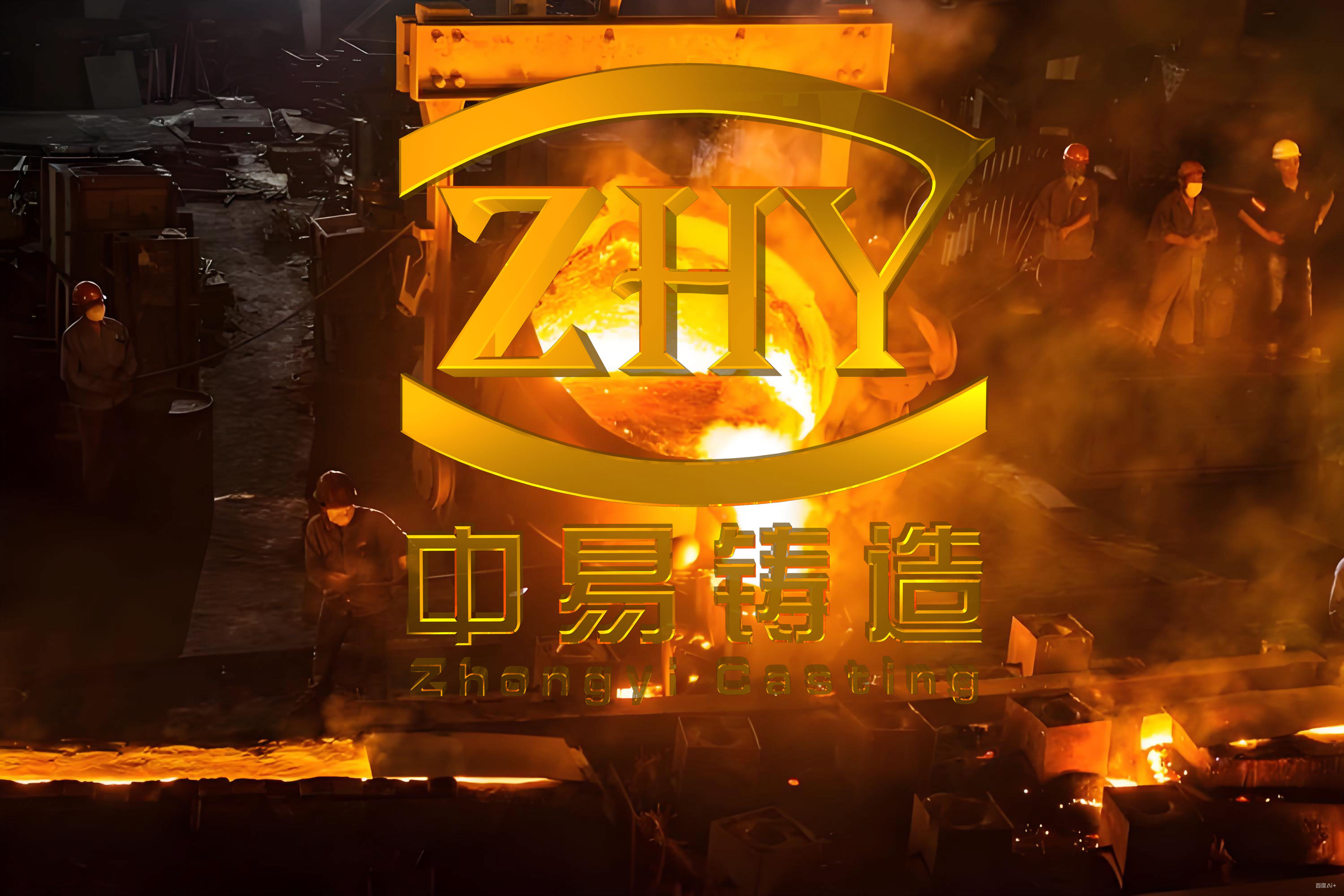
However, the evolution for sand casting manufacturers doesn’t stop at improving cupolas. A fundamental energy consumption结构调整 (structural adjustment) involves shifting to more efficient and controllable melting methods. While coal-fired furnaces are common and contribute to low energy utilization and poor parameter control—especially problematic for alloy steel or ductile iron—alternatives exist. Induction furnaces (coreless and channel) and electric arc furnaces offer superior energy efficiency, precise temperature control, and cleaner operation. The energy utilization in a well-operated medium-frequency coreless induction furnace can exceed 60%. The decision matrix for a sand casting manufacturer involves analyzing the cost of electricity versus other fuels, metal grade requirements, and production scale. The total energy cost per ton of molten metal, $C_{total}$, can be modeled as:
$$C_{total} = (E_{elec} \times P_{elec}) + (E_{th} \times P_{fuel}) + C_{refractory} + C_{maintenance}$$
Where $E_{elec}$ is electrical energy consumed (kWh), $P_{elec}$ is electricity price, $E_{th}$ is thermal energy from fuel, $P_{fuel}$ is fuel price, and the latter terms represent refractory and maintenance costs. The optimal choice minimizes $C_{total}$ while meeting quality and environmental targets.
| Melting Technology | Typical Thermal Efficiency | Key Energy Cost Driver | Suitability for Sand Casting Manufacturers |
|---|---|---|---|
| Cold Blast Cupola | 30-40% | Coke Quality/Price | High-volume gray iron, high scrap tolerance |
| Hot Blast Cupola | 40-55% | Coke & Blower Power | High-volume iron, improved efficiency needed |
| Coreless Induction Furnace | 55-65% | Electricity Price | Flexible batches, alloy irons/steels, clean melt |
| Channel Induction Furnace | 60-70% (holding) | Electricity Price | High-volume holding/duplexing |
| Electric Arc Furnace | 50-60% | Electrode & Power Cost | Steel castings, large-scale melting |
2. Optimizing Heat Treatment Processes
For sand casting manufacturers producing normalized, annealed, quenched, or tempered castings, heat treatment represents another major energy consumer, primarily through resistance furnaces. The principle is straightforward: maximize the heat transferred to the workload and minimize losses to the surroundings. The thermal efficiency, $\eta$, of a batch furnace can be expressed as:
$$\eta = \frac{Q_{workload}}{Q_{input}} \times 100\%$$
Where $Q_{workload}$ is the useful energy absorbed by the castings and trays, and $Q_{input}$ is the total energy supplied. In many old furnaces, $\eta$ can be as low as 25%. Through focused retrofits, I have seen this figure reliably reach 40-50%. The two most effective measures are:
A. Advanced Furnace Lining: Replacing traditional heavy firebrick with ceramic fiber modules or blankets on the walls, roof, and door is transformative. These materials have extremely low thermal mass and conductivity. This means less energy is wasted heating the furnace structure itself, and faster heating/cooling cycles are possible. The heat flux through the wall, $\dot{q}$, is governed by:
$$\dot{q} = \frac{T_{inside} – T_{outside}}{R_{total}}$$
The total thermal resistance, $R_{total}$, is significantly increased with ceramic fiber, directly reducing $\dot{q}$ and standby heat loss.
B. High-Efficiency Heating Elements: Upgrading from old wire or ribbon elements to new-generation materials, or applying high-emissivity coatings (infrared coatings) to existing elements, enhances radiant heat transfer. These coatings increase the emissivity factor $\epsilon$, boosting the radiant heat transfer rate according to the Stefan-Boltzmann law. The result is faster heating and lower surface temperatures for the elements, extending their life.
| Retrofit Action | Primary Energy Saving Mechanism | Expected Efficiency Gain | Impact for Sand Casting Manufacturers |
|---|---|---|---|
| Install Ceramic Fiber Lining | Reduces thermal mass & conductivity losses | 15-25% reduction in cycle energy | Faster cycles, lower standby costs, flexibility |
| Use High-Emissivity Coatings | Increases radiant heat transfer to load | 5-10% faster heating time | Increased throughput, lower element temp |
| Optimize Load Stacking | Maximizes effective furnace volume utilization | Directly improves $Q_{workload}$ / batch | Higher yield per furnace cycle, simple to implement |
| Install Automated Doors & Seals | Minimizes ambient air infiltration losses | 5-15% reduction in losses | Consistent performance, especially at high temp |
3. Systemic Structural Adjustment and Growth Model Transformation
Beyond individual processes, the overall structure of a foundry’s operations dictates its baseline energy footprint. For sand casting manufacturers, this involves two critical adjustments:
Industrial Structure Optimization: The “four sames” principle—grouping production by similar size, wall thickness, material, and complexity—is a powerful concept. By reorganizing production cells or even entire facilities around such specialization, a foundry can achieve remarkable efficiencies. Dedicated lines for a specific family of parts allow for optimized, consistent process parameters (pouring temperature, sand composition, cycle time), minimizing trial-and-error waste and rework. This is the foundation for low energy consumption per unit of quality output.
Energy Consumption Structure Optimization: The fuel mix itself must be evaluated. As mentioned, moving from coal to cleaner, more controllable energy sources like natural gas or electricity for heating and热处理 (heat treatment) is crucial. While the unit cost of electricity may be higher, its superior utilization efficiency, precision, and the elimination of fuel handling/handling losses often make it economically and environmentally favorable in the long run. For a sand casting manufacturer, this shift also improves product quality consistency and reduces environmental compliance costs.
4. Harnessing Waste Heat: Turning Loss into Asset
Perhaps the most glaring opportunity for sand casting manufacturers, especially those operating cupolas, lies in waste heat recovery. A typical cupola’s energy balance is an eye-opener:
- Useful heat for melting: 38-43%
- Heat lost in hot exhaust gases: 7-16%
- Chemical heat loss (incombustible gases like CO): 20-25%
- Solid incomplete combustion loss: 3-5%
This means 30-45% of the input energy is potentially recoverable! The exhaust gases, at temperatures often between 200°C and 600°C, carry both sensible heat and chemical energy (from CO and unburnt carbon). Implementing waste heat boilers to generate hot water or steam for facility heating, preheating combustion air (for the cupola itself or other furnaces), or powering absorption chillers represents a direct conversion of waste into value. The potential savings are immense. For example, preheating blast air from 20°C to 500°C can reduce coke consumption by approximately 20%. The economic benefit can be calculated. If a cupola uses $C_{coke}$ worth of coke annually, and waste heat recovery saves a fraction $f$, the annual savings $S$ is:
$$S = f \times C_{coke}$$
The return on investment (ROI) for the recovery system, considering its capital cost $I$, is then:
$$ROI = \frac{S}{I} \times 100\%$$
For many sand casting manufacturers, this ROI can be very attractive, often paying back the investment in just a few years.
| Waste Heat Source | Temperature Range | Recovery Technology | Application for Recovered Energy |
|---|---|---|---|
| Cupola Exhaust Gases | 200°C – 600°C+ | Heat Exchangers, Recuperators, Waste Heat Boilers | Air preheating, steam generation, space heating |
| Heat Treatment Furnace Exhaust | 300°C – 800°C | Recuperators, Regenerative Burners | Preheating combustion air for the same furnace |
| Cooling Water from Furnaces/Machines | 40°C – 80°C | Plate Heat Exchangers | Preheating incoming plant water or for cleaning |
5. Integrated Management and Behavioral Strategies
Technology is only half the battle. The most advanced equipment can be rendered inefficient by poor management and operational practices. For sand casting manufacturers, instilling a culture of energy consciousness is paramount. This involves:
Strategic Production Planning: Matching equipment run-time to actual need. For instance, ensuring the number of active molding lines or machines aligns with the output of centralized systems like air compressors. Running a large compressor at partial load to supply a few tools is highly inefficient. Scheduling large energy-consuming processes (melting, heat treatment) during off-peak electricity hours, if tariff structures allow, can yield significant cost savings.
Relentless Focus on Base Load and Leaks: The “always-on” energy consumption—lights, fans, pumps, idling equipment—forms the base load. Reducing this through automatic controls (timers, motion sensors), scheduled shutdowns, and diligent maintenance to fix compressed air leaks, steam leaks, or water drips is low-hanging fruit. A single small air leak can waste thousands of dollars annually.
Employee Engagement and “Start With Me” Culture: Ultimately, people operate the systems. Fostering a culture where every employee feels responsible for saving energy—turning off lights, shutting down workstations, reporting leaks—creates a powerful, sustained force for efficiency. Simple, clear guidelines and regular communication about goals and achievements are key.
Consider the holistic approach of a progressive foundry. They might begin with a detailed energy audit to establish a baseline. This is followed by a phased implementation plan: first, tackling behavioral and maintenance issues (leaks, shut-down protocols). Next, retrofitting existing furnaces with better insulation. Then, investing in a major project like cupola waste heat recovery. Finally, planning for the long-term replacement of a coal-fired furnace with a high-efficiency induction system. For sand casting manufacturers, such a roadmap turns energy management from a cost center into a strategic driver of profitability and resilience.
In conclusion, the path forward for foundries, and particularly for the numerous sand casting manufacturers worldwide, is clear. We must confront the energy challenge head-on. By modernizing core melting and heat treatment technologies, optimizing our production structures, aggressively capturing waste heat, and fostering an ingrained culture of efficiency at all levels, we can transform this challenge into our greatest opportunity. The goal is not just to reduce a utility bill, but to build a fundamentally more competitive, sustainable, and profitable enterprise. I am confident that by integrating these methods and measures, the foundry industry can power its own sustainable future.