
As an industry analyst, I have been closely monitoring the dynamic shifts within the global metal casting sector. The convergence of optimistic investment trends and technological breakthroughs, particularly in large-scale die casting, paints a vivid picture of an industry in transformation. In this article, I will delve into the detailed findings from recent surveys and market developments, emphasizing the pivotal role of sand casting manufacturers in this evolving landscape. The narrative is supported by extensive data, summarized through tables and mathematical models to provide a thorough understanding of the forces at play. The focus remains on how sand casting manufacturers are adapting, investing, and innovating to meet future demands.
The metal casting industry, a cornerstone of modern manufacturing, is experiencing a wave of cautious optimism, especially among North American foundries. A recent quarterly outlook survey conducted by a prominent industry association reveals that over 55% of respondents are either very optimistic or somewhat optimistic about their business prospects for the next 12 months. Only 21% hold a negative view. This optimism is fueled by anticipated growth in sectors such as defense, oil and gas, and valves. For sand casting manufacturers, this sentiment translates into preparedness for significant capital expenditures. The survey indicates that 39% of companies plan to allocate $1 million or more for capital projects in the coming year, with another 25% expecting to spend between $500,000 and $1 million. This investment drive is not merely about expansion but about strategic modernization to enhance competitiveness.
The investment priorities identified are multifaceted, reflecting a holistic approach to upgrading manufacturing capabilities. For sand casting manufacturers, key areas include grinding equipment, robotics, machining tools, molding systems, and environmental controls. To illustrate this distribution, I have compiled the following table summarizing the primary investment foci based on the survey data.
| Investment Area | Percentage of Companies |
|---|---|
| Grinding Equipment | 41% |
| Robotics | 35% |
| Machining Tools | 35% |
| Molding Equipment | 30% |
| Lifting Equipment | 28% |
| Conveyors | 26% |
| Environmental Control Systems | 26% |
| Laboratory Equipment | 26% |
| Shot Blasting Technology | 22% |
| Inspection/Testing Equipment | 22% |
| Melting Equipment | 22% |
| Core Making Machines | 20% |
| Air Compressors | 19% |
This table underscores the comprehensive nature of investments, highlighting that sand casting manufacturers are not focusing on a single aspect but are upgrading across the entire production chain. The integration of robotics and automation, for instance, is crucial for improving precision and reducing labor dependency, a point I will explore mathematically later.
Despite this optimism, significant challenges persist. Labor shortages top the list, followed by regulatory hurdles and workforce training issues. For sand casting manufacturers, these challenges necessitate not only equipment investment but also strategic human resource development. The efficiency gains from new technologies can be modeled to understand their impact. Consider a production line where traditional methods yield an output \( O_t \) with a labor input \( L_t \) and time \( T_t \). With automation, the output \( O_a \) may increase while labor input \( L_a \) decreases. The productivity improvement \( \Pi \) can be expressed as:
$$ \Pi = \frac{O_a / L_a}{O_t / L_t} = \frac{O_a \cdot L_t}{O_t \cdot L_a} $$
For many sand casting manufacturers, investing in robotics aims to achieve \( \Pi > 1 \), indicating higher output per worker. Assuming a typical foundry sees a 30% increase in output and a 20% reduction in direct labor after automation, we have:
$$ O_a = 1.3 O_t, \quad L_a = 0.8 L_t $$
Then,
$$ \Pi = \frac{1.3 O_t \cdot L_t}{O_t \cdot 0.8 L_t} = \frac{1.3}{0.8} = 1.625 $$
This represents a 62.5% increase in labor productivity, a compelling reason for sand casting manufacturers to pursue such investments. However, the capital cost \( C_c \) must be weighed against the savings \( S \) from reduced labor and increased efficiency over time \( n \). The net present value (NPV) of the investment can be calculated as:
$$ \text{NPV} = -C_c + \sum_{i=1}^{n} \frac{S_i}{(1 + r)^i} $$
where \( r \) is the discount rate. For a sand casting manufacturer investing $1 million with annual savings of $200,000 over 10 years at a 5% discount rate, the NPV is:
$$ \text{NPV} = -1,000,000 + \sum_{i=1}^{10} \frac{200,000}{(1.05)^i} \approx -1,000,000 + 1,544,347 = 544,347 $$
This positive NPV justifies the investment, illustrating why many sand casting manufacturers are allocating funds to robotics and automation.
Transitioning to the Asian market, a remarkable technological race is unfolding in the electric vehicle (EV) sector, with implications for casting technologies worldwide. The development of giant die-casting machines, capable of forces exceeding 20,000 tons, represents a leap in manufacturing efficiency. This innovation allows for the integration of large components, such as vehicle chassis, into single pieces, drastically reducing part counts and assembly time. For sand casting manufacturers, this trend signals both competition and opportunity. While die casting differs from sand casting, the overarching theme of innovation and investment is parallel. The adoption of mega-casting machines can reduce chassis manufacturing time from 1–2 hours to 1–2 minutes, a efficiency gain that can be modeled similarly. If \( T_{\text{old}} \) is the traditional time and \( T_{\text{new}} \) is the new time, the time reduction factor \( \tau \) is:
$$ \tau = \frac{T_{\text{old}}}{T_{\text{new}}} $$
For \( T_{\text{old}} = 90 \) minutes (average of 1–2 hours) and \( T_{\text{new}} = 1.5 \) minutes (average of 1–2 minutes),
$$ \tau = \frac{90}{1.5} = 60 $$
This signifies a 60-fold increase in speed, revolutionizing production logistics. The cost implications are profound. Let \( C_p \) be the cost per part, which comprises material cost \( C_m \), labor cost \( C_l \), and overhead \( C_o \). In traditional manufacturing, a chassis might require multiple parts, each with its own costs. With integrated casting, the number of parts \( N \) decreases significantly, so:
$$ C_p = C_m + C_l + C_o $$
If integrated casting reduces \( N \) from 100 parts to 1 part, and assuming each part has similar cost components, the total cost reduction \( \Delta C \) is:
$$ \Delta C = (N_{\text{old}} – N_{\text{new}}) \cdot \bar{C}_p $$
where \( \bar{C}_p \) is the average cost per part. For \( \bar{C}_p = \$50 \),
$$ \Delta C = (100 – 1) \cdot 50 = 4,950 $$
This per-unit saving, when scaled to mass production, justifies the massive investment in such presses. For sand casting manufacturers, this underscores the importance of adopting advanced technologies to remain competitive, even if their primary focus is on different materials or processes.
To compare the capabilities of these large die-casting machines, I have created the following table based on available market data. Note that specific company names are omitted per the guidelines, focusing instead on the technical specifications.
| Machine Force (Tons) | Typical Application | Estimated Part Integration Level |
|---|---|---|
| 7,200 | Mid-size vehicle components | Moderate |
| 9,000 | Larger body parts | High |
| 12,000 | Major structural elements | Very High |
| 20,000+ | Full skateboard chassis | Maximum |
This table highlights the trend toward higher forces for greater integration. For sand casting manufacturers, especially those involved in producing large, complex parts, this evolution in die casting may inspire similar ambitions in sand casting processes for other industries, such as aerospace or heavy machinery. The principles of reducing part count and assembly time are universally applicable.
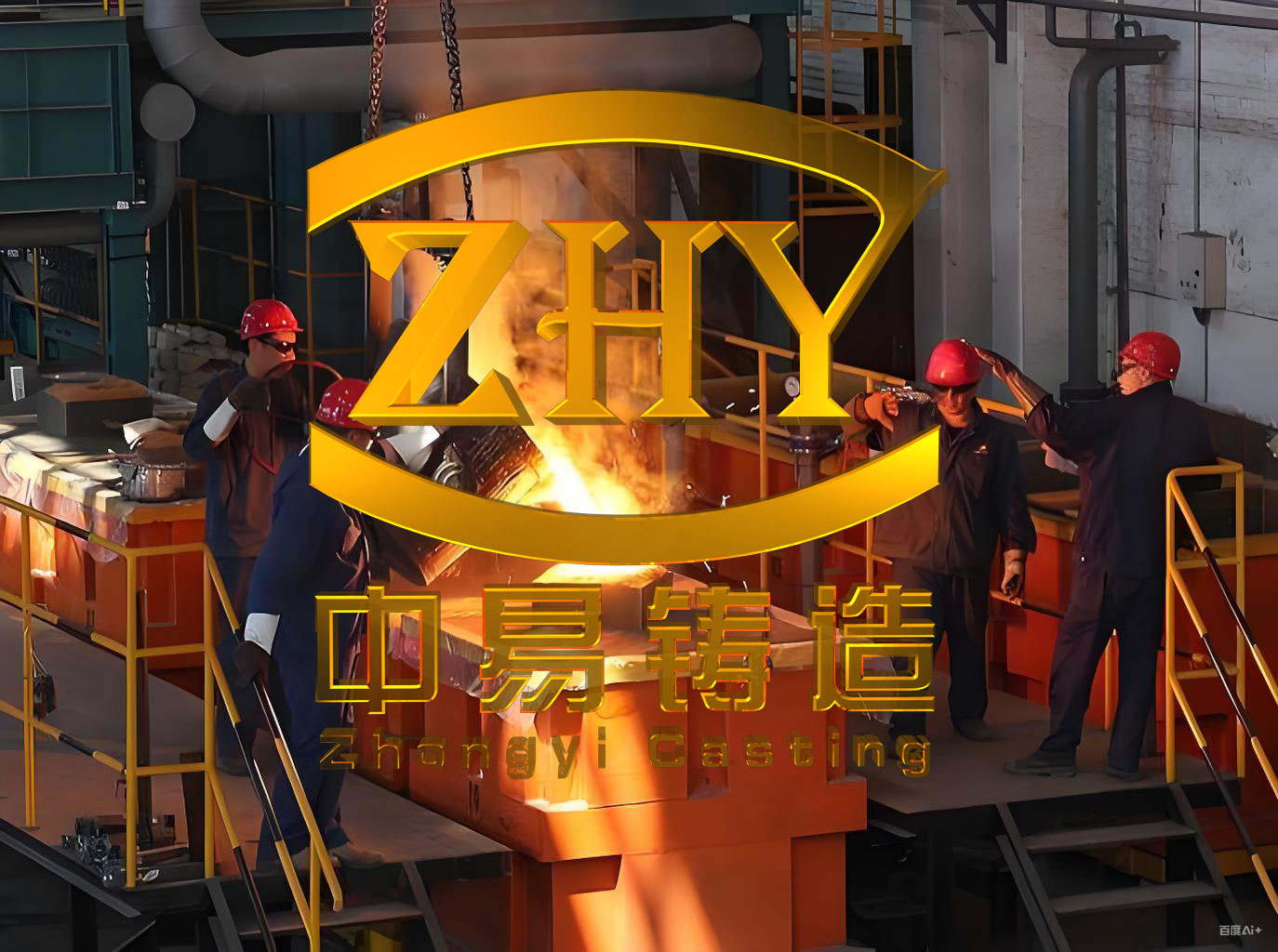
The image above symbolizes the global scale of casting manufacturing, highlighting the interconnectedness of innovation across regions. For sand casting manufacturers, this visual serves as a reminder of the industry’s vast potential and the need for continuous improvement. As investment flows into equipment, the focus must also be on sustainability and environmental control, areas where sand casting manufacturers have made strides. The survey mentioned earlier shows that 26% of foundries are investing in environmental control systems, reflecting a commitment to greener operations. The efficiency of such systems can be quantified using emission reduction metrics. If \( E_b \) is the baseline emission and \( E_a \) is the emission after control, the reduction percentage \( \rho \) is:
$$ \rho = \left(1 – \frac{E_a}{E_b}\right) \times 100\% $$
For a sand casting manufacturer reducing particulate emissions from 100 mg/m³ to 20 mg/m³,
$$ \rho = \left(1 – \frac{20}{100}\right) \times 100\% = 80\% $$
This not only complies with regulations but also enhances community relations and worker safety.
Looking at the broader economic impact, the investments by sand casting manufacturers contribute significantly to job creation and innovation. The survey suggests that these capital projects will foster employment opportunities, particularly in high-skilled areas like robotics maintenance and process engineering. To estimate the job impact, consider a model where investment \( I \) leads to direct jobs \( J_d \) and indirect jobs \( J_i \). A simple linear relationship can be assumed:
$$ J_d = k_d \cdot I, \quad J_i = k_i \cdot I $$
where \( k_d \) and \( k_i \) are coefficients. For illustration, if \( k_d = 0.001 \) jobs per dollar and \( k_i = 0.002 \), a $1 million investment yields:
$$ J_d = 0.001 \times 1,000,000 = 1,000 \text{ direct jobs} $$
$$ J_i = 0.002 \times 1,000,000 = 2,000 \text{ indirect jobs} $$
While these numbers are simplistic, they underscore the multiplicative effect of capital spending by sand casting manufacturers. Furthermore, the emphasis on training addresses the skill gap, ensuring that the workforce can operate advanced equipment. The cost of training \( C_t \) per worker should be factored into the overall investment equation. If a foundry invests $100,000 in training for 50 workers, \( C_t = 2,000 \) per worker. The return on this investment \( R_t \) can be measured through reduced downtime and higher productivity. If each trained worker increases output by 10%, the gain \( G \) per worker is:
$$ G = 0.1 \times \text{Annual Output Value per Worker} $$
For an output value of $200,000 per worker, \( G = 20,000 \), far exceeding \( C_t \), making training a wise investment for sand casting manufacturers.
In the context of global supply chains, sand casting manufacturers are also exploring digitalization and data analytics. The integration of Internet of Things (IoT) sensors in equipment allows for predictive maintenance, reducing unplanned downtime. The effectiveness of predictive maintenance can be modeled using failure rate reduction. Let \( \lambda_0 \) be the baseline failure rate and \( \lambda_p \) be the reduced rate with predictive maintenance. The improvement in reliability \( R \) is:
$$ R = \frac{\lambda_0 – \lambda_p}{\lambda_0} $$
If \( \lambda_0 = 0.1 \) failures per month and \( \lambda_p = 0.02 \), then \( R = 0.8 \), meaning an 80% reduction in failures. This translates to higher equipment utilization rates, crucial for sand casting manufacturers operating in just-in-time environments.
To encapsulate the financial planning aspects, I present a table summarizing hypothetical investment scenarios for a mid-sized sand casting manufacturer based on the survey data. This table integrates multiple factors, including equipment costs, expected savings, and payback periods.
| Equipment Type | Estimated Cost ($) | Annual Savings ($) | Payback Period (Years) | Productivity Gain (%) |
|---|---|---|---|---|
| Robotic System | 500,000 | 150,000 | 3.33 | 40 |
| Advanced Molding Machine | 300,000 | 100,000 | 3.00 | 25 |
| Environmental Controls | 200,000 | 50,000 | 4.00 | 10 (via reduced waste) |
| Laboratory Upgrades | 150,000 | 60,000 | 2.50 | 15 (via better quality control) |
| Total/Average | 1,150,000 | 360,000 | 3.19 | 22.5 |
This table demonstrates that a strategic mix of investments can yield attractive returns, encouraging sand casting manufacturers to proceed with capital projects. The payback period \( P \) is calculated as \( P = \frac{\text{Cost}}{\text{Annual Savings}} \), and the overall portfolio shows a balanced approach. For instance, the robotic system has a payback of 3.33 years, which aligns with typical industry benchmarks. The productivity gains are derived from estimated increases in output or reductions in rework, essential for sand casting manufacturers aiming to scale operations.
Moreover, the technological advancements in die casting exert a pull effect on the entire casting industry. Sand casting manufacturers may find opportunities in supplying components for these large presses or in adopting similar integration principles for their own products. The material science involved also evolves; for example, the development of new aluminum alloys that are suitable for both sand casting and die casting opens cross-process synergies. The strength-to-weight ratio \( \zeta \) of an alloy is critical:
$$ \zeta = \frac{\sigma}{\rho} $$
where \( \sigma \) is tensile strength and \( \rho \) is density. For a new alloy with \( \sigma = 300 \) MPa and \( \rho = 2.7 \) g/cm³,
$$ \zeta = \frac{300}{2.7} \approx 111.1 \text{ MPa·cm³/g} $$
This high ratio makes it desirable for lightweight applications, driving demand from sand casting manufacturers serving automotive or aerospace sectors.
The regulatory landscape, however, poses challenges. Compliance costs \( C_r \) can be substantial, especially for sand casting manufacturers operating in multiple jurisdictions. If regulations require emission reductions or waste management upgrades, the total cost over \( n \) years is:
$$ C_r = \sum_{i=1}^{n} C_{r,i} $$
where \( C_{r,i} \) is the annual compliance cost. To mitigate this, proactive investment in environmental controls, as seen in the survey, is a strategic move. The net benefit \( B \) of early compliance includes avoided fines \( F \) and enhanced market reputation \( M \):
$$ B = \sum_{i=1}^{n} \left( F_i + M_i \right) – C_r $$
For many sand casting manufacturers, \( B > 0 \) in the long run, justifying upfront investments.
In conclusion, the metal casting industry stands at a crossroads of optimism and innovation. The survey data from North America reveals a strong inclination toward capital investment, with sand casting manufacturers leading the charge in upgrading equipment and processes. Simultaneously, the breakthroughs in large die casting, particularly in the EV sector, showcase the transformative power of technology. For sand casting manufacturers, these trends underscore the necessity of embracing change—through robotics, automation, environmental stewardship, and workforce development. The mathematical models and tables presented here illustrate the tangible benefits of such investments, from productivity gains and cost savings to job creation and sustainability. As the industry moves forward, sand casting manufacturers who strategically allocate resources and innovate will not only survive but thrive, contributing to a robust manufacturing ecosystem globally. The future is bright for those willing to invest in it.
To further elaborate on the interdependencies, consider the supply chain dynamics. Sand casting manufacturers often rely on raw material suppliers, and fluctuations in material costs \( C_m \) can impact profitability. A simple cost model for a casting product is:
$$ C_{\text{total}} = C_m + C_l + C_e + C_o $$
where \( C_e \) is energy cost and \( C_o \) is overhead. Investing in energy-efficient melting equipment, as indicated by 22% of foundries, reduces \( C_e \). If energy consumption decreases by 15%, and \( C_e \) initially constitutes 20% of \( C_{\text{total}} \), the overall cost reduction \( \Delta C_{\text{total}} \) is:
$$ \Delta C_{\text{total}} = 0.15 \times 0.2 \times C_{\text{total}} = 0.03 C_{\text{total}} $$
This 3% reduction can significantly boost margins for sand casting manufacturers, especially in competitive markets.
Finally, the role of research and development (R&D) cannot be overstated. Sand casting manufacturers investing in R&D, perhaps through partnerships with academic institutions, can develop proprietary processes that enhance quality and reduce costs. The return on R&D investment \( R_{\text{R&D}} \) is often nonlinear, but a basic formula is:
$$ R_{\text{R&D}} = \frac{V_{\text{new products}}}{C_{\text{R&D}}} $$
where \( V_{\text{new products}} \) is the value generated from new products or processes. For a sand casting manufacturer spending $500,000 on R&D that leads to a new alloy saving $1 million annually, \( R_{\text{R&D}} = 2 \), indicating a high return.
In summary, the evidence is clear: sand casting manufacturers are pivotal players in the manufacturing renaissance, driven by strategic investments and technological adoption. The tables and formulas provided throughout this article offer a quantitative lens to view their journey, highlighting the calculated moves that will define the industry’s future. As we look ahead, continuous monitoring of these trends will be essential for stakeholders across the globe.