
In the rapidly evolving automotive industry, the demand for high-performance, efficient, and cost-effective components has driven significant innovation in manufacturing processes. As a foundry engineer with extensive experience in aluminum casting, I have been deeply involved in the planning and design of a state-of-the-art aluminum piston casting factory. This project aimed to set a new benchmark in the industry, integrating advanced technologies, lean production principles, and sustainable practices. While many sand casting manufacturers traditionally rely on older methods, our approach emphasizes mechanization, automation, and environmental stewardship, offering insights that could benefit broader casting sectors, including sand casting manufacturers seeking to modernize.
The design philosophy was rooted in a forward-thinking vision: to achieve world-class standards by streamlining logistics, adopting cutting-edge processes, and prioritizing energy efficiency and clean production. Unlike conventional sand casting manufacturers, who often deal with high waste and energy consumption, our goal was to minimize resource use and maximize output. The factory was planned to produce 30 million engine aluminum pistons annually, with diameters ranging from 30 mm to 350 mm, using various aluminum alloys such as hypoeutectic Al-Si, eutectic Al-Si, hypereutectic Al-Si, and Al-Cu alloys. The annual aluminum alloy consumption was set at 30,000 tons, necessitating a robust and efficient layout.
| Parameter | Value |
|---|---|
| Annual Production Volume | 30 million pistons |
| Piston Diameter Range | 30–350 mm |
| Annual Aluminum Usage | 30,000 tons |
| Alloy Types | Hypoeutectic Al-Si, Eutectic Al-Si, Hypereutectic Al-Si, Al-Cu |
The factory layout was meticulously designed to optimize material flow and reduce operational inefficiencies. It is part of a larger industrial park that includes an electrolytic aluminum plant, allowing for direct delivery of molten aluminum to the casting facility. This innovation eliminates the need for remelting ingots, saving energy and reducing metal loss—a common issue for sand casting manufacturers who often melt solid materials. The industrial park spans 1,100 acres, with the piston foundry located in the northeastern section. The main building covers approximately 24,000 m², housing areas for melting, casting, gate cutting, heat treatment, rough machining, mold preparation, and utilities.
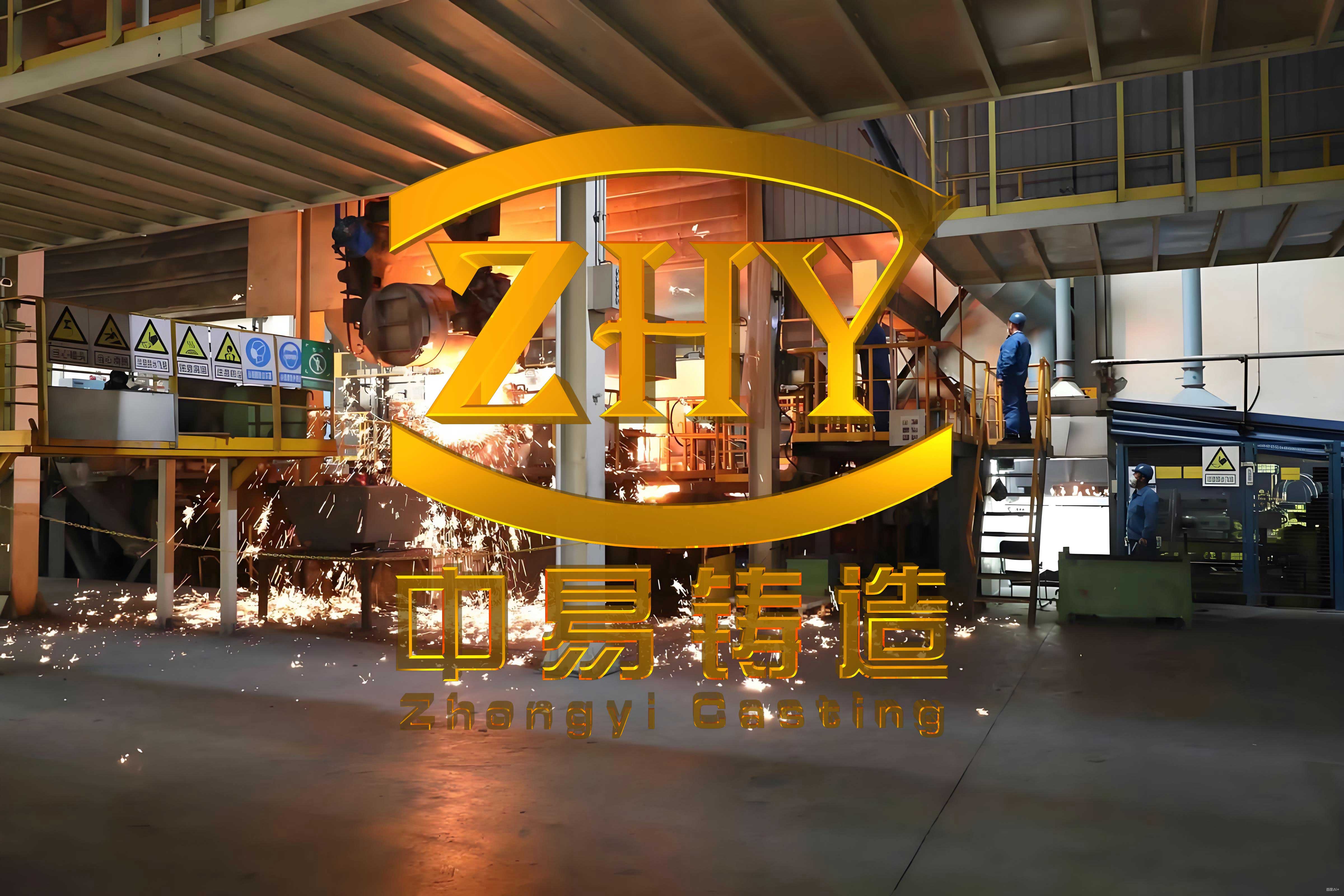
The layout centers on the melting shop, which receives molten aluminum from the adjacent electrolytic plant. This direct liquid metal transfer is a groundbreaking practice, reducing thermal losses and environmental impact. The aluminum is then treated in induction furnaces using AlP alloy for modification and refinement—a cleaner alternative to flux-based methods used by some sand casting manufacturers. After treatment, the aluminum is transferred to mobile crucible holding furnaces, which are transported via forklifts to casting stations. This centralized handling minimizes contamination and energy use, contrasting with decentralized processes in many sand casting manufacturers’ facilities.
The process route is streamlined to enhance quality and efficiency. Below is a detailed sequence for producing pistons, including those with inserted rings and salt cores:
| Step | Description |
|---|---|
| 1 | Molten aluminum delivery from electrolytic plant |
| 2 | Incoming material inspection (spectrometry for composition) |
| 3 | Charging into induction furnace |
| 4 | Modification and refinement with AlP alloy |
| 5 | Thermal analysis check for modification effectiveness |
| 6 | Transfer to mobile crucible holding furnace |
| 7 | Transport to degassing station |
| 8 | Degassing and slag removal using fixed degassing machine |
| 9 | Thermal analysis for density equivalent and modification |
| 10 | Composition verification via spectrometry |
| 11 | Microstructure sampling in laboratory |
| 12 | Transport to casting station |
| 13 | Casting using gravity die casting and squeeze casting machines |
| 14 | Quenching immediately after mold ejection |
| 15 | Dimensional inspection of castings |
| 16 | Macrostructural check for porosity and shrinkage |
| 17 | Microstructural examination in laboratory |
| 18 | Transport to gate cutting station |
| 19 | Gate and riser removal with cutting machines |
| 20 | Transport to salt core washing station |
| 21 | High-pressure pure water washing of salt cores |
| 22 | Transport to heat treatment station |
| 23 | Continuous heat treatment in conveyorized furnace |
| 24 | Volume stability testing |
| 25 | Post-heat treatment macrostructural inspection |
| 26 | Post-heat treatment microstructural analysis |
| 27 | Mechanical properties testing (hardness, tensile strength) |
| 28 | Transport to rough machining station |
| 29 | Rough machining (turning, boring, chamfering) |
| 30 | Dimensional verification |
| 31 | Non-destructive testing (ultrasonic/X-ray for internal quality) |
| 32 | Transport to machining plant for final processing |
This optimized route reduces handling time and improves consistency, offering lessons for sand casting manufacturers who often face challenges with multi-step processes. The integration of advanced technologies is a hallmark of this design. For instance, the use of mobile crucible holding furnaces enhances thermal efficiency, with power consumption reduced by 50% compared to traditional setups. The energy savings can be quantified using the formula for thermal loss reduction: $$ \Delta E = m \cdot c \cdot \Delta T $$ where \( \Delta E \) is the energy saved, \( m \) is the mass of aluminum, \( c \) is the specific heat capacity, and \( \Delta T \) is the temperature drop avoided. Assuming an annual aluminum throughput of 30,000 tons and a \( \Delta T \) of 50°C, the savings are substantial.
Several innovative technologies were implemented, yielding remarkable economic and environmental benefits. While sand casting manufacturers may focus on different materials like steel, these advancements are transferable. Below is a summary of key technologies and their impacts:
| Technology | Description | Benefits | Annual Savings (Estimated) |
|---|---|---|---|
| Direct Molten Aluminum Delivery | Liquid aluminum transported from electrolytic plant | Reduces melting energy and metal loss | $42 million |
| Mobile Crucible Holding Furnaces | Portable furnaces for aluminum transport and holding | Improves thermal efficiency, reduces oxidation | $2 million |
| AlP Alloy Modification | Use of AlP alloy for silicon refinement | Enhances mechanical properties, pollution-free | Environmental gain |
| Centralized Degassing | Concentrated degassing in a dedicated area | Minimizes emissions, improves air quality | Operational efficiency |
| Casting Mechanization | Automated gravity and squeeze casting machines | Increases productivity, stabilizes quality | Quality improvement |
| Bottom Core Pulling Process | Downward core extraction in casting | Reduces riser size, improves yield | $6 million |
| Continuous Heat Treatment | Conveyorized furnace for uniform treatment | Enhances product consistency, saves energy | $3 million |
| Silicon Carbide Crucibles | High-thermal-conductivity crucibles | Lowers energy use, extends lifespan | $1 million |
| Cast-Quenching Integration | Quenching immediately after casting | Eliminates separate solution treatment | $1 million |
The casting mechanization, in particular, represents a leap forward. Over 150 proprietary casting machines are deployed, achieving an 85% mechanization rate. This reduces labor intensity and ensures stable process conditions, leading to higher product quality. The yield improvement from traditional methods to the bottom core pulling process can be expressed as: $$ \text{Yield Improvement} = \frac{\text{New Yield} – \text{Old Yield}}{\text{Old Yield}} \times 100\% $$ With old yields of 40-50% and new yields of 80-85%, the improvement exceeds 70%. Such efficiencies are often sought by sand casting manufacturers to compete in cost-sensitive markets.
Environmental considerations were paramount. The centralized degassing system captures harmful gases for treatment, preventing workplace pollution. This is a critical advantage over dispersed operations common among sand casting manufacturers, where emissions control can be challenging. The use of AlP alloy eliminates toxic fluxes, aligning with green manufacturing trends. Additionally, the direct use of molten aluminum cuts carbon emissions associated with remelting, contributing to sustainability goals.
Quality assurance is reinforced through advanced inspection techniques. For example, internal cooling channel pistons are 100% inspected using X-ray and ultrasonic testing, ensuring reliability. This level of scrutiny surpasses the sampling methods used by many sand casting manufacturers, highlighting the commitment to zero-defect production. The non-destructive testing principles can be modeled with probability equations: $$ P(\text{Detection}) = 1 – e^{-\lambda t} $$ where \( P \) is the detection probability, \( \lambda \) is the defect rate, and \( t \) is the inspection intensity. Full inspection drives \( P \) toward 1, minimizing risk.
The factory’s design also incorporates lean principles to minimize waste. The layout facilitates straight-line material flow, reducing transportation distances and handling. For instance, aluminum moves from the melting shop to casting stations in a linear path, and finished pistons are conveyed seamlessly to subsequent stages. This contrasts with the often complex layouts in sand casting manufacturers’ facilities, where material handling can be inefficient. The overall equipment effectiveness (OEE) is enhanced through such optimizations, calculated as: $$ \text{OEE} = \text{Availability} \times \text{Performance} \times \text{Quality} $$ With high mechanization and process control, OEE values exceed 85%, setting a benchmark for the industry.
In terms of economic impact, the technologies implemented have led to significant cost savings. The direct molten aluminum delivery alone saves about 1,500 tons of metal loss annually, valued at $30 million, plus energy savings of $12 million. When combined with other innovations, total annual savings exceed $55 million. These figures demonstrate how modern foundries can achieve low input and high output, a lesson applicable to sand casting manufacturers aiming to improve profitability. The return on investment (ROI) for such projects can be estimated with: $$ \text{ROI} = \frac{\text{Net Savings}}{\text{Initial Investment}} \times 100\% $$ Given the reduced capital outlay from using domestically developed equipment, the ROI is favorable.
The integration of continuous heat treatment is another standout feature. Unlike batch furnaces, the conveyorized system provides uniform temperature distribution, improving material properties. The heat treatment kinetics can be described by the Arrhenius equation: $$ k = A e^{-E_a / RT} $$ where \( k \) is the rate constant, \( A \) is the pre-exponential factor, \( E_a \) is the activation energy, \( R \) is the gas constant, and \( T \) is the temperature. Consistent \( T \) ensures predictable \( k \), leading to stable hardness and volume stability in pistons.
Looking broader, the principles applied here—such as logistics optimization, energy efficiency, and advanced process control—are highly relevant to sand casting manufacturers. While sand casting involves different materials and molds, the core ideas of reducing waste, automating processes, and enhancing quality are universal. For example, sand casting manufacturers could adopt centralized melting and automated molding lines to mimic the efficiencies achieved in this aluminum piston foundry. The key is to adapt technologies to specific material behaviors, such as the flow characteristics of sand molds versus metal dies.
In conclusion, the planning and design of this modern aluminum piston foundry exemplify how innovation can drive sustainability and competitiveness. By leveraging direct molten aluminum delivery, mechanized casting, and continuous processing, the factory sets a new standard for the casting industry. The lessons learned here offer valuable insights for sand casting manufacturers and other metalworking sectors striving to modernize. As global demand for efficient components grows, such integrated, eco-friendly designs will become increasingly vital. Through relentless focus on improvement and adaptation, foundries can thrive in the dynamic automotive landscape, delivering high-quality products while conserving resources and protecting the environment.