
As a professional engaged in the design of industrial environmental systems, I have witnessed firsthand the rapid evolution of China’s manufacturing sector, particularly in the automotive industry, which has spurred significant growth in foundry production. However, traditional casting operations, especially among many sand casting manufacturers, grapple with persistent issues such as low automation, high energy consumption, severe pollution, and poor working conditions for laborers. With growing environmental awareness, modern foundries are increasingly adopting green design principles, integrating extensive environmental protection measures that yield substantial improvements. This article, based on my direct experience and design work, presents a detailed ventilation and air conditioning strategy implemented for a large-scale, green casting facility. The approach combines centralized dust removal, workshop ventilation, and personalized air supply to address air quality and thermal comfort, offering a replicable model for sand casting manufacturers aiming to enhance sustainability and worker welfare.
The core challenge in casting workshops lies in effectively managing the diverse pollutants and heat generated during production. According to technical specifications for foundry dust control, local exhaust ventilation is mandatory at dust-generating process equipment. Yet, in practice, fugitive emissions of dust and hazardous substances still escape into the workshop, compromising indoor air quality. Furthermore, as a hot-processing workshop, the casting area produces considerable radiant heat, leading to elevated temperatures and an inhospitable environment for workers. For sand casting manufacturers, where processes like molding, core making, and sand handling are prevalent, controlling silica dust and organic vapors is paramount. The design philosophy outlined here systematically tackles these issues through integrated systems.
1. Project Overview and Foundry Process Context
The project involved a green foundry workshop with a total floor area of approximately 19,660 square meters. It housed three vertical squeeze molding lines, each comprising melting, molding, core making, and sand processing sections, with a total annual output of 65,000 tons of castings. The facility embraced advanced, automated, and intelligent production technologies to minimize pollution at source. This scale and technological level are representative of forward-thinking sand casting manufacturers seeking to balance productivity with environmental stewardship. The ventilation and air conditioning design was tailored to this specific layout and process flow, ensuring comprehensive coverage.
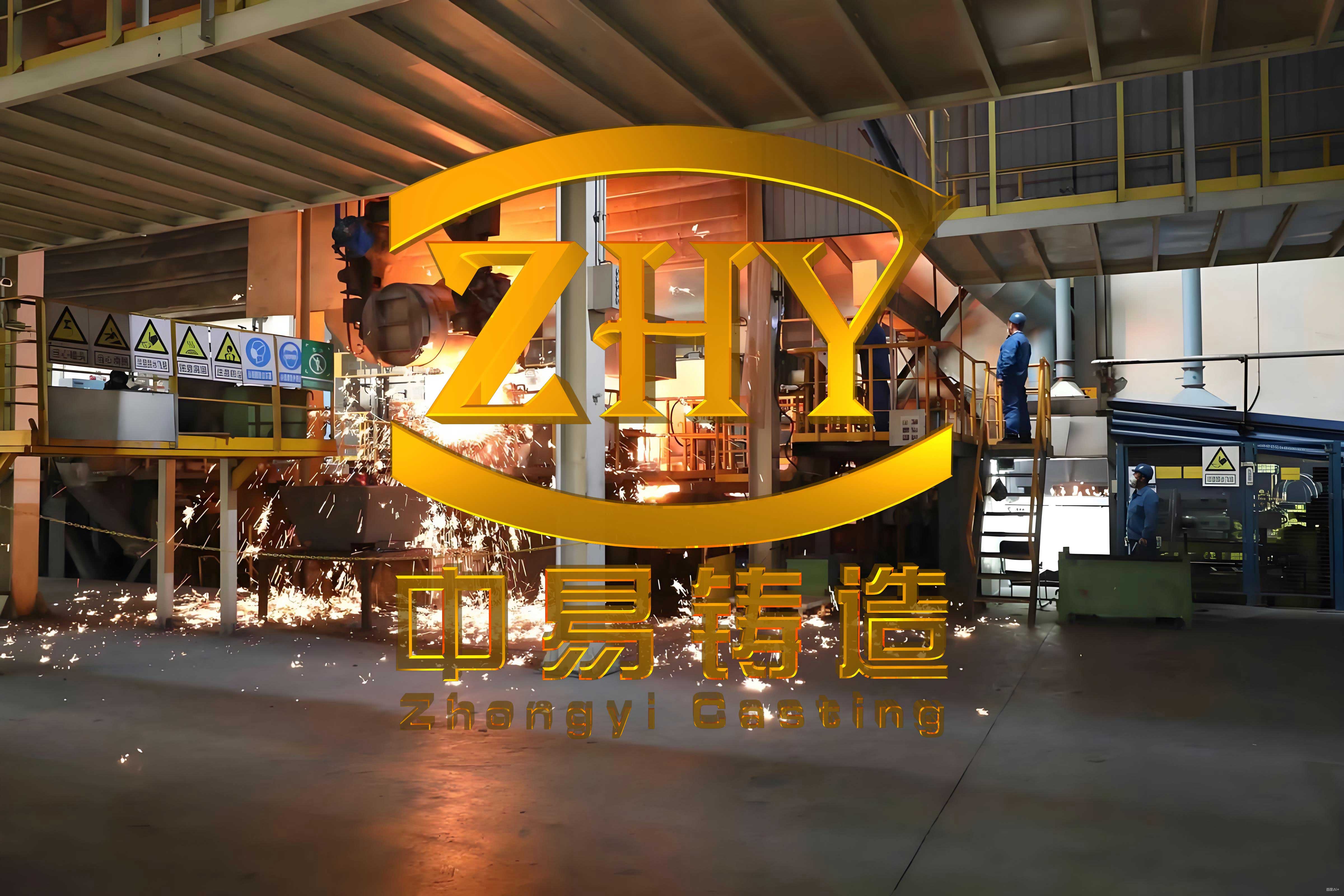
2. Analysis of Dust and Fume Pollution Sources in Casting Workshops
In casting production, particularly for sand casting manufacturers, pollutants are emitted at various stages. The primary sources include fine sand dust, coal dust, bentonite powder, metal oxides, volatile organic compounds (VOCs), and combustion gases. A systematic breakdown is essential for designing effective capture systems. The table below categorizes these sources based on process sections and operations, which is critical for sand casting manufacturers to identify control points.
| Process Section | Operation | Type of Emissions | Typical Particle Size (µm) |
|---|---|---|---|
| Melting Department | Induction Furnace Operation | Oil fumes, metal oxides (e.g., Fe₂O₃) | 0.1 – 10 |
| Melting Department | Nodularization (Spheroidization) Treatment | Metal oxides, magnesium oxide fumes | 0.1 – 5 |
| Melting Department | Ladle Drying | Combustion烟气 (CO, CO₂, soot) | 0.1 – 100 |
| Molding Department | Pouring | CO, CO₂, resin combustion fumes, steam | Gaseous and particulates < 1 |
| Molding Department | Molding (Sand Compaction) | Sand, coal dust, bentonite powder | 10 – 200 |
| Molding Department | Shakeout & Cooling Drum | Sand, coal dust, bentonite powder | 10 – 500 |
| Core Making Department | Core Making (using resin binders) | Fine sand dust, VOCs (formaldehyde, phenols) | Dust: 1 – 100; VOCs: molecular |
| Sand Processing Department | Sand Reclamation & Handling | Sand粉尘, coal dust, bentonite powder | 10 – 300 |
The emission characteristics vary significantly. For instance, dust from sand handling tends to be coarser, while furnace fumes are finer and often hotter. This diversity necessitates tailored capture and treatment solutions, a key consideration for any sand casting manufacturers planning their environmental controls.
3. Design of Centralized Dust Removal Systems
The dust removal strategy was segmented into multiple independent systems based on pollution source location, process continuity, and emission properties. This modular approach enhances operational flexibility and efficiency, a best practice I advocate for all sand casting manufacturers.
3.1 Induction Furnace Dust Removal System
Each production line was equipped with four 5 t/h medium-frequency coreless induction furnaces (two operational, two standby). A dedicated dust removal system was designed per line. Capture was achieved using furnace cover exhaust hoods. To avoid interference with molten metal transfer systems, the ductwork was routed through trenches. Each branch duct connecting to a furnace was fitted with an electrically operated damper interlocked with the furnace operation. Additionally, side-draft hoods were installed along the molten metal transfer route to capture fugitive emissions during transport.
The exhaust air volume for a single furnace cover hood is typically determined by the furnace’s nominal capacity. A common empirical formula is:
$$ Q_f = k \cdot C $$
where \( Q_f \) is the exhaust flow rate (m³/h), \( C \) is the furnace capacity (tons), and \( k \) is an empirical coefficient ranging from 8,000 to 12,000 m³/h per ton for medium-frequency furnaces. For a 5-ton furnace, \( Q_f \) could be approximately 50,000 m³/h. For the transfer hoods, the required flow rate is calculated based on the capture face velocity \( v_0 \):
$$ Q_t = A \cdot v_0 $$
where \( A \) is the open area of the hood (m²). We selected \( v_0 = 2.0 \, \text{m/s} \) to ensure effective capture. The combined system flow rate for each line was about 120,000 m³/h. Bag filter dust collectors were employed. The high-temperature fumes from the furnace covers were mixed with the relatively cooler air from the transfer hoods before entering the collector to prevent bag damage. This integration is crucial for sand casting manufacturers using electric melting.
| System Name | Covered Processes/Areas | Key Design Parameters | Calculated Air Volume (m³/h) | Collector Type |
|---|---|---|---|---|
| Furnace System | Furnace melting, molten metal transfer | Hood face velocity: 2.0 m/s for transfer hoods | ~120,000 per line | Bag Filter |
| Ladle Repair Area System | Pneumatic chipping of ladle linings (4 stations) | Hood face velocity: 2.0 m/s | ~40,000 | Bag Filter |
| Nodularization & Pouring System | Nodularization station, slag skimming, inoculant addition, pouring machine | Hood face velocity: 2.0 m/s (top/side hoods) | ~65,000 per line | Bag Filter |
| Pouring Cooling & Shakeout System | Pouring/cooling conveyor, shakeout conveyor, cooling drum, return sand belt (in pit) | Cooling zone: 1.5 m/s; Shakeout: 3.0 m/s | ~110,000 per line | Bag Filter (with insulation) |
| Core Making System | Core machine outlets, core storage tables | Hood face velocity: 1.5 m/s; Includes VOCs treatment | ~45,000 | Bag Filter + Photocatalytic Oxidizer |
| Sand Processing System* | Sand mixing, screening, reclamation | Integrated by equipment supplier | ~130,000 (total for department) | Bag Filter |
*The sand processing department, crucial for sand casting manufacturers, was housed separately, and its dust control was integrated into the equipment design.
3.2 Specialized Systems: Core Making with VOCs Abatement
The core making department, a significant source of both particulate and gaseous pollution for sand casting manufacturers using resin-bonded sands, required a combined approach. Six core machines were served by a single system. Hoods were placed at machine exits and core storage tables. The exhaust air, laden with fine sand dust and VOCs (formaldehyde, phenols), was first treated in a bag filter to remove particulates. The cleaned gas then passed through a photocatalytic oxidation (PCO) unit to degrade the VOCs. The PCO process can be simplified by the following reaction representation for a generic VOC (RH):
$$ \text{RH} + \text{O}_2 \xrightarrow[\text{catalyst}]{\text{UV light}} \text{CO}_2 + \text{H}_2\text{O} + \text{other intermediates} $$
The system flow rate was designed at 45,000 m³/h. This two-stage treatment is highly recommended for sand casting manufacturers to meet stringent air emission standards.
3.3 Thermal Considerations and Air Volume Calculations
For processes like the pouring cooling and shakeout system, moisture evaporation can lead to condensation within ducts. To mitigate this, the design included a burner to supply warm air into the duct and insulation for both the ducts and collector. The required heat input \( P \) to raise the air temperature can be estimated by:
$$ P = \dot{m} \cdot c_p \cdot \Delta T $$
where \( \dot{m} \) is the mass flow rate of air (kg/s), \( c_p \) is the specific heat capacity of air (~1005 J/kg·K), and \( \Delta T \) is the desired temperature rise (K). Such detailed thermal management is often overlooked but is vital for reliable system operation in humid climates, a point I stress to sand casting manufacturers.
4. Workshop Ventilation Strategy: Natural and Mechanical
Even with efficient local exhaust, some pollutant dispersion into the workshop is inevitable due to the semi-open nature of many capture hoods dictated by process constraints. Additionally, the substantial radiant heat load must be addressed. Therefore, a hybrid ventilation scheme was implemented. The primary reliance was on natural ventilation, utilizing strategically placed roof monitors and louvers to leverage thermal buoyancy. The driving force for natural ventilation \( \Delta P \) due to stack effect is given by:
$$ \Delta P = \rho_{out} g h \left( \frac{T_{in} – T_{out}}{T_{out}} \right) $$
where \( \rho_{out} \) is the outdoor air density (kg/m³), \( g \) is gravitational acceleration (9.81 m/s²), \( h \) is the height difference between inlet and outlet (m), and \( T_{in} \) and \( T_{out} \) are indoor and outdoor absolute temperatures (K), respectively.
To supplement this in high-intensity areas like the melting furnace front, nodularization zone, pouring area, core making section, ladle drying station, and shakeout drum vicinity, roof-mounted axial exhaust fans were installed. These fans provide targeted mechanical exhaust to remove fugitive fumes and hot air accumulating near the roof, preventing stratification and improving overall air exchange. This layered ventilation approach is both energy-efficient and effective, a model suitable for large facilities operated by sand casting manufacturers.
5. Personalized Air Supply (PAS) System for Occupational Comfort
Traditional cooling methods in foundries, such as mist fans or industrial pedestal fans, offer limited relief by enhancing evaporative cooling but often create uncomfortable drafts and localized humidity. Full-space air conditioning for an entire casting workshop is prohibitively expensive in terms of both capital investment and operational energy due to the vast space, high ventilation rates, and poor enclosure. The solution adopted was a Personalized Air Supply (PAS) system, which creates a microclimate around individual workstations.
For each of the three molding lines and the core making area, a dedicated air handling unit (AHU) with a capacity of 80,000 m³/h was installed. The supply air duct mains were routed along the workshop columns, with branch ducts descending to deliver air via adjustable drum-shaped diffusers mounted at a height of 3.5 meters above the floor. The airflow direction was strategically set: from the diffuser, towards the worker, and then towards the pollution source. This creates an “air umbrella” that delivers clean, conditioned air to the worker’s breathing zone while subtly pushing contaminant-laden air away, aiding the local exhaust systems.
The PAS system operates on 100% outdoor air. In summer, it supplies cooled air at approximately 22°C. During transitional seasons, it delivers untreated outdoor air. Winter operation is optional based on need. The cooling load \( Q_c \) for a PAS zone can be approximated by:
$$ Q_c = \dot{m}_{air} \cdot c_p \cdot (T_{oa} – T_{supply}) $$
where \( \dot{m}_{air} \) is the mass flow rate for that zone, \( T_{oa} \) is the outdoor air temperature, and \( T_{supply} \) is the supply air temperature (22°C in summer).
Beyond comfort, the PAS system serves a dual purpose: it provides the necessary make-up air for the exhaust and dust removal systems, ensuring they operate at design efficiency without creating negative pressure that could draw in unfiltered air from other areas. This integrated airflow management is a game-changer for improving the hygiene of the workshop environment, a significant advancement for the working conditions within sand casting manufacturers facilities.
6. Comprehensive Benefits and System Synergy
The combined design of centralized dust removal, enhanced general ventilation, and personalized air supply creates a powerful synergy. The table below quantifies some of the key performance indicators and benefits relevant to sand casting manufacturers.
| Aspect | Metric/Outcome | Impact |
|---|---|---|
| Air Quality | Reduction in ambient particulate concentration (PM10, PM2.5) | Estimated >70% reduction in worker breathing zone compared to baseline without integrated systems. |
| Worker Thermal Comfort | Predicted Mean Vote (PMV) index improvement at workstations | PMV shifts from “hot” (+2 to +3) to near-neutral (0 to +1) within the PAS zone. |
| Energy Efficiency | Comparison vs. full-space air conditioning | PAS system energy consumption is estimated at 20-30% of an equivalent full-space cooling system. |
| Dust Collection Efficiency | Overall capture efficiency of localized sources | System design targets >95% capture at source; fugitive emissions reduced by enhanced general ventilation. |
| Operational Flexibility | Zonal control of PAS and ventilation fans | Allows shutdown in unused areas, saving energy. Systems can be maintained line-by-line without full shutdown. |
The economic rationale is also clear for sand casting manufacturers. While the initial investment in such comprehensive systems is substantial, the long-term benefits include reduced health-related absenteeism, lower risk of occupational diseases (like silicosis), improved productivity from a more comfortable workforce, compliance with increasingly strict environmental regulations, and enhanced corporate social responsibility image. The return on investment can be calculated considering these factors, though it varies by region and scale.
7. Conclusions and Recommendations for Sand Casting Manufacturers
Based on the design, implementation, and observed outcomes of this project, I can distill several critical insights for modern sand casting manufacturers:
- Integrated System Design is Paramount: A piecemeal approach to dust control and ventilation is inadequate. The triad of local exhaust (dust removal), general dilution ventilation, and targeted personal air supply must be designed concurrently from the early stages of plant layout.
- Segmentation Enhances Control: Dividing dust collection into process-specific systems (melting, pouring, core making, etc.) allows for optimized design parameters, easier maintenance, and independent operation, which is crucial for the complex workflows of sand casting manufacturers.
- Leverage Natural Forces: Where climate permits, natural ventilation should be the foundation for general workshop ventilation. It is a low-energy solution for removing bulk heat and diluted pollutants. Mechanical assists should be reserved for hotspots.
- Personalized Air Supply is a Cost-Effective Game Changer: For improving occupational comfort in large, hot industrial spaces, PAS systems offer a practical and energy-efficient alternative to full air conditioning. They directly improve the immediate environment of the worker and synergize with exhaust systems.
- Consider All Pollutants: For sand casting manufacturers using chemical binders, VOCs are as significant as particulate matter. Treatment systems must be designed to handle both, possibly requiring combined technologies like filtration followed by oxidative destruction.
- Detailed Engineering Matters: Duct routing to avoid process interference, thermal management to prevent condensation, proper hood design with calculated face velocities, and strategic placement of supply air outlets are all details that determine overall system efficacy.
The formula for success in green foundry design, therefore, can be symbolically represented as a holistic function:
$$ \text{Effective Workshop Environment} = f(\text{Local Exhaust}_{optimized}, \text{General Ventilation}_{balanced}, \text{PAS}_{targeted}, \text{System Integration}_{seamless}) $$
By adopting such comprehensive ventilation and air conditioning strategies, sand casting manufacturers can significantly mitigate their environmental footprint, safeguard worker health and comfort, and transition towards truly sustainable and productive manufacturing operations. This design philosophy represents a necessary evolution in the industry, aligning operational efficiency with human-centric and ecological values.