
As a developer deeply involved in the evolution of industrial automation, I have witnessed firsthand the transformative impact of advanced communication systems in modern manufacturing. For sand casting manufacturers, the shift toward intelligent foundry plants represents a critical leap forward, driven by the need for enhanced efficiency, precision, and data-driven decision-making. In this context, the development of a robust PLC communication management system emerges as a cornerstone for integrating diverse equipment and enabling seamless data exchange between upper-layer management systems and底层 devices. This article delves into the intricacies of designing and implementing such a system, emphasizing its vital role for sand casting manufacturers striving to adopt Industry 4.0 principles. By leveraging technologies like C#.net, multi-threading, and Redis clusters, this system addresses the通讯 challenges posed by heterogeneous PLCs and non-standard data acquisition devices, ultimately fostering a more connected and intelligent production environment. Throughout this discussion, I will highlight how sand casting manufacturers can harness this innovation to optimize processes, reduce costs, and maintain competitiveness in an increasingly digital landscape.
The rapid advancement of industrial automation has compelled sand casting manufacturers to rethink traditional production methodologies. With the proliferation of smart devices and the Internet of Things (IoT), foundries are evolving into complex ecosystems where numerous machines—ranging from 3D printers for sand cores and molds to AGVs, cleaning stations, and pouring systems—must operate in harmony. These devices often come from various manufacturers, each employing distinct communication protocols, leading to integration hurdles that can impede operational fluidity. For sand casting manufacturers, achieving real-time monitoring and control across such diverse equipment is paramount to ensuring quality, minimizing downtime, and scaling production. Historically, solutions like OPC software or relational databases have been employed, but they often fall short in scenarios involving high variable counts or demanding real-time requirements, resulting in latency issues and elevated costs. Thus, a tailored PLC communication management system becomes indispensable, offering a unified framework to bridge the gap between upper-level execution systems and底层 automation components. This system not only facilitates efficient data exchange but also empowers sand casting manufacturers to implement predictive maintenance, traceability, and adaptive process control, key tenets of smart manufacturing.
To appreciate the necessity of this system, consider the typical workflow in a contemporary intelligent foundry operated by sand casting manufacturers. Processes such as 3D printing of sand cores and molds, cleaning, coating, microwave drying, storage in automated warehouses, core assembly, sand pouring, casting, cooling, knockout, and sand reclamation involve over 20 PLCs and non-standard data acquisition devices, collectively managing more than 6,000 variables. Each step generates critical data that must be captured, analyzed, and acted upon to maintain process integrity. For sand casting manufacturers, relying on disparate communication methods—such as Kepware or WinCC for OPC or direct database interactions—can introduce bottlenecks, especially when handling large volumes of real-time data. These conventional approaches often struggle with scalability, incur significant licensing fees, and complicate testing during system integration. Consequently, developing a dedicated PLC communication management system addresses these pain points by providing a centralized, cost-effective, and高性能 platform. By doing so, sand casting manufacturers can achieve a decoupled architecture where upper-layer systems, like Manufacturing Execution Systems (MES), interact seamlessly with底层 devices through standardized interfaces, thereby reducing development complexity and enhancing overall system resilience.
The architectural design of the PLC communication management system is pivotal to its success in serving sand casting manufacturers. Drawing from my experience, I conceptualized a multi-tiered framework that harmonizes various communication protocols while ensuring scalability and low latency. At its core, the system employs a modular approach, segregating functionalities into distinct layers: a front-end management module for configuration, a process control module for handling command-based interactions, and a data acquisition and推送 module for real-time monitoring. This design aligns with the diverse needs of sand casting manufacturers, who must interface with equipment from Siemens (S7 series), Mitsubishi, Omron, Schneider, Beckhoff, and other vendors, each using protocols like Modbus TCP/IP, S7, Ads, or OPC UA. Additionally, non-standard devices such as thermometers, spectrometers, barcode scanners, and electronic scales often communicate via serial ports, necessitating conversion to Ethernet through tools like NPort adapters. To unify these disparate channels, the system integrates a common communication component library built on C#.net, capable of parsing device-specific报文 and translating them into a consistent data model. For upper-layer systems, two interaction modes are provided: a RESTful API over HTTP for process control commands, which involve infrequent, small data exchanges, and a Redis-based memory database cluster for high-frequency data acquisition, where variables are pushed only upon change to minimize network overhead. This dual-mode strategy ensures that sand casting manufacturers can balance responsiveness with resource efficiency, a critical consideration in large-scale operations.
To elucidate the system’s architecture, consider the following table summarizing key communication protocols and their applications in a smart foundry context for sand casting manufacturers:
| Device Type | Common Protocols | Typical Use Cases in Sand Casting | Integration Challenge |
|---|---|---|---|
| Siemens PLCs (S7-1200/1500) | S7, Modbus TCP/IP | Controlling molding machines and pouring systems | High variable count leading to potential latency |
| Non-standard Sensors (e.g., Thermometers) | Serial (RS-232/485) via Ethernet conversion | Real-time temperature monitoring during melting and cooling | Custom报文 parsing and validation |
| Relational Databases (MySQL, SQL Server) | SQL queries over TCP/IP | Storing historical production data for quality analysis | Synchronization delays with real-time processes |
| Redis Memory Database | In-memory key-value store | Caching real-time equipment states for multiple MES instances | Cluster configuration and data consistency |
This table underscores the heterogeneity that sand casting manufacturers must navigate, reinforcing the need for a unified communication management system. Furthermore, the system’s efficiency can be quantified using performance metrics. For instance, the communication latency for a given protocol can be modeled as: $$ L = T_{processing} + \frac{D}{B} + \sum_{i=1}^{n} Q_i $$ where \( L \) represents total latency, \( T_{processing} \) is the time for data parsing and handling, \( D \) is the data size, \( B \) is the bandwidth, and \( Q_i \) denotes queuing delays at various nodes. By optimizing these parameters through multi-threading and efficient算法, the system minimizes \( L \), ensuring timely responses for sand casting manufacturers engaged in time-sensitive operations like pour control or defect detection.
The functional modules of the PLC communication management system are designed to cater to the operational rhythms of sand casting manufacturers. The front-end management module, implemented as a B/S (Browser/Server) application using C#.net Core 3.0, provides an intuitive web interface for configuring PLC devices, variables, and test scenarios. This module allows engineers at sand casting manufacturers to define communication parameters—such as IP addresses, port numbers, and data types—without delving into code, thereby simplifying maintenance and scalability. For example, variables corresponding to mold temperature or sand moisture content can be mapped to specific PLC addresses, with validation rules to ensure data integrity. Additionally, a simulation feature enables the creation of test variables, permitting sand casting manufacturers to conduct pre-deployment testing of upper-layer systems like MES, even before physical设备 are available. This accelerates development cycles and reduces on-site调试 time, a significant advantage for sand casting manufacturers aiming to minimize downtime during plant upgrades.
The process control module handles command-based interactions between upper-layer systems and底层 devices. Through RESTful APIs that return JSON-formatted responses, this module exposes endpoints for reading from or writing to PLC variables. For sand casting manufacturers, this means that operations such as starting a conveyor, adjusting a furnace temperature, or retrieving a batch ID can be executed via simple HTTP requests, abstracting the underlying protocol complexities. The API design follows stateless principles, ensuring scalability across distributed deployments common in large foundries. To illustrate, consider an API call to set the pouring speed on a Siemens PLC: a POST request to /api/plc/write with a payload specifying the variable address and value triggers the system’s S7 protocol handler to establish a TCP connection, package the data according to the S7 specification, and transmit it. The response includes a success flag and timestamp, enabling sand casting manufacturers to log actions for audit trails. This modular approach decouples the MES from device-specific details, allowing sand casting manufacturers to update or replace equipment without overhauling their entire software stack.
In contrast, the data acquisition and推送 module adopts a C/S (Client/Server) architecture optimized for high-throughput, real-time data streaming. This module continuously polls connected devices—PLCs and non-standard sensors—using multi-threading to parallelize communications, thereby maximizing throughput. For sand casting manufacturers, this is crucial for monitoring critical parameters like sand compaction pressure or metal composition in real time, where delays could lead to quality deviations. Upon detecting a change in a variable’s value, the module pushes the update to a Redis cluster, a distributed in-memory database that serves as a shared data cache for multiple upper-layer systems. The use of Redis clusters enhances scalability and fault tolerance, vital for sand casting manufacturers operating 24/7 production lines. The data flow efficiency can be expressed as: $$ \Theta = \frac{V_{changed}}{V_{total}} \times \frac{1}{T_{poll}} $$ where \( \Theta \) is the throughput in variables per second, \( V_{changed} \) is the number of variables that changed since the last poll, \( V_{total} \) is the total monitored variables, and \( T_{poll} \) is the polling interval. By minimizing \( T_{poll} \) and employing change-detection algorithms, the system ensures that sand casting manufacturers receive timely updates without overwhelming network resources.
To further elucidate the system’s performance, the following table compares the traditional OPC-based approach with the developed PLC communication management system, highlighting benefits for sand casting manufacturers:
| Aspect | Traditional OPC Software (e.g., Kepware) | Custom PLC Communication Management System |
|---|---|---|
| Cost | High licensing fees, especially for multiple deployments | Open-source based, reducing capital expenditure |
| Latency with High Variable Counts | Increases due to middleware overhead | Optimized via direct protocol handling and multi-threading |
| Integration Flexibility | Limited to supported protocols; customization difficult | Extensible to custom devices and databases |
| Testing and Simulation | Often requires physical hardware | Built-in test variable management for early development |
| Scalability | Can become a bottleneck in large foundries | Distributed部署 with Redis clustering for horizontal scaling |
This comparison underscores why sand casting manufacturers are increasingly adopting custom solutions to overcome the limitations of off-the-shelf software. Moreover, the system’s ability to integrate non-standard devices is a game-changer for sand casting manufacturers, who often rely on specialized equipment for quality control. For instance, a spectrometer analyzing molten metal composition may send data via a serial port with a proprietary报文 format. The system’s virtual COM port driver, coupled with a custom parser, decodes this报文 and maps it to a standardized variable, which can then be accessed via the RESTful API or pushed to Redis. This eliminates the need for intermediate gateways, reducing points of failure and simplifying the data pipeline for sand casting manufacturers.
The development process of the PLC communication management system involved rigorous attention to technical细节, ensuring it meets the demanding environments of sand casting manufacturers. Using C#.net as the primary development platform offered a balance of performance and productivity, with libraries like S7NetPlus for Siemens PLC communications and NModbus for Modbus TCP/IP interactions. Multi-threading was implemented via the Task Parallel Library (TPL), allowing concurrent polling of multiple devices without blocking the main thread. This is particularly beneficial for sand casting manufacturers, where dozens of PLCs must be queried simultaneously to maintain a coherent view of the production floor. The threading performance can be approximated by: $$ S = \frac{T_1}{T_n} $$ where \( S \) is the speedup factor, \( T_1 \) is the time for sequential execution, and \( T_n \) is the time with \( n \) threads. In practice, for sand casting manufacturers with 20+ devices, employing 10-15 threads reduced data acquisition cycles by over 60%, enhancing real-time responsiveness.
Redis clustering was another critical component, configured to ensure high availability and data persistence. For sand casting manufacturers, this means that even if one Redis node fails, the system continues to operate with minimal disruption, safeguarding against data loss during critical processes like pouring or cooling. The cluster uses a hash-based partitioning scheme to distribute variables across nodes, optimizing memory usage and access times. Data integrity is maintained through asynchronous replication, with a consistency model tailored for the high-write, low-latency needs of sand casting manufacturers. Additionally, the system incorporates health monitoring and logging mechanisms, alerting administrators to通讯 failures or performance degradation—a vital feature for maintaining uptime in continuous production settings.
In application, the PLC communication management system has been deployed in several intelligent foundry plants, demonstrating tangible benefits for sand casting manufacturers. One notable case involves a facility specializing in 3D-printed sand cores and molds, where the system integrates over 30 devices, including printers, AGVs, robotic arms, and drying ovens. By providing a unified communication layer, it enabled the MES to coordinate complex workflows, such as automatically调度 AGVs to transport molds from printers to cleaning stations based on real-time availability data. For sand casting manufacturers, this level of automation translates to reduced manual intervention, lower labor costs, and improved throughput. The system’s test simulation capability allowed the plant’s operators to validate MES logic prior to commissioning, shortening the deployment timeline by approximately 30%—a significant competitive edge for sand casting manufacturers in fast-paced markets.
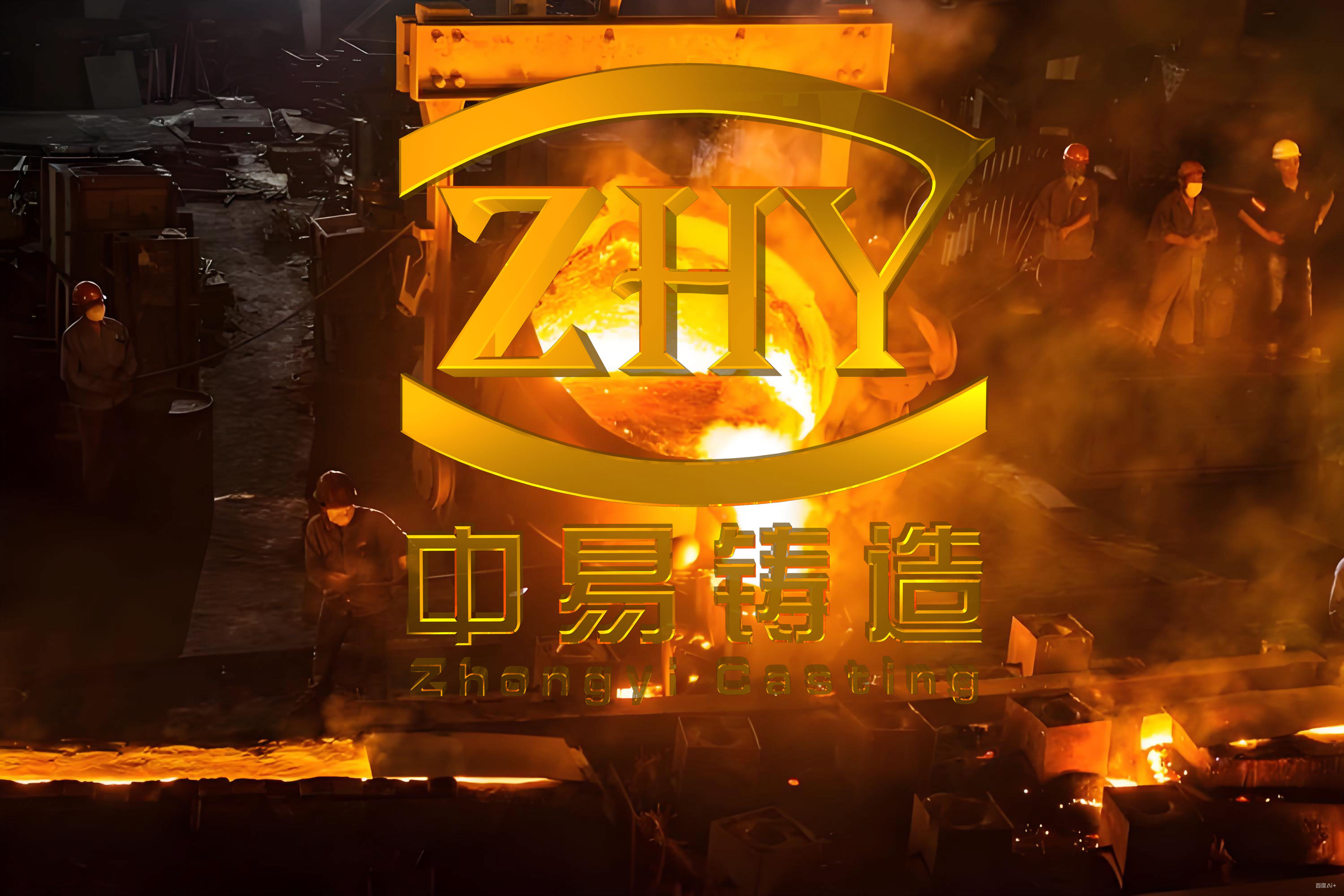
This image illustrates a typical智能铸造车间场景 where sand casting manufacturers employ advanced equipment like automated pouring systems and robotic handlers, all interconnected through the PLC communication management system. Such visualizations underscore the practical implementation of the system, highlighting how sand casting manufacturers can achieve a seamless flow of materials and information. In another instance, a sand casting manufacturer utilizing traditional molding lines integrated the system to retrofit legacy PLCs with modern通讯 capabilities. By deploying the C/S data acquisition module alongside existing equipment, they gained real-time insights into sand compaction and moisture levels, enabling predictive adjustments that reduced scrap rates by 15%. This case exemplifies how sand casting manufacturers can incrementally adopt smart technologies without costly overhauls, leveraging the system’s flexibility to bridge old and new assets.
The system’s impact on data management is equally profound for sand casting manufacturers. With all device variables accessible via a single interface, data analytics platforms can aggregate information to identify trends, such as correlating furnace temperature fluctuations with casting defects. This facilitates proactive maintenance, where sand casting manufacturers can schedule equipment servicing based on usage patterns rather than fixed intervals, minimizing unplanned downtime. Furthermore, the RESTful APIs support integration with cloud platforms, allowing sand casting manufacturers to implement remote monitoring and control—a growing trend in the era of digital twins. For example, production managers can access real-time dashboards from anywhere, making informed decisions to optimize resource allocation across multiple foundries. This connectivity aligns with the broader Industry 4.0 vision, positioning sand casting manufacturers at the forefront of technological innovation.
Looking ahead, the PLC communication management system is poised to evolve in tandem with emerging technologies. For sand casting manufacturers, future enhancements could incorporate machine learning algorithms to predict equipment failures based on historical data stored in Redis, or blockchain for immutable traceability of cast components from raw material to finished product. Additionally, support for newer protocols like MQTT or OPC UA PubSub could expand its applicability to edge computing scenarios, where sand casting manufacturers deploy sensors in remote or harsh environments. The system’s modular design ensures that such extensions can be integrated with minimal disruption, future-proofing investments for sand casting manufacturers. As 5G networks become prevalent, the low-latency capabilities could be further leveraged for real-time control of mobile robots or augmented reality maintenance guides, opening new avenues for efficiency gains in sand casting operations.
In summary, the development and application of a PLC communication management system represent a pivotal advancement for sand casting manufacturers embarking on digital transformation journeys. By addressing the通讯 fragmentation inherent in heterogeneous industrial environments, this system provides a scalable, cost-effective, and高性能 foundation for integrating upper-layer management systems with底层 automation devices. Its architecture—combining B/S and C/S modules with RESTful APIs and Redis clusters—ensures both flexibility and real-time responsiveness, critical for the dynamic processes of sand casting manufacturers. The incorporation of simulation tools accelerates development, while multi-threading and efficient protocol handling minimize latency, enabling sand casting manufacturers to monitor and control production with unprecedented precision. As demonstrated in real-world deployments, the system enhances operational efficiency, reduces costs, and supports data-driven决策, empowering sand casting manufacturers to thrive in an increasingly competitive and technologically sophisticated market. Ultimately, this innovation underscores the importance of tailored software solutions in unlocking the full potential of intelligent foundry plants for sand casting manufacturers worldwide.