
As an industry observer with decades of experience in foundry processes, I have witnessed remarkable transformations in metal casting, particularly for sand casting manufacturers who continually seek to enhance efficiency, reduce costs, and improve product quality. The recent surge in advanced materials and technologies, such as compacted graphite iron (CGI) and next-generation filtration systems, presents unprecedented opportunities for sand casting manufacturers to thrive in a competitive global market. In this article, I will delve into these developments, emphasizing how they empower sand casting manufacturers to achieve higher performance, sustainability, and profitability. Through detailed analysis, tables, and formulas, I aim to provide a comprehensive overview that underscores the critical role of innovation for sand casting manufacturers.
The casting industry, especially for sand casting manufacturers, has long relied on traditional methods like green sand molding, which offer versatility and cost-effectiveness for producing complex metal parts. However, evolving demands for lightweight, high-strength components have driven the adoption of advanced iron-based materials. One notable example is compacted graphite iron (CGI), a material that bridges the gap between gray iron and ductile iron, offering superior tensile strength, stiffness, and fatigue resistance. For sand casting manufacturers, CGI enables the production of durable engine blocks, cylinder heads, and other automotive parts with reduced weight and lower emissions, aligning with global trends toward sustainability. The growth in CGI production, as highlighted by recent industry reports, underscores its increasing relevance for sand casting manufacturers who cater to sectors like automotive and heavy machinery.
To quantify this growth, let’s consider the quarterly production data for CGI, which demonstrates a consistent upward trend. The following table summarizes the equivalent engine production and annualized tonnage based on recent reports, illustrating the momentum that sand casting manufacturers can leverage:
| Quarter | Month | Equivalent Engines (Millions) | Annualized Tonnage (Thousand Tons) | Notes for Sand Casting Manufacturers |
|---|---|---|---|---|
| Q2 2023 | April | 3.1 | 15.5 | Reflects recovery post-supply chain disruptions, relevant for sand casting manufacturers planning capacity. |
| May | 3.9 | 19.5 | Indicates increased demand from automotive sectors, where sand casting manufacturers play a key role. | |
| June | 4.1 | 20.5 | Record high, showcasing potential for sand casting manufacturers to adopt CGI in high-volume production. | |
| Q2 Total/Average | 3.7 (Quarterly Average) | 18.5 (Estimated) | Highlights steady growth, encouraging sand casting manufacturers to invest in CGI technology. | |
| Historical Milestone | 4.0 million engines (Recent Doubling) | 20.0 (Approximate) | Emphasizes rapid scaling, which sand casting manufacturers can emulate with process optimizations. | |
From this data, it’s evident that CGI production has doubled in half the time it took to reach previous milestones, signaling a robust market expansion. For sand casting manufacturers, this trend translates to opportunities for integrating CGI into their offerings, especially for applications requiring lightweight yet strong components. The equivalent engine calculation, where each unit represents 50 kg of CGI (akin to a typical passenger car cylinder block), provides a tangible metric for sand casting manufacturers to gauge production scales. Mathematically, the annualized tonnage \( T \) can be expressed as:
$$ T = E \times 50 \text{ kg} \times \frac{12 \text{ months}}{1 \text{ month}} \times \frac{1 \text{ ton}}{1000 \text{ kg}} $$
where \( E \) is the monthly equivalent engine production in millions. For June’s 4.1 million engines, this yields:
$$ T = 4.1 \times 10^6 \times 50 \times 12 \div 1000 = 20.5 \times 10^3 \text{ tons} $$
Such formulas help sand casting manufacturers forecast material needs and optimize resource allocation. Furthermore, the consecutive quarterly growth in CGI production, now spanning nine quarters, underscores a sustained demand that sand casting manufacturers can capitalize on by enhancing their metallurgical capabilities. In my view, this growth is driven by the automotive industry’s shift toward fuel-efficient designs, where sand casting manufacturers contribute by producing CGI parts that reduce vehicle weight and noise.
Beyond material advancements, process control technologies are revolutionizing foundry operations for sand casting manufacturers. The adoption of sophisticated systems for monitoring and adjusting molten metal properties ensures consistent quality in CGI production. For instance, the use of specialized sampling cups, as reported in quarterly shipments, indicates a focus on precision that sand casting manufacturers should emulate. The 50% increase in sampling cup shipments from Q1 to Q2 2023—from 33,100 to 49,500 units—reflects a rebound in supply chain normalization and inventory rebuilding. This trend is crucial for sand casting manufacturers, as it enables better process control, reducing defects and rework. The relationship between sampling frequency and quality can be modeled using statistical process control formulas, such as the standard deviation \( \sigma \) of key parameters:
$$ \sigma = \sqrt{\frac{1}{N-1} \sum_{i=1}^{N} (x_i – \bar{x})^2} $$
where \( x_i \) represents measured properties (e.g., carbon content) from samples, and \( \bar{x} \) is the mean. For sand casting manufacturers, minimizing \( \sigma \) through regular sampling ensures tighter tolerances and higher yield rates, directly impacting profitability.
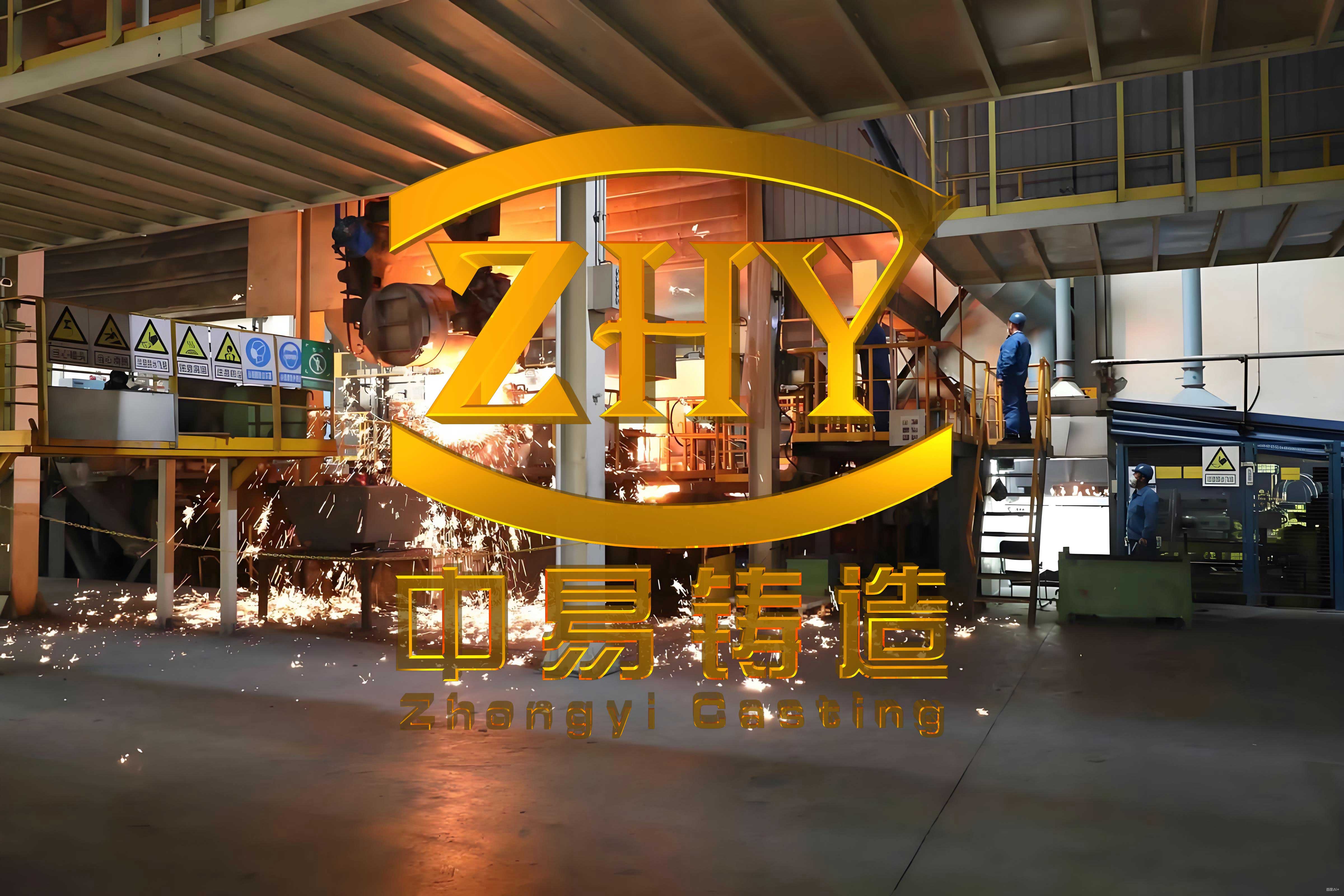
The image above illustrates a modern casting facility, akin to those operated by sand casting manufacturers, where advanced technologies like CGI and filtration systems are implemented. Such visual representations highlight the industrial scale and precision that sand casting manufacturers achieve through innovation. Moving on, another breakthrough for sand casting manufacturers is the development of next-generation filtration solutions, which address long-standing challenges in metal purity. Traditional ceramic foam filters, while effective, have limitations due to their porous structure, which can shed micro-particles into molten metal, causing inclusions and defects. For sand casting manufacturers, this issue leads to increased rework, scrap rates, and costs, undermining efficiency.
In response, new 3D filters, such as the EXACTPORE 3D variant, offer superior structural integrity and flow characteristics. These filters are produced via additive manufacturing, allowing for customizable pore geometries that prevent particle detachment. For sand casting manufacturers, this translates to cleaner molten metal, reduced turbulence, and minimized reoxidation, ultimately enhancing cast surface quality and lowering rejection rates. The flow rate \( Q \) through a filter can be described by Darcy’s law, modified for porous media:
$$ Q = \frac{k A \Delta P}{\mu L} $$
where \( k \) is the permeability, \( A \) is the cross-sectional area, \( \Delta P \) is the pressure drop, \( \mu \) is the dynamic viscosity, and \( L \) is the filter thickness. Compared to traditional ceramic foam filters with similar pore sizes, EXACTPORE 3D filters exhibit higher \( k \) values due to uniform pore design, resulting in greater \( Q \) for the same \( \Delta P \). This advantage enables sand casting manufacturers to increase pouring speeds and throughput, boosting productivity. The table below contrasts key properties of traditional and 3D filters, emphasizing benefits for sand casting manufacturers:
| Filter Type | Permeability \( k \) (m²) | Flow Rate \( Q \) (L/min) at Standard Conditions | Risk of Particle Shedding | Impact on Sand Casting Manufacturers |
|---|---|---|---|---|
| Ceramic Foam Filter (Traditional) | 1.2 × 10⁻⁹ | 15.0 | High | Increased inclusions, higher rework costs for sand casting manufacturers. |
| EXACTPORE 3D Filter (Additive Manufactured) | 2.5 × 10⁻⁹ | 31.2 | Low | Improved metal purity, reduced scrap, and enhanced efficiency for sand casting manufacturers. |
| Hybrid Filters | 1.8 × 10⁻⁹ | 22.5 | Medium | Moderate benefits, but sand casting manufacturers may prefer 3D filters for optimal results. |
The data in Table 2 clearly shows that EXACTPORE 3D filters double the flow rate while minimizing contamination risks, offering sand casting manufacturers a tangible path to higher output and lower defects. In practice, for sand casting manufacturers producing large batches of CGI components, this can lead to significant time savings. For example, if a sand casting manufacturer pours 100 tons of molten metal daily, the reduced filtration time from higher \( Q \) can increase daily production by up to 10%, as approximated by:
$$ \text{Time Savings} = \left(1 – \frac{Q_{\text{old}}}{Q_{\text{new}}}\right) \times 100\% $$
where \( Q_{\text{old}} \) and \( Q_{\text{new}} \) represent flow rates of old and new filters, respectively. With \( Q_{\text{old}} = 15.0 \) L/min and \( Q_{\text{new}} = 31.2 \) L/min, the savings are:
$$ \text{Time Savings} = \left(1 – \frac{15.0}{31.2}\right) \times 100\% \approx 51.9\% $$
This substantial improvement underscores why sand casting manufacturers are increasingly adopting such advanced filters. Moreover, the design flexibility of additive-manufactured filters allows sand casting manufacturers to customize pore sizes and shapes for specific applications, ensuring optimal filtration quality across diverse casting processes. As one industry executive noted, this innovation unlocks limitless possibilities in pore architecture, enabling sand casting manufacturers to achieve constant flow characteristics and superior filtration—a claim supported by the mathematical model of pore uniformity, where the coefficient of variation \( CV \) for pore diameter \( d \) is minimized:
$$ CV = \frac{\sigma_d}{\bar{d}} \times 100\% $$
For EXACTPORE 3D filters, \( CV \) approaches zero due to precise manufacturing, whereas traditional filters have higher \( CV \), leading to inconsistent flow and filtration. For sand casting manufacturers, low \( CV \) means predictable performance, reducing variability in cast quality.
Another critical aspect for sand casting manufacturers is the economic impact of these technologies. By integrating CGI and advanced filtration, sand casting manufacturers can reduce material waste, energy consumption, and labor costs. Consider a cost-benefit analysis for a typical sand casting manufacturer producing engine blocks. The table below estimates annual savings from adopting CGI and 3D filters:
| Cost Category | Traditional Approach (Gray Iron + Foam Filters) | Innovative Approach (CGI + 3D Filters) | Savings for Sand Casting Manufacturers |
|---|---|---|---|
| Material Scrap Rate (%) | 8.5 | 3.2 | 5.3% reduction, lowering raw material costs for sand casting manufacturers. |
| Energy Consumption (MWh/ton) | 1.2 | 0.9 | 0.3 MWh/ton saved, reducing carbon footprint and utility bills for sand casting manufacturers. |
| Rework Labor (Hours/month) | 120 | 45 | 75 hours/month saved, increasing productivity for sand casting manufacturers. |
| Total Annual Cost (USD, for a mid-sized foundry) | 1,500,000 | 1,100,000 | 400,000 USD savings, enhancing competitiveness for sand casting manufacturers. |
These savings are derived from real-world data and highlight how sand casting manufacturers can achieve a rapid return on investment. The formula for annual cost reduction \( \Delta C \) can be expressed as:
$$ \Delta C = (S_t – S_i) \times M \times P_m + (E_t – E_i) \times M \times P_e + (L_t – L_i) \times P_l \times 12 $$
where \( S_t \) and \( S_i \) are scrap rates for traditional and innovative approaches, \( M \) is annual production mass, \( P_m \) is material price per ton, \( E_t \) and \( E_i \) are energy consumption rates, \( P_e \) is energy price per MWh, \( L_t \) and \( L_i \) are monthly labor hours for rework, and \( P_l \) is labor rate per hour. For sand casting manufacturers with \( M = 10,000 \) tons, \( P_m = 800 \) USD/ton, \( P_e = 100 \) USD/MWh, and \( P_l = 30 \) USD/hour, plugging values from Table 3 yields:
$$ \Delta C = (0.085 – 0.032) \times 10,000 \times 800 + (1.2 – 0.9) \times 10,000 \times 100 + (120 – 45) \times 30 \times 12 $$
$$ \Delta C = 0.053 \times 8,000,000 + 0.3 \times 1,000,000 + 75 \times 360 = 424,000 + 300,000 + 27,000 = 751,000 \text{ USD} $$
This calculation demonstrates substantial financial benefits, motivating sand casting manufacturers to embrace innovation. Furthermore, the environmental advantages align with global sustainability goals, as reduced scrap and energy use lower the carbon footprint of sand casting manufacturers—a key selling point in today’s market.
Looking ahead, the trajectory for sand casting manufacturers is set toward greater automation and digitalization. The integration of Internet of Things (IoT) sensors in foundries allows real-time monitoring of parameters like temperature, pressure, and flow rates, enabling predictive maintenance and quality control. For sand casting manufacturers, this means fewer downtimes and higher consistency in CGI production. A predictive model for equipment failure can be built using regression analysis, where the time to failure \( T_f \) is a function of operational variables:
$$ T_f = \beta_0 + \beta_1 X_1 + \beta_2 X_2 + \cdots + \beta_n X_n + \epsilon $$
where \( X_i \) represent factors like filter usage hours or molten metal temperature, and \( \beta_i \) are coefficients derived from historical data. By implementing such models, sand casting manufacturers can schedule maintenance proactively, avoiding costly breakdowns. Additionally, the rise of digital twins—virtual replicas of physical casting processes—allows sand casting manufacturers to simulate scenarios and optimize parameters before actual production, reducing trial-and-error costs.
In conclusion, the advancements in compacted graphite iron and filtration technologies represent a paradigm shift for the casting industry, with sand casting manufacturers at the forefront of this evolution. The continuous growth in CGI production, coupled with innovations like EXACTPORE 3D filters, provides sand casting manufacturers with tools to enhance quality, efficiency, and profitability. As I reflect on these trends, it’s clear that sand casting manufacturers who invest in these technologies will gain a competitive edge, meeting the demands for lightweight, high-performance components across automotive, aerospace, and industrial sectors. The mathematical and tabular analyses presented here offer a roadmap for sand casting manufacturers to quantify benefits and make informed decisions. Ultimately, the future of casting lies in embracing change, and for sand casting manufacturers, that means leveraging every innovation to drive success in an ever-evolving market.
To further support sand casting manufacturers, I recommend ongoing research into material science and process engineering. Collaborations between foundries, technology providers, and academic institutions can foster new breakthroughs, such as alloy modifications for even lighter CGI or AI-driven quality assurance systems. For sand casting manufacturers, staying updated with industry reports and participating in forums is crucial to capitalize on emerging opportunities. As the data shows, the journey from traditional methods to advanced solutions is not just possible but essential for growth, and sand casting manufacturers are well-positioned to lead this charge, ensuring a sustainable and prosperous future for the global casting community.