
In my years of experience as a sand casting manufacturer, I have witnessed the transformative power of effective management and strategic thinking in this industry. The journey from a small foundry to a robust enterprise requires not only technical prowess but also a clear vision and disciplined execution. This article delves into the core principles and practical approaches that can help sand casting manufacturers thrive in a competitive market. I will share insights on equipment optimization, leadership qualities, quality control,诚信, innovation, and self-promotion, all from a first-person perspective. Throughout, I will emphasize the unique challenges and opportunities faced by sand casting manufacturers, using formulas and tables to consolidate key concepts. Our goal is to build stronger, more efficient operations that deliver excellence in every cast.
Let us begin with a fundamental aspect: technological transformation. Many sand casting manufacturers struggle with outdated equipment that hampers productivity and increases costs. Through redesign and innovation, we can simplify processes, reduce expenses, and save space. For instance, consider a common issue in mold handling where heavy hammers and iron molds need synchronized movement to prevent adhesion and minimize faults. The relationship between force, weight, and efficiency can be expressed mathematically. Suppose the force applied (F) is a function of the hammer weight (W_h) and mold weight (W_m). The synchronization condition ensures that the net force avoids sticking, which can be modeled as:
$$ F_{net} = \alpha \cdot W_h + \beta \cdot W_m – \gamma \cdot F_{adhesion} $$
where $\alpha$, $\beta$, and $\gamma$ are coefficients determined by the system design. For sand casting manufacturers, optimizing this leads to higher production rates. The improvement in productivity (P) can be quantified as:
$$ P = \frac{Q_{new} – Q_{old}}{T} \times 100\% $$
where $Q_{new}$ is the output after modification, $Q_{old}$ is the previous output, and T is the time period. This underscores how incremental changes can yield significant gains for sand casting manufacturers.
To further illustrate, below is a table summarizing key equipment parameters before and after optimization for typical sand casting manufacturers:
| Parameter | Before Optimization | After Optimization | Improvement (%) |
|---|---|---|---|
| Cycle Time (seconds) | 120 | 90 | 25 |
| Energy Consumption (kWh) | 150 | 110 | 26.7 |
| Fault Frequency (per 1000 cycles) | 15 | 5 | 66.7 |
| Space Utilization (m²) | 50 | 35 | 30 |
Such data-driven approaches are essential for sand casting manufacturers aiming to enhance operational efficiency. The integration of synchronized systems not only prevents defects but also boosts overall output, making us more competitive. In this context, visualizing modern foundry setups can inspire further innovations. For example, advanced sand casting manufacturers often employ automated lines that reduce manual intervention. Here is an image depicting state-of-the-art equipment that embodies these principles:
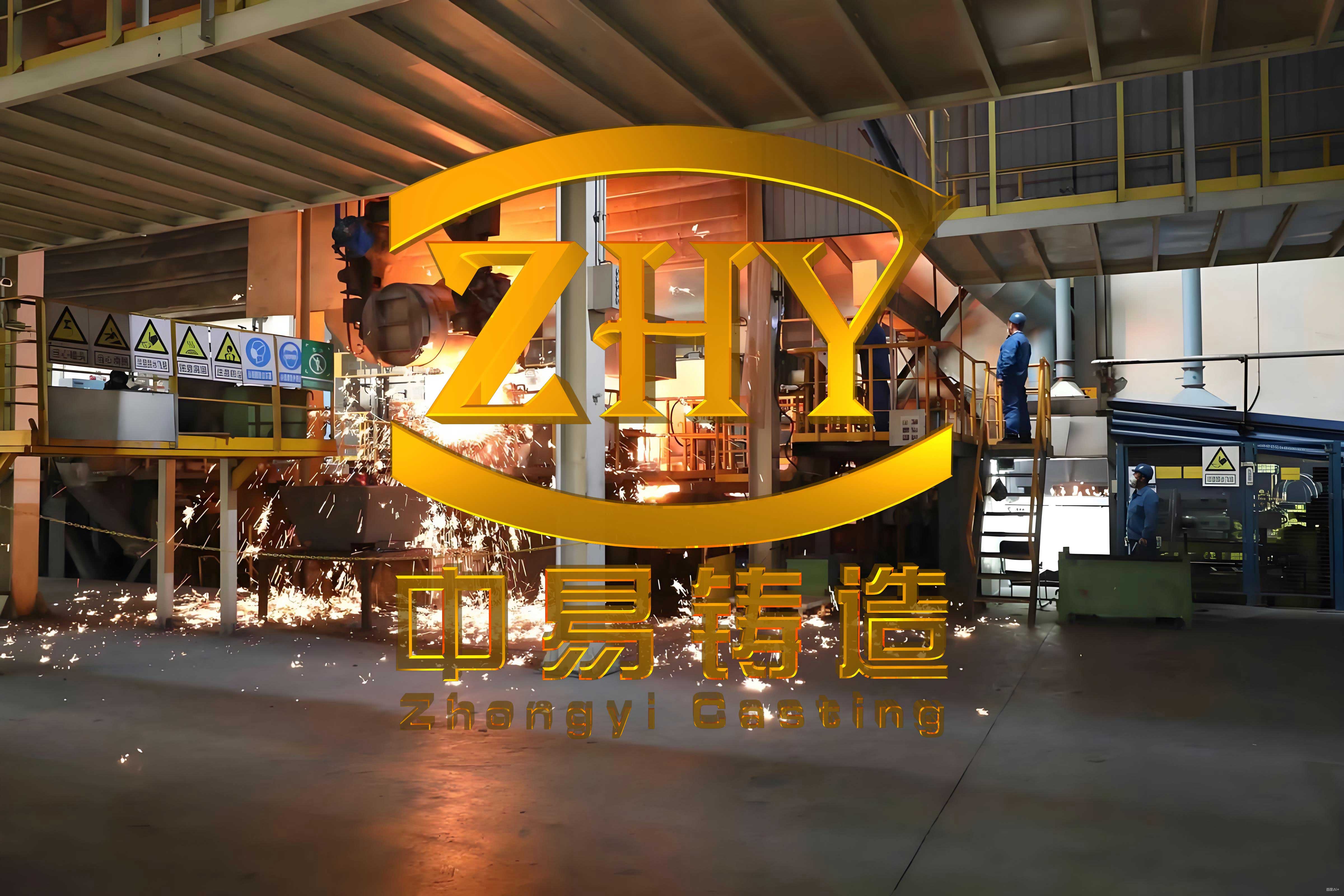
This highlights the importance of adopting robust machinery in sand casting manufacturing processes.
Moving beyond hardware, the human element is paramount. For sand casting manufacturers to grow, leadership plays a decisive role. A factory manager must embody a blend of traits that drive success. From my perspective, the ideal leader for a sand casting manufacturer should possess three core qualities: mindset, knowledge, and capability. These can be broken down into specific attributes, as summarized in the table below:
| Quality Category | Key Attributes | Impact on Sand Casting Manufacturers |
|---|---|---|
| Mindset | Strong career dedication, sensitivity to new trends, relentless learning, perseverance, integrity, self-criticism | Fosters a culture of innovation and resilience, crucial for adapting to market shifts in sand casting. |
| Knowledge | Solid theoretical foundation, deep expertise in casting processes, broad general knowledge (e.g., law, social dynamics) | Enables informed decision-making, improving technical outcomes for sand casting manufacturers. |
| Capability | Ability to appoint talent, accurate judgment, organizational skills, adaptability, leading by example | Enhances team efficiency and reduces operational bottlenecks in sand casting operations. |
Moreover, a successful manager in sand casting manufacturers must have foresight, remain present at the helm, implement hierarchical management, stay informed through regular inspections, offer fair compensation, and enforce balanced rewards and penalties. These practices ensure that everyone is aligned toward common goals. For instance, the effectiveness of leadership (L) can be modeled as a function of these factors:
$$ L = \sum_{i=1}^{n} w_i \cdot A_i $$
where $w_i$ represents weights assigned to each attribute $A_i$, such as decision-making speed or employee satisfaction. By optimizing L, sand casting manufacturers can achieve higher morale and productivity.
Quality is the lifeblood of any sand casting manufacturer. Without superior quality, market trust erodes, and growth stagnates. In my practice, I insist on treating every casting as a masterpiece, where defects are unacceptable. To elevate quality, sand casting manufacturers must focus on several areas: employing skilled personnel, using premium materials, implementing robust processes, and maintaining strict controls. The quality index (Q) for a casting batch can be expressed as:
$$ Q = \frac{N_{defect-free}}{N_{total}} \times 100\% $$
where $N_{defect-free}$ is the number of defect-free castings, and $N_{total}$ is the total produced. For sand casting manufacturers, striving for Q close to 100% is essential. This requires high standardization, comprehensive testing, and a traceability system for rejects. Below is a table outlining key quality metrics for sand casting manufacturers:
| Metric | Target Value | Measurement Method | Frequency |
|---|---|---|---|
| Dimensional Accuracy (mm) | ±0.5 | Coordinate Measuring Machine | Per batch |
| Surface Roughness (Ra) | ≤ 6.3 μm | Profilometer | Daily |
| Tensile Strength (MPa) | ≥ 250 | Destructive testing | Weekly |
| Defect Rate (%) | < 1 | Visual and X-ray inspection | Continuous |
Implementing a defect追究 system, where every reject is analyzed and corrective actions are taken, reinforces a quality-first mindset among sand casting manufacturers. Over time, this builds a reputation for reliability, paving the way for brand development. For sand casting manufacturers, a strong brand translates into market dominance and sustained profitability.
诚信 is another cornerstone for sand casting manufacturers. In a competitive landscape, trustworthiness can set a foundry apart. I adhere to the principle that credibility outweighs short-term profits. This means delivering on promises:优质 products, sufficient quantities, timely供应, and responsive service. The relationship between诚信 (T) and customer retention (R) can be approximated by:
$$ R = k \cdot T^2 $$
where k is a constant specific to the market. By prioritizing诚信, sand casting manufacturers cultivate loyal clients who return and refer others. This organic growth is more sustainable than aggressive sales tactics. For example, when sand casting manufacturers face supply chain delays, transparent communication and compensatory measures uphold trust. In the long run, this ethical approach reduces transaction costs and enhances collaboration within the industry.
Innovation is the engine of progress for sand casting manufacturers. Stagnation leads to obsolescence, so we must embrace change and think unconventionally. This involves逆向思维—exploring paths others avoid. From a technical standpoint, innovation in sand casting can be quantified through the innovation index (I):
$$ I = \frac{E_{new} – E_{baseline}}{C_{R&D}} $$
where $E_{new}$ is the efficiency gain from a new method, $E_{baseline}$ is the baseline efficiency, and $C_{R&D}$ is the research and development cost. For sand casting manufacturers, investing in R&D yields dividends in process improvements, such as novel binder systems or energy-efficient熔炼. Below is a table comparing traditional versus innovative practices in sand casting manufacturing:
| Aspect | Traditional Approach | Innovative Approach | Benefits for Sand Casting Manufacturers |
|---|---|---|---|
| Molding Sand | Clay-bonded, high waste | Environmentally friendly, recyclable | Reduces material costs and ecological footprint |
| Melting | Coal-fired, inconsistent | Induction furnaces, precise control | Improves metal quality and energy efficiency |
| Quality Control | Manual inspection | AI-driven defect detection | Enhances accuracy and speed |
| Supply Chain | Local sourcing only | Global digital networks | Increases flexibility and reduces lead times |
By fostering a culture of innovation, sand casting manufacturers can stay ahead of market trends and seize new opportunities. This requires courage to take calculated risks, grounded in thorough research and analysis.
Self-promotion is vital for sand casting manufacturers to gain visibility in a crowded marketplace. Even the best products need exposure to attract clients. In my experience, multiple strategies work synergistically. First, producing优质 castings is the most potent advertisement—satisfied customers become brand ambassadors. Second, creating opportunities for亮相, such as participating in exhibitions or supporting community projects, raises awareness. Third, associating with reputable entities (e.g., universities for joint R&D) enhances credibility. Fourth, leveraging media through ads and publications amplifies reach. The impact of promotion (P) on sales growth (G) can be modeled as:
$$ G = \alpha \cdot P + \beta \cdot Q $$
where $\alpha$ and $\beta$ are coefficients, and Q represents product quality. For sand casting manufacturers, a balanced promotion strategy ensures that the message reaches the right audience without compromising trade secrets. Publishing case studies or technical papers, for instance, showcases expertise while protecting core intellectual property. Over time, this builds a strong reputation that drives business expansion.
To encapsulate these ideas, let’s consider a holistic framework for sand casting manufacturers. The overall strength (S) of a foundry can be expressed as a composite of the discussed factors:
$$ S = w_1 \cdot T + w_2 \cdot Q + w_3 \cdot I + w_4 \cdot L + w_5 \cdot P $$
where T is诚信, Q is quality, I is innovation, L is leadership, P is promotion, and $w_i$ are weights reflecting their relative importance. By optimizing each component, sand casting manufacturers can achieve sustainable growth. The journey requires continuous effort and adaptation, but the rewards—increased market share, profitability, and industry respect—are well worth it.
In conclusion, as a sand casting manufacturer, I believe that the path to strength lies in integrating technical excellence with strategic management. From equipment upgrades to human resource development, every aspect contributes to a resilient operation. By emphasizing quality,诚信, innovation, and self-promotion, sand casting manufacturers can not only survive but thrive in dynamic economies. The formulas and tables provided here serve as tools for reflection and improvement. Let us commit to these principles, collaborate within the community, and drive the sand casting industry toward unprecedented achievements. Together, we can build foundries that are not just productive but also pillars of innovation and trust.