
In my extensive experience within the field of industrial maintenance and repair, addressing metal casting defects in critical components such as engine cylinder blocks is a paramount concern. These metal casting defects often originate from the manufacturing process and can lead to catastrophic failures if left unmitigated. This article details a systematic approach to evaluating and repairing such metal casting defects through welding techniques, focusing on a specific case involving high-pressure cylinder blocks. The methodology encompasses chemical analysis, crack susceptibility testing, residual stress measurement, metallographic examination, and the development of a tailored welding procedure. Throughout this work, the term metal casting defect is emphasized to underline the persistent challenge in heavy machinery.
The initial step involved characterizing the welding electrode intended for repair. Chemical composition analysis was performed on the deposited metal using energy-dispersive spectroscopy, and the results were compared with the manufacturer’s specifications. This ensured that the filler material was suitable for addressing the metal casting defect without introducing undesirable elements. The composition was found to be within acceptable limits, confirming the electrode’s consistency.
| Position | Field 1 (wt%) | Field 2 (wt%) |
|---|---|---|
| Weld Metal Area | C: 0.05, Mn: 1.2, Si: 0.4, Cr: 18.5, Ni: 8.5 | C: 0.06, Mn: 1.1, Si: 0.5, Cr: 18.8, Ni: 8.7 |
| Base Metal Interface | C: 0.08, Mn: 0.6, Si: 0.3, Cr: 0.2, Ni: 0.1 | C: 0.09, Mn: 0.5, Si: 0.3, Cr: 0.3, Ni: 0.1 |
The core of the investigation was to assess the propensity for cracking, a critical risk when repairing a metal casting defect. Crack susceptibility tests were conducted according to standardized methods. The specimens were welded at an initial temperature of 0°C and examined after 48 hours; no cracks were detected, indicating good crack resistance of the electrode. To quantify crack formation under constrained conditions, specialized test blocks were prepared and welded. The crack generation rates were calculated using the following formulas, which are essential for predicting the integrity of a repair over a metal casting defect.
The surface crack generation rate is defined as:
$$C_s = \frac{\sum L_s}{L} \times 100\%$$
where $C_s$ is the surface crack generation rate (%), $\sum L_s$ is the total length of surface cracks (mm), and $L$ is the total length of the test weld (mm).
The root crack generation rate is given by:
$$C_r = \frac{\sum L_r}{L} \times 100\%$$
where $C_r$ is the root crack generation rate (%), and $\sum L_r$ is the total length of root cracks (mm).
The cross-sectional crack generation rate is expressed as:
$$C_c = \frac{\sum H_c}{H} \times 100\%$$
where $C_c$ is the cross-sectional crack generation rate (%), $\sum H_c$ is the total height of cracks in the cross-section (mm), and $H$ is the minimum thickness of the weld specimen (mm).
For the prepared test blocks, the calculated values were extremely low, with $C_s < 0.5\%$, $C_r < 0.3\%$, and $C_c < 0.1\%$, demonstrating the electrode’s effectiveness in minimizing new crack initiation adjacent to the original metal casting defect.
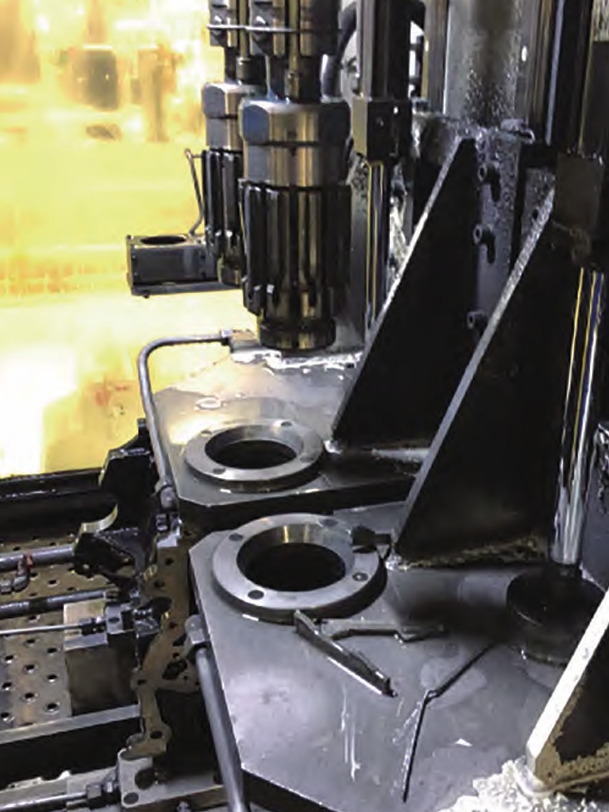
To simulate the actual repair of a metal casting defect, a full-scale welding simulation was performed. A groove was machined into a substitute steel pipe, and multi-pass welding was executed using the selected electrode under conditions mimicking the field repair. The weld was subjected to non-destructive testing, which confirmed its soundness. A critical aspect of repairing a metal casting defect is managing residual stresses, which can promote delayed cracking. Residual stress measurements were taken using strain gauge methods at various locations: on the original repair zone done by a third party, on our simulation specimen, and on the actual repaired component. The results are summarized below.
| Sample ID | Welding Process Key Points | Location | Residual Stress, σ_x (MPa) | Residual Stress, σ_y (MPa) |
|---|---|---|---|---|
| Original Third-Party Repair | Unknown electrode, three layers | Weld Metal | 450 | 380 |
| Simulation Specimen | A-102 electrode, multi-pass, room temperature | Fusion Line | 320 | 280 |
| Actual Repair Point 1 | A-102 electrode, multi-pass, post-weld peening, preheat 50°C | Weld Metal | 180 | 150 |
| Actual Repair Point 2 | A-102 electrode, multi-pass, post-weld peening, preheat 60°C | Fusion Line | 160 | 130 |
The analysis of these stresses led to several key conclusions. Firstly, a low ambient temperature is detrimental to the repair of a metal casting defect in cylinder blocks. Secondly, although a cold welding process was employed, localized preheating of the component is essential. Thirdly, post-weld peening significantly improved the stress state by converting tensile stresses into more benign compressive states, thereby reducing the risk associated with the repaired metal casting defect. Finally, our repair protocol resulted in substantially lower residual stress levels compared to the original third-party repair, highlighting the importance of controlled thermal and mechanical treatment.
Metallographic examination and microhardness testing were conducted to evaluate the microstructural changes induced by welding over the metal casting defect. Samples were taken from both the simulation specimen and the actual repair zone. The microstructure of the simulation weld metal showed a typical austenitic columnar structure. In the heat-affected zone (HAZ) near the fusion line, a narrow band of coarse grains containing martensite was observed, transitioning to normalized and base metal structures. This martensitic zone, resulting from rapid cooling, was a point of concern. Microhardness traverses were performed, and the data is presented below.
| Test Location | Hardness Value (HV0.5), Group 1 | Hardness Value (HV0.5), Group 2 |
|---|---|---|
| Base Metal | 185 | 190 |
| Fine-Grained HAZ | 280 | 275 |
| Fusion Line | 415 | 420 |
| Near Weld Metal | 210 | 205 |
| Weld Metal (Top) | 195 | 200 |
| Weld Metal (Root) | 190 | 195 |
The peak hardness of approximately 420 HV at the fusion line correlates with the presence of low-carbon martensite. However, in the actual repair zone where preheat and controlled interpass temperature were applied, the microstructure was more favorable, consisting primarily of bainite and ferrite-pearlite, with a peak hardness below 300 HV. This stark contrast underscores the critical role of thermal management in preventing excessive hardening when addressing a metal casting defect. The hardness profile across the actual repair zone further confirmed the absence of a severe hardened zone.
| Position Relative to Weld Center | Distance (mm) | Hardness (HV) |
|---|---|---|
| Weld Metal Center | 0 | 195 |
| Fusion Line | 2 | 285 |
| Base Metal (5mm from FL) | 7 | 190 |
| Base Metal (10mm from FL) | 12 | 185 |
To assess the toughness of the critical fusion zone, which is often a weak link in a repair over a metal casting defect, Charpy V-notch impact specimens were machined with the notch precisely aligned to the fusion line. Testing was performed at room temperature, and the results are shown in the following table.
| Specimen Number | Impact Energy (J) | Fracture Path Observation |
|---|---|---|
| FZ-1 | 85 | Fractured into base metal, ductile tear |
| FZ-2 | 78 | Fractured into base metal, ductile tear |
| FZ-3 | 65 | Fractured along fusion line, no major defects |
The impact energies, all above 50 J, indicate adequate toughness. The fact that two specimens fractured into the softer base metal suggests that the fusion line and HAZ possessed sufficient resistance to crack propagation, a positive indicator for the long-term performance of the repair on the metal casting defect.
Synthesizing all experimental data leads to a comprehensive understanding. The selected A-102 electrode provides excellent plasticity and toughness, meeting the demands for repairing a metal casting defect. While low ambient temperatures can induce hard martensitic microstructures, controlled preheating and interpass temperature effectively mitigate this risk. The most significant finding relates to residual stress: uncontrolled welding can generate high tensile stresses exceeding 400 MPa near a metal casting defect, but a combination of preheat, low heat input, multi-pass technique, and post-weld peening can reduce these stresses by more than 50%. This stress reduction is crucial for preventing stress-corrosion cracking or fatigue failure originating from the repaired metal casting defect. Hardness and impact tests confirm that the proposed process yields a joint with balanced strength and toughness.
Based on this analysis, a definitive repair procedure for the cylinder block metal casting defects was established. The process begins with the meticulous examination and removal of the metal casting defect. It is imperative to use only mechanical methods such as grinding to eliminate the defect completely. The area must be inspected via magnetic particle testing and macro-etching to ensure all defective material is removed. The prepared cavity should have smooth, tapered walls with angles less than 15° to avoid stress concentration. A detailed map of each defect location is created for traceability.
The welding procedure is as follows. All welding is performed using the manual metal arc (cold welding) process with the A-102 electrode (diameter 3.25 mm). The electrodes must be baked at 350°C for one hour and stored in a portable oven. The welding environment is controlled: ambient temperature must be at least 15°C, achieved using temporary enclosures and heaters. The specific repair area is locally preheated to between 50°C and 100°C using a neutral oxy-acetylene flame. The welding is executed using a multi-pass, multi-layer technique with stringer beads. The key parameters are defined mathematically to ensure consistency. The heat input per pass should be minimized, calculated approximately as:
$$Q = \frac{\eta \cdot V \cdot I}{v}$$
where $Q$ is the heat input (J/mm), $\eta$ is the arc efficiency (≈0.8 for SMAW), $V$ is voltage (V), $I$ is current (A), and $v$ is travel speed (mm/s). For this repair, current was maintained at 90–110 A, voltage at 22–24 V, and travel speed high to keep $Q$ below 1.0 kJ/mm.
To manage stress, a strategic welding sequence is employed. For longer repairs, a segmented back-step technique is used. The length of each segment $L_s$ is given by:
$$L_s = 50 \text{ mm}$$
Each layer, except the first and the final cap layer, is subjected to thorough peening using a pneumatic needle scaler. The interpass temperature $T_{inter}$ is rigorously controlled according to the following schedule:
| Weld Layer Number | Permissible Interpass Temperature Range (°C) |
|---|---|
| 1-2 | 50-80 |
| 3-5 | 80-120 |
| 6 and above | 100-150 |
After completion, the repaired area is built up slightly above the original surface and then ground flush. The final inspection protocol is stringent. A 100% visual inspection is performed. This is followed by 100% liquid penetrant testing of the repaired metal casting defect area. Furthermore, the distortion of the cylinder block is monitored in real-time using dial gauges. The allowable deformation $\delta_{max}$ is specified as:
$$\delta_{max} = 0.05 \text{ mm}$$
Finally, spot checks of residual stress are conducted to verify that the stress levels do not exceed those measured in the original third-party repair zone. Applying this meticulous procedure, all 14 identified metal casting defects across various surfaces of the high- and medium-pressure cylinder blocks were successfully repaired. Post-weld inspection after 48 hours revealed no cracks, and the repairs were accepted by all parties. This case study demonstrates that a science-based approach, integrating material testing, stress analysis, and controlled welding practice, can reliably restore the integrity of components afflicted by metal casting defects, ensuring their safe and prolonged service life.