
The pursuit of high-integrity, complex geometry components in aerospace and defense sectors has firmly established investment casting as a critical manufacturing process. Its unparalleled ability to replicate intricate details and achieve excellent surface finish is derived from three core advantages: the absence of parting lines, the high-fidelity replication of the wax pattern by the ceramic slurry, and the superior mold fill capability afforded by hot-shell pouring. However, this very strength—hot-shell pouring—is also a source of significant metallurgical challenge. The slow cooling rate inherent to the process promotes the formation of coarse as-cast microstructures, which, except in specialized applications like directionally solidified components, generally results in mechanical properties inferior to those obtained via other casting methods for the same alloy.
To adapt to flexible, low-volume production runs, many foundries employ medium-frequency induction furnaces for melting. While these furnaces offer rapid heating and excellent electromagnetic stirring for composition homogeneity, their operational principle introduces a major drawback. The continuous, vigorous agitation of the melt perpetually ruptures the protective oxide layer on the aluminum surface. This creates a persistent, dynamically renewed interface between the molten metal and the furnace atmosphere, dramatically exacerbating both oxidation and hydrogen absorption. Adhering to the fundamental metallurgical axiom that “slag carries gas”—where non-metallic inclusions often nucleate and trap gaseous phases—the combination of contaminated melt and the intrinsically poor gas permeability of ceramic shells makes ZL101A investment castings highly susceptible to defects like gas porosity, shrinkage, and, critically, slag inclusion defects. Consequently, enhancing melt cleanliness prior to pouring is paramount for achieving reliable, high-quality castings.
This article details a comprehensive investigation into the origins and prevention mechanisms of gas porosity and slag inclusion defects in ZL101A alloy. The focus is on practical melt treatment methodologies suitable for induction furnace operations.
Fundamental Mechanisms: Oxidation and Hydrogen Pickup
The formation of slag inclusion defects is intrinsically linked to the oxidation behavior of molten aluminum. Upon exposure to air, a thin, continuous layer of alumina (Al2O3) forms on the melt surface. Under quiescent conditions, this film acts as an effective protective barrier, significantly slowing further oxidation. However, this protective mechanism breaks down under agitation. The oxide film, whose solid particles possess a melting point exceeding 2050°C, is torn apart and entrained into the bulk liquid. Once submerged, these solid alumina particles become potential nucleation sites for other oxides and reactions, forming complex non-metallic clusters. During solidification, these clusters are trapped within the casting matrix, manifesting as debilitating slag inclusion defects that severely compromise mechanical properties, particularly fatigue life.
Hydrogen porosity, the other major defect, stems from the unique solubility characteristics of hydrogen in aluminum. Hydrogen is the only gas with significant solubility in molten aluminum, with its dissolution following Sieverts’ law:
$$ C_{H} = K_{H} \sqrt{P_{H_2}} $$
where \( C_{H} \) is the dissolved hydrogen concentration, \( K_{H} \) is the equilibrium constant (strongly temperature-dependent), and \( P_{H_2} \) is the partial pressure of hydrogen at the melt surface. The solubility decreases drastically upon solidification. A critical parameter is the hydrogen solubility ratio at the solidus temperature:
$$ R_{H} = \frac{C_{H}^{L}}{C_{H}^{S}} $$
For aluminum alloys, this ratio is typically very high (often >10). For instance, under 0.1 MPa, the hydrogen solubility can drop from approximately 0.65 mL/100g in the liquid just above the solidus to about 0.034 mL/100g in the solid. If the actual hydrogen content in the melt exceeds the solid solubility, the excess hydrogen is rejected at the solidification front, forming bubbles that become permanent gas pores in the casting.
Experimental Materials and Methodology
The alloy used in this study was ZL101A, a near-eutectic Al-Si-Mg alloy widely used for high-strength castings. Its nominal and measured chemical compositions are presented in Table 1.
| Element | Si | Mg | Fe | Ti | Cu | Mn | Zn | Al |
|---|---|---|---|---|---|---|---|---|
| Specification (GB/T 8733) | 6.5-7.5 | 0.30-0.45 | ≤0.15 | 0.08-0.20 | – | – | – | Bal. |
| Measured | 6.542 | 0.361 | 0.154 | 0.127 | 0.046 | 0.011 | 0.010 | Bal. |
The melting was conducted in a medium-frequency induction furnace using a charge of primary aluminum (Al99.7), Al-Si master alloy, pure magnesium, Al-Ti master alloy, and approved returns. The melt treatment sequence was as follows:
- Melting & Alloying: The charge was melted and superheated to 750°C for homogenization.
- Degassing & Deoxidation: At 740°C, the melt was treated for 10 minutes using a combined method: purging with high-purity (99.99%) argon gas and the addition of a small amount (0.2%) of low-chloride flux. The argon bubbles provide a dual function: they create a local oxygen-depleted environment at the bubble-melt interface, and their upward flotation mechanically strips away entrained oxide films and dissolved hydrogen.
- Modification: At 730°C, a strontium-based modifier was added and held for 4 minutes to refine the eutectic silicon morphology.
- Filtration: Prior to pouring, the melt was passed through a ceramic foam filter with a pore density of 20 PPI (pores per linear inch) to physically intercept remaining solid inclusions responsible for slag inclusion defects.
Casting was performed via conventional gravity pouring into preheated (400°C) ceramic shells. The pouring temperature was maintained at 720°C.
Analysis and Discussion of Slag Inclusion Defects
The effectiveness of the melt treatment was evaluated through metallographic examination. In untreated melts, or those processed without adequate protection/filtration, the slag inclusion defects were readily observable. These defects typically appear as irregular, dark-colored clusters or stringers within the matrix, often associated with micro-porosity. The inclusions are primarily composed of alumina (Al2O3), but can also contain spinels (MgAl2O4) and other complex oxides formed during melt handling.
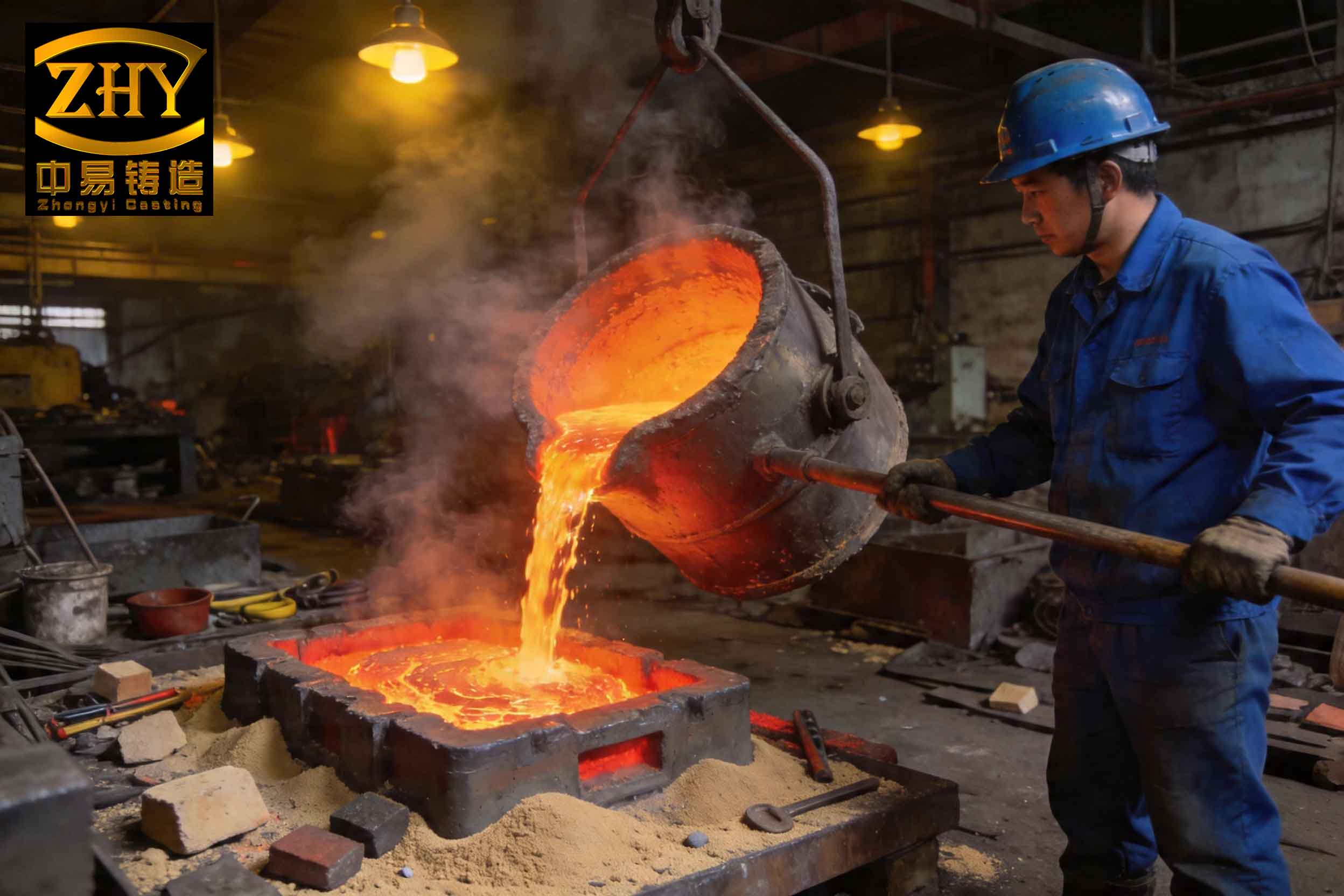
The quantitative impact of different treatment stages on inclusion content is profound. In a typical uncontrolled induction melt, the volume fraction of non-metallic inclusions can range from 0.005% to 0.020%. While this number seems small, the actual particle count is staggering. Assuming an average inclusion size of 40 μm, a volume fraction of just 0.01% (1 x 10⁻⁴) corresponds to roughly 11,000 individual particles per kilogram of melt. Each of these particles is a potential stress concentrator and failure initiation site.
The implemented treatment strategy attacks the slag inclusion defect problem at multiple stages, as summarized in Table 2.
| Treatment Stage | Approx. Inclusion Vol. Fraction After Treatment | Estimated Inclusion Removal Efficiency | Primary Mechanism |
|---|---|---|---|
| 1. Baseline (Untreated Induction Melt) | 0.005% – 0.020% | 0% (Reference) | – |
| 2. Argon Purging & Fluxing | 0.0015% – 0.0060% | ~70% | Flotation & separation of oxides; creation of oxygen-depleted zones. |
| 3. Ceramic Foam Filtration (20 PPI) | 0.0001% – 0.0040% | ~80% (relative to baseline) | Physical interception and cake filtration of solid inclusions. |
| 4. Combined Argon Purging + Filtration | 0.00005% – 0.0020% | ~90% | Synergistic effect of flotation/chemical cleaning followed by physical filtration. |
The mechanism of argon purging can be modeled by considering the flotation of inclusions on ascending bubbles. The probability \( P \) of an inclusion adhering to a gas bubble and being removed is a function of several factors, including wettability, collision efficiency, and bubble size. The reduction in inclusion concentration \( C \) over time \( t \) during purging can be approximated by a first-order decay:
$$ \frac{dC}{dt} = -k C $$
where \( k \) is a rate constant dependent on gas flow rate, bubble size distribution, and melt viscosity. The ceramic filter acts as a depth filter, where the filtration efficiency \( \eta \) for a particle of diameter \( d_p \) is often described by models considering interception, Brownian diffusion, and gravitational settling within the porous structure. The combined process ensures that both chemically formed clusters and entrained exogenous particles are targeted, leading to the dramatic reduction in slag inclusion defects.
Analysis and Discussion of Gas Porosity Defects
Hydrogen-induced porosity is equally detrimental. In untreated melts, hydrogen content typically ranges from 0.30 to 0.60 mL/100g. Given the large difference between liquid and solid solubility (\( R_{H} \)), a significant portion of this hydrogen is rejected during solidification. The growth of a hydrogen pore can be described by considering the pressure balance within a bubble nucleus of radius \( r \):
$$ P_{gas} = P_{atm} + P_{hyd} + \frac{2\gamma}{r} $$
where \( P_{gas} \) is the pressure of hydrogen inside the bubble (related to \( C_{H} \) by Sieverts’ law), \( P_{atm} \) is atmospheric pressure, \( P_{hyd} \) is the local metallostatic pressure, and \( \gamma \) is the surface tension of the liquid metal. For a bubble to nucleate and grow, \( P_{gas} \) must overcome the sum of the external pressures and the capillary pressure \( 2\gamma/r \), which is very high for small radii. This is why pores often nucleate on pre-existing interfaces, such as those provided by slag inclusion defects, reinforcing the link between the two defect types.
Argon degassing directly reduces \( C_{H} \). As an argon bubble rises, the partial pressure of hydrogen inside it, \( P_{H_2}^{(bubble)} \), is initially near zero. Hydrogen from the supersaturated melt diffuses into the bubble. The mass transfer of hydrogen can be modeled. The efficiency of this process depends on bubble size (smaller bubbles provide more surface area per unit volume of gas), residence time, and initial hydrogen concentration. The results from the argon treatment were significant: the hydrogen content was reduced to a range of 0.08 to 0.16 mL/100g. This represents a reduction in potential pore volume of approximately 73%, calculated based on the excess hydrogen above the solid solubility limit.
Metallographic analysis confirmed this reduction. Castings from untreated melts showed numerous, relatively large, spherical pores, often located in interdendritic regions or near last-to-freeze zones. After effective argon degassing, porosity was drastically reduced, with any remaining pores being significantly smaller and more sporadic. The elimination of hydrogen also improves the effectiveness of feeding during solidification and reduces the propensity for interconnected microporosity, which is often more damaging than isolated pores.
Integrated Process Considerations and Optimization
While argon purging and filtration are highly effective, their success depends on integrated process control. Key parameters include:
- Argon Purity and Flow Rate: Moisture or oxygen in the purge gas is counterproductive. The flow rate must be optimized to generate sufficient bubble surface area for mass transfer without causing excessive surface turbulence that re-entrains oxide.
- Temperature Control: All treatments (degassing, modification) must occur within strict temperature windows to prevent excessive oxidation, hydrogen reabsorption, or fade of modifying elements.
- Filter Selection and Preheating: The filter pore size (e.g., 20 PPI vs. 10 or 30 PPI) must be chosen based on the expected inclusion load and melt viscosity. Cold filters can chill the metal, potentially causing misruns; they must be adequately preheated.
- Hold Time After Treatment: A brief holding period after degassing and before filtration allows inclusions coalesced by the flux or floated by argon to reach the surface for skimming, improving filter life and effectiveness.
The synergy between the methods is critical. Argon purging removes hydrogen and aids in oxide separation, but some fine inclusions remain. The ceramic filter then captures these remaining solids, preventing the final slag inclusion defects. Without prior degassing, hydrogen saturation could lead to bubble formation within the filter or during pouring, negating the benefits of filtration. Therefore, the sequence and parameters of these operations are non-negotiable for premium casting quality.
Conclusion
The production of high-quality ZL101A investment castings using medium-frequency induction melting necessitates a proactive and multi-stage approach to melt refinement. The inherent stirring action of the furnace, while beneficial for temperature and composition uniformity, aggressively promotes oxide entrainment and hydrogen absorption, creating a direct pathway for the formation of both gas porosity and slag inclusion defects.
This investigation demonstrates that these defects are not inevitable. A disciplined melt practice centered on inert gas purging and ceramic filtration provides a robust solution. Argon degassing, when properly executed, achieves a dual objective: it drastically reduces dissolved hydrogen content (by ~73%), thereby eliminating the primary driver for gas porosity, and it facilitates the removal of a significant portion (∼70%) of suspended non-metallic inclusions through flotation. The subsequent passage of the melt through a fine-pore ceramic foam filter provides a final, physical barrier, intercepting the remaining solid oxides and preventing them from manifesting as slag inclusion defects in the final casting, with a combined removal efficiency reaching approximately 90%.
The implementation of this integrated treatment protocol transforms the inherent challenges of induction melting into a controllable process. By fundamentally improving the cleanliness and gas content of the molten ZL101A alloy prior to its entry into the mold, the foundry can consistently produce castings with enhanced structural integrity, improved mechanical properties, and significantly higher reliability—meeting the stringent demands of advanced engineering applications.