
In recent years, I have observed a growing demand from international clients for steel casting slag tanks with room-temperature impact absorption energy (Akv) exceeding 80 J. This requirement represents a significant challenge, as it nearly doubles the standard impact performance for such steel casting components. To address this trend, our company established a dedicated task force in 2020 to focus on enhancing the impact properties of steel casting slag tanks. The following analysis and practices are based on my experience and the collective efforts of our team in optimizing the steel casting process for high-impact applications.
The increasing demand for high-impact steel casting slag tanks is evident from market statistics. Over a five-year period, the proportion of steel casting slag tank inquiries requiring an Akv ≥ 80 J has risen dramatically, indicating a clear industry shift toward more stringent performance criteria in steel casting.
| Category | Unit | 2015 | 2016 | 2017 | 2018 | 2019 |
|---|---|---|---|---|---|---|
| Total Number of Steel Casting Slag Tank Varieties | pieces | 30 | 35 | 50 | 40 | 45 |
| Number of Steel Casting Slag Tank Varieties with Akv ≥ 80 J | pieces | 0 | 3 | 8 | 12 | 25 |
| Percentage of Steel Casting Slag Tank Varieties with Akv ≥ 80 J | % | 0 | 8.57 | 16.00 | 30.00 | 55.56 |
Common steel casting materials for slag tanks, such as G17Mn5 per DIN EN-10293, ZG20Mn per JB/T 6402, and ZG230-450H per GB/T 7659, offer good castability and weldability. However, their standard impact properties fall short of the new client requirements, making it essential to refine the steel casting process. The mechanical and chemical specifications highlight the performance gap that must be bridged in steel casting production.
| Material Designation | Tensile Strength (MPa) | Yield Strength (MPa) | Elongation (%) | Room-Temperature Akv (J) | Remarks |
|---|---|---|---|---|---|
| Client Specification | 450 | 230 | 20 | 80 | Target for high-impact steel casting |
| G17Mn5 (EN 10293) | 450 | 230 | 20 | 45 | Common steel casting grade |
| ZG20Mn (JB/T 6402) | 510 | 295 | 14 | 39 | Typical steel casting alloy |
| ZG230-450H (GB/T 7659) | 450 | 230 | 22 | 44 | Steel casting for welded structures |
| Material Designation | C | Si | Mn | P | S | Al | Residual Elements |
|---|---|---|---|---|---|---|---|
| Client Specification | ≤ 0.22 | 0.30–0.50 | 1.20–1.55 | ≤ 0.020 | ≤ 0.020 | ≤ 0.006 | ≤ 0.80 |
| G17Mn5 (EN 10293) | 0.15–0.20 | ≤ 0.60 | 1.00–1.60 | ≤ 0.020 | ≤ 0.020 | – | – |
| ZG20Mn (JB/T 6402) | 0.12–0.22 | 0.60–0.80 | 1.00–1.30 | ≤ 0.035 | ≤ 0.035 | – | – |
| ZG230-450H (GB/T 7659) | 0.17–0.20 | 0.20–0.50 | 1.00–1.20 | ≤ 0.040 | ≤ 0.040 | – | ≤ 0.80 |
Initial tests on existing steel casting slag tank products, using attached test blocks, revealed that most samples failed to meet the 80 J Akv target consistently. This underscored the need for a comprehensive analysis of factors affecting impact performance in steel casting.
| Sample Set | Test Block 1 (J) | Test Block 2 (J) | Test Block 3 (J) | Average (J) | Minimum (J) | Target (J) |
|---|---|---|---|---|---|---|
| 1 | 50 | 55 | 58 | 54 | 50 | 80 |
| 2 | 62 | 63 | 46 | 57 | 46 | |
| 3 | 73 | 84 | 86 | 81 | 73 | |
| 4 | 48 | 54 | 48 | 50 | 48 | |
| 5 | 55 | 46 | 60 | 53 | 46 | |
| 6 | 93 | 81 | 85 | 86 | 81 | |
| 7 | 42 | 53 | 48 | 47 | 42 | |
| 8 | 49 | 55 | 62 | 55 | 49 | |
| 9 | 72 | 62 | 58 | 64 | 58 | |
| 10 | 65 | 68 | 75 | 69 | 65 | |
| 11 | 91 | 82 | 76 | 83 | 76 | |
| 12 | 60 | 75 | 68 | 67 | 60 |
To achieve high impact performance in steel casting, it is crucial to understand the metallurgical factors at play. The quality of the molten steel is paramount in steel casting, as impurities and inclusions can severely degrade toughness. Key elements like phosphorus (P), sulfur (S), hydrogen (H), nitrogen (N), and oxygen (O) originate from raw materials or atmospheric reactions during steelmaking and must be controlled rigorously in the steel casting process.
| Element | Primary Source | Effect on Steel Casting Properties |
|---|---|---|
| Phosphorus (P) | Charge materials during steelmaking | Segregates at grain boundaries as Fe₂P, reducing ductility and toughness; typically kept below 0.02% for high-impact steel casting. |
| Sulfur (S) | Charge materials during steelmaking | Forms FeS-Fe eutectic at grain boundaries, lowering mechanical properties; controlled to ≤0.020% in premium steel casting. In some cases, added intentionally to improve machinability. |
| Hydrogen (H) | Absorption from furnace atmosphere | Causes porosity or hydrogen embrittlement during solidification, leading to reduced toughness in steel casting components. |
| Nitrogen (N) | Absorption from furnace atmosphere | Forms nitrides (e.g., AlN, ZrN) that can refine grains but in excess reduce plasticity and toughness of steel casting. |
| Oxygen (O) | Oxidation of iron to FeO | Generates CO gas pores and forms FeO at grain boundaries, weakening strength and toughness in steel casting; must be minimized through deoxidation. |
Non-metallic inclusions are another critical factor in steel casting quality. Their shape, size, and distribution significantly influence impact performance. In steel casting, inclusions like oxides, sulfides, and silicates can act as stress concentrators, initiating cracks under impact loads.
| Inclusion Type | Typical Sources in Steel Casting | Morphology and Distribution | Impact on Steel Casting Properties |
|---|---|---|---|
| Oxides (e.g., SiO₂, Al₂O₃) | Charge materials, refractory erosion, deoxidation products | Angular, often concentrated at grain boundaries | Severely reduce strength and toughness; Al₂O₃ is particularly detrimental in steel casting. |
| Sulfides (e.g., FeS, MnS) | Reaction of sulfur with iron or manganese | FeS: films at grain boundaries; MnS: globular within grains | FeS promotes hot tearing and lowers toughness in steel casting; MnS is less harmful. |
| Rare Earth Oxides/Sulfides (e.g., Ce₂O₃, LaS) | Rare earth treatment for deoxidation and desulfurization | Spheroidal, isolated distribution | Minimal deterioration of mechanical properties, beneficial for high-impact steel casting. |
| Silicates (e.g., MnO·SiO₂) | Complex oxides from acidic/basic reactions | Globular or particulate, isolated | Relatively minor weakening effect on steel casting toughness. |
| Nitrides (e.g., TiN, AlN) | Reaction of nitrogen with alloying elements | Polygonal, within grains or at boundaries | In small amounts, grain refinement improves steel casting properties; excess reduces strength. |
The solidification rate during steel casting profoundly affects microstructure and, consequently, impact toughness. Faster cooling refines the primary grain structure, reduces segregation, and limits inclusion size, all contributing to enhanced toughness in steel casting. The relationship can be modeled empirically. For instance, impact absorption energy (Akv) often correlates with cooling rate (v) through a logarithmic or linear function in steel casting:
$$ \text{Akv} = A + B \cdot \ln(v) $$
where \(A\) and \(B\) are material-dependent constants. Alternatively, a linear approximation may be used for certain steel casting grades:
$$ \text{Akv} = C + D \cdot v $$
with \(C\) and \(D\) as constants. In practice, for steel casting slag tanks, increasing the solidification rate through chills or exothermic materials can shift the curve upward, as illustrated in schematic diagrams where curve 1 (fast cooling) yields higher impact values than curve 2 (slow cooling). This principle is central to optimizing steel casting processes for high impact performance.
Based on this analysis, I have identified several control points for producing high-impact steel casting slag tanks. First, melting practices must ensure low impurity levels. Using clean, rust-free scrap steel and pre-dried alloys is essential. Decarburization exceeding 0.40% during oxidation helps remove gases and inclusions, while the reduction phase must achieve effective deoxidation and desulfurization in the steel casting melt.
Second, pouring control minimizes reoxidation and inclusion entrapment. Ladles should be preheated to about 700°C (dull red) and slag thoroughly removed. After tapping, allowing a 5–10 minute quiet period lets inclusions float out, followed by rapid pouring at a lower temperature to reduce oxidation during steel casting.
Third, foundry engineering techniques enhance solidification rates. Placing chills or chromite sand in thick sections and fillets accelerates cooling, refines grains, and improves density in steel casting components. This directly boosts impact toughness, as per the solidification rate models discussed.
To validate these approaches, our team conducted production trials with varying charge mixes and micro-alloying additions. The goal was to find a cost-effective method for achieving Akv ≥ 80 J in steel casting slag tanks.
| Trial Scheme | Sample Set | Test Block 1 (J) | Test Block 2 (J) | Test Block 3 (J) | Average (J) | Minimum (J) | Target (J) |
|---|---|---|---|---|---|---|---|
| (1) Premium Scrap Steel | 1 | 133 | 102 | 114 | 116 | 102 | 80 |
| 2 | 120 | 118 | 112 | 116 | 112 | ||
| 3 | 103 | 107 | 104 | 104 | 103 | ||
| (2) Premium Scrap + Micro-alloys | 4 | 134 | 138 | 139 | 137 | 134 | |
| 5 | 140 | 138 | 117 | 131 | 117 | ||
| 6 | 154 | 133 | 133 | 140 | 133 | ||
| (3) Regular Scrap + Micro-alloys | 7 | 122 | 130 | 146 | 132 | 122 | |
| 8 | 131 | 119 | 143 | 131 | 119 | ||
| 9 | 133 | 134 | 138 | 135 | 133 | ||
| (4) Mixed Premium and Regular Scrap | 10 | 109 | 103 | 122 | 111 | 103 | |
| 11 | 91 | 119 | 116 | 108 | 91 | ||
| 12 | 108 | 87 | 125 | 106 | 87 |
All trial schemes met the 80 J target, but the combination of premium scrap steel with micro-alloying additives yielded the most consistent and highest impact values in steel casting. Using regular scrap with micro-alloys also performed well, while mixed scrap approached the minimum requirement. This demonstrates that careful selection of raw materials and minor alloying can effectively enhance the impact properties of steel casting products without excessive cost escalation.
The successful implementation of these control points has led to the production of high-quality steel casting slag tanks with superior impact performance. These steel casting components exhibit reduced finishing work and shorter processing cycles, contributing to overall efficiency. Below is an image showcasing finished steel casting slag tanks produced using these optimized methods.
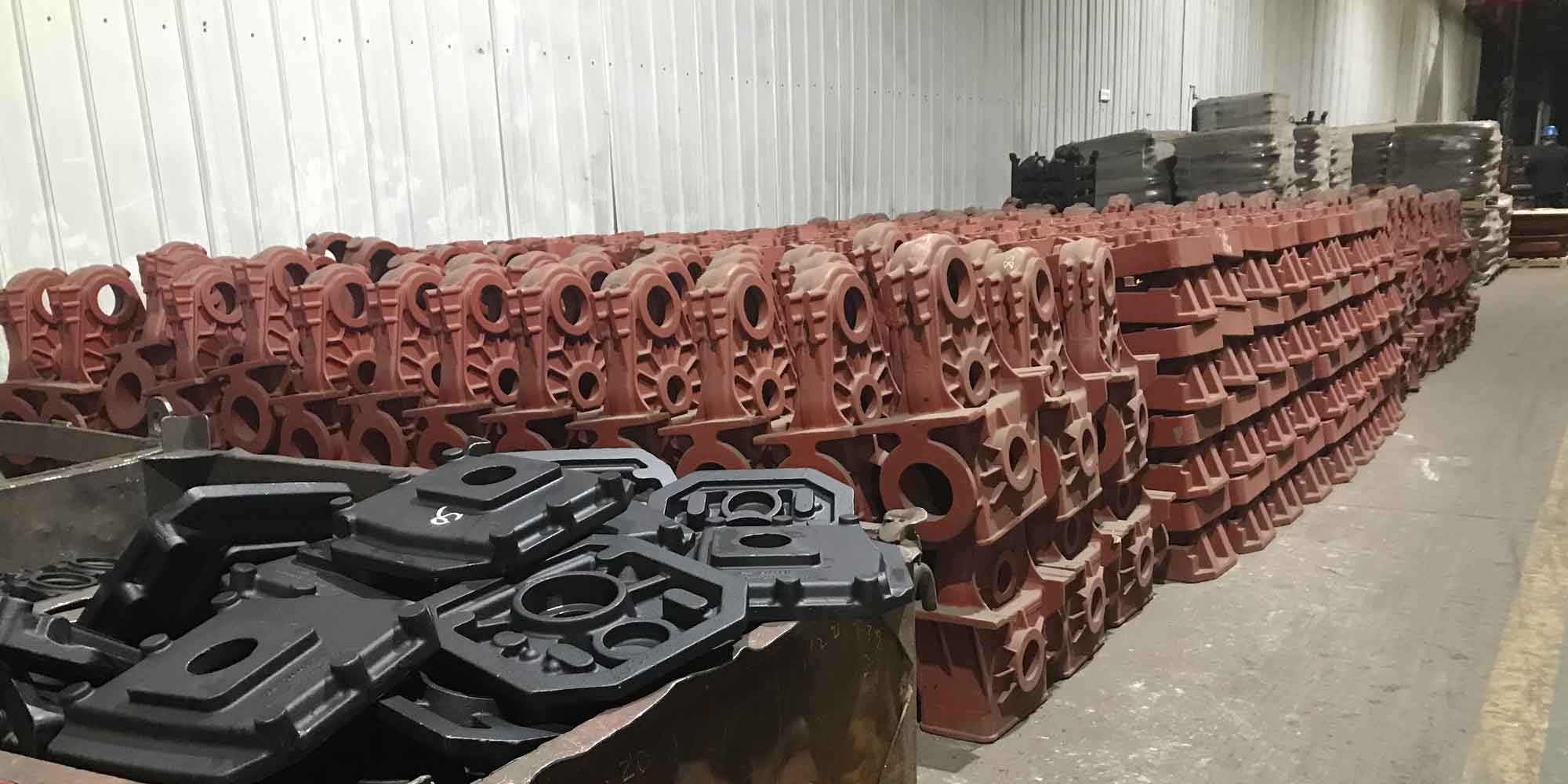
In conclusion, the demand for high-impact steel casting slag tanks is a growing trend in the industry. Achieving such performance hinges on meticulous control over raw material quality, melt chemistry, and solidification dynamics in the steel casting process. Through systematic analysis and practical trials, we have developed reliable methods to produce steel casting slag tanks that meet stringent impact requirements. This advancement not only satisfies client needs but also opens new market opportunities for high-performance steel casting products, yielding substantial economic benefits. The ongoing refinement of steel casting techniques will continue to drive innovation in this field.