
In the foundry industry, sand casting foundry has long been the backbone of metal component production, but it faces unprecedented challenges from labor shortages, environmental regulations, and the need for rapid product iteration. As a team deeply involved in advancing intelligent casting technologies at the National Intelligent Foundry Innovation Center, we have observed firsthand how additive manufacturing—specifically 3D sand printing—is transforming traditional sand casting foundry practices. This article analyzes the current difficulties of the sand casting foundry sector, elaborates on the advantages of 3D printing technology in this field, and presents concrete application cases from automobile steering systems, engine components, and motor housings. Through systematic comparisons and quantitative assessments, we demonstrate that 3D sand printing simplifies molding processes, drastically shortens lead times, lowers manufacturing costs, and significantly improves R&D efficiency, making it an ideal solution for complex, high-quality, low-volume production in sand casting foundry.
1. Challenges Confronting the Sand Casting Foundry Industry
1.1 Internal Development Constraints
Sand casting foundry remains an indispensable pillar of modern manufacturing—from aerospace and marine equipment to automotive parts and everyday items. Yet traditional sand casting foundry operations are characterized by high labor intensity, poor working conditions, and significant environmental emissions. In recent years, as economic growth has shifted focus from basic material needs to quality of life, the younger generation increasingly prioritizes workplace safety, cleanliness, and intellectual engagement. Consequently, sand casting foundry enterprises across China report severe difficulties in recruiting and retaining skilled workers. The industry must modernize its production environment to remain viable.
1.2 Product Structure Evolution
Customization and personalization are now mainstream market demands. Multi-variety, small-batch production has become the norm, replacing the era of mass standardization. In sand casting foundry, this shift implies frequent mold changes, high mold costs, and significant inventory accumulation. Traditional wooden patterns, once produced for a specific order, often become obsolete and occupy valuable storage space, representing hidden capital waste. As a result, sand casting foundry must adopt flexible manufacturing technologies that eliminate the dependency on physical molds.
1.3 Stringent Environmental Policies
With growing environmental awareness and stricter regulations, sand casting foundry has become a primary target for pollution control. Conventional sand casting foundry processes generate dust, binder fumes, and waste sand. End-of-pipe treatment investments are costly and often only partially effective. The industry urgently needs cleaner production methods—3D sand printing offers a fundamentally different approach by enclosing the entire molding process, drastically reducing emissions and improving sustainability.
2. Advantages of 3D Printing Technology in Sand Casting Foundry
3D printing, specifically binder jetting (3DP) technology, brings transformative benefits to sand casting foundry. The key advantages are summarized in the following table:
| Aspect | Traditional Sand Casting Foundry | 3D Sand Printing (Additive) |
|---|---|---|
| Molding process | Requires physical patterns (wood/metal); manual ramming, stripping, core assembly | No patterns; direct printing of sand molds and cores; automated in enclosed chamber |
| Lead time for new product | Pattern fabrication: 30–90 days; trial iterations: weeks to months | From CAD design to printed mold: 1–7 days |
| Cost for low-volume orders | High pattern amortization; expensive modifications | No pattern cost; unit cost independent of quantity |
| Complex geometry capability | Limited by draft angles, undercuts, core assembly | Unlimited geometric freedom; no draft required |
| Dimensional accuracy | Dependent on pattern quality and operator skill; typical tolerances ±0.5–1 mm | Layer resolution 0.2–0.3 mm; repeatable ±0.1 mm |
| Environmental impact | Dust, noise, binder fumes; high waste sand | Closed system; minimal emissions; lower binder content |
| Design iteration speed | Requires new pattern for each change; costly | Digital file modification; reprint in hours |
These advantages make 3D sand printing particularly attractive for prototype development, complex castings, and low-volume production in sand casting foundry.
3. Application Case Studies
3.1 Case 1: Automobile Steering Gear Component
We encountered a steering gear component weighing 34 kg with multiple internal channels and numerous mounting bosses. Traditional sand casting foundry attempted to produce this part using investment casting, which required wax injection, tree assembly, ceramic shell building (3–5 layers), dewaxing, and firing—a process taking over 20 days for a single batch. In contrast, using our 3D sand printing system, we designed the sand mold digitally and printed it directly in 2 days. The subsequent pouring and post-processing steps were identical, but the total lead time was reduced to 5 days. The following table compares key parameters:
| Parameter | Investment Casting (Traditional) | 3D Sand Printing (Our Method) |
|---|---|---|
| Pattern/tooling cost | $15,000–$25,000 (wax injection die) | $0 (no tooling) |
| Pre-production lead time | 30–45 days (die making) | 2 days (sand printing) |
| Manufacturing cycle per batch | 20 days (shell + casting) | 5 days (print + cast) |
| Design change flexibility | Extremely low; new die required | High; modify CAD & reprint |
| Typical dimensional tolerance | ±0.5 mm | ±0.3 mm |
This demonstrates that for R&D of complex steering parts, 3D sand printing drastically reduces time to first article and enables rapid iteration—critical for automotive suppliers in a competitive sand casting foundry market.
3.2 Case 2: Engine Component
Another example involved an automotive engine part with thin walls, complex internal oil passages, and weight-reduction ribs. Traditional sand casting foundry would require a metal pattern (cost: $30,000–$60,000) and a hot-box core box, with a manufacturing lead time of 2 months. Once the pattern was made, geometry modifications were nearly impossible without rebuilding. We employed 3D sand printing to produce both the mold and cores directly from a digital model. This allowed us to test three design iterations in just 10 days, each with dimensional accuracy within ±0.2 mm. After finalizing the design, the customer ordered a limited production run of 50 pieces. The cost comparison for this low-volume scenario is illustrated below:
$$ C_{traditional} = C_{pattern} + C_{molding/assembly} + C_{material} $$
$$ C_{3D} = C_{printing} + C_{material} $$
For 50 units, the pattern cost amortization alone was $60,000/50 = $1,200 per casting, making traditional sand casting foundry economically unfeasible. In contrast, 3D printing cost per unit was only $350, including printing material and binder, with no pattern amortization. The total savings reached 70%.
Furthermore, the following table summarizes the time and quality metrics for the engine part:
| Metric | Traditional (metal pattern + hot-box) | 3D Sand Printing |
|---|---|---|
| Pattern manufacturing time | 60 days | 0 days |
| First sample delivery time | 90 days | 7 days |
| Iterations possible in 90 days | 1 (due to pattern change cost) | 5+ |
| Surface roughness (Ra) | 6.3–12.5 μm | 3.2–6.3 μm |
| Scrap rate during prototyping | 15%–25% (due to core shifts) | <5% |
This case clearly shows that 3D sand printing accelerates engine component development and dramatically reduces risk in sand casting foundry.
3.3 Case 3: Motor Housing with Extensive Cooling Fins
Motor housings require dozens to over a hundred cooling fins. In a typical design we handled, the housing had 72 fins, each 110 mm deep, 6 mm thick, with 5.5 mm gaps between adjacent fins. Traditional sand casting foundry would require making 72 separate fin pattern segments, assembling them in the mold, ramming sand, and then carefully extracting each segment before pouring. This manual process was extremely labor-intensive, time-consuming, and prone to fin damage or deformation. The reject rate due to fin defects exceeded 30%.
Using 3D sand printing, we consolidated all fins into a single sand mold cavity—no assembly, no extraction. The printing process built the entire fin array with precise spacing and perpendicularity. The result was a defect-free mold ready for pouring in 3 days, compared to 15 days for traditional pattern assembly and molding. The following table compares the two approaches:
| Parameter | Traditional Pattern Assembly | 3D Sand Printing |
|---|---|---|
| Number of separate fin segments | 72 | 0 (integral printing) |
| Mold preparation time (per unit) | 3–4 days (segment assembly + sand filling + extraction) | 1 day (printing + cleanup) |
| Fin dimensional consistency | ±0.8 mm (manual variation) | ±0.15 mm |
| Scrap from fin damage | 30%–40% | <2% |
| Pattern storage space required | ~5 m³ for all segments | None (digital files) |
The elimination of pattern handling not only improved quality but also dramatically reduced labor intensity, directly addressing the human resource challenges faced by sand casting foundry.
4. Quantitative Benefits: A Formulaic Perspective
To generalize the economic impact of 3D sand printing in sand casting foundry, we can model the total cost per casting for a batch of N units. Let:
$$ C_{total}^{trad} = C_{pattern} + N \cdot (C_{molding}^{trad} + C_{material} + C_{labor}^{trad} + C_{reject}^{trad}) $$
$$ C_{total}^{3D} = C_{printer\_amortization} + N \cdot (C_{print\_material} + C_{binder} + C_{labor}^{3D} + C_{reject}^{3D}) $$
where Cprinter_amortization is fixed printer investment divided over its lifetime prints. For low N (e.g., N < 100), Cpattern dominates, making 3D printing always cheaper. The breakeven point can be found by:
$$ N_{break} = \frac{C_{pattern} + C_{printer\_amortization}}{(C_{molding}^{trad} + C_{labor}^{trad} + C_{reject}^{trad}) – (C_{print\_material} + C_{binder} + C_{labor}^{3D} + C_{reject}^{3D})} $$
In typical automotive sand casting foundry scenarios, we have calculated Nbreak to be between 200 and 500 units, depending on part complexity. This means for prototype or short-run production, 3D sand printing is unequivocally superior.
Furthermore, the time-to-market reduction is captured by:
$$ T_{savings} = T_{pattern} + T_{trial\_trad} – T_{print} – T_{trial\_3D} $$
where Tpattern often exceeds 30 days, while Tprint is measured in hours or days. In our experience, total development time for a new complex casting can be reduced by 60%–80%.
5. Discussion: Future Application Prospects in Sand Casting Foundry
The three case studies illustrate that 3D sand printing is not merely a prototyping tool but a viable production technology for sand casting foundry, especially for complex, high-quality, low-volume parts. As the technology matures, we anticipate wider adoption in the following areas:
- Integrated core-mold printing: Combining cores and molds into a single print eliminates core assembly errors and reduces labor.
- Large-scale sand printing: Current build chambers can print up to 2 m × 1.5 m × 1 m, enabling larger engine blocks and housings.
- Smart Foundry integration: Linking 3D printers with robotic pouring, automated cleaning, and real-time inspection creates a fully digital production line.
- Recyclable sand and binder systems: Environmentally friendly binders (e.g., inorganic) further reduce the environmental footprint of sand casting foundry.
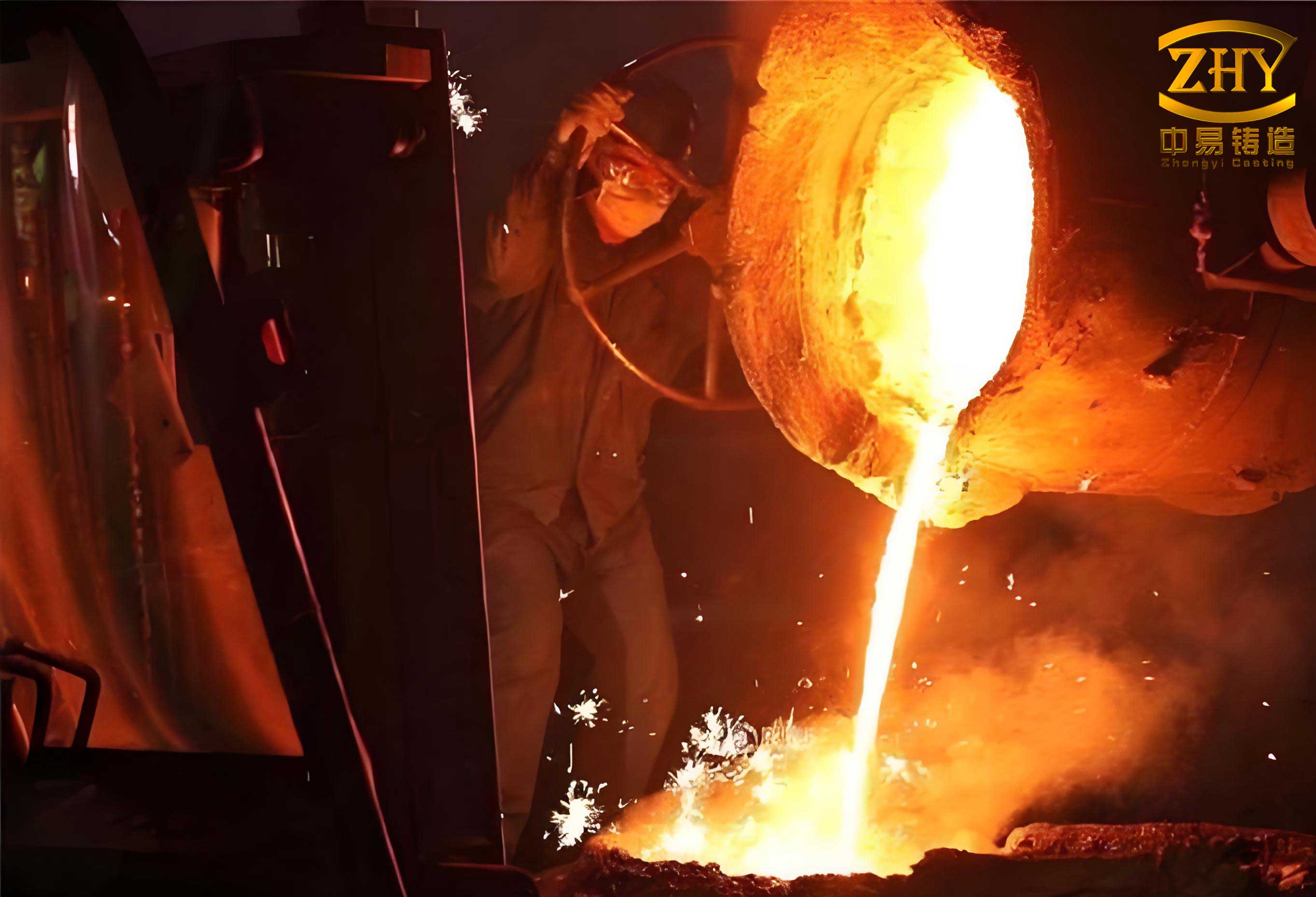
Moreover, the digital nature of 3D printing aligns perfectly with Industry 4.0 concepts. Companies in the sand casting foundry sector that adopt this technology can respond to market changes with unprecedented flexibility. We have already witnessed customers shifting from traditional pattern-based production to entirely digital workflows, resulting in faster innovation cycles and reduced inventory.
6. Conclusion
3D sand printing technology offers a paradigm shift for sand casting foundry. It eliminates the need for physical patterns, reduces lead times from months to days, improves dimensional accuracy, and enables the production of complex geometries that are impossible with conventional methods. Through the three application examples—automotive steering components, engine parts, and motor housings—we have demonstrated substantial cost and time savings. The tables and formulas presented herein quantify these benefits, proving that 3D sand printing is an economically and technically superior solution for complex, high-quality, low-volume castings. We believe that the wide-scale adoption of 3D sand printing will be a key driver for the modernization and sustainable development of sand casting foundry worldwide. As the technology continues to evolve, its scope will expand from prototyping to mainstream production, making sand casting foundry cleaner, smarter, and more competitive.