
Magnesium and its alloys are known for their high specific strength and excellent machinability, making them attractive for lightweight structural applications in aerospace, automotive, and electronics industries. However, the chemical reactivity of molten magnesium poses significant challenges in the sand casting foundry. Molten magnesium readily reacts with atmospheric oxygen and moisture in the mold, leading to oxidation, burning, and defects such as surface pitting and inclusions. To mitigate these issues, conventional sand casting foundry practice for magnesium alloys relies on the addition of anti‑ignition inhibitors such as alkyl sulfonates, boric acid, sulfur, and other compounds. These inhibitors, while effective, generate harmful gases (e.g., SO₂, H₂S, organic fumes) during casting, causing severe environmental pollution, equipment corrosion, and health hazards for workers. Therefore, the development of a sand casting foundry technology that eliminates the need for such inhibitors is of great economic and social significance.
Natural amorphous graphite sand is a novel molding material that has not been widely reported in the sand casting foundry literature. Due to its high thermal conductivity, strong chilling ability, high chemical stability, and neutral chemical nature, graphite sand shows great potential for use in the sand casting foundry of reactive metals. This study investigates the influence of graphite sand molds on the microstructure and mechanical properties of a magnesium‑aluminum alloy, and analyzes the formation mechanism of “black spot” defects that occasionally appear during the casting process. The ultimate goal is to establish a clean, efficient sand casting foundry process for magnesium alloys without anti‑ignition additives.
Experimental Conditions and Methods
Materials
The magnesium alloy used in this work was a commercial Mg‑Al alloy (nominal composition: 8 wt% Al, 0.5 wt% Zn, balance Mg). The molding materials included natural amorphous graphite sand (mean particle size 0.2–0.4 mm), silica sand, water glass (sodium silicate), bentonite, alkyl sulfonate (as an inhibitor), and boric acid. All materials were dried in an oven at 120 °C for 4 h before use, except for the wet‑type molds which were prepared with controlled moisture content.
Equipment
The melting was performed in a crucible resistance furnace with a protective atmosphere of CO₂ + 1 vol% SF₆. A spherical sand mixer was used to prepare the molding sand mixtures. Tensile tests were carried out on a universal material testing machine at a crosshead speed of 2 mm/min. Microstructural and compositional analyses were performed using a scanning electron microscope (SEM) and an electron probe microanalyzer (EPMA).
Mold Preparation and Casting
Four types of sand molds were prepared, as listed in Table 1. The first mold (Mold A) was a dry graphite sand mold without any anti‑ignition inhibitor. The second mold (Mold B) was a conventional wet silica sand mold containing the usual inhibitors (alkyl sulfonate and boric acid). The third mold (Mold C) was a wet graphite sand mold with inhibitors. The fourth mold (Mold D) was a dry silica sand mold with inhibitors. All molds were baked at 200 °C for 2 h to remove residual moisture, except for the wet‑type molds which were used in the as‑prepared state.
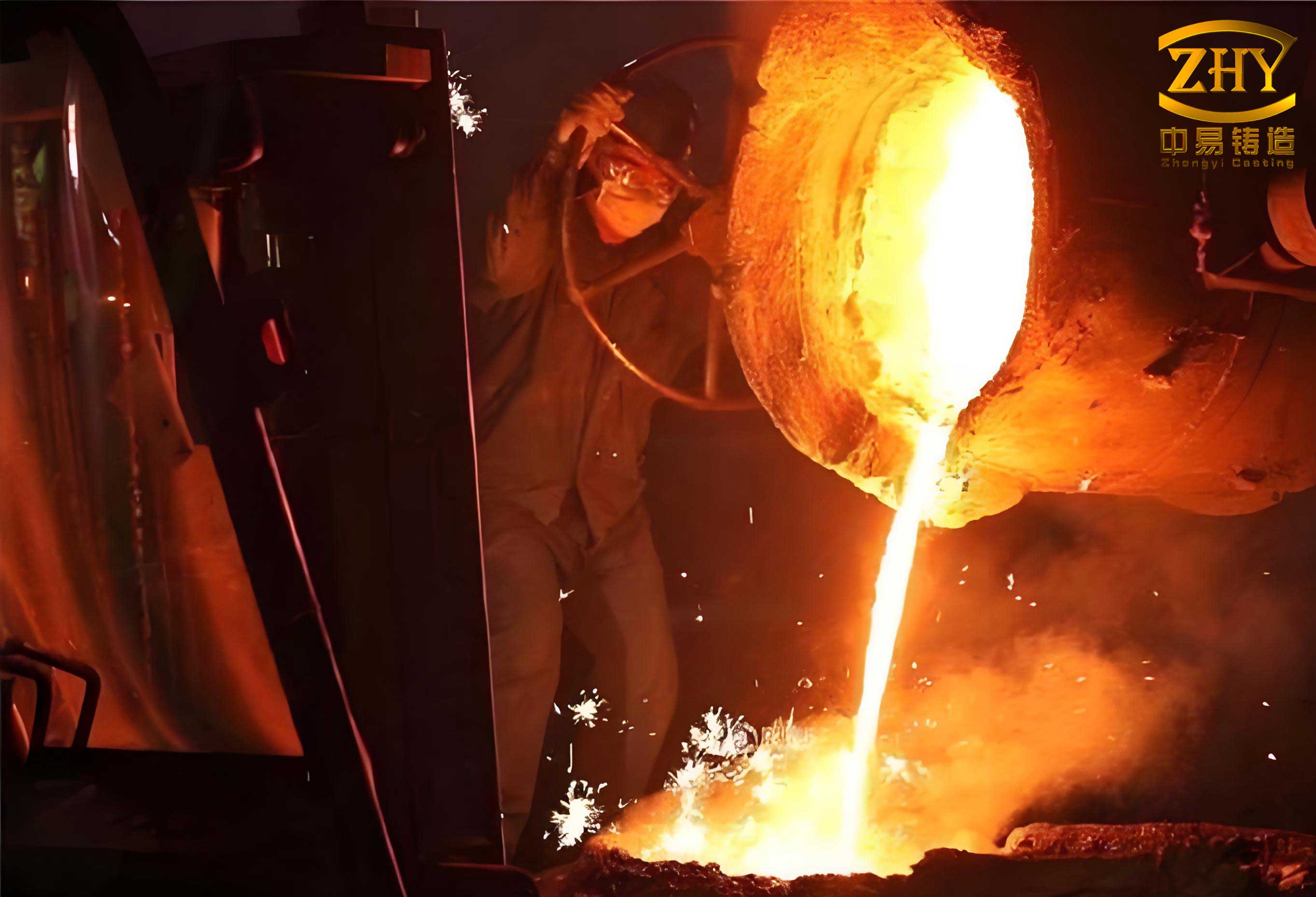
The Mg‑Al alloy was melted at 720 °C, degassed with hexachloroethane tablets, and poured at 710 °C into the prepared sand molds. Standard tensile test bars (gauge diameter 10 mm, gauge length 50 mm) were cast. After solidification, the castings were cleaned and subjected to surface quality inspection by visual examination, fluorescent dye penetrant inspection, and radiographic (X‑ray) inspection. The tensile specimens were machined and tested at room temperature. For each mold condition, at least five specimens were tested to obtain average values.
| Mold ID | Base sand | Binder / additive | Inhibitor | Moisture (wt%) | Curing type |
|---|---|---|---|---|---|
| A | Graphite sand (100 wt%) | — | None | 0 (dry) | Baked at 200 °C |
| B | Silica sand (100 wt%) | Bentonite (6 wt%) + water (4 wt%) | Alkyl sulfonate (0.5 wt%) + boric acid (0.3 wt%) | 4 (wet) | As‑prepared (wet) |
| C | Graphite sand (100 wt%) | Bentonite (6 wt%) + water (4 wt%) | Alkyl sulfonate (0.5 wt%) + boric acid (0.3 wt%) | 4 (wet) | As‑prepared (wet) |
| D | Silica sand (100 wt%) | Water glass (5 wt%) | Alkyl sulfonate (0.5 wt%) + boric acid (0.3 wt%) | 0 (dry) | Baked at 200 °C |
Results and Analysis
Effect of Different Molds on Casting Quality
The surface quality and internal soundness of the castings from the four mold types were evaluated. The results are summarized in Table 2. Mold A (dry graphite sand without inhibitor) produced castings with a bright silvery‑gray surface, no visual defects, and passed both fluorescent and X‑ray inspections. In contrast, Mold B (wet silica sand with inhibitor) showed poor surface quality, fine slag inclusions, and gas porosity. Mold C (wet graphite sand with inhibitor) exhibited a few black spots on the surface but passed nondestructive inspection. Mold D (dry silica sand with inhibitor) gave good overall quality.
| Mold ID | Visual inspection | Fluorescent penetrant inspection | X‑ray inspection |
|---|---|---|---|
| A | Excellent – bright silvery‑gray surface | No defects | No defects |
| B | Poor – rough surface, dark oxidation | Fine slag inclusions present | Gas porosity and slag inclusions |
| C | Fair – a few black spots | No significant defects | No significant defects |
| D | Good – uniform appearance | No defects | No defects |
The most remarkable finding is that the dry graphite sand mold without any anti‑ignition additive (Mold A) outperformed the conventional wet silica sand mold with inhibitors (Mold B). The dry graphite sand in the sand casting foundry eliminated the need for chemical inhibitors, thereby avoiding the generation of toxic fumes. The superior performance can be attributed to several factors:
- Elimination of moisture: The dry mold prevents the violent reaction between molten magnesium and water vapor, which is the primary cause of hydrogen gas porosity and oxidation in wet molds.
- Protective atmosphere from graphite oxidation: At high temperatures, graphite reacts with residual oxygen in the mold cavity and with the magnesium melt, producing CO and CO₂ gases. These gases create a slightly reducing or inert environment around the molten metal, suppressing further oxidation.
- Carburizing effect: Amorphous carbon from the graphite sand can diffuse into the alloy surface, forming a thin protective layer that hinders oxidation.
- High chilling capacity: The high thermal conductivity of graphite leads to rapid solidification, reducing the time available for oxidation reactions.
Effect of Graphite Sand on Mechanical Properties
Table 3 compares the mechanical properties of the Mg‑Al alloy cast in dry graphite sand molds (Mold A) versus dry silica sand molds with inhibitors (Mold D). Both molds were dry and baked. The results show that the graphite sand mold produced higher ultimate tensile strength (UTS) and elongation.
| Mold type | UTS (MPa) | Elongation (%) |
|---|---|---|
| Dry graphite sand (Mold A) | 228 ± 5 | 6.2 ± 0.4 |
| Dry silica sand with inhibitor (Mold D) | 205 ± 7 | 4.8 ± 0.5 |
The improvement in mechanical properties can be explained by the refined microstructure induced by the rapid solidification in graphite sand molds. The cooling rate in a graphite sand casting foundry is significantly higher than in silica sand molds due to the higher thermal diffusivity of graphite. The thermal diffusivity $\alpha$ is given by:
$$ \alpha = \frac{k}{\rho c_p} $$
where $k$ is the thermal conductivity, $\rho$ is the density, and $c_p$ is the specific heat. For graphite sand, $k \approx 25 \, \text{W/(m·K)}$, while for silica sand $k \approx 0.6 \, \text{W/(m·K)}$. The much larger $\alpha$ of graphite sand promotes faster heat extraction, yielding a finer dendritic structure and reduced secondary dendrite arm spacing (SDAS). Finer microstructure generally leads to higher strength and ductility according to the Hall‑Petch relationship and reduced micro‑porosity.
Furthermore, the absence of inhibitors in the graphite sand mold avoids the formation of brittle oxide inclusions that often act as crack initiation sites. The clean surface and sound interior of the graphite‑sand‑cast specimens contribute to the improved elongation.
Analysis of “Black Spot” Defects
During the experiments, some castings from Mold C (wet graphite sand with inhibitor) exhibited small black spots on the surface. These defects were also occasionally observed in Mold A when the drying process was incomplete. SEM and EPMA analyses were performed on the black spot regions.
Figure 1 (not shown) revealed that the black spots consisted of a mixture of magnesium oxide (MgO), carbon, and traces of sulfur and boron from the inhibitor. The formation mechanism is proposed as follows:
In a wet graphite sand mold, residual moisture reacts with molten magnesium:
$$ \text{Mg} + \text{H}_2\text{O} \rightarrow \text{MgO} + \text{H}_2 \uparrow $$
The hydrogen gas can be trapped in the solidifying metal, leading to porosity. Meanwhile, the inhibitor (e.g., alkyl sulfonate) decomposes to produce sulfur‑bearing gases that react with magnesium to form MgS. At the same time, graphite particles may become mechanically entrapped or react with oxygen:
$$ \text{C} + \text{O}_2 \rightarrow \text{CO}_2 \quad \text{or} \quad 2\text{C} + \text{O}_2 \rightarrow 2\text{CO} $$
$$ 2\text{Mg} + \text{CO}_2 \rightarrow 2\text{MgO} + \text{C} $$
The latter reaction produces fine carbon particles that appear as black spots when they accumulate on the casting surface or within oxide films. Moreover, the decomposition of boric acid generates boron oxide (B₂O₃) which can also react with magnesium:
$$ 3\text{Mg} + \text{B}_2\text{O}_3 \rightarrow 3\text{MgO} + 2\text{B} $$
Boron is insoluble in magnesium and forms dark‑colored boride compounds. The combination of MgO, C, MgS, and borides gives the characteristic black appearance.
To avoid this defect in the sand casting foundry, two measures are critical: (1) using thoroughly dried graphite sand to eliminate moisture, and (2) avoiding the use of chemical inhibitors that introduce reactive elements such as sulfur and boron. The dry graphite sand mold without any additives (Mold A) successfully eliminated black spot formation, confirming that the defect is entirely associated with the presence of moisture and/or inhibitor decomposition.
Discussion
Antioxidant Mechanism of Dry Graphite Sand
The success of the dry graphite sand mold in the sand casting foundry without inhibitors can be understood through thermodynamics and kinetics. At the pouring temperature (710 °C), the standard Gibbs free energy for the oxidation of magnesium is:
$$ \Delta G^\circ_{\text{MgO}} = -1200 + 0.23T \, \text{(kJ/mol O}_2\text{)} $$
For graphite oxidation:
$$ \Delta G^\circ_{\text{(C+O}_2\text{)}} = -394 – 0.00084T \, \text{(kJ/mol O}_2\text{)} $$
Both reactions are strongly favorable, but the presence of solid graphite creates a competition for available oxygen near the melt surface. The rapid consumption of oxygen by graphite produces CO and CO₂, which form a protective blanket over the molten metal. The graphite mold also acts as a sink for any oxygen that diffuses inward, maintaining a low oxygen partial pressure in the cavity. This mechanism is analogous to the use of carbon‑based molding materials in the steel casting foundry for deoxidation.
Furthermore, the high thermal conductivity of graphite reduces the depth of the reaction zone by accelerating solidification. The local solidification time $t_s$ can be approximated by:
$$ t_s = \frac{L}{h(T_m – T_0)} \cdot \frac{\rho V}{A} $$
where $L$ is the latent heat, $h$ is the heat transfer coefficient, $T_m$ is the melting point, $T_0$ is the mold temperature, and $V/A$ is the volume‑to‑surface area ratio. Graphite sand provides a much larger $h$ due to its thermal conductivity, thereby reducing $t_s$ and limiting the extent of oxidation.
Microstructural Refinement
The improvement in mechanical properties is supported by microstructural observations. In the graphite‑sand‑cast specimens, the SDAS was measured to be approximately 15 µm, while in the silica‑sand‑cast specimens it was about 25 µm. The relationship between SDAS and cooling rate $R$ is given by:
$$ \text{SDAS} = B \cdot R^{-n} $$
where $B$ and $n$ are material constants. For Mg‑Al alloys, $n \approx 0.3$. The higher cooling rate in the graphite sand casting foundry leads to a finer microstructure, which promotes higher strength via grain‑boundary strengthening. Additionally, the finer SDAS reduces the size and volume fraction of micro‑shrinkage pores, enhancing ductility.
Environmental and Economic Benefits
The adoption of dry graphite sand molds in the sand casting foundry for magnesium alloys eliminates the need for anti‑ignition inhibitors such as alkyl sulfonates and boric acid. This removes the primary sources of air pollution (SO₂, organic volatiles) and reduces equipment corrosion. The cost of graphite sand, while initially higher than silica sand, is offset by the elimination of inhibitor costs, simplified dust collection systems, and lower maintenance. Moreover, graphite sand can be reclaimed and reused after appropriate screening and drying, making the process more sustainable.
Conclusions
This study demonstrates that natural amorphous graphite sand is a highly effective molding material for the sand casting foundry of magnesium alloys. The following conclusions can be drawn:
- Dry graphite sand molds without any anti‑ignition inhibitors provide excellent casting quality, with bright metallic surfaces and sound internal structures, comparable or superior to conventional inhibitor‑protected silica sand molds.
- The mechanical properties (UTS and elongation) of the Mg‑Al alloy cast in dry graphite sand molds are significantly higher than those cast in dry silica sand molds, owing to the finer microstructure resulting from the high thermal conductivity and chilling capacity of graphite.
- The “black spot” defects observed in wet graphite sand molds or inhibitor‑containing graphite sand molds are caused by the formation of MgO, carbon, MgS, and boride phases, originating from reactions with residual moisture and inhibitor decomposition. Thorough drying of the graphite sand and elimination of inhibitors completely prevent these defects.
- The use of graphite sand in the sand casting foundry offers a clean, environmentally friendly, and cost‑effective alternative for casting magnesium alloys, with potential for widespread industrial application.
Future work should focus on optimizing the graphite sand grading, binder systems (if any), and mold coating to further improve surface finish and mechanical properties. The reusability of graphite sand and its long‑term performance in high‑volume production also warrant further investigation. Nonetheless, the present findings already provide a solid foundation for a new generation of sand casting foundry processes for reactive light alloys.