
In the production of grey and ductile iron castings using green sand molds, pulverized coal is added to the molding sand mixture. When molten metal is poured, the coal undergoes thermal decomposition, releasing reducing gases within the mold cavity. This inhibits the formation of iron oxide (FeO), while hydrocarbon gases condense on the mold surface to form a lustrous carbon film. The film prevents sand adhesion (burn-on), improves surface finish, and reduces the tendency for sand expansion defects such as scabbing and veining. However, the quality of pulverized coal varies significantly among different sources. Poor-quality coal not only fails to prevent sand casting defects but also increases coal consumption and degrades sand properties. In our foundry, we have consistently used high-quality coal characterized by high lustrous carbon (12%–16%), high volatile matter (33%–38%), high calorific value (6,500–7,200 kcal/kg), low ash (5%–7%), low sulfur (0.2%–0.5%), low oxygen content (O/C ≤ O/C), and the property of non-self-ignition during storage.
Our production includes automotive parts such as oil pump covers, differential housings, balance shafts, and brake discs, as well as air conditioner compressor and water pump components. The melting equipment consists of Inductotherm medium-frequency induction furnaces, Disa vertical flaskless molding machines, and Eirich batch mixers. The binder used in the green sand is Jianping PNa-12-35 bentonite, and the pulverized coal is Baotou SMFZ-1 grade. Before the fourth quarter of 2014, we had tried several coals from Henan, Shandong, and Anhui provinces (including so-called “high-efficiency” coals), but their performance did not meet our requirements. The measured technical indices of three representative coals (labeled A, B, and C) are shown in Table 1, along with the standard JB/T9222-2008 and the SMFZ-1 grade we later adopted.
| Parameter | Moisture (%) | Ash (%) | Volatile matter (%) | Lustrous carbon (%) | Sulfur (%) | Coke residue type | Remarks |
|---|---|---|---|---|---|---|---|
| SMF-1 (JB/T9222-2008) | ≤4.0 | ≤7.0 | ≥30 | ≥12 | ≤0.6 | 4–6 | Standard |
| SMFZ-1 (supplier) | ≤4.0 | ≤7.0 | 33–38 | 12–16 | ≤0.5 | 4–5 | Specified |
| SMFZ-1 (our test) | 3.6–4.0 | 5.7–6.5 | 34–36 | 14–16.6 | 0.42–0.48 | 4–5 | Measured |
| Coal A | 6.5–9.0 | 7.5–11.5 | 30–34 | 9–12 | 0.65–0.75 | 4–5 | Measured |
| Coal B | 5.5–8.5 | 7.2–10.5 | 32–35 | 9–12 | 0.60–0.70 | 4–5 | Measured |
| Coal C | 8–12 | 9–13 | 30–32 | 4.0–9.6 | 1.0–1.3 | 4–6 | Measured |
The measured data reveal that coals A, B, and C do not fully comply with the JB/T9222-2008 standard. For instance, their moisture content exceeds 5% (up to 12% for coal C), ash is high, lustrous carbon is low (as low as 4% for coal C), and sulfur is elevated. In contrast, SMFZ-1 exhibits low moisture, low ash, low sulfur, high volatile matter, high lustrous carbon, and moderate particle size (AFS 170–210). Due to its low oxygen content and special drying process, it does not self-ignite during storage — a critical advantage for safety and quality consistency.
Sand Mixture Formulations and Properties
We formulate the green sand using 97%–99% return sand (reclaimed), 1%–3% new silica sand, 0.9%–1.2% bentonite, 0.4%–0.6% coal (with slight variation depending on coal type), and 0.01%–0.07% starch. Table 2 compares the actual coal addition levels for different coals while maintaining the same sand formulation.
| Component | Return sand (%) | New sand (%) | Bentonite (%) | Coal (%) | Starch (%) |
|---|---|---|---|---|---|
| Target specification | 97–99 | 1–3 | 0.9–1.2 | 0.4–0.6 | 0.01–0.07 |
| With coal A | 97–99 | 1–3 | 0.9–1.2 | 0.46–0.6 | 0.01–0.07 |
| With coal B | 97–99 | 1–3 | 0.9–1.2 | 0.46–0.6 | 0.01–0.07 |
| With coal C | 97–99 | 1–3 | 0.9–1.2 | 0.5–0.65 | 0.01–0.07 |
| With SMFZ-1 | 97–99 | 1–3 | 0.9–1.2 | 0.3–0.5 | 0.01–0.07 |
Remarkably, using SMFZ-1, the coal addition could be reduced by about 12% compared to the upper limit of the specification, and by 15%–25% compared to the other coals, while still achieving the desired sand properties. The green sand properties obtained with different coals are summarized in Table 3.
| Property | Moisture (%) | Compactability (%) | Wet compressive strength (kPa) | Permeability | Effective clay (%) | Loss on ignition (%) | Total clay (%) | AFS fineness |
|---|---|---|---|---|---|---|---|---|
| Target | 3.2–3.6 | 34–39 | 160–180 | 100–130 | 7.5–9.5 | 3.0–4.0 | 10.5–12.5 | 58–63 |
| Coal A | 3.3–3.8 | 33–35 | 160–175 | 95–115 | 7.5–9.5 | 3.0–3.55 | 11.0–13.0 | 58–63 |
| Coal B | 3.3–3.8 | 32–35 | 160–175 | 90–120 | 7.2–9.2 | 3.0–3.55 | 11.0–12.5 | 58–63 |
| Coal C | 3.5–4.0 | 32–36 | 160–170 | 90–120 | 7.0–9.5 | 3.0–3.30 | 11.5–14.0 | 58–63 |
| SMFZ-1 | 3.2–3.5 | 34–36 | 165–185 | 100–135 | 7.0–8.5 | 3.5–3.80 | 10.5–12.0 | 58–63 |
The sand with SMFZ-1 coal consistently exhibited better compactability (34–36%), higher wet compressive strength (165–185 kPa), and improved permeability (100–135), while maintaining adequate loss on ignition (3.5–3.8%). The higher loss on ignition indicates a greater amount of residual carbonaceous material, which is beneficial for preventing sand casting defects such as burn-on and penetration. Moreover, the reduced coal addition lowers the total clay demand, thereby improving the recyclability of the sand system.
Effect on Casting Quality and Production Efficiency
The primary motivation for using high-quality pulverized coal is to eliminate sand casting defects on the surface of iron castings. Our products require a surface roughness of 2.5–12.5 μm on non-machined areas. With coals A, B, or C, achieving this roughness was difficult and required extended shot blasting cycles. After switching to SMFZ-1 coal, we observed a dramatic improvement in casting surface finish and a significant reduction in defects. Table 4 summarizes the annual defect distribution over a four-year period.
| Year | Sand inclusion defects (%) | Gas porosity (%) | Burn-on / metal penetration (%) |
|---|---|---|---|
| 2014 | 1.18 | 0.45 | 0.86 |
| 2015 | 0.76 | 0.29 | 0.07 |
| 2016 | 0.82 | 0.26 | 0.26 |
| 2017 (first half) | 0.72 | 0.20 | 0.04 |
The data show a dramatic drop in burn-on defects from 0.86% in 2014 to 0.07% in 2015 after adopting SMFZ-1, and further down to 0.04% in the first half of 2017. Sand inclusion and gas porosity also declined significantly. In particular, severe sand casting defects such as metal penetration were virtually eliminated. The improvement in surface finish allowed us to reduce the shot blasting time: the initial blasting pass was shortened from 10–20 minutes (with coals A–C) to 5–15 minutes, and the second pass was reduced by 30–50%. For castings with moderate surface requirements, the second pass could be completely omitted, saving both time and electrical energy.
The mechanism behind this improvement can be explained by the thermal decomposition of coal. The volatile matter and lustrous carbon index are critical parameters. The decomposition reaction can be idealized as:
$$ \text{C}_{\text{coal}} \xrightarrow{\Delta} \text{volatile gases} + \text{lustrous carbon (C)} + \text{ash} $$
where the volatile gases include H₂, CO, CH₄, and other hydrocarbons that create a reducing atmosphere in the mold cavity, preventing the oxidation of iron:
$$ \text{Fe} + \frac{1}{2}\text{O}_2 \rightarrow \text{FeO} \quad \text{(undesired)} $$
The reducing gases consume oxygen:
$$ 2\text{CO} + \text{O}_2 \rightarrow 2\text{CO}_2 \quad \text{and} \quad 2\text{H}_2 + \text{O}_2 \rightarrow 2\text{H}_2\text{O} $$
Moreover, the formation of a lustrous carbon layer on the sand grains acts as a physical barrier that prevents liquid metal from penetrating the interstices. The effectiveness of this barrier can be related to the lustrous carbon content (LC). Based on our measurements, the ability to eliminate sand casting defects improves with higher LC and lower oxygen content. A semi-empirical relationship observed in our foundry is:
$$ \text{Defect reduction} \propto \frac{\text{LC} \times \text{VM}}{\text{Ash} \times \text{S}} $$
where VM is volatile matter, Ash is ash content, and S is sulfur content. The SMFZ-1 coal has the highest numerator and lowest denominator among the tested coals.
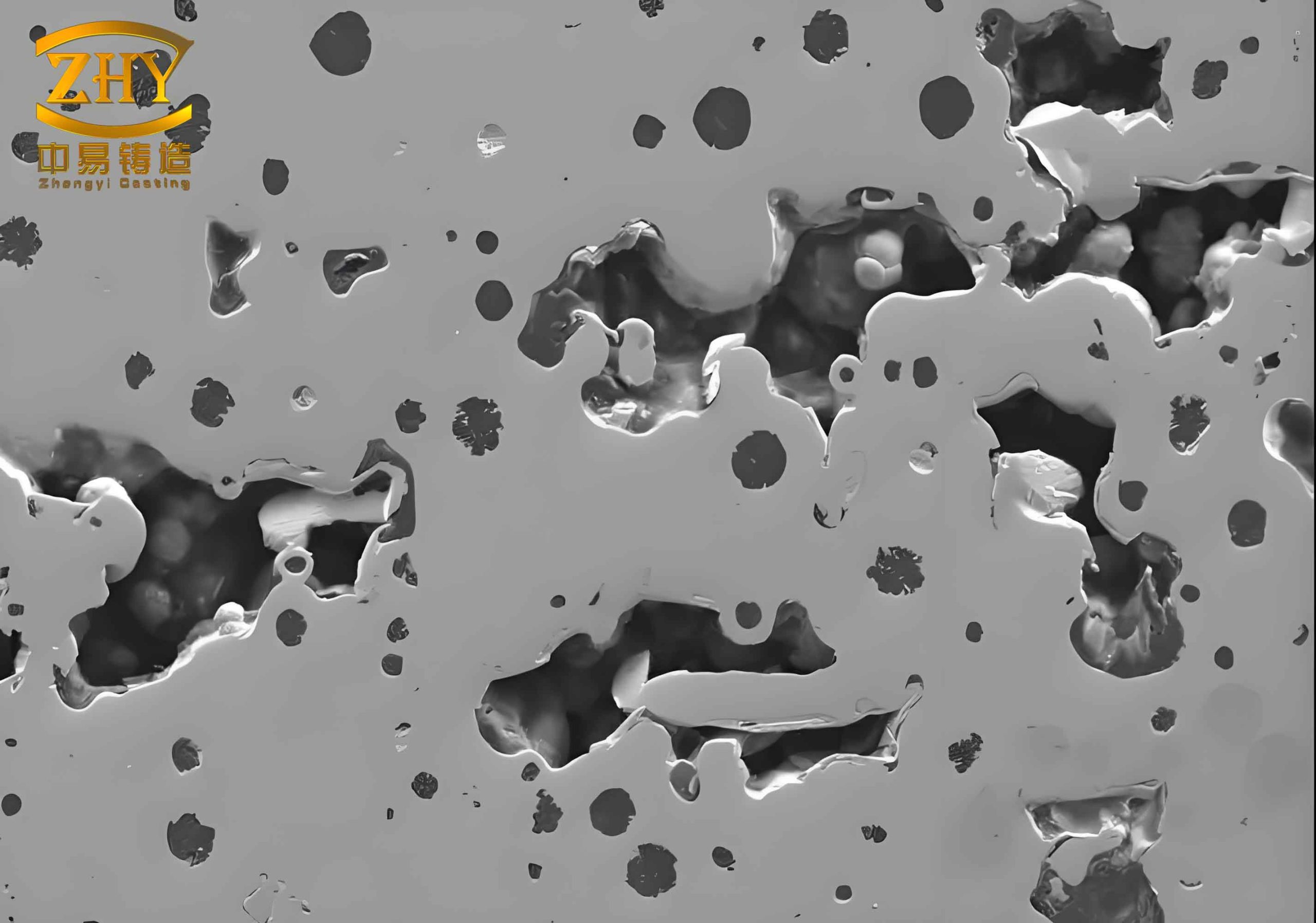
Another critical advantage of SMFZ-1 coal is its resistance to spontaneous combustion. Previously, during hot and humid seasons, coals A, B, and C (including “high-efficiency” grades) frequently self-ignited in the warehouse or even in the hoppers. We attempted various mitigation measures such as reducing stockpile height, increasing storage intervals, and improving ventilation, but the problem persisted. SMFZ-1 coal is produced from naturally low-oxygen coal seams and processed via a low-temperature, long-duration drying method in an open-circuit mill, followed by vacuum packaging. This results in a product with very low moisture, low exit temperature, and isolation from air, thereby eliminating the exothermic oxidation that leads to self-heating. Since adopting SMFZ-1 in late 2014, we have not experienced a single incident of spontaneous combustion, even during the prolonged summer of 2017 when warehouse temperatures exceeded 40–60°C.
Additional Observations on Sand Casting Defect Reduction
Beyond surface defects, the use of SMFZ-1 also improved the internal soundness of the castings. Ultrasonic inspection revealed a marked reduction in shrinkage porosity, microporosity, and subsurface blowholes. The density and nodularity of ductile iron (when producing SG iron parts) improved by approximately 5–10%. This is likely because the reducing atmosphere and the carbon deposit inhibit the oxidation of magnesium and other nodulizing elements, thereby promoting better graphite nodule formation. Furthermore, the lower addition rate of coal reduced the amount of ash and sulfur introduced into the sand system, which helped maintain the bentonite’s bonding efficiency and stabilized the sand properties over many cycles.
We also quantified the reduction in sand casting defect-related scrap. Before SMFZ-1, the total scrap rate due to burn-on, sand inclusion, and gas holes averaged 2.5–3.0%. After the change, the combined scrap rate dropped to below 1.0%, representing a saving of several thousand parts per year. The financial impact, considering rework and lost casting value, is substantial.
Conclusions
Based on our extensive production experience with different pulverized coals, we draw the following conclusions:
- The technical indices of pulverized coal—especially moisture, ash, volatile matter, lustrous carbon, and sulfur—directly influence the green sand properties and the incidence of sand casting defects. Coals with high lustrous carbon and volatile matter, combined with low ash, sulfur, and oxygen, exhibit superior performance.
- SMFZ-1 coal, meeting the “three highs and three lows” (high volatile, high lustrous carbon, high calorific value; low moisture, low ash, low sulfur), enabled a 15–25% reduction in coal addition while improving sand properties such as compactability, strength, and permeability.
- After adopting SMFZ-1, the surface finish of automotive iron castings improved by two roughness grades, and sand casting defects (burn-on, sand inclusion, gas porosity) decreased by over 90%. Shot blasting time was reduced by 30–50%, and for many parts the second blasting pass was eliminated.
- The unique production process of SMFZ-1 (low-temperature drying, vacuum packaging) eliminates the risk of spontaneous combustion, a common and dangerous problem with other coals, especially in hot and humid climates.
- We recommend that foundries producing high-quality iron castings in green sand molds select pulverized coal with specifications similar to SMFZ-1, as it offers the best balance of technical performance, economic benefit, and safety. Our case study provides a practical reference for choosing coal to combat sand casting defects.
The use of quality coal is a cost-effective solution to prevent sand casting defects without the need for expensive coatings or special molding processes. We continue to monitor sand properties and defect rates and have maintained the SMFZ-1 grade as our standard coal since 2014. The data accumulated over three years confirm its reliability and superiority. Future work may explore the correlation between coal particle size distribution and the efficiency of lustrous carbon formation in thin-section castings.