
In my years of working with cupola furnace sand casting production, one of the most persistent and troublesome quality issues has been the formation of white iron defects in what should be gray iron castings. These defects manifest as excessive hardness, brittle fracture surfaces, and a characteristic white crystalline appearance on broken sections. They not only make machining extremely difficult but also compromise the mechanical properties required for components such as engine blocks, brake drums, and machine tool bases. I have encountered these sand casting defects in various foundries, and through systematic analysis, I have identified three primary categories of causes: molten iron composition and melting quality, cooling conditions within the mold, and post-casting heat treatment. In this article, I will share my consolidated findings and practical solutions, emphasizing the critical role of proper process control in preventing white iron formation.
White iron defects in cupola sand castings occur when the solidification path shifts from the stable iron-graphite system to the metastable iron-cementite system. This shift results in the formation of massive carbides rather than graphite flakes, leading to high hardness and brittleness. The defect is particularly common in thin-walled sections where cooling rates are higher. To understand the root causes, I have conducted extensive investigations involving chemical analysis, thermal analysis, and microstructural examination. The following sections detail each cause and the corresponding countermeasures that I have successfully implemented over the years.
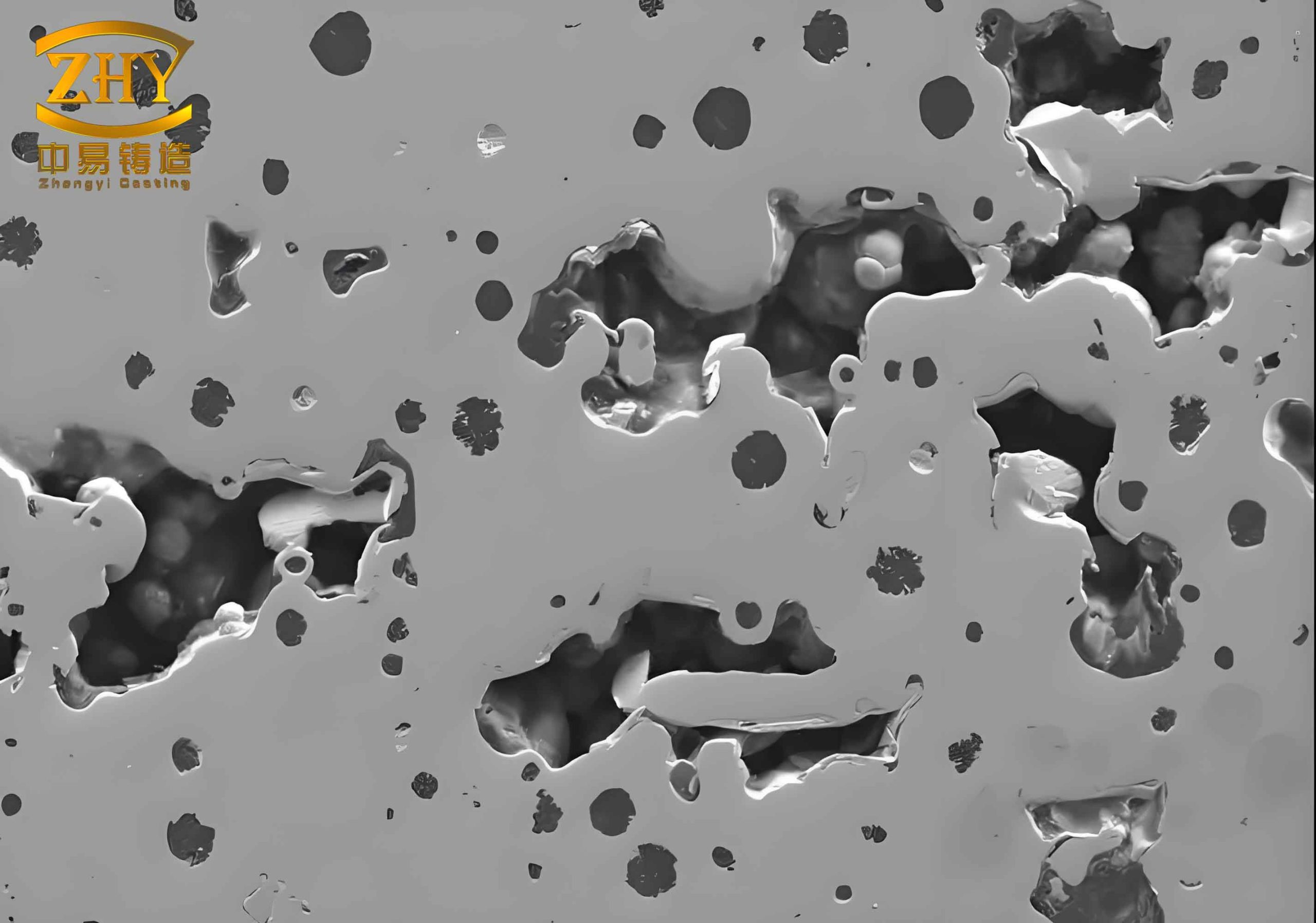
Primary Causes of White Iron Defects in Cupola Sand Castings
1. Molten Iron Chemistry and Melting Quality
The most common source of sand casting defects related to white iron is improper chemical composition. In ductile or gray iron, carbon and silicon are the primary graphitizing elements. When their levels fall below critical thresholds, the melt becomes prone to forming cementite. Based on my trials, the following ranges are generally safe for producing gray iron with minimal white iron tendency:
| Element | Minimum (wt%) | Maximum (wt%) | Remarks |
|---|---|---|---|
| Total Carbon (C) | 2.8 | 3.3 | Lower than 2.7% strongly promotes white iron |
| Silicon (Si) | 1.6 | 2.2 | Initial silicon before inoculation must be >1.4% |
| Manganese (Mn) | 0.5 | 1.0 | Excess Mn >1.3% increases carbides |
| Phosphorus (P) | — | 0.15 | High P reduces fluidity but not a major white iron driver |
| Sulfur (S) | — | 0.12 | Anti-graphitizer; needs Mn to neutralize |
| Carbon Equivalent (CE) | 3.8 | 4.2 | CE = C% + 1/3(Si%+P%). Below 3.6 is dangerous |
The carbon equivalent (CE) is a vital control parameter. I use the formula:
$$ CE = C\% + \frac{1}{3}(Si\% + P\%) $$
When the CE drops below approximately 3.6%, the risk of white iron defects increases dramatically. In one case from a foundry I consulted, the carbon content was consistently around 2.6% due to excessive oxidation in the cupola, and nearly 40% of thin-wall castings exhibited white iron. By adjusting the charge to bring carbon up to 3.0% and increasing silicon to 1.8%, the defect rate dropped below 2%.
Another critical chemical factor is the presence of trace elements that strongly promote carbides, such as lead (Pb), bismuth (Bi), and tellurium (Te). I have seen Pb at 0.08% cause severe white iron, while Te as low as 0.005% is enough to produce a fully white structure. These elements can enter the charge through contaminated scrap or certain pig iron grades. Regular spectrometric analysis for these tramp elements is essential.
Melting quality itself is a major contributor to sand casting defects. In a cupola furnace, factors like blast rate, coke quality, and charge size affect the melt temperature and oxidation. If the blast is too high or too low, or if the coke is poor, the iron becomes oxidized and the effective carbon and silicon levels are lowered. I have observed many instances where the furnace operator ran a strong oxidizing melt, producing iron that looked “white” on the cupola spout. The resulting castings had massive cementite networks. To combat this, I implemented strict controls:
- Maintain consistent coke bed height and use metallurgical coke with >85% fixed carbon.
- Monitor blast volume and temperature; aim for a tapping temperature of at least 1420°C for thin-wall castings.
- Check silicon loss; if oxidation exceeds 15%, adjust furnace operation.
- Use pre-heated blast air to stabilize combustion.
I also found that the heredity of charge materials significantly affects white iron tendency. When a foundry uses a high proportion of returned scrap that already contains white iron (e.g., from previously defective castings), the nuclei for cementite formation can be carried over, even if the final chemistry is correct. This is known as the structural heredity effect. In one plant, they tried to save costs by using 60% returns from scrapped hard castings. The silicon content was normal, but the castings still showed white iron defects. By diluting this return with low-white iron scrap and pig iron, the problem was resolved.
2. Cooling Conditions and Mold Factors
The cooling rate of a casting is perhaps the most influential physical factor in white iron formation. Gray iron solidifies with a eutectic reaction where graphite precipitates due to slow cooling, while white iron forms cementite under rapid cooling. In sand casting, the mold material, moisture content, and compaction affect heat transfer. I have seen sand casting defects arise when the mold is too hard or too wet, causing localized chilling.
The critical cooling rate for white iron formation can be expressed by the following relationship (simplified from thermal analysis):
$$ R_{crit} = \frac{dT}{dt} = k \cdot \frac{1}{L^2} \cdot \Delta T $$
where \( R_{crit} \) is the critical cooling rate above which white iron forms, \( L \) is the casting wall thickness, \( \Delta T \) is the temperature difference between the melt and the mold, and \( k \) depends on the thermal diffusivity of the mold. For a given section thickness, a higher mold moisture content increases the thermal diffusivity, accelerating cooling. I measured that green sand with 5% moisture had about 20% higher cooling rate than sand with 3% moisture, enough to push thin sections below the critical threshold.
The following table summarizes mold-related factors and their impact:
| Factor | Effect on Cooling Rate | Recommended Practice |
|---|---|---|
| Sand moisture (green sand) | Higher moisture → faster cooling | Control moisture to 3-4% |
| Sand grain fineness | Finer sand → lower permeability, slower gassing but may trap moisture | Use AFS 50-70 for gray iron |
| Mold compaction (hardness) | Harder mold → better contact, faster heat flow | Aim for 80-90 hardness (B-scale) for consistent cooling |
| Coating (mold wash) | Refractory coatings reduce heat transfer | Use graphite-based wash on surfaces to retard chill |
| Pouring temperature | Lower pour temp → faster solidification | Never below 1320°C for thin sections |
| Core and mold washes | Excessive water in washes creates steam chill | Dry washes thoroughly before pouring |
I recall a specific case where a foundry producing thin-wall hydraulic valve bodies (4 mm section) experienced a 30% scrap rate due to white iron. Examination revealed that the sand moisture was 5.5% and the mold hardness was 95, causing very rapid heat extraction. By reducing moisture to 3.5% and softening the mold to 85, the scrap rate dropped to 5%. Additionally, they increased the pouring temperature from 1280°C to 1350°C, which further reduced the undercooling. The combined effect eliminated the white iron defects entirely.
Pouring temperature is a critical parameter. I use the concept of “undercooling” to explain white iron formation. When molten iron is superheated and then poured into a cold mold, the thermal undercooling \(\Delta T = T_{liquidus} – T_{pour}\) can be large. The degree of undercooling directly influences the nucleation of cementite. For gray iron, the eutectic temperature (stable) is about 1150°C, while the metastable eutectic (white iron) is about 1130°C. A larger undercooling favors cementite:
$$ \Delta T_{actual} = T_{liquidus} – T_{mold\_interface} \quad \text{and} \quad \text{More white iron if } \Delta T_{actual} > \Delta T_{crit} $$
In practice, I always ensure that the pouring temperature is at least 50–80°C above the liquidus for the given composition. For thin sections (≤5 mm), the recommended pouring temperature is 1380–1420°C. For thicker sections, 1320–1360°C is sufficient. I also instruct the foundry crew to pour the smallest castings first while the iron is hottest, and gradually move to larger castings as the iron cools. This minimizes variation in cooling rates across the product mix.
Another cooling-related factor is the shakeout time. Premature shakeout exposes hot castings to ambient air, causing rapid cooling on the surface that can transform the outer layer into white iron (chilled layer). I have seen castings that were knocked out within 10 minutes of pouring develop a hard white rim of 1–2 mm depth. My standard practice is to let castings cool in the mold until they reach below 600°C, which typically takes 30–60 minutes depending on section size. If early shakeout is unavoidable (e.g., for productivity), the castings should be covered with dry sand or buried in a heat-retaining box to slow cooling.
3. Heat Treatment Influences
Even when a casting solidifies with the correct gray iron structure, subsequent heat treatment can inadvertently cause white iron if not properly controlled. Graphite dissolution or precipitation is a diffusion-driven process. If a casting is rapidly heated or cooled through the critical transformation range, residual stresses and phase transformations can produce hard phases. I have encountered sand casting defects where a stress-relief annealing cycle was performed at too low a temperature, actually stabilizing carbides rather than breaking them down.
The standard graphitization annealing for gray iron involves heating to 900–950°C (above the A1 transformation temperature) to decompose cementite into graphite and ferrite. The reaction is:
$$ \text{Fe}_3\text{C} \rightarrow 3\text{Fe} + \text{C}_{\text{graphite}} $$
For this to proceed, the temperature must be held long enough for carbon diffusion. I recommend holding times based on the heaviest section of the casting, typically 1 hour per 25 mm of thickness. If the temperature is too low (e.g., 800°C), the decomposition rate is extremely slow, and the casting may retain a high hardness. Conversely, if the cooling after annealing is too fast, carbon may precipitate as fine carbides rather than graphite. A controlled cooling rate of 30–50°C/h through the critical range (800–600°C) is optimal.
The following table summarizes my recommended annealing parameters for gray iron castings that have white iron:
| Section Thickness (mm) | Holding Temperature (°C) | Holding Time (hours) | Cooling Rate (°C/h) down to 600°C |
|---|---|---|---|
| ≤ 10 | 920 | 1 | 50 |
| 10–25 | 920 | 1.5 | 40 |
| 25–50 | 950 | 2 | 30 |
| 50–100 | 950 | 3 | 25 |
I once advised a foundry that was experiencing high rejection rates (15%) on large brake drums due to hardness. They had been performing a “stress relief” at 650°C for 2 hours, which did nothing to transform the white iron structure. By changing to a full graphitization anneal at 930°C for 2 hours followed by slow cooling, the scrap rate dropped to zero. It is important to note that if the white iron structure is too severe (e.g., massive ledeburite), multiple annealing cycles or even normalizing may be required. However, prevention is always better than cure.
Practical Solutions and Process Controls
Based on my accumulated experience with sand casting defects, I have developed a systematic approach to tackle white iron issues. The solutions are grouped into three categories corresponding to the causes.
Chemical Composition Adjustments
The first line of defense is to ensure that the iron chemistry falls within the recommended window. I use the following checklist:
- Verify carbon content is 2.8–3.3% (higher for thin sections, lower for thick).
- Ensure silicon (final after inoculation) is 1.8–2.2%.
- Keep manganese at 0.5–0.8% for good sulfur control but not above 1.0% without countering with increased carbon.
- Maintain carbon equivalent (CE) above 3.8% for thin sections.
- Test for tramp elements (Pb, Bi, Te) if white iron persists with normal chemistry.
- Use high-purity pig iron and low-residual scrap.
Inoculation is a powerful tool. I typically add 0.3–0.5% of 75% ferrosilicon to the ladle. Fine-grained inoculants like calcium silicide or graphite-based inoculants can further reduce chill. The effect of inoculation can be modeled as increasing the number of graphite nucleation sites, thus reducing the tendency for cementite formation even under moderate cooling rates.
Melting Practice Optimization
To reduce oxidation and achieve consistent melt quality:
- Monitor the cupola blast: too high a blast increases CO/CO₂ ratio and oxidizes Si. Maintain CO₂ at 12–15% in stack gas.
- Use preheated blast (250–350°C) to improve carbon pickup and reduce oxidation.
- Charge clean scrap not exceeding 20% of total if it contains heavy rust.
- Adjust coke ratio to 12–15% of metal charge for proper temperature.
- Perform regular wedge tests on the cupola spout; a wedge fracture should show no more than 3–5 mm of white iron at the tip.
I emphasize the importance of controlling the heredity effect. If returns from previous defective runs contain white iron, they must be limited to <30% of the charge, or pre-treated by annealing before remelting. Alternatively, use special pig iron with “graphite memory” to promote gray solidification.
Mold and Cooling Control
To manage cooling rates:
- Adjust sand moisture to 3.0–3.5% for green sand. Use silica sand with AFS 55–65 for good permeability.
- Avoid excessive mold hardness; use a spring-loaded rammer to achieve uniform density.
- Apply a graphite-based refractory wash to mold surfaces, especially on thin sections. Dry the wash completely.
- Ensure consistent pouring temperatures: use a ladle thermometer. Do not pour if below 1320°C (for sections >10 mm) or below 1380°C (for sections <6 mm).
- Sequence pouring: start with smallest castings, end with largest. This minimizes temperature variation.
- Control shakeout time: let castings cool to <400°C before removing from mold; if early removal is needed, cover with insulating sand.
- For extremely thin sections (<3 mm), consider using a chill-reducing additive like tellurium (but in very controlled amounts, <0.001%) only if unavoidable, as it is harmful.
Heat Treatment Protocols
If white iron defects have already formed, the following steps can salvage the castings:
- Perform a full graphitization anneal at 920–950°C, holding for 1 hour per 25 mm thickness.
- Cool very slowly (20–40°C/h) through the eutectoid range (800–600°C).
- After annealing, check hardness; if still >220 HB, consider a second cycle or a normalizing treatment to break down residual carbides.
- Do not use a high-temperature anneal without proper atmosphere control if the furnace is oxidizing—scale formation can deplete surface carbon and cause white rims.
Case Study: Solving White Iron in Thin-Wall Hydraulic Cylinders
One of the most instructive examples in my career involved a customer producing thin-wall hydraulic cylinders (wall thickness 4–6 mm) using cupola-melted gray iron. The scrap rate due to white iron was over 35%. The initial investigation revealed the following:
| Parameter | Before (High Scrap) | After (Low Scrap) |
|---|---|---|
| Total Carbon (wt%) | 2.65 | 3.05 |
| Silicon (wt%) | 1.3 | 1.85 |
| CE (wt%) | 3.08 | 3.67 |
| Pouring Temperature (°C) | 1260 | 1390 |
| Sand Moisture (%) | 5.2 | 3.5 |
| Mold Hardness | 95 | 85 |
| Shakeout Time (min) | 10 | 35 |
| Inoculation (FeSi75%) | 0.1% | 0.4% |
After implementing all changes simultaneously, the white iron defect rate dropped to 1.2%. This case demonstrates that sand casting defects rarely have a single cause; a holistic approach addressing chemistry, melting, mold, and cooling is required.
Conclusion
White iron defects in cupola sand castings are a common but preventable type of sand casting defects. Through my extensive field experience, I have found that the majority of cases can be traced to an imbalance of graphitizing elements (C, Si) and anti-graphitizing elements (Mn, S, trace elements), excessive oxidation during melting, overly rapid cooling caused by wet or hard molds, low pouring temperatures, or improper heat treatment. The solutions are straightforward: ensure proper chemical composition with a carbon equivalent above 3.8% for thin sections, optimize cupola operation to reduce oxidation and guarantee high tapping temperatures, control mold moisture and hardness, adjust pouring temperature and sequencing, and apply appropriate annealing cycles if needed. Regular monitoring of these parameters, along with a good feedback loop between the foundry floor and the laboratory, will virtually eliminate white iron problems. I encourage all foundry engineers to systematically document their process variables and correlate them with defect statistics. With discipline and knowledge, sand casting defects like white iron can be consistently avoided, leading to higher yields, lower costs, and improved customer satisfaction.