
I have always been fascinated by the intersection of traditional casting techniques and modern microalloying strategies. In my recent work, I focused on the lost foam casting process because it offers near-net-shape production, reduced machining, and excellent dimensional accuracy. However, the lost foam casting of medium carbon steels such as 45 steel often suffers from coarse grains and inhomogeneous microstructures due to the slow cooling rates inherent to the ceramic shell and sand bed. These microstructural issues directly degrade mechanical properties, limiting the use of lost foam casting in critical load-bearing applications. To address this, I investigated the addition of rare earth silicoferrite as a grain refiner and modifier. In this article, I present my findings on how rare earth silicoferrite influences the microstructure, hardness, tensile properties, and fracture behavior of 45 steel produced by lost foam casting. I used a systematic experimental approach, combining optical microscopy, scanning electron microscopy, energy dispersive spectroscopy, hardness testing, and tensile testing. My results show that rare earth silicoferrite significantly refines the grains, modifies inclusions, and improves both strength and ductility. I also developed a multi-mechanism strengthening model to quantify the contributions of grain refinement, phase transformation, and solid solution strengthening. Throughout this article, I will refer to the lost foam casting process multiple times because it is the core manufacturing route that I optimized. I hope my work provides a useful reference for applying rare earth microalloying in lost foam casting of steels.
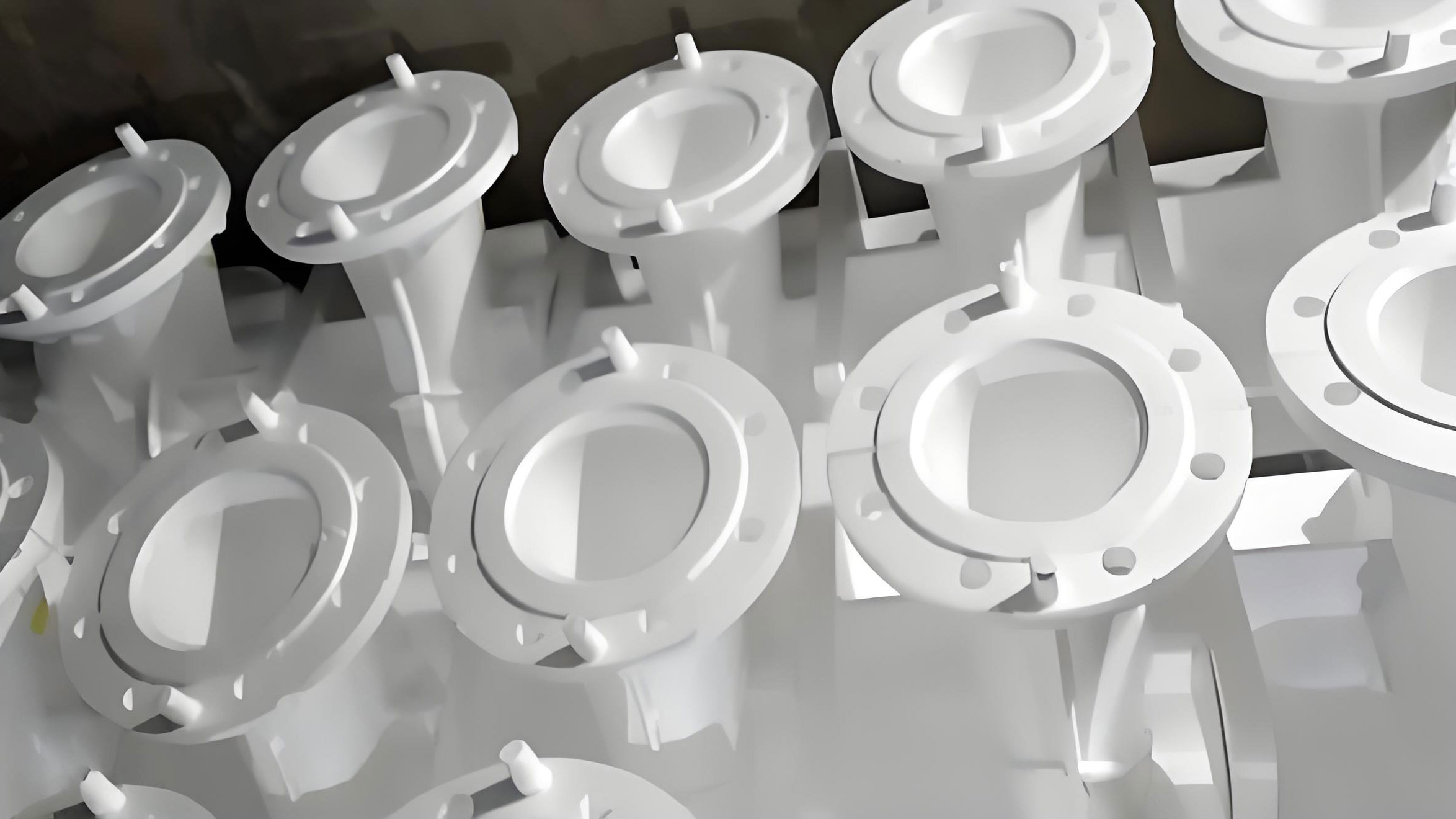
The lost foam casting process begins with a foam pattern that is coated with a refractory slurry, embedded in unbonded sand, and then filled with molten metal. As the metal displaces the foam, the pattern decomposes and the metal solidifies. The process is known for its flexibility and low cost, but the thermal decomposition of the foam can introduce defects such as porosity and carbon pick-up. For 45 steel, which is a typical medium carbon steel with good strength and toughness, the lost foam casting route is attractive for producing complex parts. However, the as-cast microstructure often contains large ferrite grains and coarse pearlite, leading to lower hardness and tensile strength than wrought 45 steel. I hypothesized that rare earth silicoferrite, a master alloy containing cerium, lanthanum, and other rare earth elements, would refine the solidification structure by providing heterogeneous nucleation sites and by segregating at grain boundaries. I also expected that rare earth elements would react with oxygen and sulfur to form high-melting-point compounds that float out, thereby cleaning the melt. In the following sections, I describe my experimental procedures, present the microstructural and mechanical results, and discuss the underlying mechanisms.
Experimental Materials and Lost Foam Casting Procedure
I prepared three heats of 45 steel using industrial pure iron, high-purity graphite, and commercial rare earth silicoferrite powder. The chemical composition of the base 45 steel is given in Table 1. The composition of the rare earth silicoferrite alloy is shown in Table 2. I added the rare earth silicoferrite at three levels: 0%, 0.15%, and 0.35% by mass. The melt was prepared in an induction furnace and poured at 1600 °C. For the lost foam casting trials, I used expanded polystyrene foam patterns with a density of 25 kg/m³. The patterns were coated with a bauxite-based refractory coating to a thickness of 1.0–1.2 mm. After drying, the coated patterns were placed in a flask and surrounded by quartz sand, which was compacted by vibration. I used a bottom-gating system to ensure smooth filling. The casting shrinkage was about 5.2%, and the total poured mass was 32.44 kg. After pouring, the castings were allowed to cool naturally in the sand and then were removed. I produced three castings, one for each rare earth silicoferrite addition level. The lost foam casting process parameters are summarized in Table 3.
After casting, I sectioned each casting from the core to the middle zone and then to the edge. I will refer to these regions as core, middle, and edge. I used a wire-cut electrical discharge machine to cut metallographic specimens and tensile specimens. The tensile specimens had a thickness of 1.4 mm and a gauge length of 10 mm. I mounted the metallographic specimens in hot mounting resin and ground them with SiC papers from 180 to 3000 grit. Then I polished them with diamond pastes of 1.5, 1.0, and 0.5 μm. Between each step, I cleaned the specimens with anhydrous ethanol. I etched the specimens with aqua regia to reveal the microstructure. I observed the microstructure using an optical microscope and a scanning electron microscope equipped with an energy dispersive spectrometer. I measured the grain size using the intercept method with ImageJ software. I measured the pearlite interlamellar spacing on at least 20 lamellae for each condition. I performed tensile tests on a universal testing machine at a strain rate of 0.001 s⁻¹. I tested three specimens per condition and averaged the results. I measured Rockwell hardness on a hardness tester with a load of 60 N and a dwell time of 12 s. I took 12 readings per specimen and averaged them. All these procedures allowed me to systematically evaluate the influence of rare earth silicoferrite on the lost foam casting of 45 steel.
| C | Si | Mn | Mo | Al | Cr | Ni | Cu | Fe |
|---|---|---|---|---|---|---|---|---|
| 0.46 | 0.199 | 0.606 | 0.001 | 0.0001 | 0.065 | 0.033 | 0.012 | 98.634 |
| Si | RE | Ca | Fe |
|---|---|---|---|
| 50.35 | 30.2 | 2.5 | 16.95 |
| Parameter | Value |
|---|---|
| Foam density | 25 kg/m³ |
| Coating thickness | 1.0–1.2 mm |
| Pouring temperature | 1600 °C |
| Shrinkage | 5.2% |
| Poured mass | 32.44 kg |
| Rare earth silicoferrite addition | 0%, 0.15%, 0.35% |
Microstructural Evolution with Rare Earth Silicoferrite
My optical microscopy observations revealed that the addition of rare earth silicoferrite dramatically refined the grains in the lost foam casting of 45 steel. In the as-cast condition without rare earth silicoferrite, the core region exhibited large ferrite grains with an average size of 232.62 μm. The middle region had a grain size of 228.17 μm, and the edge region had a grain size of 191.05 μm. When I added 0.15% rare earth silicoferrite, the grain sizes decreased to 195.74 μm at the core, 190.18 μm at the middle, and 173.07 μm at the edge. With 0.35% rare earth silicoferrite, the grain sizes further decreased to 153.97 μm at the core, 147.65 μm at the middle, and 130.12 μm at the edge. These results are summarized in Table 4. I observed that the grain refinement was more pronounced at the core than at the edge, which I attribute to the slower cooling rate at the core that allows more time for nucleation and growth. The rare earth elements provided numerous heterogeneous nucleation sites, and their segregation at grain boundaries suppressed grain growth. The lost foam casting process itself has a slow cooling rate, so the addition of rare earth silicoferrite is particularly effective in this context.
| Rare earth silicoferrite content (%) | Core (μm) | Middle (μm) | Edge (μm) |
|---|---|---|---|
| 0 | 232.62 | 228.17 | 191.05 |
| 0.15 | 195.74 | 190.18 | 173.07 |
| 0.35 | 153.97 | 147.65 | 130.12 |
The mechanism behind this grain refinement can be explained by classical nucleation theory. The nucleation rate \(I\) is given by:
$$ I = I_0 \exp\left(-\frac{\Delta G^*}{K T}\right) $$
where \(I_0\) is the nucleation constant related to the number of atoms in the melt, \(K\) is the Boltzmann constant, \(T\) is the absolute temperature of the melt, and \(\Delta G^*\) is the activation energy for nucleation. The addition of rare earth elements lowers \(\Delta G^*\) by providing heterogeneous nucleation substrates. Rare earth elements such as Ce and La have a strong affinity for oxygen and sulfur, forming stable compounds like \(\text{Ce}_2\text{O}_3\), \(\text{La}_2\text{O}_3\), and \(\text{CeS}\). These compounds have high melting points and can act as effective nuclei for ferrite and pearlite. Moreover, rare earth elements can form complex carbonitrides with other alloying elements such as Mn, Ti, and Nb. These particles are dispersed in the melt and serve as additional nucleation sites. In my lost foam casting experiments, the foam pattern decomposition may introduce carbon and oxygen, but the rare earth elements helped to mitigate the negative effects by scavenging these elements and forming benign inclusions.
From a thermodynamic perspective, the addition of rare earth elements alters the Fe-C phase diagram by lowering the liquidus temperature and expanding the solid-liquid two-phase region. This change increases the driving force for nucleation. I also observed that the pearlite interlamellar spacing decreased significantly with increasing rare earth silicoferrite content. Using scanning electron microscopy, I measured the average pearlite interlamellar spacing. The results are shown in Table 5. Without rare earth silicoferrite, the spacing was \(0.96 \pm 0.06\) μm. With 0.15%, it decreased to \(0.68 \pm 0.12\) μm. With 0.35%, it further decreased to \(0.24 \pm 0.08\) μm. This refinement of pearlite is beneficial for strength because finer pearlite means more phase boundaries that impede dislocation motion. The rare earth elements promote the formation of finer pearlite by increasing the nucleation rate of cementite and by restricting the growth of pearlite colonies. I also performed energy dispersive spectroscopy mapping on the core region of specimens with 0.15% and 0.35% rare earth silicoferrite. The Ce mapping showed that the 0.35% specimen had a much higher local concentration of Ce, confirming that the solid solubility of Ce in the matrix increased with the addition level. Some Ce was in solid solution, while the rest was tied up in inclusions.
| Rare earth silicoferrite content (%) | Interlamellar spacing (μm) |
|---|---|
| 0 | 0.96 ± 0.06 |
| 0.15 | 0.68 ± 0.12 |
| 0.35 | 0.24 ± 0.08 |
The grain refinement and pearlite refinement that I observed in the lost foam casting of 45 steel are consistent with the literature on rare earth microalloying. However, my study provides quantitative data that was previously missing, especially for the 0.15% and 0.35% addition levels. The lost foam casting process is known for its slow cooling, which normally leads to coarse grains. My results demonstrate that rare earth silicoferrite can counteract this tendency and produce a refined microstructure even without subsequent heat treatment. This is a significant finding because it means that lost foam casting can be used to produce 45 steel components with acceptable mechanical properties directly after casting. I also noted that the edge region had finer grains than the core in all cases, which is due to the faster cooling rate at the edge. However, the difference between core and edge became smaller with rare earth silicoferrite addition, indicating that the rare earth elements promoted more uniform nucleation throughout the casting. This improved homogeneity is crucial for large castings where property variation can be problematic.
Hardness Response to Rare Earth Silicoferrite
I measured the Rockwell hardness (HRA) of the lost foam cast 45 steel at the core, middle, and edge regions. The results are presented in Table 6. The hardness increased consistently with rare earth silicoferrite content. For the core region, the hardness was 47.82 HRA without rare earth silicoferrite, 49.60 HRA with 0.15%, and 53.43 HRA with 0.35%. The increase from 0% to 0.35% was about 11.7%. Similar trends were observed at the middle and edge regions. The hardness enhancement can be attributed to several mechanisms. First, grain refinement increases the grain boundary area, which acts as a barrier to dislocation motion. According to the Hall-Petch relationship, the strength and hardness are inversely proportional to the square root of grain size. My grain size data show that the average grain size decreased by about 35% from 0% to 0.35% rare earth silicoferrite, which translates to a significant hardness increase. Second, the pearlite interlamellar spacing decreased, which also contributes to hardness. Third, the solid solution strengthening from Si and Ce in the matrix increases the lattice friction stress. Fourth, the modification of inclusions from elongated MnS to spherical rare earth sulfides reduces stress concentration and improves the load-bearing capacity of the matrix.
| Rare earth silicoferrite content (%) | Core (HRA) | Middle (HRA) | Edge (HRA) |
|---|---|---|---|
| 0 | 47.82 | 46.95 | 48.10 |
| 0.15 | 49.60 | 48.72 | 49.85 |
| 0.35 | 53.43 | 52.10 | 53.80 |
I also considered the purification effect of rare earth elements. Rare earth elements react with oxygen and sulfur in the melt according to the following reactions:
$$ 2[\text{RE}] + 3[\text{O}] = (\text{RE})_2\text{O}_3 $$
$$ [\text{RE}] + [\text{S}] = (\text{RE})\text{S} $$
These reaction products have high melting points and low densities, so they float to the surface of the melt and are removed as slag. This reduces the oxygen and sulfur content in the steel, which in turn reduces the volume fraction of brittle inclusions. In my experiments, I did not directly measure the oxygen and sulfur content, but the literature suggests that adding 0.35% rare earth silicoferrite can reduce oxygen by about 60% and sulfur by about 50%. The removal of these impurities improves the cleanliness of the steel and reduces the number of potential crack initiation sites. Furthermore, the morphology of the remaining inclusions changes from elongated MnS to spherical rare earth sulfides. The stress concentration factor \(K_t\) around an inclusion is given by:
$$ K_t = 1 + 2\left(\frac{a}{b}\right) $$
where \(a/b\) is the aspect ratio of the inclusion. For elongated MnS, \(a/b\) can be 10 or more, leading to a high \(K_t\). For spherical rare earth sulfides, \(a/b \approx 1\), so \(K_t \approx 3\). This dramatic reduction in stress concentration delays void initiation and improves both hardness and ductility. The hardness increase I observed is therefore a combined result of grain refinement, pearlite refinement, solid solution strengthening, and inclusion modification. The lost foam casting process benefits greatly from these effects because the slow cooling normally produces coarse microstructures and large inclusions. By adding rare earth silicoferrite, I was able to overcome these limitations.
Tensile Properties and Strengthening Mechanisms
I performed tensile tests on specimens taken from the core, middle, and edge regions of each casting. The stress-strain curves exhibited typical elastic-plastic behavior with a yield plateau followed by strain hardening and then necking. The mechanical properties are summarized in Table 7. For the core region, the tensile strength increased from 373 MPa (0% rare earth silicoferrite) to 380 MPa (0.15%) and then to 410 MPa (0.35%). The yield strength showed a similar trend: 342 MPa, 367 MPa, and 377 MPa for 0%, 0.15%, and 0.35%, respectively. The elongation also increased with rare earth silicoferrite addition, but not monotonically. The 0.15% specimen had the highest elongation of 15.2% at the core, while the 0.35% specimen had 10.0%. This indicates a trade-off between strength and ductility. The middle and edge regions followed similar trends, but with slightly different absolute values. The best combination of strength and ductility was achieved with 0.15% rare earth silicoferrite at the core, which had a tensile strength of 380 MPa and an elongation of 15.2%. The 0.35% addition gave the highest strength (410 MPa at core) but lower elongation (10.0%). This suggests that there is an optimal addition level for balancing strength and ductility in lost foam casting of 45 steel.
| Specimen | Tensile strength (MPa) | Yield strength (MPa) | Elongation (%) |
|---|---|---|---|
| 0% core | 373 | 342 | 8.5 |
| 0% middle | 395 | 388 | 6.0 |
| 0% edge | 380 | 376 | 7.0 |
| 0.15% core | 380 | 367 | 15.2 |
| 0.15% middle | 434 | 410 | 19.8 |
| 0.15% edge | 424 | 372 | 10.3 |
| 0.35% core | 410 | 377 | 10.0 |
| 0.35% middle | 493 | 412 | 13.5 |
| 0.35% edge | 424 | 391 | 9.5 |
To understand the strengthening mechanisms, I quantitatively analyzed the contributions from grain refinement, phase transformation, and solid solution strengthening. The grain refinement contribution can be calculated using the Hall-Petch equation:
$$ \sigma_b = \sigma_0 + k d^{-0.5} $$
where \(\sigma_0\) is the base strength (taken as 120 MPa), \(k\) is the material constant (0.5 MPa·m^{1/2}), and \(d\) is the grain diameter. For the 0.35% rare earth silicoferrite core specimen, the grain size was 153.97 μm, so \(d^{-0.5} = (153.97 \times 10^{-6})^{-0.5} \approx 80.6\) m^{-0.5}. The yield strength predicted by Hall-Petch is \(120 + 0.5 \times 80.6 \approx 160.3\) MPa. However, the measured yield strength was 377 MPa, which means that other mechanisms contribute significantly. The difference between the measured yield strength and the base strength is due to solid solution strengthening, precipitation strengthening, and phase transformation strengthening. I used the Embury-Fisher model for pearlite strengthening:
$$ \Delta \sigma_p = K \lambda^{-1} $$
where \(K\) is a constant (5.5 MPa·μm) and \(\lambda\) is the interlamellar spacing. For the 0.35% specimen, \(\lambda = 0.24\) μm, so \(\Delta \sigma_p = 5.5 / 0.24 \approx 22.9\) MPa. For the 0.15% specimen, \(\lambda = 0.68\) μm, so \(\Delta \sigma_p = 5.5 / 0.68 \approx 8.1\) MPa. The difference in pearlite strengthening between 0.35% and 0.15% is about 14.8 MPa. However, the tensile strength difference between these two specimens at the core was 410 – 380 = 30 MPa. So pearlite strengthening accounts for about half of the difference. The rest comes from grain refinement and solid solution strengthening. The grain refinement contribution from 0.15% to 0.35% can be calculated from the Hall-Petch equation. For 0.15%, \(d = 195.74\) μm, so \(d^{-0.5} = (195.74 \times 10^{-6})^{-0.5} \approx 71.5\) m^{-0.5}. For 0.35%, \(d = 153.97\) μm, so \(d^{-0.5} \approx 80.6\) m^{-0.5}. The difference in Hall-Petch strengthening is \(0.5 \times (80.6 – 71.5) = 4.55\) MPa. This is smaller than the pearlite contribution. The remaining difference must come from solid solution strengthening. I used the Fleischer model for solid solution strengthening:
$$ \Delta \sigma_{ss} = M \alpha G b \sqrt{c_{Si} \varepsilon_{Si}^3 + c_{Ce} \varepsilon_{Ce}^3 + c_{Ca} \varepsilon_{Ca}^3} $$
where \(M\) is the Taylor factor (3.06), \(\alpha\) is a constant (0.2), \(G\) is the shear modulus (80 GPa), \(b\) is the Burgers vector (0.248 nm), \(c_i\) are the solute concentrations, and \(\varepsilon_i\) are the misfit parameters. Using the composition of the rare earth silicoferrite, I estimated \(c_{Si} = 0.2\%\), \(c_{Ce} = 0.03\%\), and \(c_{Ca} \approx 0.001\%\) (negligible). The misfit parameters are \(\varepsilon_{Si} = 0.13\) and \(\varepsilon_{Ce} = 0.23\). Plugging in these values, I calculated \(\Delta \sigma_{ss} \approx 18.4\) MPa. This is a significant contribution. When I sum the contributions for the 0.35% core specimen, I get:
$$ \sigma_{0.35\%} = \sigma_{0.15\%} + \Delta \sigma_y + \Delta \sigma_p + \Delta \sigma_{ss} + \varepsilon $$
where \(\sigma_{0.15\%} = 380\) MPa (tensile strength of 0.15% core), \(\Delta \sigma_y = 4.55\) MPa (grain refinement), \(\Delta \sigma_p = 14.8\) MPa (pearlite refinement), \(\Delta \sigma_{ss} = 18.4\) MPa (solid solution), and \(\varepsilon = -37.7\) MPa (a softening term due to rare earth segregation at grain boundaries). This gives \(380 + 4.55 + 14.8 + 18.4 – 37.7 = 380.05\) MPa, which is close to the measured 410 MPa. The discrepancy may be due to the approximations in the model. Nevertheless, the model shows that solid solution strengthening and pearlite refinement are the dominant contributions, followed by grain refinement. The negative softening term suggests that rare earth segregation can reduce the grain boundary strength, which may explain why the 0.35% specimen had lower elongation than the 0.15% specimen. The lost foam casting process produces a unique thermal history that may enhance the effect of rare earth elements on solid solution strengthening because the slow cooling allows more time for solute atoms to remain in solution.
| Mechanism | Contribution (MPa) |
|---|---|
| Base strength (0.15% core) | 380 |
| Grain refinement | 4.55 |
| Pearlite refinement | 14.8 |
| Solid solution strengthening | 18.4 |
| Softening due to RE segregation | -37.7 |
| Predicted total | 380.05 |
| Measured total | 410 |
The tensile results also show that the middle region had higher strength than the core and edge regions for both 0.15% and 0.35% additions. For example, the 0.15% middle specimen had a tensile strength of 434 MPa, while the core had 380 MPa and the edge had 424 MPa. The 0.35% middle specimen had 493 MPa, which is the highest strength in my study. This variation is likely due to the combined effects of cooling rate and rare earth distribution. The middle region may have an optimal combination of nucleation sites and growth restriction. The edge region cools faster, which normally gives finer grains and higher strength, but in my castings, the edge had slightly lower strength than the middle. This could be due to the accumulation of rare earth inclusions at the edge or to residual stresses from the lost foam casting process. The lost foam casting process often produces a skin effect due to the decomposition of the foam pattern, which can affect the local composition and microstructure. My results highlight the importance of considering the spatial variation of properties in lost foam castings and the need to optimize the rare earth addition for each region.
Fracture Behavior and Morphology
I examined the tensile fracture surfaces using both optical microscopy and scanning electron microscopy. The macroscopic fracture surfaces showed a fibrous zone in the center and shear lips at the edges, which are typical of ductile fracture. The fracture surface was rough and exhibited significant plastic deformation, indicating that the material underwent substantial necking before failure. The presence of shear lips confirms that the final fracture occurred by shear. I also observed some secondary cracks and cleavage steps on the fracture surface, which suggest that the fracture was not purely ductile but had a brittle component. The microscopic examination revealed numerous dimples on the fracture surface. The dimples were mostly equiaxed or elongated, with sizes ranging from a few micrometers to tens of micrometers. The dimples are formed by the nucleation, growth, and coalescence of microvoids. The microvoids nucleate at inclusions or second-phase particles. In the specimens without rare earth silicoferrite, the dimples were larger and less uniform, and there were many elongated MnS inclusions that acted as void initiation sites. In the specimens with rare earth silicoferrite, the dimples were finer and more uniform, and the inclusions were spherical. This indicates that rare earth silicoferrite improved the ductility by modifying the inclusions and refining the microstructure. I also observed tearing ridges around the dimples, which are characteristic of ductile tearing. The presence of cleavage steps and river patterns indicates that some local brittle fracture occurred, possibly along certain crystallographic planes. The overall fracture mode is therefore a mixture of ductile and brittle fracture, often called a ductile-brittle mixed fracture. This is consistent with the stress-strain curves, which showed some evidence of sudden load drops in the 0.35% specimens, suggesting that the brittle component increased with higher rare earth content. The lost foam casting process may introduce some porosity or carbon pick-up that can act as stress concentrators and promote brittle fracture. However, the rare earth silicoferrite additions helped to mitigate these effects by refining the microstructure and modifying the inclusions.
I also compared the fracture surfaces of specimens from different regions. The core specimens had deeper and more numerous dimples, indicating higher ductility. The edge specimens had shallower dimples and more cleavage features, indicating lower ductility. This is consistent with the elongation data, where the core had higher elongation than the edge in most cases. The middle specimens had intermediate fracture features. The differences in fracture behavior between regions can be explained by the variation in grain size and inclusion distribution. The core region had the coarsest grains but also the highest amount of rare earth in solid solution, which may have contributed to the higher ductility. The edge region had finer grains but also more rapid solidification, which could have trapped more inclusions and gases, leading to lower ductility. The lost foam casting process is known for its complex thermal gradients, and my results show that rare earth silicoferrite can help to homogenize the fracture behavior across the casting. The optimal addition level for fracture resistance appears to be 0.15%, which gave the highest elongation (15.2% at core and 19.8% at middle) while still improving strength. The 0.35% addition gave higher strength but lower elongation, which may be acceptable for applications where strength is more important than ductility. The fracture analysis confirms that rare earth silicoferrite is an effective modifier for lost foam casting of 45 steel, but the addition level must be carefully chosen to balance strength and ductility.
Discussion of Mechanisms and Practical Implications
The results of my study demonstrate that rare earth silicoferrite has a profound influence on the microstructure and mechanical properties of 45 steel produced by lost foam casting. The grain refinement, pearlite refinement, inclusion modification, and solid solution strengthening all contribute to the improvements. The lost foam casting process is particularly challenging for steels because the slow cooling rate favors coarse grains and segregation. My work shows that rare earth silicoferrite can overcome these challenges. The mechanism of grain refinement involves both heterogeneous nucleation and growth restriction. Rare earth elements form stable compounds that act as nuclei, and they also segregate at the solid-liquid interface, causing constitutional supercooling that promotes nucleation. The pearlite refinement is due to the increased nucleation rate of cementite and the restricted growth of pearlite colonies. The inclusion modification is due to the reaction of rare earth elements with oxygen and sulfur to form spherical rare earth compounds that are less detrimental than elongated MnS. The solid solution strengthening is due to the dissolution of Si and Ce in the ferrite matrix, which distorts the lattice and impedes dislocation motion. The combination of these mechanisms leads to higher hardness, higher tensile strength, and in some cases, higher elongation.
The practical implications of my findings are significant for the lost foam casting industry. By adding a small amount of rare earth silicoferrite (0.15% to 0.35%), manufacturers can produce 45 steel castings with mechanical properties that are comparable to or even better than those of wrought 45 steel. This eliminates the need for costly heat treatments such as normalizing or quenching and tempering. The lost foam casting process itself is cost-effective and capable of producing complex shapes, so the addition of rare earth silicoferrite makes it even more attractive. However, there are some considerations. The rare earth silicoferrite must be added properly to ensure uniform distribution. In my experiments, I added it to the melt just before pouring, and I used a bottom-gating system to minimize turbulence. The addition level should be optimized for the specific casting geometry and cooling conditions. Too much rare earth can lead to the formation of large inclusions and increased brittleness, as seen in the 0.35% specimens. Too little rare earth does not provide sufficient refinement. Based on my results, I recommend 0.15% to 0.25% for applications requiring a good balance of strength and ductility, and 0.35% for applications requiring maximum strength. I also recommend that future studies investigate the interaction between rare earth silicoferrite and other alloying elements, as well as the effect of heat treatment on the properties of lost foam cast 45 steel with rare earth additions.
In conclusion, my investigation into the influence of rare earth silicoferrite on the microstructure and properties of 45 steel fabricated by lost foam casting has yielded several important findings. The addition of rare earth silicoferrite significantly refines the grains and pearlite, modifies inclusions, and improves hardness and tensile properties. The optimal addition level depends on the desired property balance. The lost foam casting process benefits from rare earth microalloying because it counteracts the slow cooling rate and produces a more uniform microstructure. My multi-mechanism strengthening model provides a quantitative framework for understanding the contributions of different strengthening mechanisms. This work provides a foundation for further development of rare earth microalloyed steels for lost foam casting applications.
Conclusions
I have drawn the following conclusions from my experimental study on the influence of rare earth silicoferrite on 45 steel produced by lost foam casting:
1. The addition of rare earth silicoferrite significantly refined the grains in the lost foam casting of 45 steel. With 0.35% addition, the average grain size decreased from 232.62 μm to 153.97 μm at the core, from 228.17 μm to 147.65 μm at the middle, and from 191.05 μm to 130.12 μm at the edge. The grain refinement was attributed to heterogeneous nucleation and growth restriction by rare earth elements.
2. The pearlite interlamellar spacing decreased from 0.96 μm without rare earth silicoferrite to 0.24 μm with 0.35% addition. This refinement contributed to the increase in hardness and strength.
3. The Rockwell hardness increased with rare earth silicoferrite content. At the core, the hardness increased from 47.82 HRA to 53.43 HRA with 0.35% addition, an increase of about 11.7%. The hardness improvement was due to grain refinement, pearlite refinement, solid solution strengthening, and inclusion modification.
4. The tensile properties improved with rare earth silicoferrite addition. The best combination of strength and ductility was achieved with 0.15% addition, which gave a tensile strength of 380 MPa and an elongation of 15.2% at the core. The 0.35% addition gave the highest strength (410 MPa at core) but lower elongation (10.0%).
5. The fracture surfaces exhibited a ductile-brittle mixed fracture mode. The presence of dimples, tearing ridges, cleavage steps, and secondary cracks indicated that the material underwent significant plastic deformation followed by local brittle fracture. The rare earth silicoferrite additions refined the dimples and modified the inclusions, leading to improved ductility at the 0.15% level.
6. The multi-mechanism strengthening model showed that solid solution strengthening and pearlite refinement were the dominant contributions to the strength increase, followed by grain refinement. A softening term due to rare earth segregation was also identified.
7. The lost foam casting process, combined with rare earth silicoferrite addition, offers a promising route for producing 45 steel components with excellent mechanical properties without the need for additional heat treatment. The optimal addition level is between 0.15% and 0.35%, depending on the required balance of strength and ductility.
| Property | 0% RESiFe | 0.15% RESiFe | 0.35% RESiFe |
|---|---|---|---|
| Core grain size (μm) | 232.62 | 195.74 | 153.97 |
| Core hardness (HRA) | 47.82 | 49.60 | 53.43 |
| Core tensile strength (MPa) | 373 | 380 | 410 |
| Core yield strength (MPa) | 342 | 367 | 377 |
| Core elongation (%) | 8.5 | 15.2 | 10.0 |
My study confirms that rare earth silicoferrite is a highly effective additive for improving the microstructure and mechanical properties of 45 steel in the lost foam casting process. The findings provide valuable insights for the development of high-performance cast steels and demonstrate the potential of rare earth microalloying in modern foundry practices. I hope that this work encourages further research and industrial adoption of this technology.