
I have systematically reviewed the recent progress of ceramic cores used in alloy investment casting, and I have also extended the discussion to related precision casting routes such as evaporative pattern casting. In my analysis, the ceramic core is not a passive insert but a functional component that defines the internal cavity, channel, and cooling architecture of advanced alloy castings. Because the core remains in contact with molten alloy, it must simultaneously satisfy high-temperature strength, chemical inertness, dimensional stability, collapsibility, and removal efficiency. These requirements become more severe as alloy castings move toward thin walls, complex internal passages, single-crystal or directionally solidified microstructures, and near-net-shape geometries. In evaporative pattern casting, the same core requirements are further complicated by the thermal decomposition of the sacrificial foam pattern, which changes the local atmosphere, heat transfer, and gas evolution around the core surface.
I have organized this review around two coupled themes: fabrication methods and material systems. Fabrication controls the green-body architecture, interlayer bonding, shrinkage anisotropy, and defect population. Material systems control the intrinsic refractoriness, phase evolution, chemical compatibility, and removal behavior. I use tables and formulas to summarize the relationships among composition, processing, microstructure, and high-temperature performance. The discussion is intended to be useful for researchers and engineers who design ceramic cores for alloy investment casting, evaporative pattern casting, and other advanced casting processes.
1. Introduction
Alloy investment casting is a mature precision casting technology for complex components such as hollow turbine blades, integral casings, medical implants, and aerospace structural parts. In this process, a wax or polymer pattern is coated with ceramic slurry, dewaxed, sintered, and then filled with molten alloy. A ceramic core is placed inside the pattern to form internal cavities that cannot be produced by external molds alone. The core must survive wax injection, shell firing, alloy pouring, solidification, and cooling. After casting, the core is removed by chemical leaching, mechanical vibration, or a combination of both. The performance of the ceramic core therefore determines the internal dimensional accuracy, wall thickness uniformity, surface quality, and structural integrity of the casting.
Evaporative pattern casting, also known as lost foam casting, is another precision casting route in which a polymeric foam pattern is vaporized by the molten metal. Unlike investment casting, evaporative pattern casting does not require wax removal or shell dewaxing, but it does involve foam decomposition products that can interact with the ceramic core. I have found that the literature on ceramic cores for evaporative pattern casting is less developed than that for investment casting, yet the fundamental requirements are similar. In both processes, the core must resist thermal shock, alloy penetration, and dimensional distortion. In evaporative pattern casting, the core must also tolerate transient reducing or carburizing atmospheres generated by foam pyrolysis. This makes the design of ceramic cores for evaporative pattern casting an important future direction.
The main technical challenges can be summarized by three coupled requirements:
$$\text{High-temperature strength} \leftrightarrow \text{Porosity and collapsibility} \leftrightarrow \text{Chemical inertness and removal}$$
Improving one property often degrades another. For example, increasing sintering density improves strength but reduces porosity and leachability. Adding a mineralizer can promote densification but may introduce brittle phases or residual glass. Increasing the silica content can improve collapsibility but may reduce high-temperature creep resistance. I therefore treat ceramic core development as a multi-objective optimization problem rather than a single-property search.
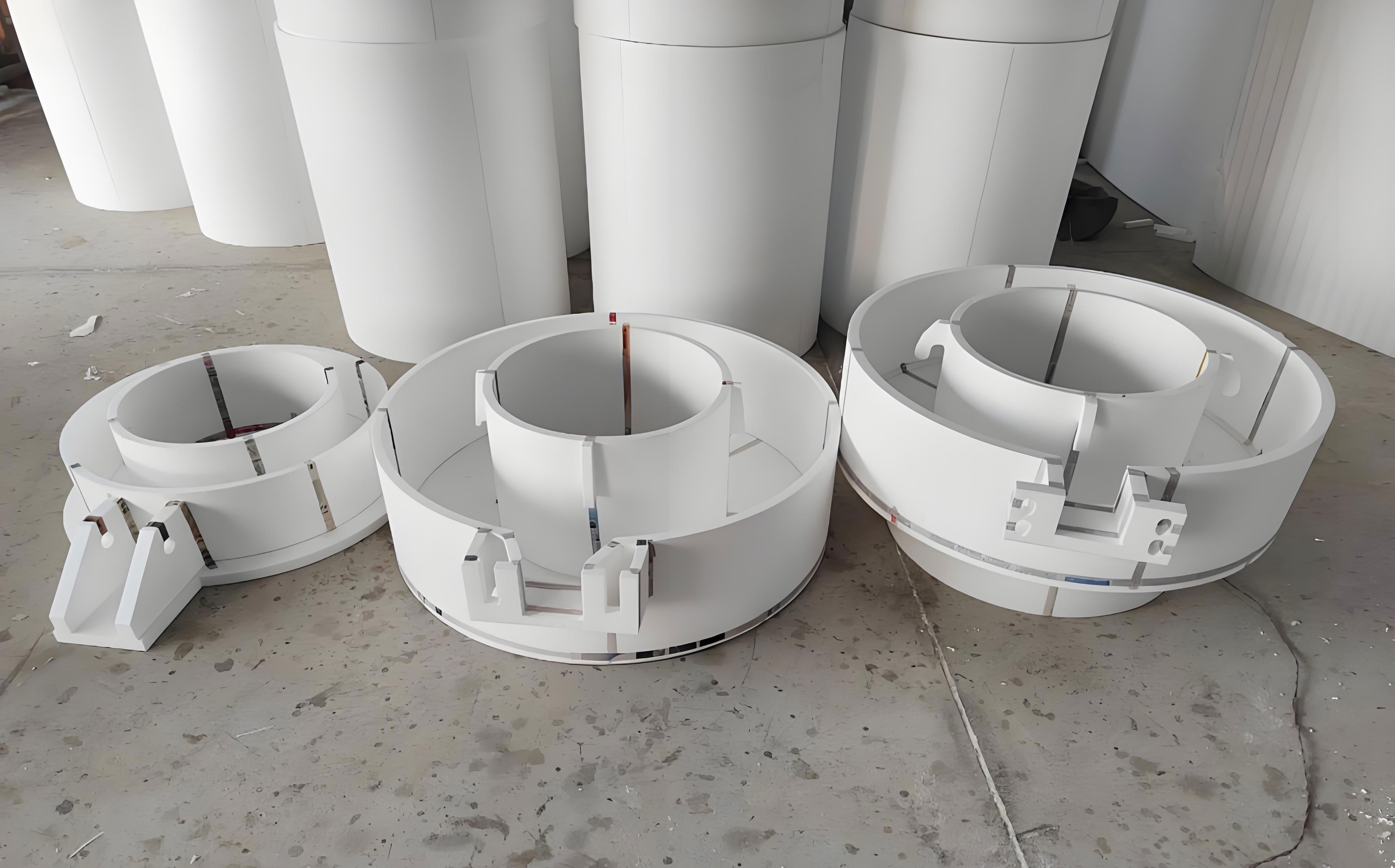
I use the above illustration of evaporative pattern casting to emphasize that core placement, foam decomposition, and gas venting are coupled. In evaporative pattern casting, the foam pattern is replaced by liquid metal, and the ceramic core sees a moving thermal front. The core surface may be exposed to decomposition gases such as carbon monoxide, hydrogen, and light hydrocarbons. These gases can reduce oxide phases, alter wetting, and create porosity at the core-metal interface. Therefore, a core that performs well in investment casting may not automatically perform well in evaporative pattern casting without interface engineering.
2. Fabrication Methods
I divide ceramic core fabrication into conventional forming and additive manufacturing. Conventional forming includes slurry pouring, pressing, hot injection, and gel casting. Additive manufacturing includes stereolithography, digital light processing, selective laser sintering, binder jetting, and material extrusion. Each route has distinct advantages and limitations. I summarize the main comparisons in Table 1.
| Feature | Conventional forming | Additive manufacturing |
|---|---|---|
| Typical processes | Slurry pouring, pressing, hot injection, gel casting | Stereolithography, DLP, SLS, binder jetting |
| Structural complexity | Limited by mold design and pressure transfer | High; near-net shape for internal passages |
| Tooling cost | Moderate to high for complex molds | Low for one-off and small batches; high equipment cost |
| Production efficiency | High for mass production | Lower for bulk production; suitable for prototypes and high-value parts |
| Dimensional accuracy | Good but mold-dependent | High in X-Y; anisotropy in Z |
| Green-body uniformity | Sensitive to slurry stability and drying | Sensitive to layer bonding and resin distribution |
| Shrinkage control | Requires strict sintering schedule | Directional shrinkage and debinding cracks |
| Typical porosity | 30%-45% | 20%-40% |
| Best application | Regular cores, mass production | Complex cores, aerospace, evaporative pattern casting trials |
In conventional forming, the green body is built by filling a mold with a slurry or powder mixture. The slurry contains ceramic powder, binder, plasticizer, and solvent. After drying and demolding, the green body is sintered. The final properties depend on particle packing, binder burnout, and sintering kinetics. I express the relative density as:
$$\rho_r = \frac{\rho}{\rho_{th}}$$
where $$\rho$$ is the measured density and $$\rho_{th}$$ is the theoretical density. The porosity is then:
$$P = 1 – \rho_r$$
For many ceramic cores, the target porosity is between 25% and 45%. This range provides sufficient permeability for gas escape during casting and enough leachability for core removal. However, porosity also reduces strength. A common empirical relationship is:
$$\sigma = \sigma_0 \exp(-bP)$$
where $$\sigma$$ is the flexural strength, $$\sigma_0$$ is the strength at zero porosity, $$b$$ is an empirical constant, and $$P$$ is the porosity. This equation shows why strength and porosity must be balanced. In evaporative pattern casting, the gas evolution from foam decomposition increases the need for core permeability, so a slightly higher porosity may be beneficial, but it must not compromise core survival during mold filling.
2.1 Conventional Forming
Slurry pouring, also called slip casting, uses a stable suspension of ceramic powder. The suspension is poured into a mold, and the liquid is absorbed by a porous mold or evaporated. The green body forms on the mold surface. The process is flexible and can replicate fine surface details. However, the green body often has a density gradient because particles settle or filter unevenly. I have observed that slurry viscosity and drying rate are critical. If drying is too fast, differential shrinkage causes cracks. If drying is too slow, the green body may sag or delaminate.
Pressing applies uniaxial or isostatic pressure to a powder mixture. The resulting green body is dense and dimensionally stable. However, pressure transmission is non-uniform in complex molds, so density gradients can form. Hot injection is widely used for ceramic cores because it combines wax or thermoplastic binder with ceramic powder. The mixture is injected into a metal die at elevated temperature. After cooling, the green body is removed and subjected to binder burnout and sintering. Hot injection can produce complex shapes with good surface finish, but mold wear and binder removal cracking are common problems.
For evaporative pattern casting, conventional forming is attractive because it can produce cores with tailored porosity and established removal behavior. However, the foam pattern may require a core with a different surface chemistry to avoid gas defects. I therefore recommend that conventional forming for evaporative pattern casting include a surface coating step or a controlled surface porosity gradient.
2.2 Additive Manufacturing
Additive manufacturing has changed the design space for ceramic cores. Stereolithography and digital light processing use a photosensitive resin filled with ceramic powder. The resin is cured layer by layer, then debound and sintered. The process can create internal channels that are impossible to mold conventionally. The key challenge is the high solid loading required to reduce shrinkage. I define the solid loading as:
$$\phi_s = \frac{V_s}{V_s + V_r}$$
where $$V_s$$ is the solid volume and $$V_r$$ is the resin volume. If $$\phi_s$$ is too low, shrinkage during sintering is large and cracking occurs. If $$\phi_s$$ is too high, the slurry viscosity increases and printing becomes difficult. A typical optimum is between 40 vol% and 60 vol%.
Selective laser sintering uses a laser to melt or soften binder-coated ceramic particles. It does not require a photosensitive resin, so material selection is broader. However, the resulting parts often have low density and rough surfaces. Binder jetting uses a liquid binder to join powder particles. It is fast and can produce large cores, but the green strength is low and post-processing is necessary.
The following formula describes the sintering shrinkage:
$$\varepsilon_s = \frac{L_0 – L_f}{L_0} \times 100\%$$
where $$L_0$$ is the green-body length and $$L_f$$ is the fired length. In additive manufacturing, shrinkage is often anisotropic. I have seen X-Y shrinkage of 2%-4% and Z shrinkage of 5%-8% in stereolithography-derived alumina cores. This anisotropy must be compensated in the digital model, especially for evaporative pattern casting where the foam pattern and core must fit together without gaps.
Table 2 summarizes typical additive manufacturing routes for ceramic cores.
| Route | Binder | Typical solid loading | Advantages | Limitations |
|---|---|---|---|---|
| Stereolithography | Photosensitive resin | 40-60 vol% | High accuracy, smooth surface | Slow, resin stability, debinding cracks |
| Digital light processing | Photosensitive resin | 40-60 vol% | Fast layer projection, good resolution | Similar to stereolithography; equipment cost |
| Selective laser sintering | Polymer or inorganic binder | No slurry | Broad material choice, no mold | Low density, rough surface, thermal stress |
| Binder jetting | Liquid binder | 50-65 vol% | Fast, large parts, low cost | Low green strength, post-processing needed |
| Material extrusion | Thermoplastic binder | 45-60 vol% | Simple equipment, low cost | Poor surface, limited resolution |
I have found that the choice of fabrication method strongly influences the phase evolution during sintering. For example, stereolithography green bodies contain residual carbon from the resin. During debinding, carbon can reduce oxide phases or form carbides. In evaporative pattern casting, residual carbon may also interact with foam decomposition products. Therefore, debinding and sintering atmospheres must be carefully controlled.
3. Material Systems
I now turn to the three main material systems: alumina-based, silica-based, and magnesia-based ceramic cores. Each system has a different combination of refractoriness, chemical stability, thermal expansion, and removal behavior. Table 3 gives a high-level comparison.
| System | Main phases | Strengths | Weaknesses | Typical casting alloys |
|---|---|---|---|---|
| Alumina-based | Al2O3, mullite, spinel | High strength, high refractoriness, chemical inertness | High sintering cost, low collapsibility, thermal shock sensitivity | Ni-based superalloys, high-temperature alloys |
| Silica-based | SiO2, cristobalite, mullite, ZrSiO4 | Low cost, good collapsibility, low thermal expansion | Low high-temperature strength, cristobalite cracking, creep | Directionally solidified and single-crystal blades |
| Magnesia-based | MgO, MgAl2O4, Mg2SiO4 | Excellent resistance to Al and stainless steel, easy leaching | Difficult sintering, moisture sensitivity, low thermal shock resistance | Al alloys, stainless steels |
3.1 Alumina-Based Ceramic Cores
Alumina-based cores are preferred for high-temperature alloy casting because Al2O3 has a high melting point, high hardness, and good chemical inertness. However, pure Al2O3 is difficult to sinter and has poor thermal shock resistance. I have reviewed several strategies to improve it, including mineralizer addition, fiber reinforcement, nano-sized additives, and pore former addition.
Silica is a common mineralizer for alumina. It reacts with Al2O3 to form mullite:
$$3Al_2O_3 + 2SiO_2 \rightarrow 3Al_2O_3 \cdot 2SiO_2$$
Mullite has a lower thermal expansion coefficient than Al2O3 and can improve thermal shock resistance. It also forms a glassy phase that promotes densification. One study reported that adding 20 vol% SiO2 to Al2O3 produced a room-temperature flexural strength of 26.13 MPa, a high-temperature flexural strength of 45.15 MPa at 1300 °C, and a thermal shock resistance of three cycles. Compared with pure Al2O3, the room-temperature strength increased by 100% and the high-temperature strength increased by 161%.
Nano-sized SiO2 can reduce the total amount of mineralizer needed. For example, adding 3 vol% nano-SiO2 to Al2O3 and sintering at 1500 °C yielded room-temperature and high-temperature strengths of 46.20 MPa and 26.10 MPa, respectively. Pure Al2O3 sintered at the same temperature showed only 22.60 MPa and 6.20 MPa. This indicates that nano-SiO2 improves the sintering neck formation and reduces the amount of glassy phase.
Y2O3 is another effective additive. It reacts with Al2O3 to form Y3Al5O12 (YAG), which can create a core-shell structure. The YAG shell inhibits crack initiation and propagation. A study using SiO2, Y2O3, and SiO2-Y2O3 mineralizers found that the Al2O3-Y2O3 system had the best high-temperature performance after sintering at 1550 °C: room-temperature flexural strength of 41.20 MPa and high-temperature flexural strength of 32.00 MPa at 1500 °C. This is about a 416% improvement over pure Al2O3.
Fiber reinforcement is another route. Organic and inorganic hybrid fibers can create pores and reinforce the matrix simultaneously. For example, adding nylon fibers and alumina fibers in a mass ratio of 6:7 produced a core with 20.10 MPa flexural strength, 43.3% apparent porosity, and only 0.2% linear shrinkage. The porosity increased by 5.27%, the strength increased by 31.37%, and the shrinkage decreased by 77.80% compared with a core without alumina fibers.
Pore formers such as polymethyl methacrylate microspheres can create connected porosity. A triple sintering process can then heal cracks and improve interlayer bonding. One study reported that a core with organic pore formers and triple sintering at 1650 °C reached 34.40 MPa flexural strength and 33.5% porosity. The strength was 63.80% higher than that of a single-sintered sample without pore formers.
I summarize representative alumina-based core results in Table 4.
| Composition | Process | Sintering temperature | Flexural strength (room temperature) | Flexural strength (high temperature) | Porosity or shrinkage |
|---|---|---|---|---|---|
| Al2O3 + 20 vol% SiO2 | Stereo-lithography | 1400 °C | 26.13 MPa | 45.15 MPa at 1300 °C | Thermal shock 3 cycles |
| Al2O3 + 3 vol% nano-SiO2 | Stereo-lithography | 1500 °C | 46.20 MPa | 26.10 MPa | Not reported |
| Al2O3 + Y2O3 | Stereo-lithography | 1550 °C | 41.20 MPa | 32.00 MPa at 1500 °C | High density |
| Al2O3 + nylon fiber + alumina fiber | Hot pressing | Not reported | 20.10 MPa | Not reported | 43.3% porosity; 0.2% shrinkage |
| Al2O3 + PMMA microspheres | 3D printing + triple sintering | 1650 °C | 34.40 MPa | Not reported | 33.5% porosity; 5.5%-8.1% shrinkage |
In evaporative pattern casting, alumina-based cores offer high strength and chemical resistance, but their low collapsibility can make removal difficult. I suggest using a graded porosity design: a dense surface for alloy contact and a porous interior for leaching. This design can be produced by additive manufacturing and is especially relevant for evaporative pattern casting of complex aluminum or superalloy parts.
3.2 Silica-Based Ceramic Cores
Silica-based cores are the most widely used ceramic cores for investment casting of hollow turbine blades. They have low cost, good formability, low thermal expansion, and excellent leachability in molten caustic or hydrofluoric acid solutions. However, they suffer from cristobalite phase transformation, which causes volume changes and microcracking. The transformation can be written as:
$$SiO_2(amorphous) \rightarrow SiO_2(cristobalite)$$
The volume change associated with this transformation can generate internal stresses. I have reviewed several methods to control cristobalite content, including mineralizer addition, fiber reinforcement, and surface coating.
Zirconia is a common additive. It reacts with silica to form zircon:
$$ZrO_2 + SiO_2 \rightarrow ZrSiO_4$$
Zircon has a low thermal expansion coefficient and good chemical stability. One study added 1 vol% ZrO2 fibers to a silica matrix and sintered at 1250 °C. The resulting core had a room-temperature flexural strength of 29.7 MPa, a high-temperature flexural strength of 28.80 MPa at 1500 °C, and 20.4% porosity. The strength improvement was attributed to ZrSiO4 formation and fiber pullout.
Alumina is another effective mineralizer. It promotes cristobalite crystallization and mullite formation. One study used 5 wt% ordinary Al2O3 in a silica matrix and obtained a room-temperature flexural strength of 20.20 MPa, a two-point deflection of only 0.23 mm at 1540 °C for 0.5 h, and a linear shrinkage of 0.6%. The impurities in ordinary Al2O3, such as alkali and alkaline earth oxides, lowered the crystallization activation energy and promoted densification.
Adding 4 wt% Al2O3 to fused silica powder and sintering at 1250 °C for 2 h produced a room-temperature flexural strength of 12.20 MPa, which is 892% higher than that of pure fused silica. The high-temperature deflection at 1550 °C was 3.05 mm, the firing shrinkage was only 0.07%, and the porosity was 37.4%.
In additive manufacturing, alumina addition also improves silica cores. One study used stereolithography with 1.0 vol% Al2O3 and obtained a room-temperature flexural strength of 20.38 MPa and a high-temperature flexural strength of 21.43 MPa at 1550 °C. These values are 76% and 128% higher than those of the unmodified core, respectively. Another study found that printing direction matters: printing parallel to the height direction and sintering at 1300 °C gave a room-temperature strength of 12.10 MPa, which is 33% higher than that of a vertically printed sample.
Nano-silica addition can also improve silica cores. Adding 2.5 wt% nano-SiO2 to a silica matrix with Al2O3 and ZrSiO4 mineralizers and sintering at 1200 °C gave a room-temperature flexural strength of 13.80 MPa, which is 38% higher than that of the unmodified core.
Surface coatings are critical for silica cores because they control the interface reaction with molten alloy. One study formed a nano-Al2O3 coating on fused silica particles by electrostatic attraction. After sintering at 1350 °C with 63 wt% coating, the room-temperature flexural strength reached 15.88 MPa, which is 98% higher than that of an uncoated core. The coating generated compressive stress, suppressed excessive cristobalite precipitation, and promoted mullite formation. The fracture mode changed from intergranular to transgranular.
Another study used n-Al2O3/SiO2 coated particles and obtained a room-temperature flexural strength of 12.80 MPa and a high-temperature creep of only 1.64 MPa at 1550 °C. The thermal expansion was 1.18%, which matched the ceramic shell.
I summarize representative silica-based core results in Table 5.
| Composition | Additive or coating | Sintering temperature | Room-temperature strength | High-temperature performance | Porosity or shrinkage |
|---|---|---|---|---|---|
| SiO2 + ZrO2 fiber | 1 vol% ZrO2 fiber | 1250 °C | 29.7 MPa | 28.80 MPa at 1500 °C | 20.4% porosity |
| SiO2 + Al2O3 | 5 wt% ordinary Al2O3 | Not reported | 20.20 MPa | Deflection 0.23 mm at 1540 °C | 0.6% linear shrinkage |
| SiO2 + Al2O3 | 4 wt% Al2O3 | 1250 °C | 12.20 MPa | Deflection 3.05 mm at 1550 °C | 37.4% porosity; 0.07% shrinkage |
| SiO2 + Al2O3 | 1.0 vol% Al2O3 | 1550 °C | 20.38 MPa | 21.43 MPa at 1550 °C | Not reported |
| SiO2 + nano-SiO2 | 2.5 wt% nano-SiO2 | 1200 °C | 13.80 MPa | Not reported | Not reported |
| SiO2 + nano-Al2O3 coating | 63 wt% coating | 1350 °C | 15.88 MPa | Not reported | Not reported |
| SiO2 + n-Al2O3/SiO2 coating | 42 wt% coated particles | 1300 °C | 12.80 MPa | Creep 1.64 MPa at 1550 °C | Thermal expansion 1.18% |
Interface reactions with nickel-based single-crystal superalloys are a major concern for silica cores. One study compared Cr2O3 and Al2O3 coatings. Without a coating, the wetting angle was 134.8° and severe sand adhesion occurred. With a Cr2O3 coating, the wetting angle decreased to 129.1°, but the coating was completely consumed and sand adhesion worsened. With an Al2O3 coating, the wetting angle decreased to 90.8°, but the coating remained mostly intact and the interface reaction was significantly reduced. The Al2O3 coating blocked the diffusion of Si, O, and alloying elements. This shows that the coating must be chemically stable and dense. In evaporative pattern casting, the same principle applies, but the atmosphere may be more reducing, so Al2O3 or Y2O3 coatings may be more robust than Cr2O3.
3.3 Magnesia-Based Ceramic Cores
Magnesia-based cores are used for aluminum alloy and stainless steel castings because MgO is highly resistant to molten aluminum and can be leached in weak acids. The removal reaction is:
$$MgO + 2CH_3COOH \rightarrow Mg(CH_3COO)_2 + H_2O$$
This reaction is mild and does not attack the casting. However, pure MgO is difficult to sinter and is sensitive to moisture. It can react with water to form Mg(OH)2:
$$MgO + H_2O \rightarrow Mg(OH)_2$$
This hydration causes volume expansion and cracking. Therefore, mineralizers and coatings are essential.
Al2O3 is a common mineralizer for MgO. It reacts to form spinel:
$$MgO + Al_2O_3 \rightarrow MgAl_2O_4$$
Spinel has a high melting point and good thermal shock resistance. One study added 12 wt% Al2O3 to MgO and obtained a room-temperature flexural strength of 54.13 MPa, which is 435% higher than that of pure MgO. Adding 10 wt% ZrO2 improved the thermal shock resistance to 37 cycles, which is 825% higher than that of pure MgO. The sintering shrinkage was 5.87%, and the relative corrosion rate in a leaching solution was 91.33% in 20 min.
CaCO3 is another effective additive. It decomposes to CaO, which dissolves into the MgO lattice and promotes sintering. Adding 5 wt% CaCO3 gave a room-temperature flexural strength of 24.03 MPa, which is 217% higher than that of pure MgO. The sintering shrinkage was 0.97%, and the dissolution rate in 40 wt% acetic acid was 55.80% after 10 h.
Quartz glass powder is used as a mineralizer for MgO cores in aluminum alloy casings. Adding 30 wt% quartz glass powder gave a room-temperature flexural strength of 15.12 MPa, a high-temperature flexural strength of 8.60 MPa at 1550 °C, a sintering shrinkage of 2.83%, and a removal rate of 86.5% in 20% acetic acid under ultrasonic conditions. The quartz glass powder promoted densification and formed magnesium silicate:
$$2MgO + SiO_2 \rightarrow Mg_2SiO_4$$
Spinel addition can also improve MgO cores. A composite core with 60 wt% MgAl2O4 in porous MgO gave a room-temperature flexural strength of 17.00 MPa and a thermal shock strength retention of 20.26%, which is 5.25 times higher than that of pure MgO. The spinel volume expansion compensated for sintering shrinkage, and the porous structure reduced thermal stress.
MgO-Cr2O3 cores have also been studied. A mixture of magnesia-chrome sand and high-purity MgO in a 60:40 mass ratio gave a room-temperature flexural strength of 18.37 MPa, which is 52.7% higher than that without high-purity MgO. The sintering shrinkage was only 1.47%, the thermal shock cycles were 8, and the core removal rate in 90 °C acetic acid was 36.37%. The Cr2O3 reacted to form magnesia-chrome spinel, which pinned grain boundaries.
I summarize representative magnesia-based core results in Table 6.
| Composition | Additive | Sintering temperature | Room-temperature strength | Thermal shock or high-temperature performance | Shrinkage or removal |
|---|---|---|---|---|---|
| MgO + Al2O3 | 12 wt% Al2O3 | 1450 °C | 54.13 MPa | Not reported | 5.87% shrinkage; 91.33% corrosion in 20 min |
| MgO + ZrO2 | 10 wt% ZrO2 | 1450 °C | Not reported | 37 thermal shock cycles | 5.87% shrinkage |
| MgO + CaCO3 | 5 wt% CaCO3 | Not reported | 24.03 MPa | Not reported | 0.97% shrinkage; 55.80% dissolution in 10 h |
| MgO + quartz glass | 30 wt% quartz glass | 1200 °C | 15.12 MPa | 8.60 MPa at 1550 °C | 2.83% shrinkage; 86.5% removal |
| MgO + MgAl2O4 | 60 wt% MgAl2O4 | Not reported | 17.00 MPa | 20.26% strength retention after thermal shock | Reduced shrinkage |
| MgO + magnesia-chrome sand | 60:40 mass ratio | 1420 °C | 18.37 MPa | 8 thermal shock cycles | 1.47% shrinkage; 36.37% removal |
In evaporative pattern casting, magnesia-based cores are attractive for aluminum alloys because they resist aluminum attack and can be removed gently. However, the foam pattern may release hydrogen and carbonaceous species that can reduce MgO or form magnesium carbide. I recommend using a protective coating such as MgAl2O4 or Al2O3 to stabilize the surface. The coating can also reduce moisture pickup during storage.
4. Interface Control and Performance Optimization
Interface control is as important as bulk composition. The core surface contacts the molten alloy, the ceramic shell, and the atmosphere. Reactions at these interfaces can change wetting, adhesion, and defect formation. I use the following thermodynamic criterion for interface stability:
$$\Delta G = \Delta H – T\Delta S$$
A negative Gibbs free energy change indicates a favorable reaction. For example, the formation of mullite, spinel, zircon, and magnesium silicate is thermodynamically favorable at typical casting temperatures. However, kinetics also matter. The reaction rate can be described by an Arrhenius equation:
$$k = A \exp\left(-\frac{Q}{RT}\right)$$
where $$k$$ is the rate constant, $$A$$ is the pre-exponential factor, $$Q$$ is the activation energy, $$R$$ is the gas constant, and $$T$$ is the absolute temperature. Higher temperatures increase reaction rates, so interface reactions are more severe in high-temperature alloy casting. In evaporative pattern casting, the local temperature may be lower than in investment casting, but the atmosphere can be more reducing, which changes the driving force for oxide reduction.
Wetting is a key indicator of interface behavior. The contact angle $$\theta$$ is related to the surface energies by Young’s equation:
$$\cos\theta = \frac{\gamma_{SV} – \gamma_{SL}}{\gamma_{LV}}$$
where $$\gamma_{SV}$$, $$\gamma_{SL}$$, and $$\gamma_{LV}$$ are the solid-vapor, solid-liquid, and liquid-vapor surface energies, respectively. A contact angle greater than 90° indicates poor wetting, which is desirable for easy core removal. A contact angle less than 90° indicates good wetting, which can cause penetration and sand adhesion. In one study, an Al2O3 coating on a silica core maintained the contact angle between 89.1° and 90.8°, which reduced sand adhesion while still allowing complete filling. This is a narrow window, so coating thickness and composition must be optimized.
Coatings can also reduce chemical diffusion. The diffusion flux $$J$$ is given by Fick’s first law:
$$J = -D \frac{\partial C}{\partial x}$$
where $$D$$ is the diffusion coefficient and $$\partial C/\partial x$$ is the concentration gradient. A dense coating with low diffusivity reduces the flux of reactive species. For evaporative pattern casting, the coating must also resist carbon diffusion and gas permeation. Multilayer coatings with alternating dense and porous layers may provide both protection and gas permeability.
5. Challenges and Bottlenecks
I have identified several bottlenecks that limit the wider application of ceramic cores in alloy casting and evaporative pattern casting.
First, the strength-porosity trade-off remains fundamental. High strength requires high density, but high density reduces permeability and leachability. I express the trade-off as:
$$\sigma = \sigma_0 \exp(-bP)$$
and
$$D_{eff} = D_0 \frac{P}{\tau}$$
where $$D_{eff}$$ is the effective diffusivity, $$D_0$$ is the bulk diffusivity, $$P$$ is porosity, and $$\tau$$ is tortuosity. To improve both strength and permeability, one must optimize pore shape and connectivity rather than just total porosity. Additive manufacturing can create designed pore networks, but the resolution and printing time are still limiting factors.
Second, dimensional stability is difficult to control. Sintering shrinkage, thermal expansion, and creep all contribute to dimensional changes. The total strain can be approximated as:
$$\varepsilon_{total} = \varepsilon_{sintering} + \varepsilon_{thermal} + \varepsilon_{creep}$$
Each term depends on temperature, time, and microstructure. For evaporative pattern casting, the foam pattern also changes dimension during pyrolysis, so the core and pattern must be designed with matched shrinkage.
Third, interface reactions with reactive alloys, especially Ti, Al, and Ni-based superalloys, can cause sand adhesion, surface contamination, and core failure. Coatings are effective but add cost and process steps. In evaporative pattern casting, the decomposition products can also react with the core, so the coating must be stable in a carbon-rich environment.
Fourth, removal of complex cores is challenging. Chemical leaching requires acid or alkali solutions that may attack the casting. Mechanical removal can damage thin walls. I use the removal efficiency:
$$\eta_d = \frac{m_0 – m_t}{m_0} \times 100\%$$
where $$m_0$$ is the initial core mass and $$m_t$$ is the remaining mass after leaching. High removal efficiency requires open porosity and soluble phases. Magnesia-based cores have an advantage here, but they are moisture-sensitive. Silica-based cores are easy to remove but have low high-temperature strength. Alumina-based cores are strong but difficult to remove. A composite or graded core may solve this dilemma.
Fifth, additive manufacturing of ceramic cores still faces challenges in binder burnout, anisotropic shrinkage, and interlayer bonding. The green body strength is low, and cracks often form during debinding. I have found that slow heating rates and controlled atmospheres can reduce cracking, but the process window is narrow.
6. Future Directions
I propose the following future directions for ceramic cores in alloy investment casting and evaporative pattern casting.
First, multi-material and functionally graded cores should be developed. A core can have a dense, chemically resistant surface and a porous, leachable interior. The composition can also change from alumina-rich at the hot surface to silica-rich at the interior. This design can be realized by additive manufacturing with multiple print heads or by sequential infiltration.
Second, interface engineering should move from single-layer coatings to adaptive coatings. An adaptive coating can react with the alloy to form a stable barrier but remain soluble in the leaching solution. For evaporative pattern casting, the coating should also catalyze the decomposition of foam products into harmless gases.
Third, green manufacturing should be prioritized. Current binders and leaching agents can be toxic or corrosive. Water-based binders, recyclable resins, and weak organic acids are preferred. For evaporative pattern casting, the foam pattern itself should be designed to decompose into low-toxicity products.
Fourth, standardized testing and databases are needed. Properties such as flexural strength, porosity, thermal shock resistance, creep rate, and removal rate are measured under different conditions. A unified database would allow engineers to compare materials and predict performance. I suggest the following figure of merit for core selection:
$$FOM = \frac{\sigma_{HT} \cdot \eta_d}{E \alpha \cdot \rho}$$
where $$\sigma_{HT}$$ is the high-temperature strength, $$\eta_d$$ is the removal efficiency, $$E$$ is the elastic modulus, $$\alpha$$ is the thermal expansion coefficient, and $$\rho$$ is the density. A higher figure of merit indicates a better overall core.
Fifth, in situ monitoring and simulation should be integrated. The casting process involves complex heat transfer, fluid flow, and phase transformation. I can model the temperature field as:
$$\rho C_p \frac{\partial T}{\partial t} = \nabla \cdot (k \nabla T) + Q$$
where $$C_p$$ is the specific heat, $$k$$ is the thermal conductivity, and $$Q$$ is the latent heat or reaction heat. For evaporative pattern casting, the foam decomposition adds a moving boundary and gas generation term. Coupling these models with core property data would enable virtual design and reduce trial-and-error experiments.
7. Conclusions
I have reviewed the fabrication methods and material systems of ceramic cores for alloy casting, with attention to evaporative pattern casting as a related and emerging application. Conventional forming remains dominant for mass production of regular cores, while additive manufacturing enables complex geometries for high-value components. Alumina-based cores provide high strength and chemical inertness but are difficult to remove. Silica-based cores offer good collapsibility and low cost but suffer from cristobalite cracking and low high-temperature strength. Magnesia-based cores are excellent for aluminum and stainless steel but require moisture protection and careful sintering.
The key to future progress is not a single material or process but the integration of composition, microstructure, interface, and manufacturing design. I expect that functionally graded cores, adaptive coatings, and digital process simulation will become standard tools. In evaporative pattern casting, the additional challenges of foam decomposition and gas evolution will require cores with tailored surface chemistry and permeability. By combining the knowledge from investment casting with the specific needs of evaporative pattern casting, I believe that ceramic cores can enable a new generation of complex, high-performance alloy components.
Finally, I emphasize that the ceramic core is not an auxiliary consumable but a critical enabler of casting quality. Its properties must be considered from the beginning of the casting design, not as an afterthought. The formulas and tables in this review provide a framework for comparing materials and processes, and I hope they will support the development of more robust and sustainable ceramic cores for alloy casting.