
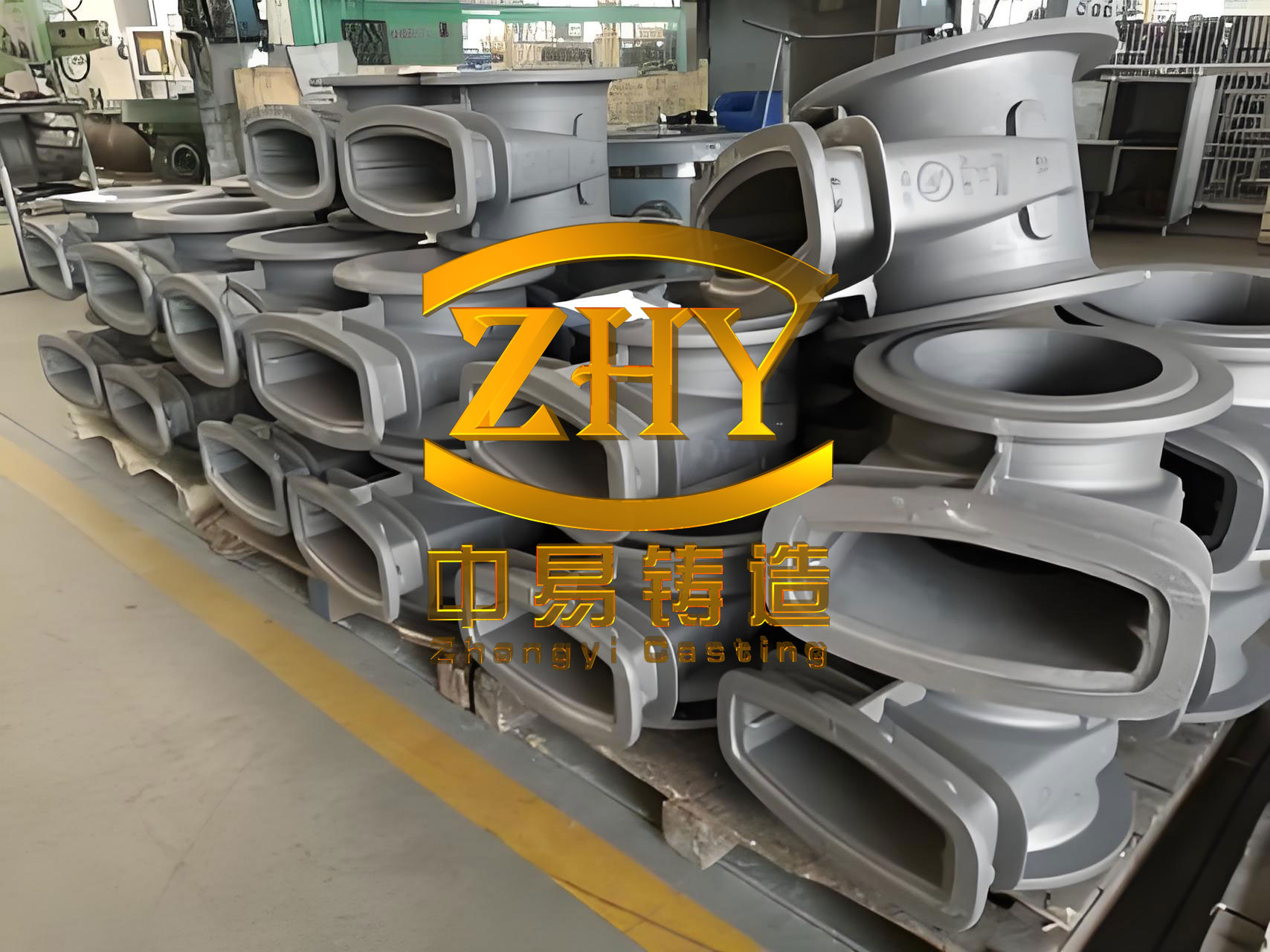
The production of high-quality grey iron casting remains a cornerstone of modern manufacturing, essential for components requiring excellent castability, good machinability, and reliable damping capacity. At the heart of achieving the desired microstructure—dominated by well-formed, interconnected graphite flakes (Type A)—lies the practice of inoculation. This critical post-treatment modifies the solidification characteristics of the molten iron, promoting graphite nucleation, suppressing carbide formation (chill reduction), and significantly influencing the soundness of the final casting by mitigating shrinkage porosity. The efficacy of an inoculant, however, is not merely a function of its chemical composition but is intrinsically tied to its ability to alter the thermodynamic and kinetic pathways of solidification. This article details a first-person investigative study focused on quantitatively comparing the performance of four distinct inoculants using an advanced thermal analysis system, establishing a direct correlation between real-time solidification parameters and the final quality of grey iron casting test specimens.
The fundamental challenge in grey iron casting is managing the inherent volume contraction during solidification. While the precipitation of graphite provides some compensatory expansion, improper solidification patterns can lead to internal shrinkage cavities and porosity, compromising mechanical integrity. The role of an effective inoculant is to increase the number of potent substrates for graphite nucleation, thereby facilitating a more uniform, eutectic solidification that proceeds with a favorable temperature gradient. This study was designed to move beyond qualitative assessments, employing the PD-GD thermal analysis system to capture precise solidification curves and derive key parameters that serve as proxies for inoculation effectiveness.
Methodology: The PD-GD Thermal Analysis System
The core analytical tool for this investigation was the PD-GD thermal analysis system. This system functions by continuously monitoring the temperature of a small, representative sample of molten iron as it solidifies inside a standardized, instrumented cup containing a K-type thermocouple. The temperature-time (T-t) curve, or cooling curve, and its first derivative (dT/dt) contain a wealth of information about the phase transformations occurring within the metal.
For grey iron casting, the following critical temperatures and parameters are extracted and calculated:
- Liquidus Temperature (TL): The temperature at which the first solid phases (austenite dendrites) begin to form.
- Eutectic Start Temperature (TEStart or TEU): The temperature at which the austenite-graphite eutectic reaction commences.
- Eutectic Minimum Temperature (TEMin): The lowest temperature reached during the eutectic plateau, influenced by undercooling.
- Eutectic Recalescence (ΔTR): The temperature rise from TEMin due to the release of latent heat of fusion during graphite growth. It is calculated as: $$ \Delta T_R = T_{EMax} – T_{EMin} $$ where \( T_{EMax} \) is the maximum temperature after recalescence.
- Solidus Temperature (TS): The temperature at which solidification is complete.
From these temperatures, two derived parameters were of particular importance for this study:
- Secondary Graphite Precipitation Time (tSG): This is the duration of the eutectic plateau or a specifically defined segment of it, often correlated with the time available for the growth of graphite. A longer tSG generally indicates more favorable conditions for the development of well-formed, longer graphite flakes.
- Thermal Conductivity Coefficient (Keff): A computed parameter based on the shape and characteristics of the cooling curve. It relates to the effective thermal conductivity of the solidifying material. In grey iron casting, a higher Keff is strongly associated with a finer, more interconnected graphite structure that conducts heat more efficiently, which in turn promotes directional solidification and reduces the risk of internal shrinkage. It can be conceptually linked to the rate of heat extraction: $$ q = -K_{eff} \cdot A \cdot \frac{dT}{dx} $$ where \( q \) is heat flow, \( A \) is area, and \( dT/dx \) is the temperature gradient.
The PD-GD system synthesizes these parameters to generate a “Metallurgical Quality Score,” providing a quantitative, at-a-glance assessment of the iron’s suitability for producing sound castings.
Experimental Design for Inoculant Comparison
To ensure a rigorous comparison, the experiment was designed to isolate the variable of inoculant type while holding all other factors constant. The base iron chemistry was targeted for a typical Grade HT300 grey iron casting, with the following composition: C: 3.02%, Si: 1.78%, Mn: 1.0%, P: 0.02%, S: 0.085%, Cr: 0.3%, plus trace amounts of Cu and Sn.
| Group | Inoculant Type | Key Active Element (Approx.) | Sample Cup ID | Test Block ID |
|---|---|---|---|---|
| I | Pure Lanthanum (La) Inoculant | La (~1%) | a | A |
| Strontium-Silicon (SrSi) Inoculant | Sr (~1%) | b | B | |
| II | Barium-Silicon (BaSi) Inoculant | Ba (4-6%) | c | C |
| Standard 72% Ferrosilicon (FeSi) Inoculant | Ca, Al (~1% Ca) | d | D |
All inoculants were sieved to a consistent particle size of 0.2–0.7 mm to ensure comparable dissolution kinetics. The addition rate was fixed at 0.12% by weight. For thermal analysis, 0.30g of inoculant was placed in the bottom of four separate PD-GD sample cups (labeled a, b, c, d), each designed to hold approximately 250g of molten iron.
Concurrently, a special mold was prepared to cast test blocks specifically designed to be sensitive to shrinkage. The block geometry incorporated a significant thermal mass (hot spot) that, under a deliberately inadequate feeding system (a short sprue), was prone to form internal shrinkage porosity and cavities. This provided a tangible, physical measure of the inoculant’s effect on casting soundness. Two such blocks were cast from each pouring. In the mold’s runner system, a small cavity before each block held 1.2g of the respective inoculant for instantaneous, in-stream treatment, creating test blocks A, B, C, and D corresponding to the inoculants in Table 1.
The experimental procedure was as follows: A single melt of the base HT300 iron was prepared in an electric furnace. Upon reaching the target temperature and chemistry, a ladle was used to pour the molten iron. Within a three-minute window to minimize thermal and compositional drift, the iron was poured: 1) directly into the four prepared thermal analysis cups, and 2) into the mold containing the different inoculants in its runners. This ensured that the iron treated with each inoculant type, for both thermal analysis and physical test blocks, originated from the same batch, guaranteeing a valid comparison.
Results: Thermal Analysis and Physical Inspection
The PD-GD system captured the complete solidification profiles for all four sample cups. A side-by-side comparison of the curves for the BaSi (c) and FeSi (d) cups is particularly revealing. The curve for cup ‘c’ (BaSi) displayed a more pronounced eutectic plateau with a distinct recalescence, while cup ‘d’ (FeSi) showed a less defined thermal event.
The quantitative data extracted from all thermal analysis curves are summarized below, alongside the results from the physical inspection of the corresponding test blocks and metallographic examination of the samples from the thermal analysis cups themselves.
| Inoculant Type | Sample Cup ID | Secondary Graphite Time, tSG (s) | Thermal Conductivity Coeff., Keff (Arb. Units) | Metallurgical Quality Score | Graphite Structure (Cup Sample) | Test Block Shrinkage Defect |
|---|---|---|---|---|---|---|
| La Inoculant | a | 43 | 24 | 65 | Type A, Fine/Short | Pronounced Shrinkage Cavity, Minor Porosity |
| SrSi Inoculant | b | 43 | 22 | 60 | Type A, Fine/Short | Pronounced Shrinkage Cavity, Slight Porosity |
| BaSi Inoculant | c | 58 | 28 | 82 | Type A, Well-Formed | No Major Cavity, Slight Porosity |
| 72% FeSi Inoculant | d | 43 | 23 | 58 | Type A, Very Fine | Pronounced Shrinkage Cavity, Significant Porosity |
The metallographic examination of the cup samples revealed that all four produced a Type A graphite matrix, confirming some level of inoculation. However, the morphology differed significantly. The graphite in samples from cups ‘a’, ‘b’, and ‘d’ was notably finer and shorter. In contrast, the sample from cup ‘c’ (BaSi) exhibited a more desirable, well-developed and coarser Type A graphite flake structure.
The sectioned test blocks provided the most direct evidence of performance. Block C (BaSi treated) was markedly superior, showing no major shrinkage cavity and only minimal micro-porosity. Blocks A (La) and B (SrSi) showed clear shrinkage cavities, with Block A appearing slightly denser (less porous). Block D (FeSi) exhibited the worst condition, with a large cavity and extensive surrounding porosity.
Analysis and Discussion of Inoculation Mechanisms
The results present a clear hierarchy of performance under the tested conditions (0.12% addition). The BaSi inoculant (4-6% Ba) demonstrated unequivocally the best overall performance, followed by the La inoculant, with SrSi and standard FeSi showing similar, lesser efficacy. The thermal analysis data offers a scientific explanation for this observed ranking.
The significantly longer Secondary Graphite Precipitation Time (tSG=58s) for the BaSi-treated iron is a critical indicator. This extended eutectic reaction duration suggests a higher number of active nucleation sites and a slower, more controlled growth of graphite. The relationship between nucleation rate (I), growth velocity (v), and the total solidification time (tf) can be conceptualized in terms of the volume fraction of graphite transformed: $$ V_g(t) \propto \int_0^{t_f} I(T) \cdot \left[ \int_0^t v(T) \, d\tau \right]^3 \, dt $$ A longer tSG allows the \( v(T) \) integral to develop over a greater interval, promoting the formation of larger, more interconnected flakes rather than numerous tiny ones, which is consistent with the observed microstructure.
The superior Thermal Conductivity Coefficient (Keff=28) for the BaSi iron is both a cause and a consequence of its better graphite structure. Graphite is an excellent thermal conductor. A well-formed, interconnected graphite network established early in solidification enhances the effective thermal conductivity of the semi-solid mass. This improved internal heat conduction promotes a steeper, more favorable temperature gradient from the casting center to the walls (dT/dx), facilitating directional solidification. This phenomenon directly counteracts the formation of isolated liquid pools in hot spots, thereby minimizing shrinkage porosity. The system’s high Metallurgical Quality Score of 82 for this sample accurately reflected this optimized solidification dynamic.
The outperformance of BaSi can be attributed to the higher concentration (4-6%) and potent nature of Barium as a modifying agent. Barium is known to form stable, high-melting-point compounds (e.g., BaS, BaO·Al2O3·2SiO2) that serve as excellent heterogeneous nucleation substrates for graphite. Furthermore, Ba is believed to have a prolonged fading resistance compared to other elements. The other inoculants (La, Sr, Ca in FeSi), while effective nucleants, were present at only ~1% concentration in this trial. At the fixed 0.12% addition rate, this translated to a substantially lower absolute mass of the active nucleating agent entering the melt, likely resulting in an insufficient number of substrates to fully optimize the solidification process. This highlights a crucial aspect of grey iron casting process control: the interplay between inoculant potency and required addition level. An “Inoculation Efficiency Index” (IEI) could be hypothesized: $$ IEI = f(C_{active}, \rho_{substrate}, \Delta T_{undercooling}) $$ where \( C_{active} \) is the concentration of active element, \( \rho_{substrate} \) is the density of effective nucleation substrates formed, and \( \Delta T_{undercooling} \) is the reduction in eutectic undercooling achieved.
The PD-GD system’s risk prediction for the FeSi-treated sample (Score 58), flagging potential shrinkage issues, was validated by the severe defects in Block D. This underscores the practical value of thermal analysis as a real-time process control tool for grey iron casting, allowing for corrective actions (e.g., inoculant type or dose adjustment) before an entire batch of castings is poured.
Practical Implications and Recommendations for Grey Iron Casting
This study provides actionable insights for foundry engineers and metallurgists. While the “best” inoculant can vary with base iron composition, section size, and casting design, the methodology establishes a framework for selection:
- Quantitative Assessment: Relying solely on post-casting inspection is reactive. Implementing thermal analysis provides proactive, quantitative data on the melt’s inoculated state. Key parameters to monitor are tSG and Keff.
- Inoculant Selection and Dosing: For critical castings prone to shrinkage, Ba-bearing inoculants should be strongly considered due to their potent and long-lasting effects. However, the required addition level must be determined experimentally for each specific foundry condition. The trial suggests that for La, Sr, or standard FeSi inoculants to be effective at low addition rates (e.g., 0.12%), their potency or concentration may need to be re-evaluated.
- Correlation Development: Foundries should conduct their own experiments to build a database correlating PD-GD parameters (like Metallurgical Quality Score) with the actual quality metrics of their specific castings (shrinkage rates, tensile strength, hardness). This enables the setting of reliable control limits for the thermal analysis system.
- Fading Consideration: The time between inoculation and pouring (holding time) is critical. The superior performance of BaSi in this immediate-pour scenario suggests better fade resistance, but its performance over longer holds should be evaluated separately.
Conclusion
This investigation successfully employed advanced thermal analysis to differentiate the efficacy of four commercial inoculants for grey iron casting. By simultaneously analyzing real-time solidification curves and evaluating the soundness of purpose-designed test castings, a direct and convincing correlation was established. Under the specific conditions of this trial—using a fixed, relatively low addition rate of 0.12%—the silicon-barium inoculant (with 4-6% Ba) yielded the most favorable results. It produced the longest secondary graphite time (58s), the highest computed thermal conductivity coefficient (28), the best metallographic structure, and crucially, the test block with the least shrinkage defects. The performance hierarchy was BaSi > La > SrSi ≈ FeSi.
The key conclusion for practitioners of grey iron casting is that inoculant choice has a measurable and profound impact on the solidification dynamics and final casting integrity. The PD-GD thermal analysis system proved to be an invaluable tool in quantifying this impact, transforming inoculation from an empirical art into a more controlled science. By monitoring parameters such as tSG and Keff, foundries can gain immediate insight into the effectiveness of their inoculation practice, predict potential quality issues like shrinkage, and make informed decisions to optimize the production of reliable, high-quality grey iron castings. Future work should explore the interaction of these inoculants with varying base sulfur levels and their performance across different holding times to build a more comprehensive model of inoculation efficiency.