
The traditional sand casting process, while versatile, is fundamentally constrained by its reliance on physical patterns and core boxes. Any design iteration or defect correction necessitates costly and time-consuming modifications to these tooling elements. Furthermore, in an era of rapid product cycles, the obsolescence of a part often renders its associated patterns and cores waste, representing significant resource inefficiency. The advent of Additive Manufacturing (AM), or 3D printing, has introduced a paradigm shift, offering a direct digital pathway from CAD model to functional mold or core. This technology liberates the design of sand casting products from the geometric constraints of conventional pattern-making, enabling the production of highly complex internal passages, optimized gating systems, and lightweight mold structures that were previously impossible or prohibitively expensive to manufacture.
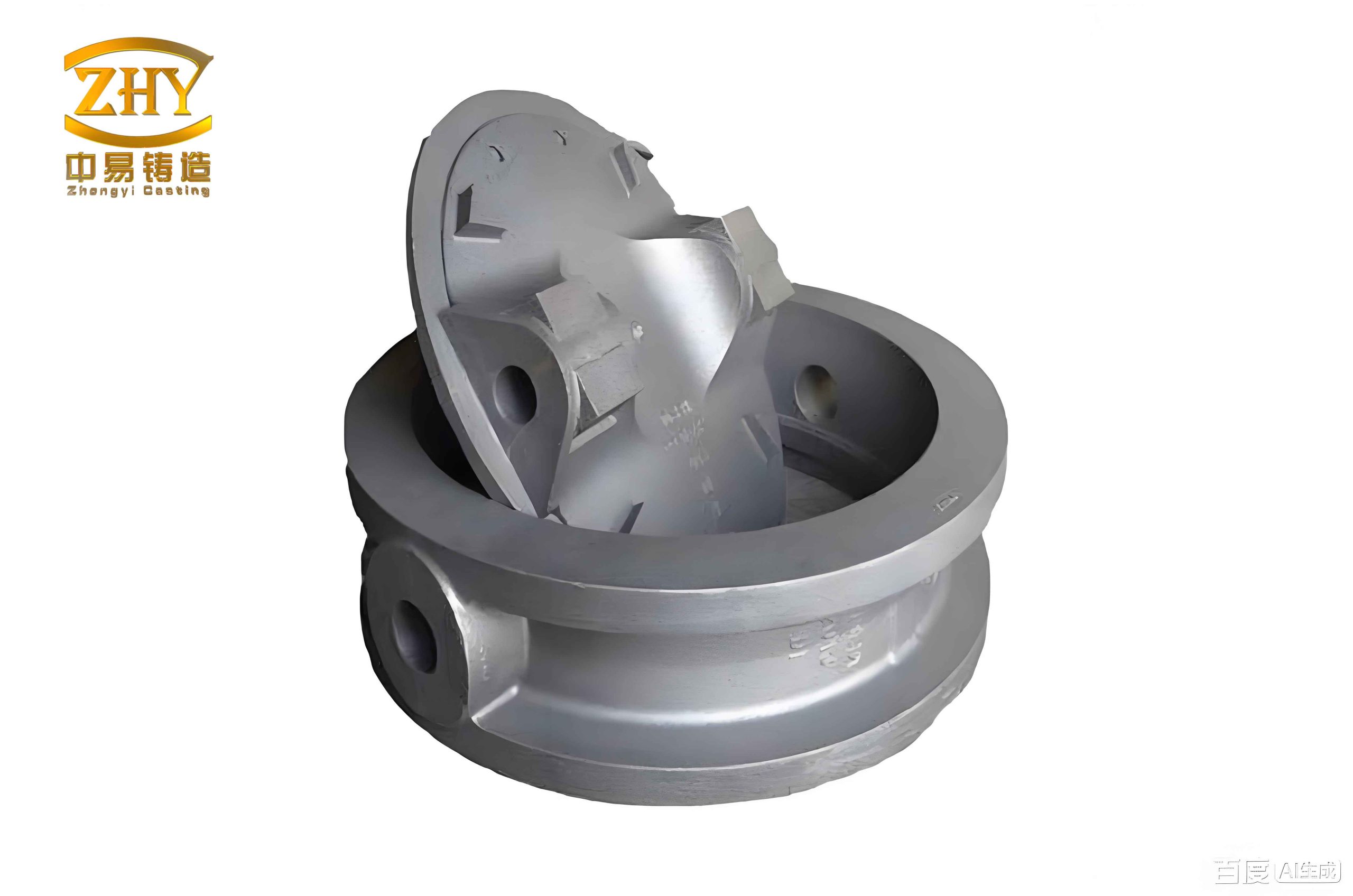
In the context of sand casting, AM primarily manifests in two methodologies: direct and indirect mold production. The direct method involves printing the sand mold or core itself. The CAD model of the desired cavity is digitally manipulated to create the mold block, which is then sliced and printed layer-by-layer. The indirect method employs AM to create a precise pattern, which is subsequently used in a conventional molding process. While adding a step, this can still accelerate prototyping. The core advantage of both approaches lies in their ability to drastically shorten lead times, simplify pre-production workflows, and reduce costs for low-volume or high-complexity sand casting products. Among the various AM technologies, Selective Laser Sintering (SLS) and Binder Jetting (3DP) have emerged as the most mature and widely adopted for sand mold fabrication.
1. Foundational AM Technologies for Sand Molds
1.1 Selective Laser Sintering (SLS)
The SLS process for sand utilizes a laser to selectively fuse coated sand particles. A thin layer of sand, typically pre-mixed with a heat-activated binder (like phenolic resin), is spread across a build platform. A high-precision laser beam, guided by cross-sectional data from the CAD model, scans the surface. The laser’s thermal energy melts or sinters the binder, bonding the sand grains together in the desired shape. After one layer is completed, the build platform lowers, a new layer of powder is recoated, and the process repeats until the full 3D mold is created. The un-sintered powder naturally supports overhanging features during the build.
The quality of SLS-printed molds is governed by a complex interplay of energy density parameters related to the laser and scan strategy, as well as material properties. The linear energy density ($E_l$) is a critical parameter, defined as:
$$E_l = \frac{P}{v}$$
where $P$ is the laser power (W) and $v$ is the scan speed (mm/s). An optimal $E_l$ is required for sufficient binder fusion without degradation. If the energy is too low, bonding is weak; if too high, the binder may carbonize, also compromising strength. Furthermore, the area energy density ($E_a$) accounts for scan spacing ($h_s$):
$$E_a = \frac{P}{v \cdot h_s}$$
This parameter influences the overlap between adjacent scan tracks and the homogeneity of layer bonding. Key influencing factors are summarized in the table below:
| Process Parameter | Primary Influence | Typical Effect on Mold Properties |
|---|---|---|
| Laser Power ($P$) | Energy input per unit time | Increased strength up to a point, then potential resin burn-off. |
| Scan Speed ($v$) | Exposure time per unit length | Higher speed decreases energy density, reducing strength. |
| Scan Spacing ($h_s$) | Overlap between scan vectors | Smaller spacing increases overlap and strength but slows build. |
| Layer Thickness ($t_l$) | Vertical resolution & stair-step effect | Thinner layers improve surface finish but increase build time. Thicker layers reduce inter-layer bonding strength. |
1.2 Binder Jetting (3DP)
The Binder Jetting process, often referred to as 3DP in the foundry context, operates on a similar layer-wise principle but uses a liquid binding agent. A layer of dry sand (pre-mixed with a powdered catalyst or hardener) is spread. A print head, similar to an inkjet printer, selectively deposits droplets of a liquid binder onto the sand surface according to the layer’s geometry. The binder reacts with the hardener in the sand, causing localized hardening. The platform descends, a new layer of sand is spread, and the process continues. A key distinction is that 3DP is a “line-wise” or “area-wise” process compared to the “point-wise” scanning of SLS, which can translate to faster build speeds for larger volumes, though often at a slight trade-off in feature resolution.
Critical parameters for 3DP focus on the jetting process and binder-powder interaction:
| Process Parameter | Primary Influence |
|---|---|
| Binder Saturation Level | Ratio of binder volume to pore volume in powder bed. Directly affects green strength. |
| Drop Velocity & Volume | Controlled by print head pulse waveform. Affects penetration depth and dimensional accuracy. |
| Layer Thickness | Similar stair-step and strength trade-offs as SLS. |
| Print Head Speed/Scan Rate | Influences production time and potential for bleeding between adjacent areas. |
2. Materials for AM Sand Molds
The performance of printed molds, and consequently the quality of the final sand casting products, is heavily dependent on the base materials. The requirements extend beyond traditional foundry sand properties to include AM-specific needs like excellent flowability for consistent recoating and controlled particle size distribution for optimal binder interaction.
2.1 Base Sand
The choice of base sand impacts refractoriness, thermal stability, expansion characteristics, and surface finish of the cast part.
| Sand Type | Key Properties | Advantages for AM | Disadvantages |
|---|---|---|---|
| Silica Sand | High thermal expansion, angular shape. | Low cost, widely available. | Poor flowability, prone to “pushing” during recoating, high expansion can cause casting defects. |
| Zircon Sand | High refractoriness, density, and thermal conductivity. Rounded grains. | Excellent flowability, low expansion, produces superior surface finish on sand casting products. | High cost, limited availability. |
| Ceramic Beads (e.g., Spherical Ceramic Sand) | Synthetic, spherical shape, low thermal expansion. | Excellent flowability, good compromise on cost vs. performance, high recyclability. | Synthetic production cost higher than natural silica. |
Grain size distribution (AFS Fineness Number) is crucial. A model for permeability ($\Pi$) and approximate strength relationship can be considered:
$$ \Pi \propto \frac{d^2 \phi^3}{(1-\phi)^2} $$
and
$$ \sigma \propto \frac{B}{S_v} $$
where $d$ is the effective grain diameter, $\phi$ is porosity, $\sigma$ is mold strength, $B$ is the total binder content, and $S_v$ is the specific surface area of the sand ($S_v \propto 1/d$). Coarser sands increase permeability and can increase strength for a given binder weight (lower $S_v$), but degrade surface finish and limit minimum printable layer thickness. A balanced AFS grain fineness of ~70-100 is common.
2.2 Binder Systems
The binder is the transformative component that confers strength to the unconsolidated sand matrix. Development focuses on achieving high strength with low gas generation and environmental impact.
| Binder Type | Mechanism | Status & Notes |
|---|---|---|
| Furan Resin | Acid-catalyzed polymerization. | Mature technology, properties well-understood from conventional processes. Can be corrosive to print heads in 3DP. |
| Phenolic Resin (Thermosetting) | Heat-activated crosslinking. | Widely used in SLS. Research on microwave post-curing for more uniform properties. Can suffer from low high-temperature strength. |
| Inorganic Binders (e.g., silicate-based) | Chemical reaction or dehydration to form solid bonds. | Growing interest due to very low gas emission, non-toxic decomposition, and non-corrosive nature. Challenges with humidity sensitivity and brittle fracture. |
The gas evolution ($V_g$) during pouring is a critical parameter for casting integrity and is directly related to binder content ($w_b$) and type:
$$ V_g \approx k \cdot w_b $$
where $k$ is a gas yield coefficient specific to the binder chemistry. Minimizing $V_g$ is paramount for producing sound sand casting products, especially in thick sections.
3. Design and Process Considerations for AM-Enabled Casting
3.1 Digital Data Handling and Geometric Effects
The journey begins with the conversion of a CAD model to the de facto standard STL (Stereolithography) format, which approximates surfaces with a mesh of triangles. The fineness of this tessellation controls the geometric fidelity of the printed mold. Furthermore, the layer-wise nature of AM inherently leads to the “stair-step” effect on non-horizontal surfaces, a form error ($\epsilon_s$) roughly proportional to the layer thickness ($t_l$):
$$ \epsilon_s \approx \frac{t_l}{2} \tan(\theta) $$
for a surface at angle $\theta$ from the build plane. This affects the surface roughness of the mold cavity, which is transferred to the sand casting products. Strategies to mitigate this include optimal part orientation and the application of high-quality refractory coatings with good leveling properties.
3.2 Mold Lightweighting and Advanced Design
Freedom from tooling constraints enables radical mold designs. Lightweighting through shell molds or internal lattice (shell-truss) structures reduces sand consumption (lowering binder cost and waste) and improves cooling rates. For a shell of thickness $t$, the solidification time ($t_s$) according to Chvorinov’s rule is:
$$ t_s = B \left( \frac{V}{A} \right)^n $$
where $B$ and $n$ are constants, $V$ is volume, and $A$ is cooling surface area. A shell mold significantly increases the effective $A/V$ ratio for the mold-metal system, reducing $t_s$ and potentially refining the microstructure of the casting.
3.3 Gating System Innovation
AM allows the implementation of optimized gating systems designed using fluid simulation software. Parabolic or spiral sprue designs can be printed to control metal flow, minimizing turbulence, air entrainment, and oxide formation. This direct translation of optimized virtual designs into physical molds is a key advantage for enhancing the quality and yield of sand casting products.
3.4 Multi-Material Sand Printing
A frontier in AM for casting is the simultaneous or sequential printing of different sand/binder compositions within a single mold. This enables the placement of materials with high chilling power (e.g., chromite sand) in thermal hotspots, insulating materials in other regions, or materials with high collapsibility in areas prone to hot tearing. This material-control capability allows for the precise tailoring of local mold properties to the solidification needs of specific zones of a complex sand casting product, pushing the boundaries of casting quality and performance.
4. Industrial Applications and Future Trajectory
The adoption of sand AM is accelerating across multiple sectors, demonstrating clear value in specific applications.
| Application Sector | Use Case | Benefit |
|---|---|---|
| Aerospace & Defense | Complex, thin-walled structural components with internal cores. | Eliminates core assembly; enables geometries impossible with conventional cores. |
| Automotive | Prototype engine blocks/cylinder heads, complex intake manifolds. | Reduces development time by >70%; allows functional testing of optimized designs. |
| Heavy Machinery & Power | Large turbine housings, pump casings, valve bodies in low volumes. | Economic production of large, complex one-off or spare parts without pattern investment. |
| General Engineering | Jigs, fixtures, and tooling for other manufacturing processes. | Rapid, low-cost production of durable tooling directly from CAD. |
Despite these successes, challenges remain that define the future development path:
1. Economic Scaling: While ideal for prototypes and low-to-medium complexity low/medium volume parts, the per-part cost and speed of AM must improve to compete with high-pressure molding lines for mass-produced, simple sand casting products.
2. Material Science: Development of next-generation, environmentally friendly binders with ultra-low gas emission and high strength remains a top priority. Furthermore, expanding the library of printable sand composites (e.g., with enhanced thermal properties) is critical.
3. Process Integration & Automation: The future lies in integrating AM systems into fully automated smart foundries. This includes automated post-processing (depowdering, coating, curing), robotic handling, and seamless data flow from design to poured casting.
4. Large-Scale Production: Overcoming the build volume limitations of current printers is essential for very large castings. Strategies include segmenting molds for printing on multiple machines or developing next-generation gantry-style binder jetting systems with larger envelopes.
5. Conclusion
Additive Manufacturing has irrevocably altered the landscape of sand casting. It is not merely a tool for rapid prototyping but has matured into a viable production technology for high-value, geometrically complex castings. By decoupling design from the constraints of tooling, it empowers engineers to optimize both the component itself and the mold in which it is born. The technology enhances the production of sand casting products by reducing lead times, minimizing waste, and enabling performance-enhancing designs. While challenges in cost, speed, and material properties for the highest-volume applications persist, the trajectory is clear. Continued advancements in printer technology, a deeper understanding of material-process-property relationships, and the integration of multi-material printing will further consolidate AM’s role as a cornerstone technology in the modern, agile, and innovative foundry, pushing the boundaries of what is possible in metal casting.