
The pursuit of precision and quality in manufacturing has always driven innovation in foundational processes. As a practitioner deeply involved in materials engineering for foundry applications, I have witnessed a significant evolution in one of the most ubiquitous metal-forming techniques: sand casting. The global demand for high-integrity components across automotive, aerospace, energy, and machinery sectors has placed unprecedented demands on this traditional method. The central challenge lies in producing complex, near-net-shape sand casting products with excellent surface finish, dimensional accuracy, and internal soundness, all while maintaining economic viability. It is within this context that advanced, or high-performance, coated sand has emerged as a transformative material, enabling the reliable and efficient production of sophisticated sand casting products that were previously difficult or impossible to achieve with conventional green sand or other binder systems.
Sand casting itself is a process where molten metal is poured into a cavity formed within a sand mold. The quality of the final sand casting products is intrinsically linked to the properties of the mold material. Traditional methods often grapple with issues like poor surface finish, dimensional inaccuracies due to mold wall movement, and defects such as veining, burn-on, and gas porosity, especially in geometries with thin sections, deep pockets, or intricate cores. High-performance coated sand directly addresses these limitations. This material is essentially a precision-engineered composite where individual base sand grains are uniformly enveloped by a thin layer of thermosetting resin. This coating, when activated by heat, undergoes a rapid and strong polymerization, bonding the grains into a rigid, accurate, and complex shape. The strategic formulation of this sand-resin system is key to unlocking new possibilities in casting design and performance.
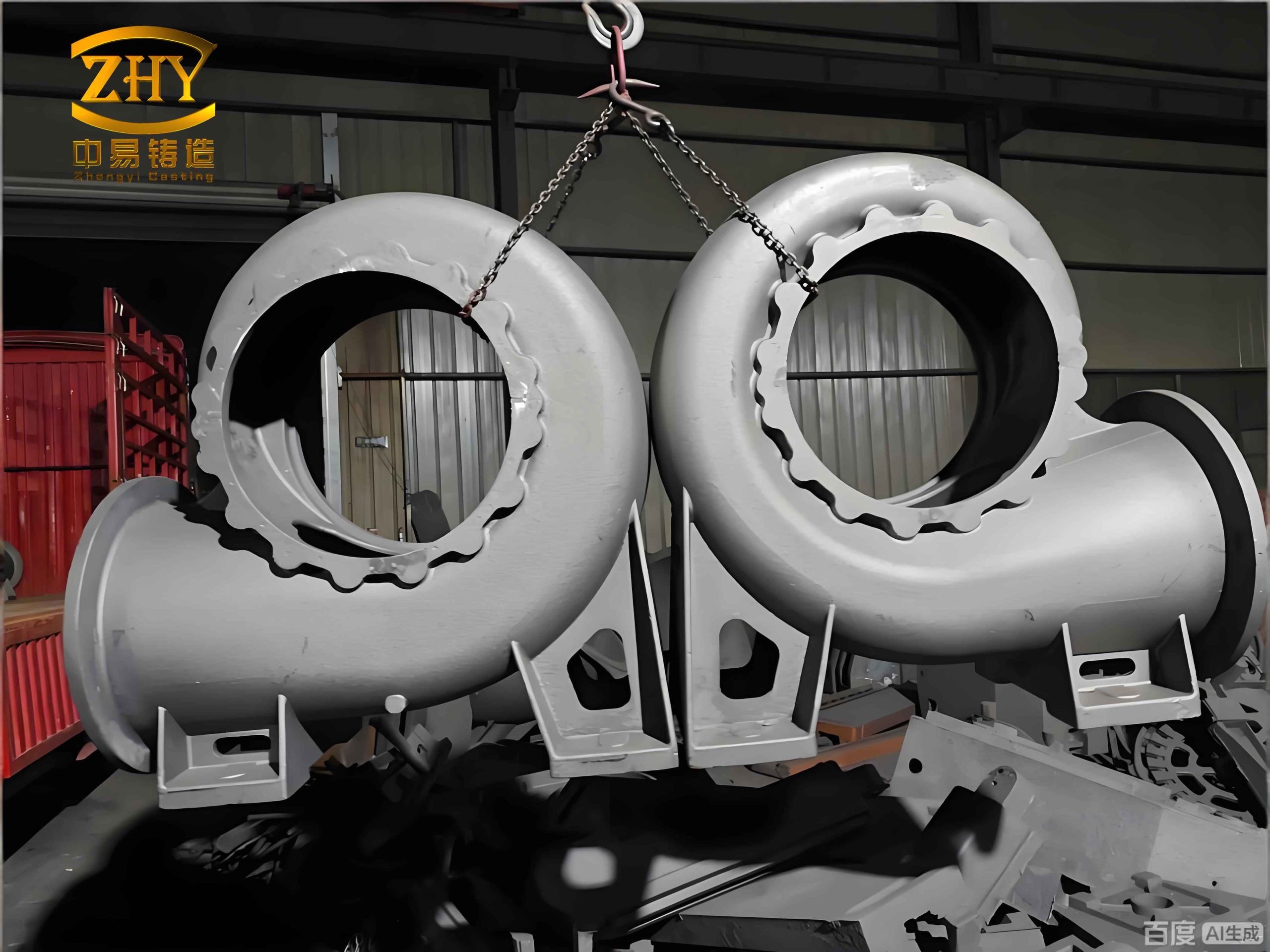
The fundamental composition of high-performance coated sand is a carefully balanced triad: the base sand, the resin coating, and specialized additives. Each component plays a critical role in determining the final behavior of the mold and, consequently, the quality of the sand casting products.
| Component | Primary Types | Key Function & Influence |
|---|---|---|
| Base Sand | Silica Sand, Zircon Sand, Chromite Sand, Ceramic Beads | Provides the refractory skeleton. Grain shape (angularity vs. roundness), size distribution (AFS number), and thermal stability define mold strength, surface finish, and resistance to thermal shock. |
| Resin Binder | Phenolic (Hot-box/Cold-box), Furan, Alkaline Phenolic | Forms the adhesive bridge between sand grains. Determines tensile/bending strength, curing speed, gas evolution, and breakdown behavior after casting. |
| Additives | Lubricants (Calcium Stearate), Coupling Agents, Flow Enhancers, De-caking Agents, Special Additives | Modify specific properties: improve flowability and release, enhance resin-sand adhesion, prevent agglomeration during storage, and impart special characteristics like enhanced collapsibility or reduced lustrous carbon. |
The manufacturing process, known as coating, is precisely controlled. Base sand is heated and mixed in a specialized mixer. Liquid resin is then introduced, coating the hot grains through mechanical action and thermal wetting. Upon cooling, the resin solidifies on the grain surface. Finally, additives like lubricants are blended in to create a free-flowing, ready-to-use granular material. The performance of this material can be modeled and predicted through several key relationships. For instance, the tensile strength ($\sigma_t$) of the cured sand is a function of the resin content ($R_c$), the quality of coating, and the curing parameter ($Q_c$), which encompasses time and temperature.
$$
\sigma_t \propto f(R_c, Q_c)
$$
More specifically, for a well-coated sand, strength often follows a relationship related to the binder bridges between grains. A simplified model for the maximum theoretical strength can be derived from the number of contact points and the bond strength per point, though real strength is also limited by flaw populations within the structure.
The defining characteristics of high-performance coated sand that make it indispensable for complex sand casting products are its balanced set of properties:
1. High and Consistent Strength: The resin bond provides substantial cold and hot strength. This is crucial for handling complex cores and molds, resisting the metallostatic pressure of the molten metal, and preventing mold wall movement that leads to dimensional inaccuracies in the final sand casting products. The strength is typically quantified via tensile, transverse (bending), and compression tests. The transverse strength ($\sigma_{tr}$) is particularly important and can be expressed as a function of the bonding force.
$$
\sigma_{tr} = \frac{3 F L}{2 b h^2}
$$
where $F$ is the breaking load, $L$ is the span, $b$ is the width, and $h$ is the height of the test specimen. Advanced coated sands are engineered to maintain a high $\sigma_{tr}$ even at elevated temperatures near the metal pouring temperature.
2. Excellent Flowability and Packing Density: The spherical, coated grains with lubricant additives exhibit superb dry-flow characteristics. This allows the sand to completely and uniformly fill intricate cavities in core boxes and pattern equipment under low injection pressure, ensuring perfect replication of fine details. The flowability can be related to internal friction and cohesion. A common empirical measure is the “flow index,” but fundamentally, for a granular material, the ability to flow is inversely related to the inter-particle friction angle ($\phi$). High-performance coated sand achieves a very low effective $\phi$.
$$
\text{Flowability} \propto \frac{1}{\tan(\phi)}
$$
3. Superior Thermal Stability and Low Gas Evolution: Upon contact with molten metal, the resin cures further (post-cures) before breaking down. This provides a stable mold wall that minimizes metal penetration (burn-in) and veining defects. Furthermore, modern resins are formulated to decompose in a controlled manner, generating less volatile gas at critical moments, which reduces gas porosity defects in sand casting products.
4. Optimal Collapsibility (Shakeout Property): After the metal solidifies and cools, the sand mold must disintegrate easily to allow the removal of the casting. Advanced coated sands are designed with “thermal shock” characteristics; the binder bond weakens significantly upon cooling, allowing the sand to crumble away effortlessly from even complex internal passages. This minimizes cleaning costs and stress on delicate sand casting products during shakeout.
The application of this technology revolutionizes the production of demanding sand casting products. Let’s examine its impact across several industries.
| Industry Sector | Exemplary Sand Casting Products | Key Challenges Addressed by Coated Sand | Performance Outcome |
|---|---|---|---|
| Automotive | Engine Cylinder Blocks & Heads, Turbocharger Housings, Complex Brake Components | Thin-walled sections, internal coolant jacket cores, high-pressure integrity, as-cast bore surfaces, high-volume production consistency. | Excellent dimensional stability for machining tolerances, smooth as-cast surfaces in water jackets, reduced leakage rates, high production yield. |
| Aerospace & Power Generation | Turbine Blades & Vanes (inconel, etc.), Engine Structural Castings, Pump & Valve Housings | Extremely complex aerodynamic shapes, tight dimensional tolerances, superior surface finish for reduced airflow friction, high-temperature alloy compatibility. | Near-net-shape casting minimizing expensive machining of exotic alloys, excellent reproduction of intricate cooling channels, reduced surface cleaning and finishing time. |
| General Machinery & Heavy Equipment | Complex Gear Blanks, Hydraulic Manifolds, Large but Intricate Machine Tool Structures | Precise gear tooth profiles, deep and intersecting internal passages (ports), maintaining rigidity and accuracy in large molds. | High accuracy of gear tooth forms reducing gear grinding time, clean internal passages free of residual core sand, dimensional fidelity in large, complex sand casting products. |
The effectiveness in these applications is not automatic; it results from a strategic and integrated approach to process implementation. The following matrix outlines a comprehensive strategy for deploying high-performance coated sand to optimize the production of complex sand casting products.
| Strategy Pillar | Technical Considerations | Implementation Actions |
|---|---|---|
| 1. Material Selection & Specification | Match sand properties (AFS fineness, base sand type) and resin chemistry (phenolic, furan, alkaline) to the specific metal (cast iron, steel, aluminum), casting geometry, and process (shell molding, hot-box, cold-box). | Conduct pre-production trials to test strength, flow, and collapse. Define tight specifications for sand supplier. Consider specialized sands (e.g., zircon for critical steel sections) for enhanced performance. |
| 2. Process Parameter Optimization | Precise control of curing parameters (time, temperature, catalyst gas concentration) is critical for achieving optimal strength and minimizing gas defects. | Establish Design of Experiments (DOE) to model the relationship between inputs and casting quality. Implement Statistical Process Control (SPC) charts for key parameters like cure temperature ($T_c$) and time ($t_c$). The curing degree ($\alpha$) can be modeled by an Arrhenius-type equation: $$ \alpha = 1 – \exp(-k(T) \cdot t_c^n) $$ where $k(T)$ is a temperature-dependent rate constant. |
| 3. Advanced Tooling & Mold Design | Tooling must accommodate the flow and curing characteristics of coated sand. Venting design is crucial to allow gases to escape. | Use simulation software to analyze sand filling and gas evolution. Design optimal gating and venting systems. Employ high-precision, temperature-controlled core boxes and patterns to ensure consistent curing. |
| 4. Integrated Quality & Environmental Control | Monitor sand properties (strength, moisture) and environmental conditions (humidity, temperature) which affect performance. Manage emissions and waste sand. | Perform regular sand testing (tensile, compaction). Control foundry ambient conditions. Invest in closed-loop sand reclamation systems to recycle used coated sand, reducing cost and environmental impact. |
The choice of resin system, a core element of the strategy, has a profound impact. Different resins offer different balances of strength, curing speed, gas generation, and breakdown behavior. The selection can be guided by analyzing the trade-offs for a given family of sand casting products.
Looking forward, the trajectory of advanced coated sand technology points towards even greater integration with digital and sustainable manufacturing paradigms. The development of “engineered” sands with nano-additives or functional gradations promises further enhancements in properties like heat transfer or controlled collapse. Furthermore, the coupling of coated sand with additive manufacturing (3D sand printing) is breaking the final barriers of geometric complexity, enabling the production of monolithic sand molds for highly integrated sand casting products that defy conventional pattern-making. This synergy allows for the economic production of prototypes, complex one-off parts, and optimized lightweight structures directly from digital models.
In conclusion, from the perspective of practical application and continuous improvement, high-performance coated sand is far more than just a molding aggregate; it is a critical enabling technology for modern precision casting. Its unique combination of strength, flowability, thermal stability, and collapsibility provides the essential foundation for manufacturing the high-integrity, complex sand casting products demanded by advanced industries. By adopting a strategic approach that encompasses meticulous material selection, precise process control, sophisticated tooling design, and robust quality systems, foundries can fully harness the potential of this material. The result is a significant elevation in product quality, a reduction in total manufacturing cost through yield improvement and cleaner casting, and an expanded design freedom for engineers. As material science and process technology continue to advance, the role of advanced coated sand in shaping the future of metal component manufacturing remains unequivocally central and full of potential.