
The pursuit of high-integrity, defect-free castings, especially for complex and critical components like reducer housings, continuously drives innovation in foundry processes and their control systems. Among various casting techniques, the lost foam casting process has garnered significant attention due to its ability to produce near-net-shape components with excellent dimensional accuracy and surface finish, while minimizing the need for complex cores and core assembly. This process involves creating a foam pattern of the desired part, coating it with a refractory slurry, embedding it in unbonded sand within a flask, and then pouring molten metal. The metal replaces the foam pattern, which thermally decomposes, leaving behind a metal casting. For critical components like reducer housings, which require robust mechanical properties and structural integrity, precise control over the mold filling stage is paramount. Uncontrolled filling can lead to defects such as folds, mistruns, slag inclusions, and undesirable thermal stress distribution, ultimately compromising the component’s performance and service life.
This article delves into the design and implementation of a sophisticated control system specifically tailored to regulate the mold filling velocity within a lost foam casting process for reducer housings. It builds upon the foundational principle that precise control of the metal advance is critical to ensuring the quality of the final casting. The core challenge addressed is the inherent complexity of the lost foam casting process, where the filling velocity is not merely a function of gravitational head pressure but is intricately linked to the dynamic decomposition of the foam pattern, the permeability of the coating, and the pressure differential applied across the mold. Traditional control methods often struggle with the non-linear and time-varying nature of these interactions, leading to suboptimal filling and potential defects.
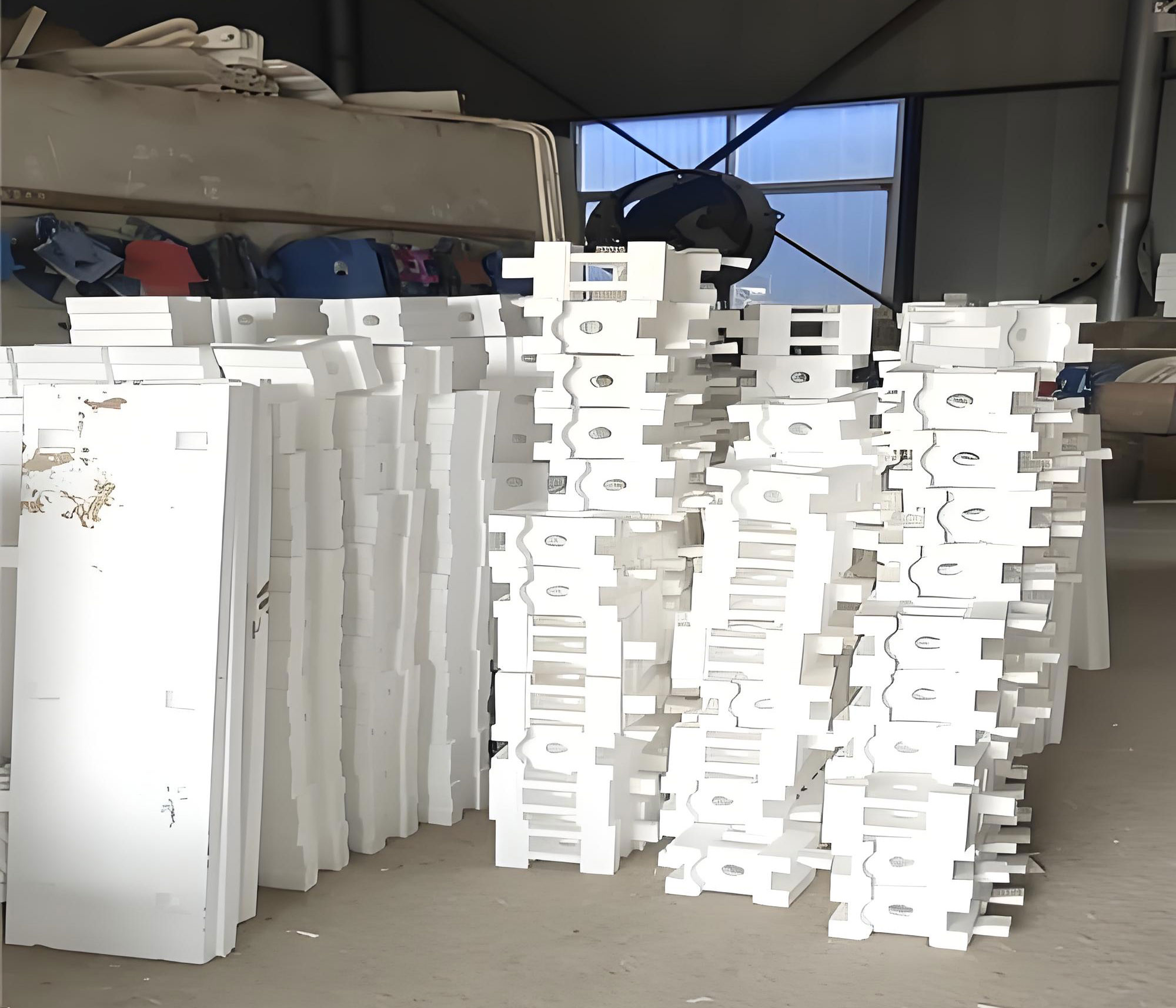
The central thesis presented here is the integration of a Programmable Logic Controller (PLC) as the computational heart of the filling control system. The PLC, renowned for its reliability, robustness in industrial environments, and powerful processing capabilities, is employed to orchestrate the entire filling sequence. It processes real-time sensor data, executes advanced control algorithms, and commands actuation devices to maintain the desired filling profile. This approach moves beyond simple set-point control towards a model-informed, feedback-driven strategy designed to adapt to the dynamic conditions of the lost foam casting process.
Technical Analysis of the Lost Foam Casting Process for Reducer Housings
The successful implementation of an advanced control system necessitates a deep understanding of the underlying process. The lost foam casting process for a reducer housing can be systematically broken down into several key stages, as summarized in the table below.
| Process Stage | Key Activities & Objectives | Critical Parameters & Control Needs |
|---|---|---|
| 1. Pattern Fabrication & Assembly | Creation of expandable polystyrene (EPS) or similar foam patterns matching the reducer housing geometry. Patterns are often assembled from multiple sections. | Pattern density, dimensional accuracy, glue joint integrity. |
| 2. Pattern Coating & Drying | Application of a refractory ceramic coating to the foam pattern. The coating provides a barrier, facilitates gas escape, and improves surface finish. | Coating thickness, viscosity, permeability, drying time/temperature. |
| 3. Mold Preparation & Compaction | The coated pattern is placed in a flask and surrounded by unbonded, dry sand. Vibration is applied to achieve uniform and high compaction density around the pattern. | Vibration frequency, amplitude, duration, sand properties (grain size, distribution). |
| 4. Mold Filling & Metal Pouring | The flask is subjected to a controlled vacuum. Molten metal is introduced, typically using a pressurized or counter-gravity system, causing the foam to decompose and be replaced by metal. | Filling Velocity, Pressure Differential, Metal Temperature, Pouring Time. This is the focal point of control. |
| 5. Solidification & Cooling | After filling, the metal solidifies under the maintained pressure/vacuum to feed shrinkage. The casting then cools within the mold. | Solidification time, pressure hold time, cooling rate. |
| 6. Shakeout & Finishing | The sand is removed from the cooled casting. The gating system is cut off, and the casting is cleaned and inspected. | Shakeout method, finishing techniques, quality inspection criteria. |
Stage 4, the mold filling phase, is the most dynamic and critical. In the context of reducer housings—which often have complex internal geometries, varying wall thicknesses, and require high mechanical strength—a poorly controlled fill can be catastrophic. The metal front velocity must be carefully managed to ensure:
- Uniform Advancement: To prevent turbulent flow that can entrap coating debris or cause fold defects.
- Optimal Pyrolysis Gas Evacuation: The decomposition gases from the foam must escape through the coating and sand faster than the metal advances to avoid gas porosity or back-pressure that can stall filling.
- Minimized Thermal Shock: A controlled fill helps manage the rapid heat transfer from the metal to the cold foam and sand, influencing the final microstructure and residual stress state.
The industry often employs vacuum-assisted or low-pressure counter-gravity methods for the lost foam casting process to enhance control. These methods use a pressure differential (ΔP) between the metal source and the mold cavity as the primary driving force for filling, offering a more direct handle on the metal velocity compared to gravity pouring alone.
Mathematical Modeling of Mold Filling Dynamics
To design an effective control system, a mathematical representation of the mold filling dynamics is essential. While the complete physics involves coupled phenomena of fluid flow, heat transfer, mass transfer (gas generation/evacuation), and chemical reactions, a simplified but insightful model can be derived by applying fundamental fluid mechanics principles.
We begin with the assumption that the molten metal flow can be approximated as a quasi-steady, incompressible flow through the evolving cavity left by the decomposing foam. The driving force for filling is the net pressure differential acting on the metal column. For a system employing counter-gravity filling with applied pressure Pa at the metal source and vacuum Pv at the top of the mold, the effective driving pressure is modified by the metallostatic head.
The instantaneous filling velocity (v) at the metal front is related to this driving pressure. A form of the energy equation (Bernoulli’s principle) adapted for flow with significant losses is often applicable. Considering flow from the pressurized source, through the sprue and gating system, and into the mold cavity, the velocity at the ingate can be expressed as:
$$
v = \sqrt{\frac{2 \left( \frac{P_a – P_v}{\rho g} + H – h_f \right) g}{1 + K_{total}}}
$$
Where:
- $v$ is the metal velocity at the ingate (m/s).
- $P_a$ is the applied pressure at the metal source (Pa).
- $P_v$ is the vacuum pressure in the mold flask (Pa).
- $\rho$ is the density of the molten metal (kg/m³).
- $g$ is the acceleration due to gravity (m/s²).
- $H$ is the effective metallostatic head height (m).
- $h_f$ represents the equivalent head loss due to friction in the gating system (m).
- $K_{total}$ is the sum of all local loss coefficients (entrance, bends, contractions, expansions).
However, in the lost foam casting process, $h_f$ and the effective flow path are not constant. They are dynamically affected by the evolving geometry as the foam decomposes and by the back-pressure from pyrolysis gases. A more process-specific model introduces a decomposition-dependent resistance. The rate of foam recession is linked to the heat flux from the metal. A simplified force balance at the metal front can be conceptualized, where the net pressure force drives the flow against the combined resistance of the gating system and the gas evacuation process:
$$
(P_{net}) \cdot A_{front} = R_{gate}(v) + R_{gas}(v, \dot{m}_{gas})
$$
Here, $P_{net}$ is the net pressure, $A_{front}$ is the instantaneous cross-sectional area of the metal front, $R_{gate}$ is the hydraulic resistance of the gating system (a function of velocity v), and $R_{gas}$ is the resistance due to gas back-pressure, which is a function of both the metal velocity and the gas generation rate $\dot{m}_{gas}$. The gas generation rate itself is a complex function of foam properties and metal temperature $T_m$:
$$
\dot{m}_{gas} = f(\text{Foam Density}, \text{Foam Type}, T_m, v)
$$
These equations, though simplified, highlight the key controlled variable ($P_{net}$ via $P_a$ and $P_v$), the key measured variable (directly or indirectly inferred velocity $v$), and the major disturbances (changing flow area $A_{front}$, variable gas generation). This forms the theoretical basis for a feedback control system where $P_a$ and/or $P_v$ are manipulated to maintain a desired $v$ despite these disturbances.
Architecture of the PLC-Based Control System
The control system is designed to translate the theoretical model into precise, real-time actuation. The system architecture is built around a high-performance PLC, chosen for its deterministic scan cycle, multitasking capabilities, and extensive support for analog and digital I/O modules. The system can be decomposed into three primary layers: the Sensing Layer, the Control Layer, and the Actuation Layer.
| System Layer | Key Components | Function |
|---|---|---|
| Sensing Layer (Inputs) |
|
To provide real-time, high-fidelity data on the state of the process to the PLC. The pressure and metal arrival signals are the primary feedback for the velocity control loop. |
| Control Layer (PLC & Logic) |
|
The brain of the operation. It acquires sensor data, compares the actual fill velocity to the setpoint profile, calculates the required corrective action using the control algorithm, and generates output commands. |
| Actuation Layer (Outputs) |
|
Converts the PLC’s digital output commands into physical actions that alter the process conditions (pressure, vacuum, valve states). |
The system operates in distinct modes. In Manual Mode, an operator can directly command individual valves and set pressures via the HMI, useful for setup and maintenance. In Automatic Mode, the PLC follows a pre-defined recipe sequence: mold close, apply vacuum, initiate fill cycle. During the fill cycle, the core control loop is active.
Control Algorithm: Fuzzy-PID Synthesis
Given the non-linear and model-uncertain characteristics of the lost foam casting process, a standard PID controller may not provide optimal performance across the entire filling range. Its fixed parameters might be tuned for one condition (e.g., initial fill) but become suboptimal later (e.g., during filling of complex sections with high gas generation). To address this, a Fuzzy-PID hybrid controller is implemented within the PLC.
This algorithm synthesizes the precise corrective action of a PID controller with the heuristic, rule-based reasoning of fuzzy logic. The fuzzy logic component acts as a “supervisor” that dynamically adjusts the PID parameters ($K_p$, $K_i$, $K_d$) based on the current operating context. The structure is as follows:
- Error Calculation: The primary error (e) is the difference between the desired filling velocity setpoint (vsp) and the estimated actual velocity (vact). The change in error (Δe) is also computed.
$$ e(k) = v_{sp}(k) – v_{act}(k) $$
$$ \Delta e(k) = e(k) – e(k-1) $$ - Fuzzification: The crisp values of $e$ and $\Delta e$ are converted into linguistic variables (fuzzy sets) such as “Negative Large (NL)”, “Negative Small (NS)”, “Zero (ZE)”, “Positive Small (PS)”, “Positive Large (PL)” using defined membership functions.
- Fuzzy Inference: A rule base, developed from process expertise and simulation studies, defines how to adjust the PID parameters. Example rules:
- IF $e$ is NL AND $\Delta e$ is ZE THEN $\Delta K_p$ is PL, $\Delta K_i$ is NL, $\Delta K_d$ is PS.
- IF $e$ is PS AND $\Delta e$ is NS THEN $\Delta K_p$ is NS, $\Delta K_i$ is ZE, $\Delta K_d$ is ZE.
The rule base evaluates the current fuzzy inputs to produce fuzzy outputs for the changes to each PID parameter ($\Delta K_p$, $\Delta K_i$, $\Delta K_d$).
- Defuzzification: The fuzzy recommendations for parameter changes are converted back into crisp numerical values using a method like the centroid technique.
- Parameter Update & PID Computation: The PID parameters are updated online:
$$ K_p^{new} = K_p^{base} + \Delta K_p $$
$$ K_i^{new} = K_i^{base} + \Delta K_i $$
$$ K_d^{new} = K_d^{base} + \Delta K_d $$
The PID controller then computes the required change in the control output (e.g., commanded pressure Pa, cmd):
$$ \text{Output}(k) = K_p^{new} \cdot e(k) + K_i^{new} \cdot \sum e(k) + K_d^{new} \cdot \Delta e(k) $$
This adaptive mechanism allows the controller to be aggressive when the error is large (e.g., at fill start) but become gentler and more stabilizing as the velocity approaches the setpoint, effectively compensating for the changing process dynamics inherent in the lost foam casting process.
System Implementation & Experimental Validation
The designed system was implemented for the casting of a specific reducer housing geometry. The foam pattern was produced from EPS, coated with a zirconia-based refractory, and compacted in silica sand under vibration. The control system hardware utilized a modular PLC platform. The software was programmed using a combination of ladder logic for sequencing and safety interlocks, and a structured text/function block environment for implementing the complex Fuzzy-PID algorithm.
The experimental validation focused on comparing the performance of the proposed Fuzzy-PID controller against a conventional, fixed-parameter PI controller. The key performance metric was not directly the velocity tracking error during the pour (though that was monitored), but the resultant quality of the casting, specifically its tendency for stress-related defects. To evaluate this non-destructively and quantitatively, numerical simulation was employed as a powerful validation tool.
A detailed 3D model of the reducer housing, its gating system, and the foam pattern was created. Using advanced casting simulation software (e.g., ProCAST, MAGMASOFT), a coupled analysis of filling, foam decomposition, solidification, and stress development was performed. The two control strategies were emulated in the simulation by applying the distinct pressure-time profiles they would generate. The thermal and mechanical boundary conditions, along with material properties for the ductile iron metal, EPS foam, coating, and sand, were meticulously defined.
The most revealing results came from the stress analysis. A path was defined across a critical, high-stress cross-section of the housing. The simulated von Mises stress distribution along this path was extracted for castings produced under the two control regimes.
| Control Strategy | Key Pressure Profile Characteristic | Simulated Peak Von Mises Stress on Path | Stress Distribution Qualitative Assessment |
|---|---|---|---|
| Conventional PI Control | More oscillatory response; slower adaptation to changing flow conditions. Prone to overshoot and settling time when gas generation varies. | ~120 MPa | Higher stress concentration, particularly in regions adjacent to thick sections and junctions. Larger gradient along the path. |
| Fuzzy-PID Control | Smoother, more stable pressure ramp. Better rejection of disturbances from foam decomposition dynamics. | ~80 MPa | More uniform stress distribution. Significantly lower peak stress. Smoother stress gradient, indicating reduced risk of hot tearing or residual stress. |
The reduction in peak stress by approximately 33% is highly significant. In the lost foam casting process, high thermal stresses can lead to hot tears during solidification or leave behind detrimental residual stresses that reduce fatigue life and dimensional stability. The smoother filling profile achieved by the adaptive Fuzzy-PID controller promotes a more uniform temperature field during filling and initial solidification, thereby minimizing thermal gradients—the primary driver of these stresses. This result compellingly demonstrates that superior dynamic control of the mold filling velocity directly translates to enhanced mechanical integrity of the cast component.
Conclusion
The design and implementation of a sophisticated, PLC-based control system for regulating mold filling velocity in the lost foam casting process of reducer housings have been presented. By moving beyond simple sequencing to incorporate real-time sensor feedback and an advanced Fuzzy-PID control algorithm, the system effectively manages the complex, non-linear dynamics between applied pressure, foam decomposition, and metal flow. The integration of high-fidelity pressure control valves and metal detection sensors creates a robust hardware platform for precise actuation and measurement.
The core achievement of this approach lies in its adaptive capability. The Fuzzy-PID supervisor continuously tunes the controller’s response based on the instantaneous state of the fill, making it far more effective than a fixed-gain controller in handling the variable conditions of the lost foam casting process. Numerical simulation validation provided clear, quantitative evidence of the system’s benefit: a substantial reduction in thermally induced stresses within the casting. This directly correlates with a lower propensity for defects like hot tears and an improvement in the overall mechanical performance and reliability of the reducer housing.
This control system architecture establishes a flexible and powerful framework. It can be adapted to other complex geometries cast via the lost foam casting process by updating the setpoint velocity profile and potentially refining the fuzzy rule base. The principles demonstrated—model-informed design, sensor integration, adaptive control, and validation via simulation—provide a valuable reference for advancing process control in precision casting applications, ultimately contributing to higher quality, more consistent, and more efficient manufacturing outcomes.