
In the evolving landscape of metal casting, the adoption of advanced resin sand casting processes has become pivotal for achieving high productivity, superior quality, and environmental sustainability. Our journey toward modernizing our foundry operations led us to design and implement a fully automated facility centered on PEPSET resin sand casting technology. This facility, capable of producing 10,000 tons of castings annually, represents a significant leap from traditional methods. The core innovation lies in integrating automated systems with a closed-loop sand recycling process, ensuring over 95% reclamation of used sand. This article details the comprehensive design principles, layout, equipment selection, and the sophisticated waste sand regeneration system that underpin this state-of-the-art resin sand casting operation.
The decision to transition to PEPSET resin sand casting was driven by the need to overcome limitations in our previous furan resin-based operations, which suffered from low yield, high labor intensity, and inefficient sand utilization. PEPSET resin sand casting offers exceptional flowability, allows for the production of complex molds without sulfur or nitrogen emissions, and supports high reclamation rates. Our design philosophy was holistic, focusing on automation, energy efficiency, worker safety, and minimal environmental impact. The entire system, from melting and molding to sand recycling, was engineered for continuous, multi-shift operation, maximizing equipment utilization and throughput for various high-demand castings, including components for high-speed trains, marine machinery, and automotive systems.
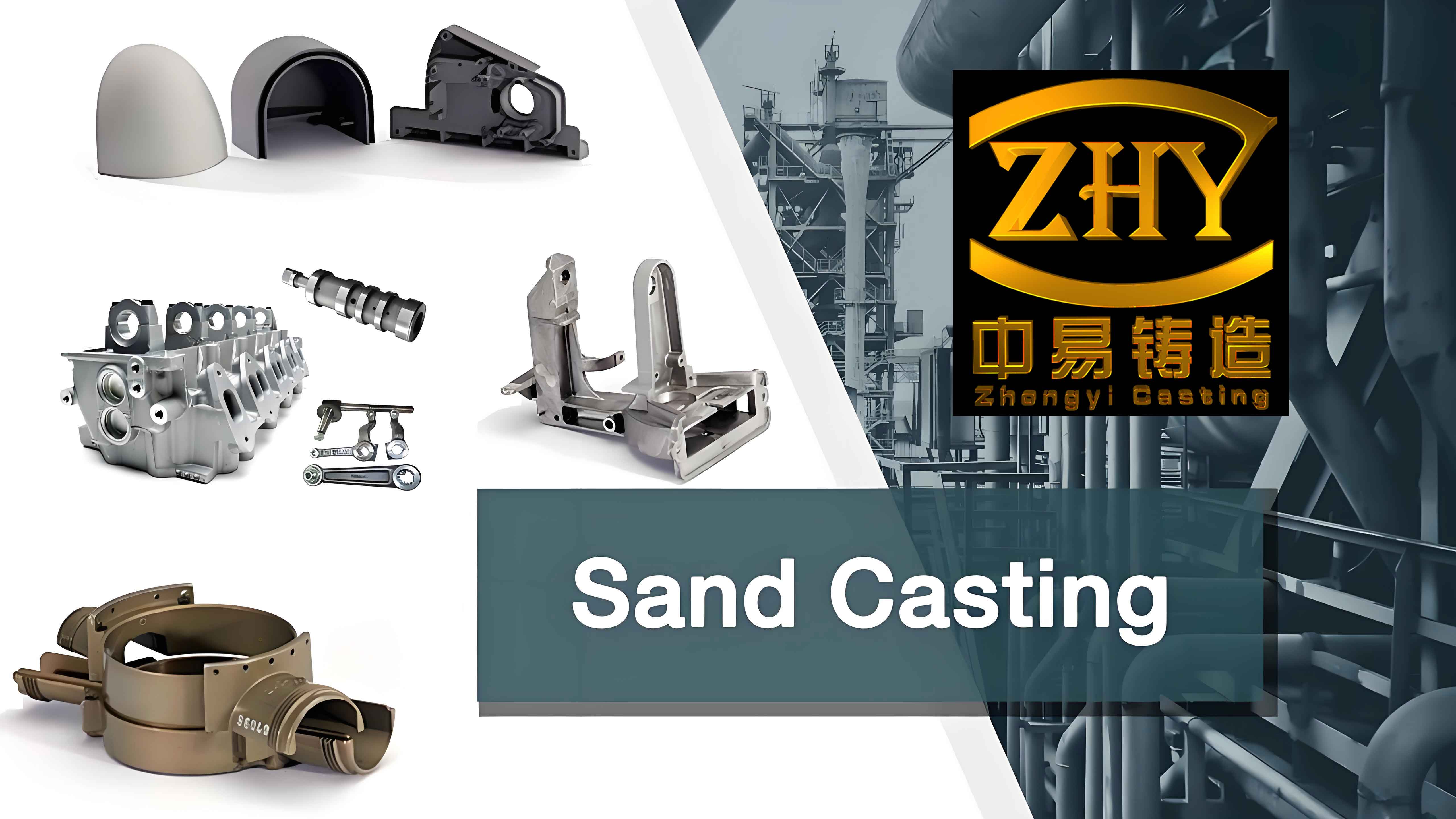
The foundational principles guiding the design of this resin sand casting facility were stringent and forward-looking. We adhered to national environmental regulations, aiming to reduce solid waste discharge and ensure that emissions met stringent standards. The workplace was designed to comply with occupational exposure limits for hazardous factors and industrial hygiene standards. Our key design principles were: First, to achieve high production efficiency with low labor intensity while emphasizing energy conservation and environmental protection. Second, to enable continuous two- or three-shift operations, maximizing equipment utilization and output. Third, to create a design that is not only practical for current needs but also scalable for future expansion and technological upgrades. Fourth, to incorporate ergonomic and safety considerations, ensuring a humane and secure working environment for all personnel. These principles ensured that the resin sand casting process would be both economically viable and socially responsible.
The layout of the casting workshop was meticulously planned to optimize material flow and minimize handling. The facility is divided into distinct zones: melting and nodularizing/ inoculation, core making, molding, coating, core setting, closing, pouring, and shakeout/sand treatment. The arrangement follows a logical sequence to support a smooth production cycle in resin sand casting. Overhead cranes, including one 5-ton and three 3-ton units, facilitate the movement of heavy ladles and equipment. In critical areas like core setting, mold closing, and pouring, roller conveyor transfer cars are installed to enhance the mobility of mold boxes, significantly reducing manual labor and speeding up operations. This streamlined layout is crucial for maintaining the high tempo required in automated resin sand casting.
The selection and integration of production equipment were central to realizing an efficient resin sand casting process. The melting section employs six medium-frequency induction furnaces, each with a capacity of 1 ton per hour. This is complemented by advanced analytical instruments like a rapid front-analysis system and a direct-reading spectrometer, ensuring precise control over iron composition and pouring temperature, which is critical for the quality standards demanded in resin sand casting. For nodularization and inoculation, we adopted a wire-feeding method. This technique ensures uniform treatment of the molten iron, leading to higher nodularization grades and more homogeneous microstructure in the final castings, a key advantage in precision resin sand casting.
The molding system is built around a high-capacity continuous mixer with a rate of 25 tons per hour. It features secondary boiling dust removal technology that effectively eliminates fines and odors before mixing, reducing binder consumption and improving sand permeability—a vital factor in resin sand casting quality. A high-frequency, low-amplitude lift-type jolting table ensures uniform compaction, with a strength deviation of ≤5% across the mold. An O-type turnover draw machine completes the molding cycle at a rate of 10 complete molds per hour, showcasing the automation core to our resin sand casting line.
Downstream, a retractable coating machine allows for multi-angle rotation of molds, ensuring even coating application. A through-type hot-air surface drying oven with a unique circulatory system provides constant, uniform temperature for efficient drying. An automatic mold closing machine achieves a positioning accuracy of ±1.0 mm, essential for complex resin sand casting molds. The shakeout process utilizes a vibrating shakeout machine with counter-rotating exciters, which separates castings from molds and breaks down the sand lumps effectively. The core-making section employs a cold-box core shooter, which utilizes regenerated sand to produce cores with excellent surface finish and hardness, contributing to superior internal quality of castings while saving energy.
To maintain a clean workshop environment, comprehensive dust collection systems are installed above the furnaces, molding stations, shakeout areas, and the sand regeneration plant. This significantly improves air quality compared to traditional foundries. Safety is paramount: railings, warning signs, enhanced lighting in key zones, and strategically placed fire-fighting equipment are integrated throughout the facility, particularly near furnace control rooms and pouring areas.
The pouring system is designed for safety and efficiency. After nodularization, molten iron is transported via overhead crane to a non-powered pouring roller conveyor with six rows of 18 stations each. Hydraulic pushers move the molds along the line. Safety features include pneumatic plate clamping devices at both ends to prevent mold slippage during the resin sand casting pouring operation.
The heart of our environmental and economic strategy is the advanced waste sand recycling system, which ensures the sustainability of our resin sand casting operations. This closed-loop system employs a multi-stage process: “Vibratory Crushing + Secondary Impact Regeneration + Intensive Friction Regeneration,” followed by thermal reclamation. The goal is to maximize the reuse of resin sand from the casting process, minimizing new sand input and waste disposal.
The recycling journey begins with shakeout. Used sand and spillage are broken into lumps by the shakeout machine and conveyed via a vibrating feeder to a bucket elevator, which lifts them to a lump sand storage silo. A suspended magnetic separator removes metallic debris at this stage. When the silo reaches a high level, the recovery system automatically halts upstream equipment. The lump sand is then fed at a controlled rate by a vibrating feeder into a vibratory crusher. Here, the lumps are rubbed and broken apart, undergoing preliminary decoating. The system screens the material: particles >5mm are retained for manual removal; fragments between 2mm and 5mm are rejected; and sand <2mm is sent to a transition hopper and then pneumatically conveyed to a regenerated sand silo. The coordination between feeder, crusher, and elevator is managed by automated control loops based on level sensors, ensuring continuous operation. The mass flow balance for this stage can be expressed as:
$$ \dot{m}_{in} = \dot{m}_{crusher} + \dot{m}_{reject} $$
where $\dot{m}_{in}$ is the feed rate from the lump silo, $\dot{m}_{crusher}$ is the rate of sub-2mm sand sent for further processing, and $\dot{m}_{reject}$ is the rate of oversized material discarded.
Sand from the regenerated sand silo then flows to a screening machine and into the intensive friction regenerator. Here, high-pressure air fluidizes the sand bed. Rotating shafts equipped with耐磨 friction wheels stir the suspended sand grains, mechanically scrubbing off the residual resin binders. The stripped resin films are then removed by the dust extraction system. This constitutes the primary air classification. The regenerated sand is subsequently cooled in a fluidized-bed cooler before being conveyed to a storage silo above the air classification and temperature adjustment unit. Control loops, such as those managing the dual-action sand valve based on hopper levels, ensure smooth operation. The friction regeneration efficiency $\eta_f$ can be related to the specific energy input and residence time:
$$ \eta_f = 1 – e^{-k \cdot E_s \cdot t} $$
where $k$ is a process constant, $E_s$ is the specific energy input per unit mass of sand, and $t$ is the residence time in the friction chamber.
The next stage is air classification and temperature conditioning. Sand flows from the silo onto multi-layered baffle plates in an air classifier, forming a thin curtain. Air drawn by an exhaust fan creates a cross-flow that removes dust and fines. The sand then moves slowly down through a heat exchanger, where it contacts cooling plates to reach the required temperature (≤40°C) before entering a sending tank. The process involves sub-cycles: for instance, the classifier’s feed valve closes when the cooler’s upper level is reached and opens at the lower level. The cooling effectiveness is governed by heat transfer principles:
$$ Q = \dot{m}_s \cdot c_{p,s} \cdot (T_{in} – T_{out}) = U \cdot A \cdot \Delta T_{lm} $$
where $Q$ is the heat removal rate, $\dot{m}_s$ is the sand mass flow rate, $c_{p,s}$ is the specific heat of sand, $T_{in}$ and $T_{out}$ are inlet and outlet sand temperatures, $U$ is the overall heat transfer coefficient, $A$ is the heat exchange area, and $\Delta T_{lm}$ is the log-mean temperature difference.
For complete regeneration, a portion of the sand undergoes thermal reclamation. Sand from the sending tank is fed into a calcining furnace’s preheating chamber, where it is heated to above 820°C. This temperature ensures complete combustion of any remaining organic residues and induces a phase transformation in the sand grains, reducing their thermal expansion coefficient—a critical property for reuse in resin sand casting. The calcined sand is then discharged into a fluidized bed cooler for rapid quenching to ambient temperature. The performance of regenerated sand is exceptional, as shown in the comparison below with new sand, proving its suitability for high-quality resin sand casting.
| Parameter | New Sand | Calcined Regenerated Sand |
|---|---|---|
| Clay Content | < 0.2% | < 0.2% |
| Moisture Content | 0.1% – 0.2% | 0.1% – 0.2% |
| Loss on Ignition (without added resin) | 0.19% – 0.34% | 0.20% – 0.25% |
The integration of this multi-stage regeneration system is what allows our resin sand casting facility to achieve a sand reclamation rate exceeding 95%. The overall system efficiency $\eta_{total}$ can be modeled as a series of efficiencies for each stage:
$$ \eta_{total} = \eta_{collection} \cdot \eta_{crushing} \cdot \eta_{friction} \cdot \eta_{thermal} $$
where each $\eta$ represents the mass recovery fraction at each step. In practice, our system is tuned to minimize losses, making resin sand casting an increasingly sustainable process.
Commissioning and fine-tuning the entire facility involved extensive testing and debugging of equipment interactions and control sequences. The result is a robust, automated production line that meets the stringent requirements for manufacturing critical components from ductile iron grades QT350 to QT700, including low-temperature and ADI grades. The PEPSET resin sand casting process, coupled with this advanced infrastructure, has significantly enhanced our production capability, product quality, and environmental performance. The high level of automation reduces labor dependency and physical strain, while the sand recycling system drastically cuts raw material consumption and waste generation. This design not only fulfills current production demands but also provides a flexible platform for future growth and adaptation in the competitive field of resin sand casting. The success of this project underscores the viability of integrating advanced process technology with thoughtful plant design to create a modern, efficient, and responsible foundry operation centered on resin sand casting.