
In my extensive experience with foundry technology transformations, I have overseen the design and implementation of numerous resin sand casting lines. This article details a comprehensive project where our team engineered a full-scale resin sand casting production line incorporating a mechanical air impact sand reclamation system. The objective was to modernize a traditional casting workshop, replacing outdated clay sand dry molding processes with an efficient, high-quality resin sand casting operation. The core of this transformation was the integration of a domestically produced mechanical air impact sand reclamation unit, controlled by a programmable logic controller (PC) system, which resulted in superior technical and environmental performance. Throughout this discussion, I will emphasize the critical role of resin sand casting in achieving precise, high-integrity castings.
The client was a medium-sized enterprise with a long history in manufacturing machinery. Their existing foundry, established decades ago, suffered from low mechanization levels and obsolete sand handling practices, which compromised casting quality and limited production capacity. The workshop spanned approximately 3,519 square meters, with a main bay height of 10 meters and crane capacities up to 15 tons. Annual production using clay sand was under 1,000 tons, but market demands necessitated a shift to resin sand casting to produce 3,000 tons of high-quality castings annually for machinery components. The castings ranged from 20 kg to 6,500 kg, with the majority being medium-sized parts, characterizing a high-mix, low-volume production environment. Our mandate was to design, supply, and commission a complete resin sand casting line focusing on molding, core making, sand preparation, and reclamation, while the client managed adjustments to other process routes.
Our design philosophy was guided by several key principles to ensure success. First, the layout had to be compact and logical, minimizing footprint while maintaining smooth material flow and operator access. Second, we committed to maximizing the use of existing workshop structures and steel supports to control investment costs. Third, equipment selection prioritized domestically available, advanced technology with proven reliability, arranged to exploit vertical space efficiently. Fourth, environmental protection was paramount; we implemented robust dust collection to meet stringent standards and improve working conditions. Fifth, the design incorporated scalability for future production increases, enabling a phased implementation that allowed the foundry to remain operational during the retrofit. Finally, the control system was built around imported PC units for core automation, complemented by high-quality domestic components, ensuring seamless operation and maintenance.
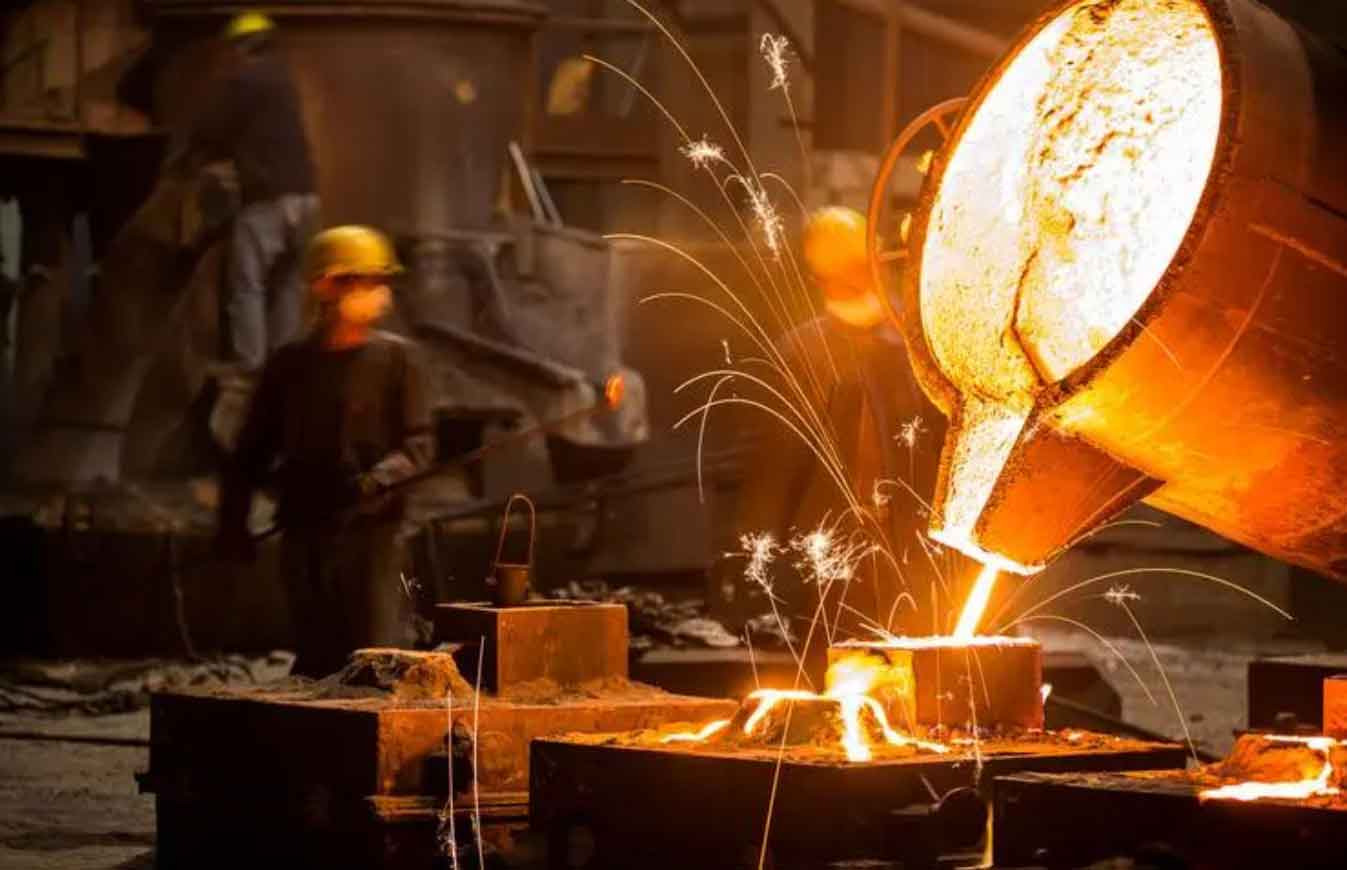
Designing the process flow for a resin sand casting line is a nuanced task, as the arrangement of equipment significantly impacts efficiency and sand quality. We addressed several critical issues. To prevent oversized sand lumps (exceeding 50 mm) from entering the reclamation system—which could jam crushers or conveyors—we installed two parallel vibratory shakeouts with interlocked grating and rubber skirts. This effectively controlled lump size. For handling hot sand from shakeout at temperatures up to 240°C, we selected heat-resistant chain bucket elevators and vibratory feeders. To protect the sand reclaimer from metallic debris, we implemented two-stage magnetic separation before the crushing stage. Dust control was meticulously planned; instead of numerous individual extraction points, we enclosed transfer points and combined nearby dust sources into shared suction lines, optimizing airflow and reducing ductwork. The required exhaust volume for each combined point was calculated as the sum of the suction needs and the air volume to keep dust suspended in the enclosure. This approach is vital for maintaining a clean environment in resin sand casting operations.
The overall process flow, depicted conceptually, begins with shakeout. Sand lumps fall onto a vibratory feeder, pass through magnetic separation, and are elevated to the sand lump crusher/reclaimer. Reclaimed sand is screened, then conveyed via pneumatic dense-phase transport to an impact-type air classifier for further cleaning and dedusting. After temperature modulation, sand is stored in intermediate silos before being distributed to mixer hoppers. New sand is dried, screened, and stored separately. The line utilizes bucket elevators, belt conveyors, and vibratory conveyors to create a seamless loop. Key equipment was selected based on production needs. For molding, a 20 t/h continuous mixer handles the bulk of resin sand casting demands, while a smaller bowl mixer is used for cores. A 10 t/h sand reclamation system forms the heart of the loop, with auxiliary equipment sized for higher capacity to avoid bottlenecks. The shakeout system employs two vibratory units for most castings, with manual handling reserved for the largest, infrequent pieces. New sand is dried in a triple-pass rotary dryer to achieve moisture content below 0.05%, essential for consistent resin sand casting quality.
The selection of equipment for this resin sand casting line was driven by performance and reliability metrics. Below is a summary of the core equipment specifications:
| Equipment | Model/Type | Key Parameters | Function in Resin Sand Casting Line |
|---|---|---|---|
| Sand Mixer (Molding) | S2520A Continuous | Capacity: 20 t/h; Power: 45 kW | Mixes resin, catalyst, and sand for mold production |
| Sand Mixer (Coring) | S202 Bowl Type | Capacity: 0.2 t/batch; Power: 7.5 kW | Prepares core sand for intricate cores |
| Sand Lump Crusher/Reclaimer | Mechanical Air Impact Type | Throughput: 8-10 t/h; Power: 2×3.7 kW; Max. feed lump: 200×200 mm | Breaks lumps and initiates binder film removal |
| Pneumatic Conveyor | Dense-Phase System | Vessel volume: 0.3 m³; Pressure: 0.5-0.7 MPa; Air consumption: 10-12 Nm³/t sand | Transports sand vertically and horizontally with minimal degradation |
| Impact Air Classifier | Vertical Impact Type | Capacity: >10 t/h; Exhaust air: 3000 m³/h; Fines removal: <0.1% below 200 mesh | Removes fines and further cleans sand grains |
| Sand Temperature Regulator | Fluidized Bed Cooler | Cooling capacity: 10 t/h; Temperature reduction: from 100°C to near ambient | Stabilizes sand temperature for consistent resin curing |
| Rotary Dryer (New Sand) | S623 Triple-Pass | Capacity: 5 t/h; Moisture output: <0.05% | Dries new silica sand to specification |
The mechanical air impact sand reclamation system is the cornerstone of this resin sand casting line’s sustainability. Its design integrates multiple functions: crushing, preliminary reclamation, and conveying. The sand lump crusher/reclaimer operates on a vibratory principle. Two vibration motors generate an oscillating force, causing sand lumps to collide with each other and with a perforated screen plate. This breaks the lumps and scrubs the sand grains, partially removing the spent resin binder film. Sand falling through the screen slides along an inclined chute coated with an abrasive material, providing additional friction for cleaning. The machine’s efficiency can be modeled by considering the kinetic energy transfer during impact. The degradation of binder film thickness per impact can be approximated by:
$$ \Delta \delta = k \cdot \frac{m v^2}{2A} $$
where $\Delta \delta$ is the reduction in film thickness, $k$ is a material-dependent constant, $m$ is the effective mass of the sand cluster, $v$ is the relative impact velocity, and $A$ is the contact area. This process is repeated thousands of times per hour, ensuring thorough cleaning. The pneumatic conveyor then transports the sand to the impact air classifier. Here, sand is accelerated by compressed air and blasted against a target plate, causing intensive grain-to-grain and grain-to-target collisions that fracture the brittle resin films. The sand then cascades down through a labyrinth of baffles while an exhaust stream removes liberated fines. The classification efficiency for removing particles below a certain size $d_c$ can be expressed as:
$$ \eta_c(d) = 1 – \exp\left(-\alpha \cdot \left(\frac{d}{d_c}\right)^\beta\right) $$
where $\eta_c(d)$ is the separation efficiency for particle diameter $d$, and $\alpha$ and $\beta$ are system-specific constants. This two-stage mechanical and pneumatic cleaning process ensures that the reclaimed sand meets the stringent requirements for reuse in resin sand casting, with low loss on ignition and consistent grain size distribution.
Dust control is a critical subsystem in any modern resin sand casting facility. We designed four independent dust collection networks. The shakeout system features a semi-enclosed hood with an opening area of 25.38 m² and a face velocity of 0.5 m/s, requiring an exhaust volume $Q_{shakeout}$ calculated as:
$$ Q_{shakeout} = A \cdot v = 25.38 \, \text{m}^2 \times 0.5 \, \text{m/s} \times 3600 \, \text{s/h} \approx 45,700 \, \text{m}^3/\text{h} $$
This is served by a baghouse dust collector with a filtration area of 350 m². The sand reclamation dust system consolidates 15 dust points into 10 branches, requiring a total of 28,000 m³/h. Given the high dust concentration (12-16 g/m³), we selected a lower filtration velocity of 1.3-1.5 m/min, resulting in another 350 m² baghouse. The new sand preparation system, handling the dryer and screens, uses a hydraulic dust collector with a capacity of 14,500 m³/h. Finally, each sand receiver hopper for the mixers is equipped with a compact bag filter unit (3,000 m³/h each). To prevent secondary dust, collected fines from two main baghouses are agglomerated using dust pelletizers that add water to form harmless clumps. The overall dust collection performance ensures that airborne particulate matter is well below occupational exposure limits, creating a safe workplace for resin sand casting operations.
The electrical control system embodies the automation level of this resin sand casting line. We implemented centralized control using three independent programmable controllers (PCs) housed in a control room. The entire production line is divided into eight functional units (e.g., shakeout, reclamation, mixing) that operate in a coordinated manner with interlocked safety logic. Operators monitor the system via a mimic panel with illuminated status indicators and receive audible alerts for faults or startups. The control logic ensures sequential start-up and shut-down to prevent equipment damage and sand spillage. For instance, the conveyor leading to the reclaimer will not start unless the magnetic separator is operational. The system allows for both automatic cycle operation and manual override for maintenance. The use of imported PCs and drivers guarantees reliability, while domestic components keep costs manageable. This automation framework is essential for maintaining the consistent process parameters required in high-quality resin sand casting.
The implementation of this resin sand casting line yielded significant technical and economic benefits. After commissioning in late 1993, the line achieved its design capacity of 3,000 tons of castings annually. The reclaimed sand quality consistently met specifications: grain size distribution remained stable, and the loss on ignition was reduced to levels allowing for high percentage reuse in resin sand casting molds and cores. The table below summarizes key performance indicators (KPIs) before and after the transformation:
| Performance Indicator | Before Transformation (Clay Sand) | After Transformation (Resin Sand Casting Line) |
|---|---|---|
| Annual Casting Output | ~980 tons | >3,000 tons |
| Casting Dimensional Accuracy | ISO CT 12-14 | ISO CT 8-10 |
| Surface Finish (Ra) | 25-50 μm | 12.5-25 μm |
| Sand Reclamation Rate | Not applicable | 85-90% |
| New Sand Consumption per ton of Castings | ~1.2 tons | ~0.15 tons |
| Energy Consumption per ton of Sand Processed | High (due to drying) | Reduced by ~30% |
| Dust Emission Concentration at Workstation | >10 mg/m³ | <5 mg/m³ |
The economic analysis further justifies the investment. The payback period, based on increased productivity, reduced scrap, and lower sand costs, was calculated to be under four years. Moreover, the flexibility of the resin sand casting process allows for rapid pattern changes, aligning perfectly with the high-mix production nature. The mechanical air impact reclaimer proved robust, with minimal wear parts and easy maintenance, contributing to high line availability.
In conclusion, the successful deployment of this integrated resin sand casting line demonstrates the transformative power of combining advanced sand reclamation technology with thoughtful process design. The mechanical air impact system provides an effective, economical solution for binder film removal, crucial for closed-loop sand management in resin sand casting. The emphasis on dust control and automation ensures environmental compliance and operational reliability. This project serves as a model for medium-scale foundries seeking to upgrade to resin sand casting, offering a path to higher quality, increased productivity, and sustainable operation. The continuous evolution of resin sand casting techniques and reclamation technology promises even greater efficiencies in the future, and this line is well-positioned to incorporate such advancements.