
In my extensive experience within heavy machinery manufacturing, the production of key components like scraper conveyor center channels presents a significant engineering challenge. Traditionally, these crucial elements are fabricated by welding together cast side channel sections with rolled steel plates for the middle deck and bottom plate. This welded assembly, while functional, inherently suffers from drawbacks such as long production cycles, susceptibility to weld seam failures, and inconsistent wear performance. My research and development efforts have therefore focused on revolutionizing this process by implementing a monolithic, single-piece casting approach for the entire center channel. This paradigm shift towards integrated sand casting products eliminates multiple machining and welding steps, thereby reducing manufacturing costs, shortening lead times, and enhancing structural integrity by removing potential points of failure.
The transition from a welded assembly to a single, complex sand casting products necessitates a holistic re-evaluation of every aspect of the manufacturing process, from initial design for manufacturability to final heat treatment. The core of this methodology lies in sophisticated sand casting techniques, which provide the flexibility and precision required for such large-scale, intricate geometries. This article details my comprehensive approach to conquering the challenges associated with the integral casting of scraper conveyor center channels, emphasizing the strategic use of ester-cured sodium silicate sand.
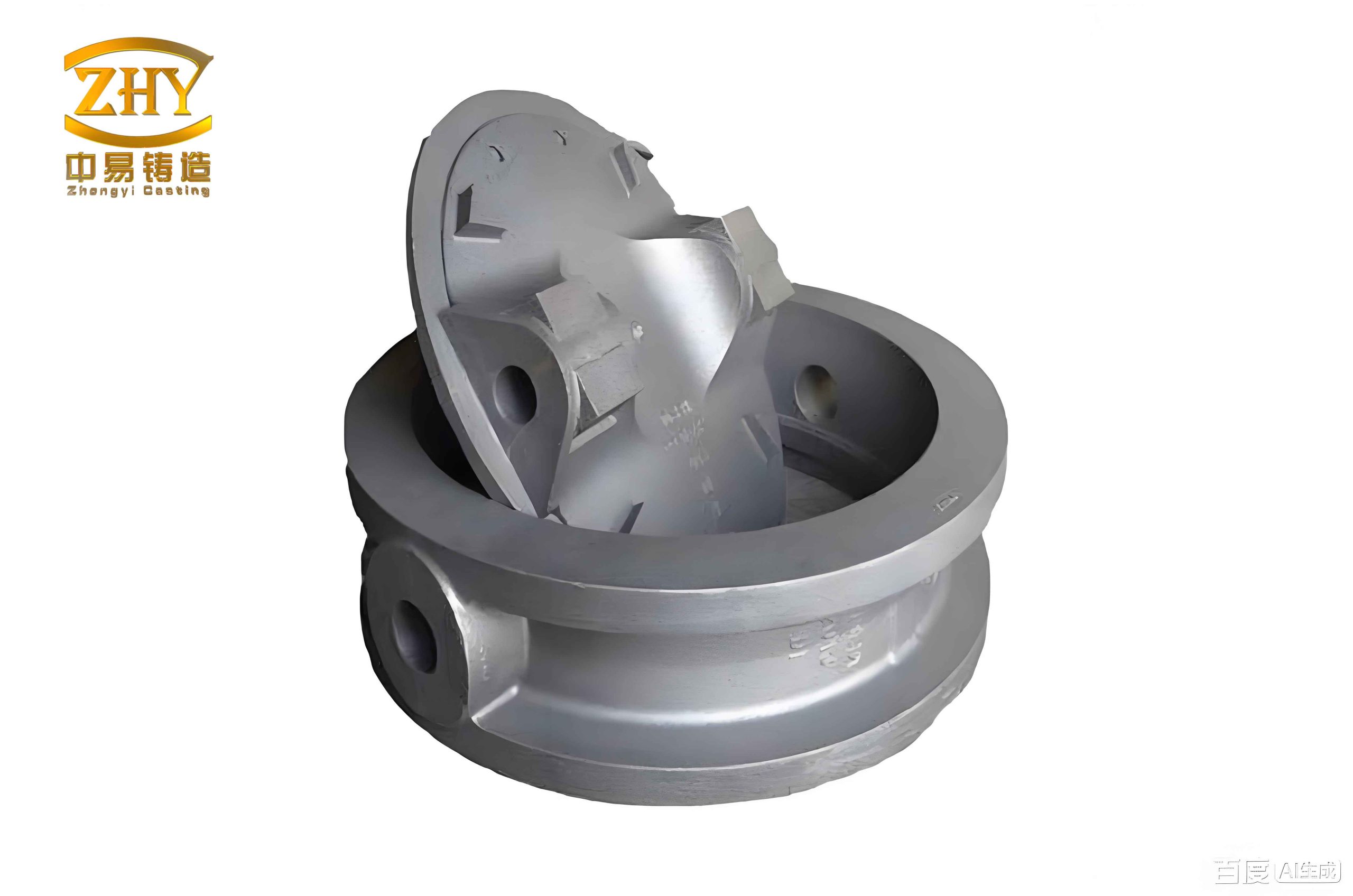
1. Strategic Redesign for Castability
The original component, with maximum dimensions of 750 mm × 1330 mm × 377 mm, is characterized by a complex geometry with uneven wall thicknesses and numerous thermal junctions. These features, if unaddressed, are prime catalysts for typical casting defects in large sand casting products, including veining, hot tearing, local burn-on, and distortion. To ensure a successful cast, the component’s structure was strategically modified from a pure functional design to a cast-friendly one. The primary modifications included:
- Simplifying intricate junction geometries at connection points to reduce stress concentration and crack risk while improving feeding paths.
- Reducing unnecessary mass in heavy sections to minimize isolated thermal masses that can lead to shrinkage porosity.
- Adding fillets and gradually increasing transition thicknesses in high-stress areas to prevent the initiation of casting cracks.
This redesign phase is critical, as it lays the foundation for a viable casting process, transforming a problematic assembly into a manufacturable monolithic sand casting products.
2. Comprehensive Casting Process Design
2.1 Material Selection and Metallurgy
A key constraint in monolithic casting is the use of a single material that must fulfill multiple, sometimes conflicting, performance requirements. The side channels demand high strength and toughness, while the deck and bottom plate require superior abrasion resistance. My solution was to develop a modified low-alloy cast steel based on a ZG30MnSi foundation. The chemical composition is carefully balanced to achieve this dual performance, as outlined in Table 1.
| Element | C | Si | Mn | Si+Mn | CE* | Micro-alloys (Re, B, Ti, V, Zr) |
|---|---|---|---|---|---|---|
| Content | ≤ 0.35 | 0.50 – 0.90 | 1.20 – 1.60 | ≤ 2.50 | ≤ 0.68 | Trace additions |
* Carbon Equivalent (CE) is calculated using the International Institute of Welding (IIW) formula for weldability assurance:
$$ CE = C + \frac{Mn}{6} + \frac{(Cr + Mo + V)}{5} + \frac{(Ni + Cu)}{15} $$
In our designed composition, the primary contributors are C and Mn, ensuring CE remains below 0.68% for adequate weldability for potential in-service repairs. The silicon and manganese provide solid solution strengthening and hardenability. The carefully selected micro-alloying elements like Titanium and Vanadium form fine carbides and nitrides, pinning grain boundaries and significantly enhancing wear resistance and strength through precipitation hardening, making this alloy ideal for high-performance sand casting products.
2.2 Molding Materials and Binder System
The choice of mold and core material is paramount for dimensional accuracy, surface finish, and defect prevention. After evaluating various self-setting sand systems, I selected the ester-hardened sodium silicate process. This system offers distinct advantages for producing large, high-quality sand casting products:
- Excellent dimensional stability and surface finish comparable to alkali phenolic resin sand.
- Lower tendency for casting defects like veining and gas porosity compared to some resin systems.
- Minimal volatile organic compound (VOC) emissions, improving the working environment.
- Excellent sand reclamation potential; used sand can be dry-reclaimed and re-used with simple water washing, making it an environmentally and economically sustainable choice.
The process parameters for the sand mixture are tightly controlled, as summarized in Table 2.
| Parameter | Specification | Control Purpose |
|---|---|---|
| Base Sand | Silica Sand | Refractoriness, availability |
| Sand Temperature | 10 °C – 35 °C | Consistent workability & strip time |
| Modified Sodium Silicate Addition | 2.0% – 3.0% (by sand weight) | Binder for strength |
| Organic Ester Hardener | 13% – 15% (of binder weight) | Controls setting speed and final strength |
| 24h Tensile Strength (Mold) | 0.2 – 0.5 MPa | Ensures mold handles during handling |
| 24h Tensile Strength (Core) | 0.4 – 0.6 MPa | Higher strength for complex core stability |
To combat burn-on and penetration in critical areas such as the deep pockets of the chain tensioner housings and heavy sections, a facing layer of chromite sand is applied. Chromite sand’s higher thermal conductivity and refractoriness chills the metal faster, preventing metal penetration into the sand interstices. Finally, the mold and core surfaces are coated with three layers of zircon-based alcohol paint to create a high-refractoriness barrier, further ensuring a clean surface on the final sand casting products.
2.3 Feeding System Design: Risers and Gating
Sound feeding is the cornerstone of defect-free castings. For this center channel, the primary thermal centers requiring feed metal are the four massive connection lugs at each end. The feeding strategy is based on Chvorinov’s Rule, where the solidification time is proportional to the square of the volume-to-surface area ratio, known as the modulus (M).
$$ t_{solidification} \propto \left( \frac{V}{A} \right)^2 = M^2 $$
To ensure risers solidify last and can feed the casting, their modulus must exceed that of the casting section. The design criterion is:
$$ M_{riser} \geq 1.2 \times M_{casting\_section} $$
Calculations for the thermal mass of the lugs yielded a required riser modulus. Considering available flask sizes and practical pouring logistics, four top cylindrical risers with dimensions Ø240 mm × 400 mm were designed, placed on the flat bottom surface of the casting for optimal feeding of the deck and bottom plate.
Computer simulation of solidification is indispensable. Using InteCast software, the design was validated. The simulation predicted adequate feeding for the main sections, though it indicated a propensity for minor micro-porosity in the deepest part of the lug pockets. This insight directly informed a subsequent process adjustment: the placement of extra chromite sand in these pockets for enhanced chilling.
The gating system is designed for a calm, controlled fill to avoid mold erosion. It utilizes ceramic tube bricks for smooth surfaces and thermal shock resistance. The system consists of a primary sprue (Ø80 mm), a runner (Ø60 mm) branching into two in-gates that introduce metal into the mold cavity from the bottom at one end. To prevent mold wall expansion and potential scabbing or cracking of the large flat sand areas forming the deck and bottom, the entire mold is tilted at an 8° angle during pouring, with the higher end being the side opposite the gating. This technique reduces the hydrostatic pressure and thermal radiation on the critical flat sand walls. Pouring temperature is maintained between 1560°C and 1590°C to ensure fluidity and avoid cold shuts on the large thin sections, a critical parameter for the surface quality of large sand casting products.
2.4 Heat Treatment Protocol
To achieve the required mechanical properties—a blend of strength, toughness, and hardness—a precise three-stage heat treatment cycle is employed. The process is designed to refine the as-cast microstructure, relieve stresses, and optimize the carbide distribution from the micro-alloying additions. The cycle is detailed in Table 3.
| Stage | Process | Temperature | Soaking Time | Cooling Medium | Objective |
|---|---|---|---|---|---|
| 1 | Normalizing (Pre-treatment) | 920 °C | 240 min | Air | Refine as-cast grain structure, homogenize |
| 2 | Quenching | 920 °C | 240 min | Water (15-30 °C) | Achieve high-strength martensitic structure |
| 3 | Tempering | 560 – 600 °C | 360 min | Air | Relieve quenching stresses, improve toughness |
The tempering temperature window is critical. Lower temperatures (closer to 560°C) yield higher hardness for wear resistance, while higher temperatures (closer to 600°C) favor toughness. The selected range provides an optimal trade-off for this specific sand casting products application.
3. Process Optimization Based on Trial Results
Initial casting trials, followed by meticulous inspection including sectioning, dimensional checks, and mechanical testing, revealed specific areas for improvement. The synergy between simulation predictions and physical trial results was crucial for rapid optimization. The main challenges and the corresponding engineered solutions are summarized in Table 4.
| Observed Challenge | Root Cause Analysis | Implemented Solution | Effect on sand casting products |
|---|---|---|---|
| Distortion (Upward bowing of middle deck, downward bowing of bottom plate) | Differential cooling and contraction stresses between the constrained side channels and free-spanning plates. | Introduction of three internal tie bars (16 mm x 50 mm) connecting the middle deck and bottom plate at their centerlines. | Maintained dimensional accuracy and flatness of critical functional surfaces. |
| Cracking at the junction between bottom plate and side channel | High thermal stress concentration during cooling at this sharp, constrained junction. | Addition of three triangular-shaped reinforcement ribs (10 mm thick) on each side at the junction. | Eliminated hot tear initiation sites, improving structural integrity. |
| Potential micro-shrinkage in lug pockets (per simulation) | Isolated thermal mass creating a last-solidifying zone inadequately fed by the main risers. | Strategic placement of high-density chromite sand in the lug pocket cores for intense localized chilling. | Promoted directional solidification towards the riser, eliminating internal shrinkage defects. |
| Insufficient localized wear resistance on the chain runways | The bulk alloy provides good overall wear resistance but cannot match the extreme hardness of a dedicated wear plate. | Application of automated hardfacing weld overlay on the specific chain path areas of the middle deck after casting and heat treatment. | Enabled a hybrid “cast-weld” strategy where the monolithic structure benefits from casting, and ultra-wear areas benefit from specialized surface engineering. |
These optimizations are not merely fixes; they represent an evolutionary step in the manufacturing process for complex sand casting products. The use of chills, reinforcing ribs, and strategic weld overlay transforms a good casting into a superior, application-optimized component.
4. Conclusion and Industrial Significance
Through a systematic approach encompassing design for manufacturability, advanced alloy development, precise sand molding with ester-hardened silicate, scientifically designed feeding and gating, controlled heat treatment, and iterative process optimization, the integral sand casting of scraper conveyor center channels has been successfully realized. This methodology conclusively demonstrates that monolithic sand casting products can replace traditional welded assemblies for large, complex mining components.
The advantages are substantial and multi-faceted:
- Economic: Elimination of multiple cutting, fitting, and welding steps significantly reduces direct labor and overhead costs.
- Quality & Reliability: Removal of weld seams eliminates the primary failure mode (de-welding) of traditional assemblies, leading to more reliable and longer-lasting components in service.
- Performance: The use of a tailored, micro-alloyed steel combined with localized hardfacing provides an optimal balance of bulk mechanical properties and surface wear resistance.
- Manufacturing Efficiency: The process shortens the overall production cycle and simplifies supply chain logistics by moving from a multi-part assembly to a single-piece casting.
- Sustainability: The use of a green sand system (ester silicate) with high reclamation rates minimizes waste and environmental impact compared to some resin-bonded systems.
This research and its successful implementation provide a robust, economical, and technically superior new paradigm for manufacturing critical wear components in the mining industry. It stands as a testament to the potential of modern sand casting technology to produce high-integrity, high-performance sand casting products that meet the ever-increasing demands for durability, efficiency, and cost-effectiveness in heavy industrial applications.