
In the contemporary landscape of automotive and motorcycle manufacturing, the demand for high-integrity, complex, and lightweight casting parts has become a paramount driver of technological innovation. As I analyze the industry’s trajectory, it is evident that the push for enhanced vehicle performance, stringent environmental regulations, and the relentless pursuit of cost-efficiency have converged to elevate the importance of advanced casting methodologies. Among these, squeeze casting technology, also known as extrusion die casting, has emerged as a pivotal process capable of meeting these multifaceted challenges. This technology enables the production of casting parts with superior dimensional accuracy, excellent mechanical properties, and intricate geometries that are often unattainable through conventional casting or machining. The following discourse, from my professional perspective, delves into the application of this technology across automotive sectors, addresses inherent challenges, and explores integrated solutions shaping the future of precision component manufacturing.
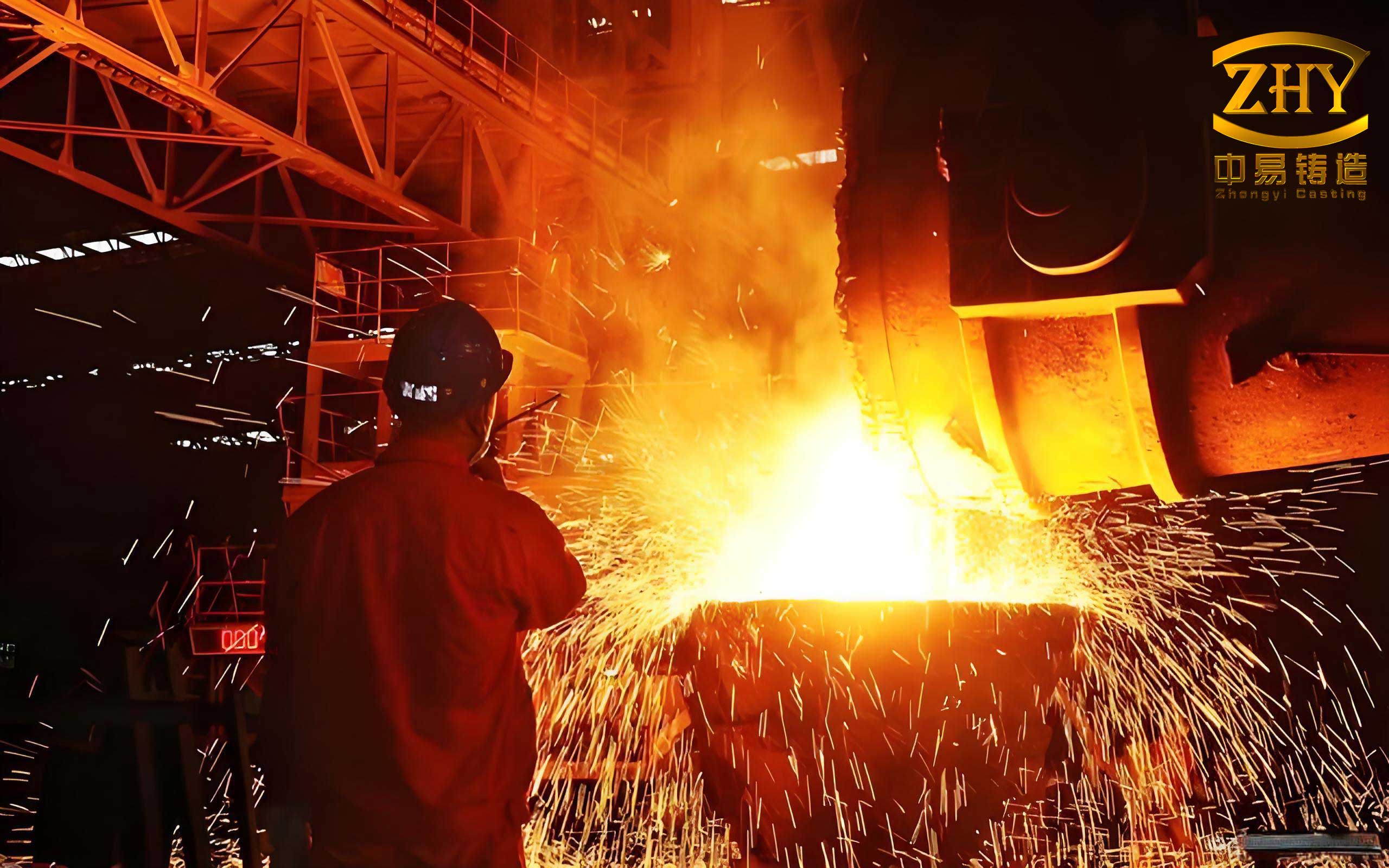
The evolution of vehicle design, particularly the shift towards electrification and lightweighting, has fundamentally altered the specifications for metal components. A casting part is no longer judged solely on its ability to fill a mold; it must now exhibit high strength-to-weight ratios, withstand significant thermal and mechanical stresses, and integrate multiple functions into a single, near-net-shape component. Squeeze casting fulfills these requirements by combining the advantages of high-pressure die casting and forging. The process involves filling a preheated mold with a precise amount of molten metal and then applying a high, controlled pressure through a punch during solidification. This action significantly refines the microstructure, reduces porosity, and improves the metallurgical bond, resulting in a casting part with properties approaching those of a forging. The general relationship for the applied pressure can be conceptualized as integral to achieving a dense structure:
$$ P_{applied} = f(V_m, T_m, t_s, A_p) $$
where \( P_{applied} \) is the critical pressure applied, \( V_m \) is the volume of molten metal, \( T_m \) is the melt temperature, \( t_s \) is the solidification time under pressure, and \( A_p \) is the area of the punch.
The following table summarizes the core advantages of squeeze cast casting parts compared to those produced by conventional high-pressure die casting (HPDC):
| Property / Characteristic | Conventional HPDC Part | Squeeze Cast Part |
|---|---|---|
| Porosity Level | High (air entrapment) | Very Low to Negligible |
| Mechanical Strength | Moderate | High (close to forged) |
| Elongation (%) | Low (typically <5%) | Significantly Improved (can exceed 10%) |
| Heat Treatability | Generally Poor (risk of blistering) | Excellent |
| Weldability & Hermeticity | Poor | Good to Excellent |
| Wall Thickness Capability | Very Thin Sections | Wider Range (thicker sections possible) |
| Alloy Suitability | Primarily Casting Alloys | Both Casting and Wrought Alloys |
Demand Analysis and Application in the Automotive Industry
The automotive industry’s requirements for precision casting parts are shaped by a triad of forces: performance, regulation, and economics. Modern vehicles, especially with the advent of electric powertrains, demand components that contribute to overall efficiency. This translates to a need for casting parts that are lighter, stronger, and more thermally conductive. Engine blocks, cylinder heads, and structural chassis components manufactured via squeeze casting achieve significant weight reduction through material optimization and thin-wall design, directly impacting fuel economy and battery range in EVs. The integrity of a squeeze cast casting part is crucial for safety-critical applications like suspension knuckles and brake system components, where failure is not an option. Furthermore, the ability to produce large, complex, and integral components reduces assembly time, part count, and potential failure points, aligning with lean manufacturing principles.
The specific application of squeeze casting in automotive components is extensive. In powertrain systems, it is ideal for producing aluminum alloy engine blocks with reinforced crankcases, high-pressure pump housings, and transmission valve bodies. The process ensures the required pressure tightness and wear resistance. For electric vehicles, squeeze casting is pivotal in manufacturing battery tray assemblies, motor housings, and power electronics enclosures that require stiffness, thermal management, and electromagnetic shielding properties. Structural applications include shock towers, subframes, and A/B-pillar reinforcements, where the high ductility and impact strength of the casting part are essential for crashworthiness. The economic and environmental impact is profound. While tooling costs are significant, the high yield, reduced machining needs, and scrap minimization lead to favorable lifecycle costs. The production of a lighter casting part contributes to a lighter vehicle, creating a virtuous cycle of reduced energy consumption and lower emissions throughout the vehicle’s operational life.
Demand Analysis and Application in the Motorcycle Industry
Motorcycle engineering presents a unique set of challenges where performance and mass are intimately linked. Every gram saved translates directly into improved acceleration, braking, and handling. Therefore, the demand for premium casting parts in this sector is exceptionally high. Motorcycle components must withstand extreme dynamic loads and vibrations within a very compact package. The casting parts used in high-performance motorcycles are not merely functional; they are often visible and integral to the machine’s aesthetic appeal, requiring excellent surface finish and precise dimensional stability. Squeeze casting meets these demands by enabling the use of high-strength aluminum and magnesium alloys to produce components that are both lightweight and structurally robust.
Key applications in motorcycle manufacturing highlight the versatility of the process. Engine casings and cylinder heads benefit from the pressure-tight, fine-grained microstructure, which is vital for maintaining oil pressure and withstanding combustion forces. Forged-level strength in these casting parts allows for more aggressive engine tuning and higher reliability. The motorcycle frame itself, particularly in high-end or racing models, can be constructed from large, complex aluminum castings for the main spine or swingarm pivot sections. This monocoque or semi-monocoque approach, enabled by squeeze casting, creates a stiffer, lighter chassis compared to traditional welded tubular structures. Wheels produced via squeeze casting offer a superior combination of lightness, strength, and consistent quality compared to gravity-cast wheels, directly enhancing ride dynamics. The following table categorizes the primary application areas and their specific benefits:
| Motorcycle System | Example Components | Key Benefit of Squeeze Casting |
|---|---|---|
| Powertrain & Drivetrain | Engine Covers, Clutch Housings, Sprocket Carriers | Pressure Tightness, High Fatigue Strength, Reduced Weight |
| Chassis & Suspension | Frame Castings, Swingarms, Triple Clamps | High Stiffness-to-Weight Ratio, Complex Integration, Excellent Damping |
| Running Gear | Wheels, Brake Caliper Brackets | Light Weight, High Impact Strength, Dimensional Precision |
The influence on the motorcycle industry is significant. By utilizing squeeze cast casting parts, manufacturers can push the boundaries of performance, offering motorcycles with better power-to-weight ratios and sharper handling. The process also aids in cost management for mid-to-high-volume production runs by reducing secondary operations and improving material utilization, making advanced component technology more accessible.
Technical Challenges and Holistic Solutions
Despite its advantages, the squeeze casting process is not without challenges. Achieving consistent quality in every casting part requires precise control over a multitude of interacting variables. Common defects can arise from deviations in process parameters, material conditions, or tooling design.
A primary concern is the formation of internal defects such as gas porosity and shrinkage cavities. Gas porosity typically originates from air entrapment during the mold filling stage or from gases released by the lubricant. Shrinkage porosity occurs when liquid metal feed is insufficient to compensate for solidification contraction, especially in isolated heavy sections. Another critical issue is the “cold shut” or non-fusion line, where two fronts of molten metal meet but fail to fuse completely due to premature surface solidification. Incomplete filling of the mold cavity, resulting in short shots, is also a risk, particularly in thin sections or complex geometries. The root causes for these defects are often interconnected and can be summarized as follows:
| Common Defect | Primary Root Causes | Impact on Casting Part |
|---|---|---|
| Gas Porosity | Turbulent filling, excessive lubricant, high melt gas content. | Reduces mechanical strength, prevents hermetic sealing, causes blistering during heat treatment. |
| Shrinkage Porosity | Inadequate intensification pressure, poor thermal design of mold (lack of local cooling/heating). | Creates localized weakness, acts as a stress concentrator, reduces fatigue life. |
| Cold Shut | Low metal or mold temperature, slow filling speed, unfavorable gating design. | Creates a visible line of weakness, significantly lowers tensile and impact properties. |
| Incomplete Fill | Insufficient shot volume, low injection pressure/speed, venting issues. | Results in a geometrically incomplete component, leading to scrap. |
Addressing these challenges requires a multi-faceted approach centered on process optimization, material science, and digitalization.
1. Process Optimization and Advanced Modeling: The foundation of quality is a robust process window. This involves meticulous design of the gating and overflow system to ensure laminar filling. The thermal management of the die is critical; strategic placement of cooling channels and heater cartridges can manipulate the solidification sequence to promote directional solidification towards a feeder. The key process parameters—melt temperature (\(T_m\)), die temperature (\(T_d\)), filling time (\(t_f\)), and intensification pressure (\(P_i\))—must be optimized in concert. Advanced simulation software now plays an indispensable role. These tools use finite element analysis (FEA) and computational fluid dynamics (CFD) to predict mold filling, solidification, stress development, and defect formation before a single tool is cut. The governing equations for fluid flow and heat transfer are solved numerically:
$$ \frac{\partial \rho}{\partial t} + \nabla \cdot (\rho \mathbf{u}) = 0 $$
$$ \rho \left( \frac{\partial \mathbf{u}}{\partial t} + \mathbf{u} \cdot \nabla \mathbf{u} \right) = -\nabla p + \nabla \cdot \boldsymbol{\tau} + \rho \mathbf{g} $$
$$ \rho C_p \left( \frac{\partial T}{\partial t} + \mathbf{u} \cdot \nabla T \right) = \nabla \cdot (k \nabla T) + \dot{Q} $$
where \( \rho \) is density, \( \mathbf{u} \) is velocity, \( p \) is pressure, \( \boldsymbol{\tau} \) is the stress tensor, \( \mathbf{g} \) is gravity, \( C_p \) is specific heat, \( T \) is temperature, \( k \) is thermal conductivity, and \( \dot{Q} \) is a heat source (e.g., latent heat of fusion).
2. Advancements in Material Science: The development of new aluminum and magnesium alloys specifically tailored for squeeze casting is a major enabler. These alloys are engineered for superior fluidity, reduced hot tearing tendency, and enhanced mechanical properties post-casting. For instance, the addition of strontium (Sr) or sodium (Na) can modify the silicon eutectic morphology in Al-Si alloys, improving ductility. The yield strength (\(\sigma_y\)) of a cast part can be estimated using a Hall-Petch type relationship influenced by secondary dendrite arm spacing (SDAS, \(\lambda\)):
$$ \sigma_y = \sigma_0 + k_y \cdot \lambda^{-1/2} $$
where \( \sigma_0 \) is the friction stress and \( k_y \) is a strengthening coefficient. Squeeze casting produces a much finer \(\lambda\) compared to conventional casting, directly leading to higher strength. Furthermore, the use of metal matrix composites (MMCs), where ceramic particles (e.g., SiC, Al2O3) are incorporated into the melt, is facilitated by squeeze casting. The applied pressure helps infiltrate the preform and minimizes particle segregation, resulting in a casting part with exceptional stiffness and wear resistance.
3. Integration of Smart Manufacturing and Industry 4.0: The real-time monitoring and adaptive control of the casting process represent the frontier of quality assurance. Sensors embedded in the die and machine measure critical data points: actual pressure in the cavity, temperature at multiple locations, and plunger displacement/velocity. This data stream is fed into a central control system that uses machine learning algorithms to compare real-time performance against the digital twin—the simulated ideal process. If deviations are detected (e.g., a slight drop in end-of-fill cavity pressure), the system can make micro-adjustments to the next shot, such as slightly increasing the intensification pressure or adjusting the shot profile. This closed-loop control system continuously optimizes the process, minimizing scrap and ensuring every casting part conforms to specifications. The paradigm shifts from statistical process control (SPC) to real-time predictive quality control.
Conclusion
The trajectory of the automotive and motorcycle industries is unequivocally towards greater efficiency, performance, and sustainability. In this context, the squeeze casting process has established itself as a critical manufacturing technology, uniquely positioned to deliver the high-performance casting parts that form the backbone of modern vehicles. Its ability to produce components with forged-like properties, complex integrated designs, and significant weight savings directly addresses the core challenges faced by OEMs. While the technical hurdles related to defect control are non-trivial, the convergence of sophisticated simulation tools, advanced alloy development, and smart, data-driven process control provides a comprehensive toolkit for overcoming them. As these technologies continue to mature and synergize, squeeze casting will undoubtedly expand its role. We can anticipate its increased adoption for larger structural components, its integration with hybrid processes (e.g., cast-in-place inserts), and its pivotal contribution to the next generation of electric and autonomous vehicle platforms. The evolution of this process is not merely a matter of incremental improvement but a fundamental enabler for the future of mobility, ensuring that every critical casting part meets the exacting standards of safety, efficiency, and innovation that the market demands.