
In our continuous pursuit of excellence in manufacturing, our factory has dedicated significant efforts to developing specialized grinding machines and improving the foundational quality of machine tool casting. The demand from various industries, especially military production, has driven us to innovate and create equipment that enhances precision, efficiency, and reliability. This article, written from a first-person perspective, details our journey in crafting advanced grinding solutions and revolutionizing machine tool casting through resin sand technology. We will explore key developments, supported by tables and formulas to summarize data, while emphasizing the critical role of machine tool casting in achieving superior performance. Throughout, we aim to highlight how these advancements have positioned us as leaders in the field, with machine tool casting being a cornerstone of our success.
To meet the stringent requirements of military production, we developed a specialized square hole grinding machine. This machine was designed to grind the four internal surfaces of square holes in components, a task that previously relied on outdated methods such as slotting, filing, and sanding. The inefficiencies of these traditional processes prompted us to innovate. Our square hole grinding machine utilizes a cup-shaped grinding wheel for face grinding, with a grinding head that can freely rotate via a grinding arm to access all four planes of a rectangular hole body. The rotary table features precise division lines with minimal error, and an optical reading head ensures accuracy. The micro-adjustment mechanism for tool alignment, along with a robust welding structure using alloy steel plates, provides high strength and rigidity. Longitudinal movement is achieved through hydraulic transmission complemented by a handwheel mechanism, while tool alignment and transverse motion employ rectangular rolling guides. The worktable can rotate, enabling the grinding of planes at arbitrary angles, and it includes a fixture with a template for easy positioning of parts with varying slopes. The template itself maintains high precision, with straightness and flatness within tight tolerances.
The impact of this machine is quantified by significant improvements in productivity. For instance, when grinding a rectangular hole body with dimensions, the efficiency increased manifold compared to previous methods. To summarize the key parameters, consider the following table:
| Parameter | Value | Unit |
|---|---|---|
| Grinding Wheel Type | Cup-shaped | N/A |
| Rotary Table Division Error | ≤ 0.001 | mm |
| Worktable Rotation Range | 0–360 | degrees |
| Template Precision (Straightness/Flatness) | ≤ 0.01 | mm |
| Efficiency Improvement | 5x | times |
This advancement underscores the importance of precision in machine tool casting, as the structural integrity of the grinding machine relies heavily on high-quality cast components. The machine tool casting process must ensure minimal deformation and superior surface finish to maintain accuracy. We can express the relationship between casting quality and grinding performance using a formula: $$ P_g = k \cdot Q_c $$ where \( P_g \) is the grinding precision, \( Q_c \) is the quality of machine tool casting, and \( k \) is a constant factor dependent on design and assembly. By enhancing machine tool casting, we directly boost the capability of our grinding machines.
Moving beyond square hole grinding, we identified a gap in the mold industry where most mold components have a length-to-width ratio of 1:1, but general-purpose surface grinding machines often feature worktables with ratios like 3:1. To address this, we designed a gantry-type surface grinding machine with a short, wide worktable tailored for large mold parts. This machine can grind planes, vertical surfaces, and slots, accommodating base plates and injection molds for plastic injection machines. The gantry layout eliminates the crossbeam, with the slide fixed on the top beam, allowing the grinding head to move for vertical feed—a structure that is简洁 and rigid. The grinding head spindle can be supported by rolling bearings or hydrostatic bearings with small orifice throttling, offering users flexibility. The worktable longitudinal movement uses hydraulic transmission for smooth operation and low noise. Additionally, the grinding head includes an automatic wheel dresser, and transverse feed allows stepless speed regulation, while vertical feed is automated for ease of use. The worktable guideways are coated with plastic wear-resistant layers to ensure grinding precision and extend service life.
The specifications of this gantry-type grinding machine are summarized in the table below:
| Feature | Description | Benefit |
|---|---|---|
| Worktable Ratio | 1:1 (short and wide) | Ideal for mold components |
| Grinding Capacity | Up to medium-sized plastic injection molds | Versatile for industry needs |
| Spindle Options | Rolling bearings or hydrostatic bearings | Customizable performance |
| Feed Mechanisms | Hydraulic longitudinal, stepless transverse, automatic vertical | Enhanced operability and precision |
| Guideway Coating | Plastic耐磨 layer | Improved accuracy and durability |
The development of this machine further highlights the role of machine tool casting in creating robust frames and components that withstand rigorous grinding operations. The quality of machine tool casting directly affects the machine’s stability and longevity, which we quantify through a wear model: $$ W = \alpha \cdot t + \beta $$ where \( W \) is wear over time \( t \), and \( \alpha \) and \( \beta \) are coefficients influenced by casting material and treatment. Superior machine tool casting reduces \( \alpha \), leading to lower wear and sustained precision.
Another area of focus has been high-efficiency double-end grinding machines. Over the past decades, we have produced numerous specialized double-end grinders for automotive, bearing, and textile machinery industries. These machines process components such as cross shafts, piston pins, bearing rings, and compressor valve plates. For example, to address the challenge of grinding both ends of slender bearing rollers, we developed a double-end grinding machine with separated series motor drives, a double-wall bed structure, and a DC motor-driven feeding mechanism for wide speed regulation. The grinding head feed uses a slide movement, and the wheel dressing device is mounted on a rotary cylinder, with an automatic vibrating loading mechanism. Testing showed that end face runout is minimal, batch length variation is tight, surface roughness is low, and qualification rates exceed high standards.
For grinding large cross shafts in military vehicles, we designed another double-end grinding machine equipped with a programmable controller and measurement instrument for reliable performance. The feeding mechanism automates positioning, clamping, and unloading, with a manipulator enabling part rotation. Coordinated actions with grinding head feed, wheel dressing, and compensation achieve high production rates. The quality metrics are impressive, with end face runout, symmetry error, and surface roughness all within stringent limits. Substituting imported machines with our domestic ones has yielded substantial economic benefits, saving millions in costs.
The performance of our double-end grinding machines can be summarized in the following table:
| Component Type | End Face Runout | Length Variation | Surface Roughness | Production Rate |
|---|---|---|---|---|
| Bearing Rollers | < 0.005 mm | < 0.01 mm | Ra ≤ 0.4 μm | High-volume batches |
| Cross Shafts | < 0.01 mm | < 0.02 mm (symmetry) | Ra ≤ 0.8 μm | 60 pieces/hour |
These achievements are underpinned by advancements in machine tool casting, as the grinding machines’ beds and structures require castings with high dimensional stability and fatigue resistance. We model the casting quality impact using: $$ E = \frac{Q_c}{\sigma} $$ where \( E \) is grinding efficiency, \( Q_c \) is machine tool casting quality, and \( \sigma \) represents operational stresses. By improving machine tool casting, we enhance \( E \), leading to higher throughput and better part quality.
Looking ahead, we continue to develop “tailor-made” products, such as gantry grinders, magnetic head slot grinders, and specialized double-end grinders, all reliant on superior machine tool casting. This brings us to a pivotal aspect of our work: the transformation of casting processes through resin sand technology. The adoption of self-hardening furan resin sand marks a revolution in molding methods, offering benefits like smooth surface finish, good dimensional accuracy, reduced labor intensity, simplified core-making and molding, and increased productivity. This is especially suitable for medium-to-large machine tool castings with complex shapes and high-quality requirements, making it ideal for our industry.
Our journey with resin sand began with exploratory trials, followed by in-depth研修 in Japan, where we gained theoretical and practical knowledge. We then prioritized resin sand process改造 as a key technical project. This改造 is a systematic engineering effort involving raw materials, sand processing equipment, tooling, and on-site techniques. Starting with localization of raw materials, we conducted surveys and tests to select optimal resins, hardeners, base sands, and developed auxiliary materials like release agents and coatings. Within a year, we largely achieved国产化, accumulating data on gating system design, tooling, pattern structures, draft angles, shrinkage rates, machining allowances, and parting line adjustments. For instance, we designed universal tooling for dozens of small-to-medium parts, using frame structures for patterns and胶合板 for surfaces, ensuring casting precision and roughness.
We also summarized defect causes and countermeasures, stabilizing the关键 technical-economic indicator of resin addition at a low percentage of sand weight. In terms of equipment, we progressed from small laboratory mixers to larger systems, eventually addressing旧砂 reuse with a简易生产线 that enabled high旧砂 recovery rates. This low-investment, quick-implementation approach not only met production needs but also trained personnel and provided experience for future upgrades. It received awards and has been推广 widely.
With thorough preparation, we imported equipment and completed installation swiftly, putting a resin sand production line into operation by year-end. This project elevated our casting工艺 to advanced levels, bringing a qualitative leap in machine tool casting quality. Since then, we have exported high-end machine tool castings internationally, generating significant foreign exchange and raising quality awareness. For example, in one quarter, we exported hundreds of tons of castings, earning millions in revenue, surpassing the cost of imported equipment. Exporting castings as commodities has accelerated our技术提升, narrowing the gap with advanced casting practices globally.
Post-import, we developed key equipment like砂块破碎机 and continuous resin sand mixers, supplying technology and装备 to other factories. Currently, we are focusing on further improving the internal quality of castings, pattern-making水平, and post-casting treatments. Our goal is to provide even better machine tool casting for our grinding machines and establish the foundry as an export base and推广 center for resin sand technology.
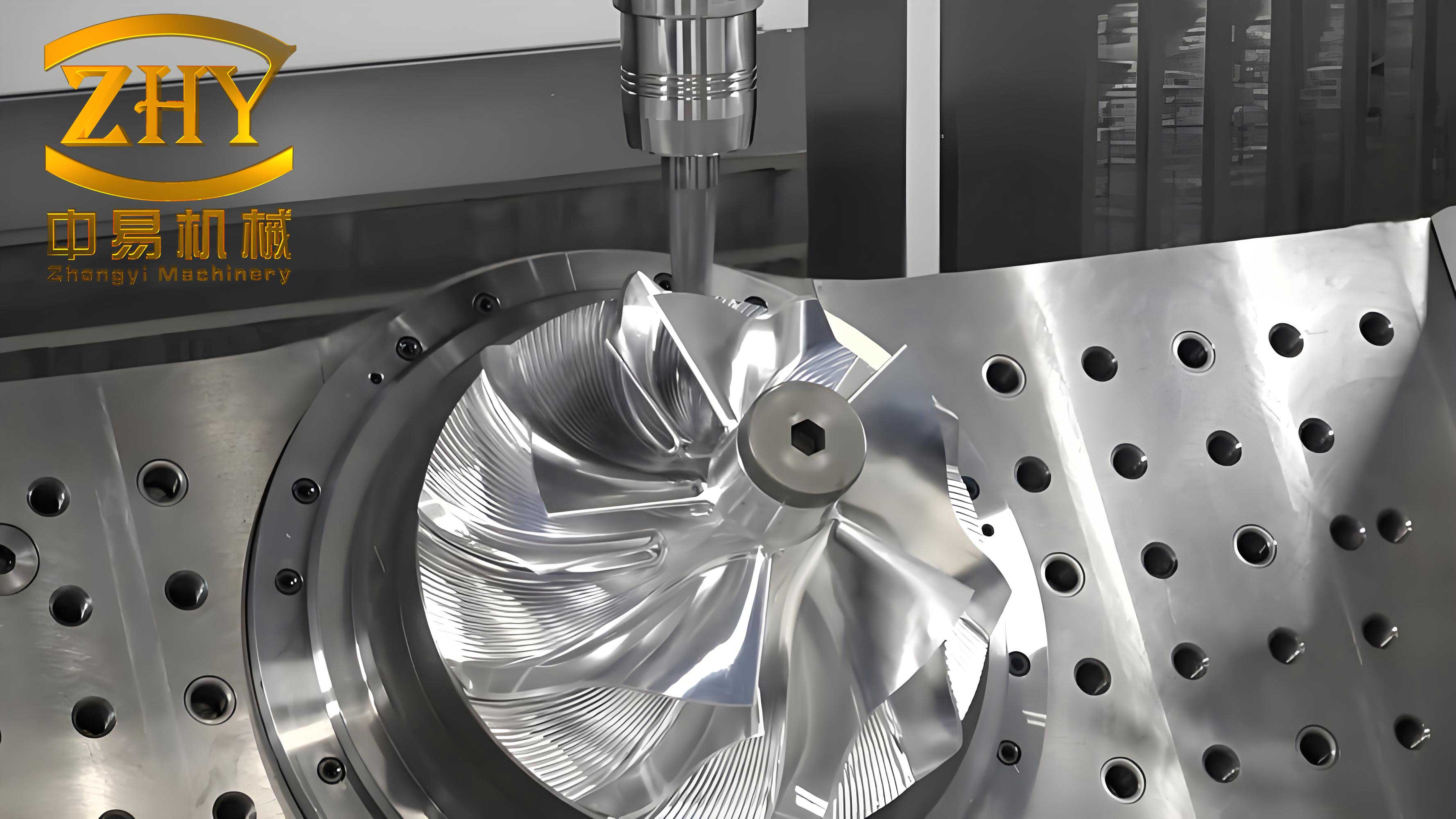
The benefits of resin sand for machine tool casting are quantifiable. Consider the following table comparing traditional sand casting with resin sand casting:
| Aspect | Traditional Sand Casting | Resin Sand Casting |
|---|---|---|
| Surface Finish | Rough, requires extensive machining | Smooth, reduces machining needs |
| Dimensional Accuracy | Moderate, high tolerances | High, tight tolerances |
| Labor Intensity | High, manual processes | Low, automated systems |
| Production Rate | Slow, batch-dependent | Fast, continuous flow |
| 旧砂 Reuse Rate | Low, often discarded | High, over 90% recovery |
| Impact on Machine Tool Casting Quality | Variable, prone to defects | Consistent, high integrity |
To mathematically represent the improvement, we can use a quality index formula: $$ Q_c = \frac{S \cdot A}{D} $$ where \( Q_c \) is machine tool casting quality, \( S \) is surface finish score, \( A \) is dimensional accuracy, and \( D \) is defect density. Resin sand increases \( S \) and \( A \) while decreasing \( D \), thereby boosting \( Q_c \). Additionally, the economic benefit from reduced scrap and higher efficiency can be modeled as: $$ B = (C_t – C_r) \cdot V + E_s $$ where \( B \) is total benefit, \( C_t \) and \( C_r \) are costs per unit for traditional and resin sand casting respectively, \( V \) is production volume, and \( E_s \) is savings from improved machine tool casting performance in end-use equipment.
Furthermore, the resin sand process parameters are critical. For instance, the resin addition ratio \( R \) is optimized as: $$ R = \frac{M_r}{M_s} \times 100\% $$ where \( M_r \) is resin mass and \( M_s \) is sand mass. Our trials have shown that maintaining \( R \) between 1.0% and 1.5% yields optimal results for machine tool casting. The curing time \( T_c \) can be expressed as: $$ T_c = k_1 \cdot e^{-k_2 \cdot T} $$ where \( T \) is temperature, and \( k_1 \), \( k_2 \) are constants based on hardener type. This allows for precise control in production.
In terms of mechanical properties, the tensile strength \( \sigma_t \) of resin sand castings relates to casting quality: $$ \sigma_t = \alpha \cdot \rho + \beta $$ where \( \rho \) is density influenced by sand compaction, and \( \alpha \), \( \beta \) are material constants. High-quality machine tool casting from resin sand exhibits superior \( \sigma_t \), enhancing the durability of grinding machine beds and frames. We also monitor hardness \( H \) using: $$ H = H_0 + \gamma \cdot Q_c $$ where \( H_0 \) is base hardness and \( \gamma \) is a proportionality factor. This ensures that our machine tool casting meets rigorous standards.
The integration of resin sand technology has also facilitated innovation in grinding machine design. For example, the stiffness \( K \) of a grinding machine structure can be approximated by: $$ K = \frac{E \cdot I}{L^3} $$ where \( E \) is Young’s modulus of the casting material, \( I \) is the moment of inertia of the cross-section, and \( L \) is length. By using resin sand for machine tool casting, we achieve more consistent \( E \) values, leading to predictable \( K \) and better grinding accuracy. Additionally, thermal deformation \( \Delta L \) during operation is reduced: $$ \Delta L = \alpha_T \cdot \Delta T \cdot L $$ where \( \alpha_T \) is thermal expansion coefficient and \( \Delta T \) is temperature change. Resin sand castings often have lower \( \alpha_T \), minimizing \( \Delta L \) and maintaining precision.
Our factory’s commitment to machine tool casting extends to ongoing research and development. We are exploring advanced alloys and heat treatments to further enhance casting properties. The relationship between alloy composition and performance can be summarized in a table:
| Alloy Element | Effect on Machine Tool Casting | Optimal Range (%) |
|---|---|---|
| Carbon (C) | Increases strength and hardness | 2.5–3.5 |
| Silicon (Si) | Improves fluidity and castability | 1.5–2.5 |
| Manganese (Mn) | Enhances toughness and wear resistance | 0.5–1.0 |
| Chromium (Cr) | Boosts corrosion and heat resistance | 0.2–0.5 |
| Molybdenum (Mo) | Increases high-temperature strength | 0.1–0.3 |
Using regression analysis, we can model the ultimate tensile strength \( \sigma_u \) as: $$ \sigma_u = a_0 + a_1 C + a_2 Si + a_3 Mn + a_4 Cr + a_5 Mo $$ where \( a_0 \) to \( a_5 \) are coefficients derived from experimental data. This allows us to tailor machine tool casting for specific grinding machine applications, ensuring that each component meets exacting demands.
Moreover, the efficiency gains from our grinding machines are directly linked to the quality of machine tool casting. For instance, the material removal rate \( MRR \) in grinding can be expressed as: $$ MRR = v_f \cdot d \cdot b $$ where \( v_f \) is feed rate, \( d \) is depth of cut, and \( b \) is width of cut. Higher machine tool casting stability enables larger \( d \) and \( v_f \) without compromising accuracy, thus increasing \( MRR \). The relationship between casting vibration damping \( \zeta \) and surface finish \( Ra \) is: $$ Ra = c_1 \cdot \frac{1}{\zeta} + c_2 $$ where \( c_1 \) and \( c_2 \) are constants. By optimizing machine tool casting to enhance \( \zeta \), we achieve lower \( Ra \) values, critical for precision components.
In conclusion, our journey in developing specialized grinding machines and advancing machine tool casting through resin sand technology has yielded substantial benefits. From square hole grinders to double-end machines, each innovation relies on the foundational quality of machine tool casting. The tables and formulas presented here summarize key aspects, demonstrating how technical parameters translate into real-world performance. As we continue to push boundaries, machine tool casting remains at the heart of our efforts, driving efficiency, precision, and competitiveness. We are confident that further advancements will emerge, solidifying our position as pioneers in the industry. The integration of these technologies not only meets current demands but also paves the way for future innovations in manufacturing.