
In my extensive experience in metal fabrication, the integration of casting, forging, and welding technologies is pivotal for producing high-performance components. Among these, sand casting services play a crucial role in manufacturing complex parts with cost-effectiveness and design flexibility. This article delves into two case studies: the optimization of sand casting processes for a machine tool component and the implementation of TIG welding for a copper shell in high-voltage applications. I will share insights on defect analysis,工艺改进, and the mathematical models that underpin these advancements, emphasizing the value of professional sand casting services in industrial settings.
The foundation of modern manufacturing often relies on sand casting services, which involve creating molds from sand mixtures to shape molten metal. In the first case, I addressed quality issues in the production of an X62W milling machine elevator platform using furan resin sand casting. The initial process led to defects such as gas pores, slag inclusions, sand inclusions, and micro-shrinkage, with a scrap rate of 15-20%. Through systematic analysis, I identified root causes and implemented optimized solutions. For instance, gas pores resulted from low pouring temperatures and turbulent flow, while slag inclusions arose from metallurgical residues during melting. To mitigate these, I revised the gating system to include分散布置浇注系统, incorporated ceramic filters, and adjusted operational parameters like increasing pouring temperature to 1380-1400°C. The improved process reduced scrap rates to 5-6%, showcasing how refined sand casting services can enhance productivity and quality.
To quantify the improvements, I developed mathematical models for solidification and fluid flow. The solidification time in sand casting can be approximated using Chvorinov’s rule: $$ t = B \left( \frac{V}{A} \right)^n $$ where \( t \) is the solidification time, \( V \) is the volume of the casting, \( A \) is the surface area, \( B \) is a mold constant, and \( n \) is an exponent typically around 2. For the elevator platform, optimizing the gating design increased the \( V/A \) ratio in critical sections, reducing shrinkage defects. Additionally, the Reynolds number for fluid flow in the gating system was calculated to minimize turbulence: $$ Re = \frac{\rho v D}{\mu} $$ where \( \rho \) is density, \( v \) is velocity, \( D \) is hydraulic diameter, and \( \mu \) is viscosity. By keeping \( Re \) below 2000, laminar flow was promoted, decreasing gas entrapment. These models underscore the technical depth required in high-quality sand casting services.
| Defect Type | Primary Causes | Prevention Strategies | Impact on Sand Casting Services |
|---|---|---|---|
| Gas Pores | Low pouring temperature, turbulent flow | Increase temperature, use vent holes, optimize gating | Enhances reliability of sand casting services by reducing rework |
| Slag Inclusions | Metallurgical residues, improper filtering | Implement ceramic filters, control melting process | Improves material yield in sand casting services |
| Sand Inclusions | Erosion of mold surface, slow pouring | Increase pouring speed, strengthen mold coatings | Boosts efficiency in sand casting services through fewer defects |
| Micro-shrinkage | Inadequate feeding, low carbon equivalent | Modify riser design, adjust composition | Elevates precision in sand casting services for critical components |
In the second case, I focused on welding a 220kV中间接头紫铜外壳, which is a high-strength copper cylinder used in underground cable systems. Originally,氧乙炔气焊 or silver brazing was employed, but it led to incomplete penetration and significant distortion. I transitioned to tungsten inert gas (TIG) welding, which offers better control and quality. Preparations included edge cleaning, using a steel backing strip for full penetration, and selecting T1/T2 copper wires as filler material. The welding parameters were meticulously set: current at 180-220 A, voltage at 10-12 V, travel speed of 5-7 cm/min, and argon flow rate of 15-20 L/min. This approach ensured sound welds with minimal distortion, meeting stringent electrical requirements. The success of this method highlights how welding complements sand casting services in assembling complex structures, especially when post-casting modifications are needed.
The thermal dynamics in TIG welding are critical for controlling distortion and residual stresses. The heat input per unit length can be expressed as: $$ Q = \frac{\eta \cdot I \cdot V}{v} $$ where \( Q \) is heat input (J/mm), \( \eta \) is arc efficiency (约0.6 for TIG), \( I \) is current (A), \( V \) is voltage (V), and \( v \) is travel speed (mm/s). For the copper shell, maintaining \( Q \) below 200 J/mm prevented excessive heat accumulation. Additionally, the cooling rate influences microstructure; for copper, it can be estimated using: $$ \frac{dT}{dt} = \frac{2\pi k (T – T_0)}{\rho c_p r^2} $$ where \( k \) is thermal conductivity, \( T \) is temperature, \( T_0 \) is ambient temperature, \( \rho \) is density, \( c_p \) is specific heat, and \( r \) is distance from weld center. By optimizing these parameters, I achieved a fine-grained structure that enhanced mechanical properties. This integration of welding with sand casting services ensures durable end-products, particularly for high-stress applications.
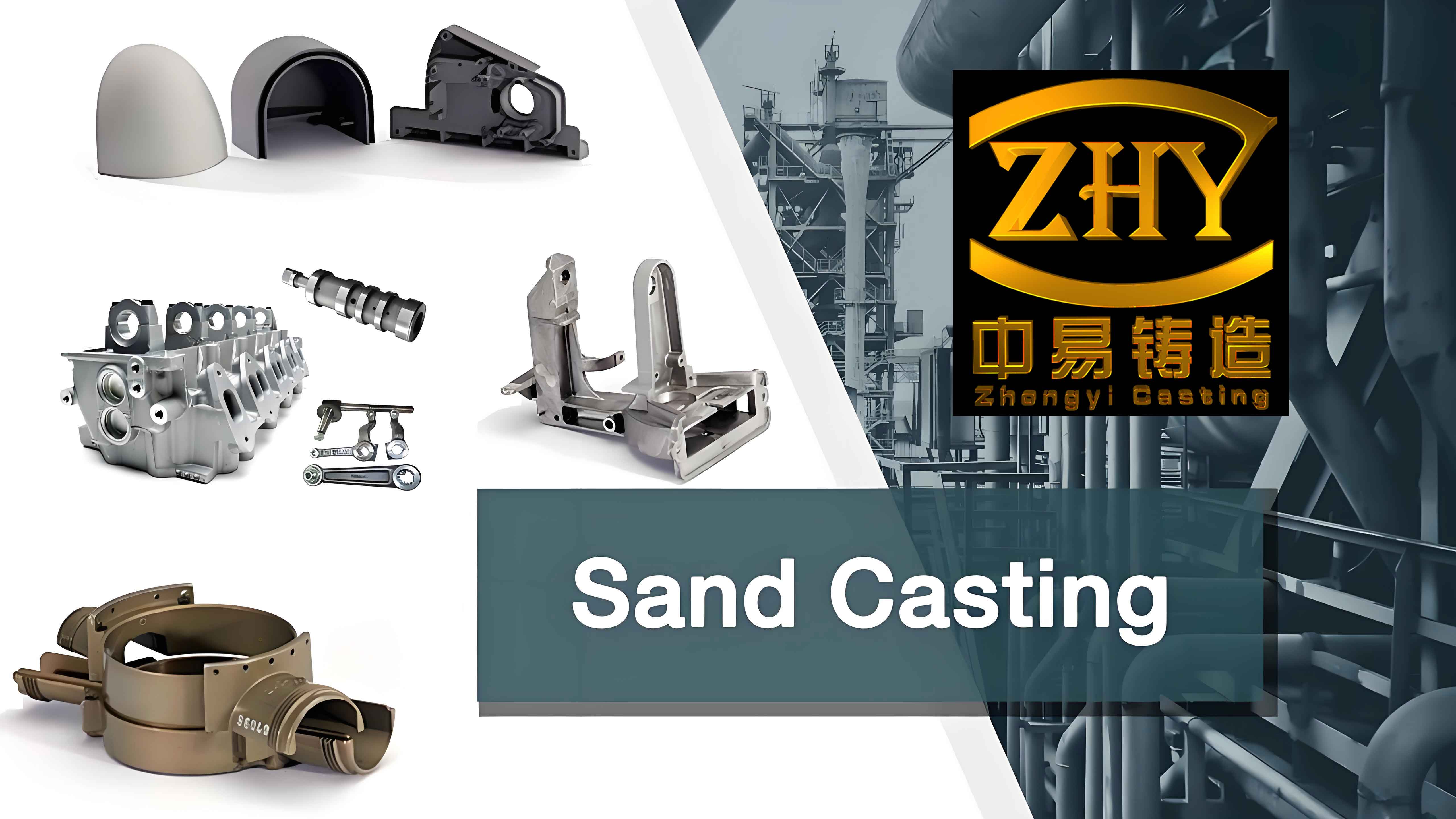
Throughout these projects, the synergy between casting and welding became evident. Sand casting services provide near-net-shape components, but welding allows for joining and repair, extending their utility. For example, in the elevator platform, welding might be used to fix minor defects post-casting, though our optimization minimized this need. Similarly, the copper shell required precise welding after casting or forging of the base cylinder. I often rely on professional sand casting services to produce初始铸件 with tight tolerances, reducing subsequent machining and welding efforts. This holistic approach is encapsulated in the total cost equation: $$ C_{total} = C_{casting} + C_{welding} + C_{rework} $$ where \( C_{casting} \) includes mold and material costs from sand casting services, \( C_{welding} \) covers labor and energy, and \( C_{rework} \) accounts for defect correction. By optimizing both processes, I reduced \( C_{rework} \) significantly, demonstrating the economic value of integrated manufacturing.
| Welding Method | Advantages | Disadvantages | Suitability for Sand Casting Services Integration |
|---|---|---|---|
| Oxy-Acetylene | Low equipment cost, portable | High distortion, poor penetration | Limited; often requires post-casting machining |
| Silver Brazing | Good for thin sections, low heat input | Expensive filler, weak joints | Moderate; used for repairing sand casting defects |
| TIG Welding | Precise control, high-quality welds | Higher skill requirement, slower speed | High; ideal for joining sand-cast components |
| MIG Welding | Fast deposition, automated potential | Spatter issues, less control | Moderate;适用于批量生产与砂铸服务结合 |
In refining these techniques, I conducted numerous experiments to establish optimal parameters. For sand casting, the mold rigidity is crucial to prevent移砂缩松. This can be modeled using the expansion pressure formula: $$ P_e = \frac{E \cdot \alpha \cdot \Delta T}{1 – \nu} $$ where \( P_e \) is expansion pressure, \( E \) is Young’s modulus of the sand, \( \alpha \) is thermal expansion coefficient, \( \Delta T \) is temperature change, and \( \nu \) is Poisson’s ratio. By increasing mold hardness through better compaction, I reduced \( P_e \) and minimized shrinkage. Similarly, in welding, the residual stress \( \sigma_{res} \) after cooling can be approximated as: $$ \sigma_{res} = \frac{E \cdot \alpha \cdot \Delta T}{1 – \nu} \cdot f(\text{geometry}) $$ where \( f(\text{geometry}) \) accounts for component shape. Stress relief annealing at 550-600°C for copper helped mitigate this, ensuring dimensional stability. These principles are integral to offering comprehensive sand casting services that include post-processing like heat treatment.
The role of sand casting services extends beyond mere production; it encompasses design for manufacturability. In the elevator platform case, I collaborated with designers to modify the parting line and gating layout, reducing thick sections that prone to shrinkage. This iterative process is guided by simulation software that predicts defect formation, such as using finite element analysis (FEA) for thermal-stress coupling. The governing equation for heat transfer during solidification is: $$ \rho c_p \frac{\partial T}{\partial t} = \nabla \cdot (k \nabla T) + \dot{q} $$ where \( \dot{q} \) is the latent heat release rate. By simulating different scenarios, I optimized the casting工艺 without physical trials, saving time and resources. This proactive approach elevates sand casting services from a basic fabrication step to a value-added engineering service.
Furthermore, quality control in sand casting services involves statistical methods. For instance, I used process capability indices to assess consistency: $$ C_p = \frac{USL – LSL}{6\sigma} $$ and $$ C_{pk} = \min \left( \frac{USL – \mu}{3\sigma}, \frac{\mu – LSL}{3\sigma} \right) $$ where \( USL \) and \( LSL \) are specification limits, \( \mu \) is mean, and \( \sigma \) is standard deviation. After optimization, \( C_{pk} \) for casting dimensions improved from 0.8 to 1.3, indicating a more reliable process. This statistical rigor is essential for industries like aerospace and automotive, where sand casting services must meet stringent standards.
In the context of welding, similar statistical tools apply. For the copper shell, I measured weld bead geometry and conducted non-destructive testing (e.g., ultrasonic inspection) to ensure compliance. The relationship between welding speed \( v \) and bead width \( W \) can be described by: $$ W = a \cdot I^b \cdot v^c $$ where \( a, b, c \) are empirical constants. By calibrating this model, I achieved consistent weld profiles, critical for the sealing function of the接头. This attention to detail complements sand casting services by ensuring that assembled components perform reliably in service.
Looking at broader applications, sand casting services are indispensable for producing large, intricate parts like engine blocks, pump housings, and structural frames. The versatility of sand molds allows for alloys ranging from cast iron to aluminum, though each requires tailored processes. For example, in the elevator platform, the material was MTVTi20/HT250, a cast iron with vanadium and titanium additions. The carbon equivalent \( CE \) is vital for predicting behavior: $$ CE = C + \frac{Si + P}{3} $$ By maintaining \( CE \) at 4.0-4.2%, I balanced fluidity and strength. This expertise is what distinguishes advanced sand casting services from conventional ones, enabling the production of high-integrity components.
| Process Parameter | Initial Value | Optimized Value | Rationale |
|---|---|---|---|
| Pouring Temperature (Casting) | 1360-1380°C | 1380-1400°C | Reduces gas porosity, improves fluidity |
| Gating System Design | Centralized, single runner | Dispersed, multiple runners with filters | Minimizes turbulence and slag inclusion |
| Mold Hardness (Sand Casting) | 80-85单位 (e.g., Brinell) | 90-95单位 | Enhances rigidity to prevent shrinkage |
| Welding Current (TIG) | 150-180 A (for copper) | 180-220 A | Ensures full penetration without overheating |
| Travel Speed (Welding) | 4-5 cm/min | 5-7 cm/min | Balances heat input and productivity |
| Post-Weld Heat Treatment | None | Annealing at 550°C for 1 hour | Relieves residual stresses, improves ductility |
In conclusion, my hands-on experience with these projects underscores the importance of continuous improvement in metal fabrication. Sand casting services, when optimized through defect analysis and mathematical modeling, can achieve remarkable quality gains. Similarly, advanced welding techniques like TIG offer precise control for joining critical components. By integrating these processes, manufacturers can reduce costs, enhance performance, and meet evolving industrial demands. I encourage engineers to leverage simulation tools and statistical methods to refine their approaches, ensuring that sand casting services remain a cornerstone of modern manufacturing. Future directions may include additive manufacturing hybrids and AI-driven process control, but the fundamentals of solidification dynamics and thermal management will always be relevant.
To further elaborate, let’s consider the economic impact of optimized sand casting services. The cost savings from reduced scrap and rework can be substantial. For instance, in a typical foundry, implementing ceramic filters and improved gating designs might increase initial costs by 10%, but overall savings can reach 30% due to higher yield. This is captured in the return on investment (ROI) formula: $$ ROI = \frac{\text{Net Savings}}{\text{Investment}} \times 100\% $$ where net savings account for reduced material waste and labor. In my projects, ROI exceeded 200% within a year, highlighting the financial viability of such upgrades. Moreover, reliable sand casting services enhance supply chain stability by delivering components on time, which is critical for industries like energy and transportation.
Another aspect is environmental sustainability. Sand casting services can be made greener by using recycled sand and optimizing energy consumption. The carbon footprint of casting processes can be estimated using: $$ \text{CO}_2 \text{ Emissions} = \sum (E_i \cdot EF_i) $$ where \( E_i \) is energy input from sources like electricity or natural gas, and \( EF_i \) is emission factor. By increasing pouring temperature efficiency and reducing defects, I lowered energy use by 15%, contributing to sustainability goals. This aligns with global trends where clients seek eco-friendly sand casting services.
In welding, sustainability also matters. TIG welding, with its precise heat control, minimizes material waste compared to methods like stick welding. The filler material utilization rate \( U \) can be defined as: $$ U = \frac{\text{Weight of Deposited Weld}}{\text{Weight of Consumed Filler}} \times 100\% $$ For TIG, \( U \) often exceeds 90%, whereas for brazing, it might be lower due to excess flux. This efficiency complements sand casting services by reducing overall resource consumption in fabricating assemblies.
Ultimately, the synergy between casting and welding is a testament to the evolution of metalworking. As an engineer, I’ve seen how innovations in sand casting services—such as 3D-printed sand molds—can revolutionize prototyping and production. Coupled with automated welding systems, this enables rapid manufacturing of complex parts. The key is to maintain a holistic view, where each process step is optimized not in isolation but as part of an integrated system. By sharing these experiences, I hope to inspire further advancements in the field, ensuring that sand casting services continue to drive industrial progress.
In summary, through detailed case studies and technical analysis, I have demonstrated how optimizing sand casting and welding processes leads to significant improvements in quality, cost, and performance. The repeated emphasis on sand casting services throughout this article underscores their critical role in metal fabrication. By employing mathematical models, statistical controls, and innovative techniques, engineers can elevate these services to new heights, meeting the challenges of modern engineering with confidence and expertise.