
As a professional deeply engaged in the sand casting foundry industry, I have witnessed the transformative journey of ordinary sand casting foundry equipment and inspection technologies over the past decades. The Chinese foundry sector, while being a global powerhouse in production volume, has long grappled with gaps in automation, intelligence, and environmental performance. Drawing upon the strategic roadmap laid out for the period 2016–2030, I will present a comprehensive review of key technologies, challenges, and targets that define the future of sand casting foundry operations. This article synthesizes the collective efforts to elevate the entire sand casting foundry ecosystem—from melting and molding to core making, sand treatment, pouring, cleaning, and inspection—toward a smarter, greener, and more competitive standing.
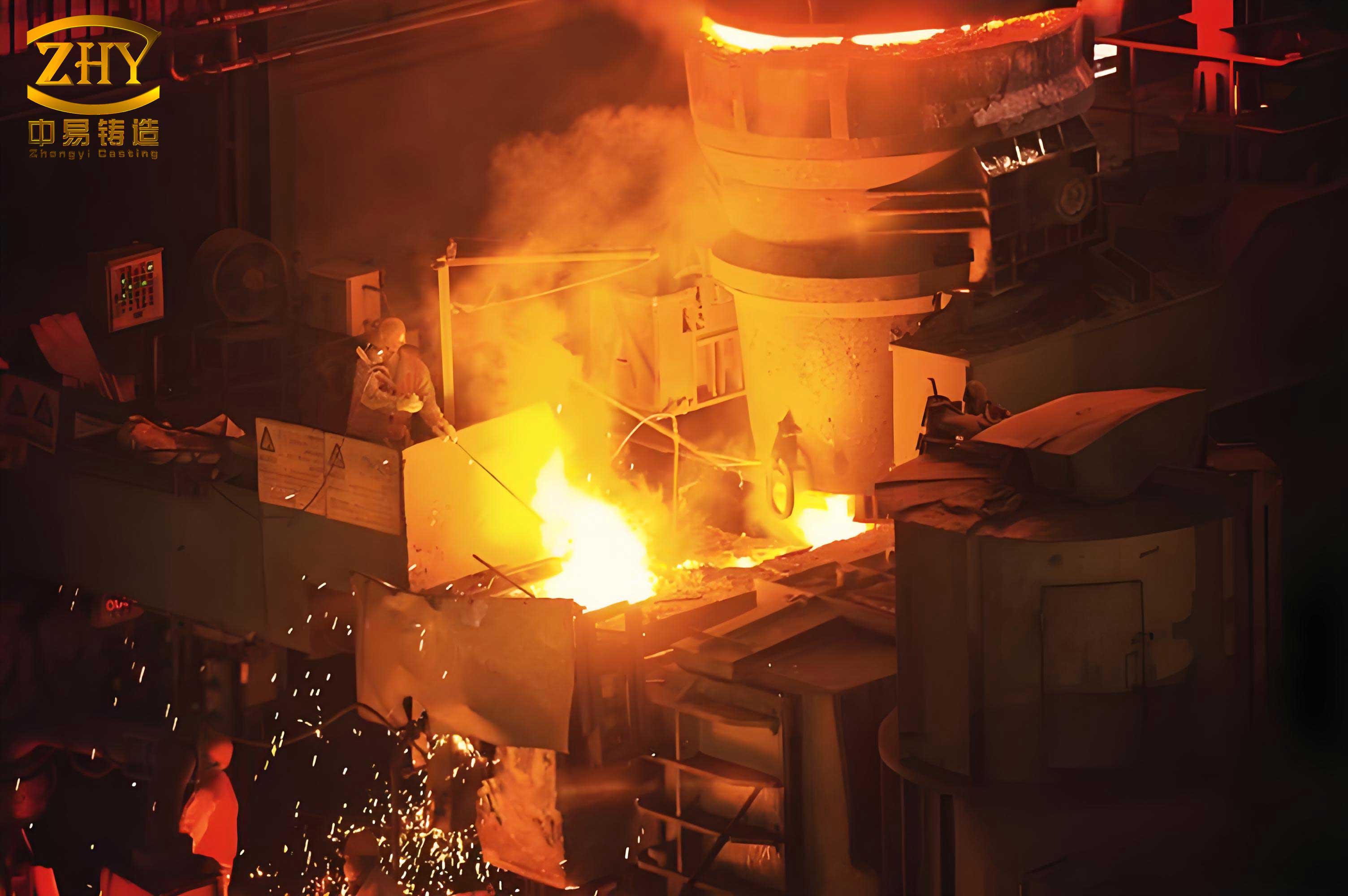
1. Melting Equipment and Technologies
Melting is the heart of any sand casting foundry. The cupola and induction furnaces remain the pillars of iron melting. Despite decades of use, the cupola still offers unmatched metallurgical performance. However, its environmental footprint and energy efficiency demand urgent innovation. Similarly, induction furnaces have seen remarkable progress in power electronics and control, but domestic brands lag behind international leaders in reliability and energy consumption.
| Technology | Current Status | Challenge | 2020 Target | 2030 Target |
|---|---|---|---|---|
| Cupola optimization control | Partial automation in feeding and blast; full‑system control lacking | Complex parameters; optimal control algorithm development | Establish relationship between charge, iron quality, and control algorithm | Full optimal control system ensuring 100% qualified iron |
| New energy cupola | Short‑life cold‑blast cupolas dominate | Green design; combined combustion of coke and gas | Build knowledge base and standards for new energy cupolas | Intelligent, low‑emission, stable melting system |
| Resource utilization & environmental protection | High refractory consumption; heat loss; dust/slag issues | Meeting ever‑stricter environmental regulations | Complete design and trial of comprehensive recycling system | Near‑zero heat emission; slag granulation; CO re‑burning |
| Induction furnace energy saving | Targeting 510 kWh/t | Optimizing load matching and reducing losses | Domestic performance reaching advanced level | Overall level approaching or exceeding foreign counterparts |
| Robotic platform operation | Mostly manual labor (charging, slagging, sampling) | Complex, harsh environment; high intelligence needed | Robot performing charging, slagging, temperature measurement, sampling | Robot with online composition adjustment, melt quality evaluation, remote control |
I emphasize that the cupola melting process involves a multitude of interrelated parameters. A simplified model for the carbon equivalent and temperature control can be expressed as:
$$
C_{\text{eq}} = f(\text{coke rate}, \text{blast volume}, \text{charge composition})
$$
$$
T_{\text{melt}} = g(\text{air preheat}, \text{combustion efficiency}, \text{heat losses})
$$
Where \(f\) and \(g\) are complex nonlinear functions. The goal is to derive an algorithm that dynamically adjusts setpoints to achieve desired \(C_{\text{eq}}\) and \(T_{\text{melt}}\).
2. Core Making Equipment and Technologies
Core making is critical for dimensional accuracy and defect reduction in sand casting foundry. Inadequate core quality contributes to over 2.5% rejections. Current machines operate on basic PLC control but lack intelligent feedback. The following table summarizes the six key areas of advancement.
| Area | Status | Challenge | 2020 Target | 2030 Target |
|---|---|---|---|---|
| Stable high‑efficiency sand mixing system | Batch mixers low efficiency; continuous mixers used for self‑setting sand | Precise resin proportioning and uniform coating | Solve residue and cleaning issues for continuous mixers | Advanced continuous mixing matching high‑end core shooters |
| Controllable multi‑mode sand shooting system | Single‑pressure shooting; uneven compactness | Simulation of shot process; high‑response pressure/velocity sensors | Establish intelligent model for low‑pressure shooting; multi‑flow shooting applied | Adaptive multi‑flow shooting with 0.1 s control resolution |
| Efficient & energy‑saving curing system | Hot‑box declining; cold‑box widely used; inorganic new | Stable gas temperature; pressure curve; catalyst residue control | Parameterized curing for fast solidification | Controllable catalyst residue; green curing |
| Intelligent closed‑loop control system | Single‑machine automation; no adaptive capability | Input condition monitoring; process dynamics; self‑adaptive algorithm | Breakthrough in monitoring and adaptive system prototypes | Wide application of self‑judging core making equipment |
| High‑precision drive system | Hydraulic dominant; problems with leakage, complexity | Electric drive for large clamping forces | Electric cylinders replacing hydraulic cylinders for main motions | All‑electric intelligent drive with self‑diagnosis and repair |
| Modular integrated unit | Scattered layout; large footprint; external disturbances | Compact integration of sand storage, mixing, shooting, and core removal | Integration of core shooter and mold; compact mixing system; network control | Big data platform; pre‑warning and self‑parameter adjustment |
The sand shooting process can be described by the continuity and momentum equations of a gas‑solid flow:
$$
\frac{\partial (\rho_g v_g)}{\partial t} + \nabla \cdot (\rho_g v_g^2) = -\nabla p + \nabla \cdot \tau + \rho_g g + F_{drag}
$$
where \( \rho_g \) is gas density, \( v_g \) is gas velocity, \( p \) is pressure, and \( F_{drag} \) represents the interphase drag. Intelligent control aims to maintain a constant sand flow velocity during shooting to ensure uniform density.
3. Vertical Parting Flaskless Molding Equipment
Vertical parting flaskless molding, pioneered by DISA in 1963, offers high productivity and precision for medium‑to‑small iron castings. Chinese manufacturers have produced over 600 machines, but reliability and accuracy still lag. Three key auxiliary technologies are essential for full automation.
| Technology | Current Status | Challenge | 2020 Target | 2030 Target |
|---|---|---|---|---|
| Automatic core setter | Manual core setting; slow and inaccurate | Precision, speed, stability | Repeatability ≤0.14 mm; cycle ≤2.5 s | Widespread application of high‑speed auto core setters |
| Full‑automatic pouring machine | Semi‑automatic; operator‑dependent | Synchronous movement; precise alignment and flow control | Key technologies for intelligent pouring: vision recognition of sprue, level detection | All lines equipped with intelligent pouring systems |
| Automatic casting picking robot | Manual picking; labor‑intensive and hazardous | Cast part recognition; mixed parts separation | Image recognition for slow, scattered parts on same plane | Robotic picking of mixed castings on different planes |
4. Horizontal Parting Flaskless Molding Equipment
Horizontal parting flaskless molding provides superior dimensional accuracy and resistance to mold dilation. Current domestic machines rely on imported core units. Key technologies focus on sand filling, compaction, and energy efficiency.
| Technology | Status | Challenge | 2020 Target | 2030 Target |
|---|---|---|---|---|
| Sand shooting & pre‑compaction | Gravity filling, single/double side shooting | Uniform pre‑compaction; relationship between shot parameters and mold fill | Determine optimal pressure, flow, and shot nozzle shape | Uniform shooting system used on all horizontal molding machines |
| Compaction technology | Mostly direct compaction; few reverse compaction | Comparison of direct vs reverse; feasibility of dual‑pressure compaction | Select optimal compaction mode and structure | Design and implementation of dual‑pressure compaction |
| High‑efficiency & energy saving | Two‑station: 100–110 molds/h; four‑station: 160–180 molds/h | Increase speed ≥25%; reduce specific energy consumption | Prototype: two‑station ≥130; four‑station ≥220 molds/h | Wide application of high‑speed lines |
I often use a simple energy balance to evaluate molding efficiency:
$$
E_{\text{total}} = E_{\text{shooting}} + E_{\text{compaction}} + E_{\text{handling}}
$$
where \(E_{\text{total}}\) is the energy per mold (kWh/mold). The goal is to minimize \(E_{\text{total}}\) while achieving required mold hardness \(H\):
$$
H \geq H_{\text{min}} \quad \text{and} \quad E_{\text{total}} \leq E_{\text{target}}
$$
5. Horizontal Parting Flask Molding Equipment
This is the oldest wet‑sand molding method, still widely used. Recent innovations include vacuum‑assisted and side‑blow static pressure technologies. The roadmap calls for autonomous development instead of perpetual importation.
| Technology | Status | Challenge | 2020 Target | 2030 Target |
|---|---|---|---|---|
| Advanced compaction methods | Repeated import of same technology (HWS, KW, Sintokogio) | Need indigenous innovations: template compaction, vacuum static pressure, side‑blow | Develop prototype using one of these new methods | Widespread adoption of new‑generation machines |
| All‑electric automatic molding line | Mostly hydraulic/pneumatic; no truly all‑electric line in China | Electric drive may lack force for compaction; need high‑power electro‑cylinders | Design control system with network monitoring, remote debugging | All‑electric line with thermal expansion compensation and precise positioning |
6. Self‑Setting Sand Equipment and Technologies
Self‑setting sand processes dominate heavy castings (machine tools, pumps, wind power). Traditional manual operations with cranes are being replaced by robotic and mechanical systems.
| Technology | Status | Challenge | 2020 Target | 2030 Target |
|---|---|---|---|---|
| Intelligent continuous sand mixer for face/back sand | Manual two‑step mixing; toxic fumes | Simultaneous production of face and back sand; unmanned operation | Intelligent adjustment of binder, layer thickness, and trajectory | Sub‑mother mixer producing both sands simultaneously, reducing costs |
| Truss‑type large manipulator for rollover, wash coating, closing | Crane‑based; risk of sand damage | Safe, precise handling of 60–100 t molds | Develop 60–100 t flexible hydraulic manipulator | Integration with MES; dual‑chain synchronous, laser measurement for automation |
7. Sand Treatment and Reclamation Equipment
Sand treatment directly affects mold quality. Common problems include dust leakage, low cooling efficiency, and lack of smart sensors. The following table outlines the three main areas.
| Technology | Status | Challenge | 2020 Target | 2030 Target |
|---|---|---|---|---|
| Key equipment reliability | Domestic mixers achieve only 50% rated output; imported units dominant | Improve double‑disc cooler water control and durability | Key equipment quality reaching international level | No import dependence; double‑disc coolers widely used |
| Green environmental protection | Belt conveyors leak dust; wet sand reclamation offline; 20–30% waste | Enclosed conveying; online reclamation; zero waste | Enclosed conveying; online reclamation common | Waste reuse rate ≥90%; international advanced green tech |
| Intelligent control | No IoT interfaces; moisture control based only on temperature | Multi‑parameter sensing and adaptive algorithm | Track world’s intelligent technology | All devices with smart interfaces; full interconnectivity |
A fundamental relationship for moisture control in green sand is:
$$
W_{\text{add}} = f(T_{\text{sand}}, \, W_{\text{existing}}, \, \text{clay content}, \, \text{compactability target})
$$
Where \(W_{\text{add}}\) is the water to be added, and the function \(f\) must be learned from data to achieve stable green strength \(\sigma_{green}\).
8. Cleaning and Grinding Equipment
Cleaning and grinding remain the most labor‑intensive and hazardous operations in a sand casting foundry. The roadmap identifies three breakthrough areas.
| Technology | Status | Challenge | 2020 Target | 2030 Target |
|---|---|---|---|---|
| High‑efficiency inline shot blasting | Offline single machines; low efficiency, high cost, pollution | Intensive production; need for domestic champions | Develop competitive inline shot blast equipment | Nurture global competitive enterprises |
| Perceptual near‑shape machining | Manual grinding dominant; automation limited by part variability | Vision and force sensing to adapt to casting variations | 2.0 version: CNC‑based multi‑part grinding with precise positioning | 3.0 version: intelligent grinding using sensor feedback |
| Integrated system solutions | Discrete manual stations; low flexibility | Automatic transport, storage, identification, sorting, and grinding for mixed parts | Provide complete process solution for target products on same line | Logistics automation solution for multiple components |
9. Pouring Equipment and Technologies
Pouring automation is essential for consistent quality in high‑production sand casting foundries. Two key developments are highlighted.
| Technology | Status | Challenge | 2020 Target | 2030 Target |
|---|---|---|---|---|
| Independent single‑coil design for induction pouring furnace | Single‑loop coil causes uneven heating and slagging | Design 10 independent, replaceable coils with individual cooling and control | Fabricate prototype unit | Widespread application of independently controlled coil furnaces |
| Intelligent pouring control system | Basic automatic pouring lacks adaptive level control | Optical and float sensor fusion for precise level control | Develop high‑precision optical/float monitoring system | Full adoption of intelligent pouring with advanced sensing |
The pressure control in a pressurized pouring furnace can be modeled as:
$$
P_{\text{ furnace}} = P_{\text{ atm}} + \rho g h_{\text{ metal}} + \Delta P_{\text{ nozzle}}
$$
Where \(h_{\text{ metal}}\) is the metal level in the furnace, and \(\Delta P_{\text{ nozzle}}\) is the pressure drop through the nozzle. The system must regulate \(P_{\text{ furnace}}\) to maintain a constant level in the pouring cup.
10. Inspection Equipment and Technologies
Inspection is the key to closing the loop in a smart sand casting foundry. Both online and offline techniques need systematic development.
| Area | Status | Challenge | 2020 Target | 2030 Target |
|---|---|---|---|---|
| Comprehensive melt quality evaluation (pre‑cast) | Fragmentary: temperature, spectroscopy, thermal analysis | Unstable raw material supply; need adaptive models | Develop systematic evaluation systems for purity, inoculability, etc. | Construct dynamic adjustment system for melt quality |
| Online sand/core quality monitoring | Only moisture, compactability, strength monitored; other parameters ignored | Comprehensive parameter suite; development of sensors | Online monitoring of sand composition, performance, core geometry | Integrated monitoring system based on multiple sensor units |
| Online pouring & solidification monitoring | Rarely applied | Dynamic pouring speed, temperature, level; crack and shrinkage detection | Develop monitoring system for automatic pouring | “Through‑type” solidification monitoring system |
| Online defect detection | Mostly off‑line sampling; hot castings difficult | New principles for NDT on hot, rough surfaces | Research new NDT methods | Group of online NDT equipment for castings |
| Laboratory melt quality system | Basic: spectrometers, metallographs; lack of thermophysical tests | Need for advanced analysis of solidification and fluidity | Develop intelligent comprehensive thermal analysis and fluidity tester | Complete lab system with spectrometer, metallograph, and new analyzers |
| Laboratory molding material analysis | Aged equipment; limited to moisture, permeability, strength | Upgrade and develop new instruments | Accelerate R&D of new-generation sand testing instruments | Intelligent lab system for both green sand and chemically bonded sand (room & high temperature) |
| Laboratory casting quality evaluation | Incomplete NDT capability | Raise awareness; invest in appropriate NDT equipment | Select appropriate NDT methods (magnetic, ultrasonic, X‑ray) per material | Joint development of comprehensive casting quality prediction system |
A key relationship in intelligent melt quality evaluation is:
$$
Q_{\text{melt}} = \alpha_1 \cdot T_{\text{pour}} + \alpha_2 \cdot CE + \alpha_3 \cdot S_{\text{inoculation}} + \alpha_4 \cdot \text{cleanliness}
$$
Where \(Q_{\text{melt}}\) is a composite quality index, and the coefficients \(\alpha_i\) are determined through machine learning on historical casting defect data from the sand casting foundry.
Conclusion: The Roadmap Ahead
The sand casting foundry industry stands at a critical juncture. The technology roadmap I have outlined provides a clear path from the current fragmented automation to an integrated, intelligent, and green ecosystem. By 2020, we expect significant breakthroughs in sensor fusion, adaptive control, and modular equipment. By 2030, the vision of a fully connected sand casting foundry with self‑optimizing processes, zero waste, and global competitiveness will become reality. The journey is demanding, but the potential rewards—reduced costs, higher quality, safer workplaces, and environmental stewardship—are immense. I am confident that through sustained collaboration among researchers, equipment manufacturers, and foundry practitioners, the sand casting foundry of tomorrow will be a beacon of advanced manufacturing.