
The relentless pursuit of higher efficiency and reduced emissions in automotive and aerospace propulsion systems has driven the need for advanced materials capable of withstanding extreme conditions while minimizing weight. For critical rotating components like turbocharger turbines, this has traditionally meant the use of nickel-based superalloys. However, their significant density imposes a penalty on rotational inertia and overall system weight. The search for a superior alternative has led to a focused investigation into intermetallic alloys, with titanium aluminides (TiAl) standing out as a prime candidate. TiAl alloys offer an exceptional combination of properties: low density (approximately 3.9–4.2 g/cm³, nearly half that of nickel superalloys), high specific strength and stiffness, excellent creep resistance, and good oxidation performance at elevated temperatures (typically up to 750–850°C). These attributes make them ideally suited for near-net-shape manufacturing of complex, thin-walled components like turbines.
Among the various TiAl compositions, those alloyed with high levels of niobium (Nb) have garnered significant interest. The addition of Nb, typically in the range of 5–10 at.%, profoundly enhances the alloy’s high-temperature capability. It improves microstructural stability, significantly boosts oxidation resistance by promoting the formation of a more protective Al₂O₃-rich scale, and increases strength at elevated temperatures. A nominal composition like Ti-45Al-8Nb (at.%) represents a state-of-the-art material targeting service temperatures beyond those of conventional TiAl alloys. However, the very properties that make high-Nb TiAl alloys attractive for service—namely their ordered crystal structure and limited room-temperature ductility—also render them extremely difficult and costly to machine using conventional methods. This intrinsic challenge elevates the importance of near-net-shape fabrication techniques, where the final component geometry is achieved directly from the forming process, minimizing or eliminating subsequent machining.
This is where precision investment casting, also known as the lost-wax process, becomes not just relevant but essential. Precision investment casting allows for the production of components with intricate geometries, excellent surface finish, and tight dimensional tolerances. The process involves creating a wax model of the desired part, building a ceramic shell around it, melting out the wax, and pouring molten metal into the resulting cavity. For reactive alloys like TiAl, the mold material (often based on ZrO₂, Y₂O₃, or CaO-stabilized ZrO₂) must be carefully selected to minimize interfacial reactions. The capability of precision investment casting to yield complex shapes in a single step is perfectly aligned with the manufacturing needs of high-Nb TiAl alloys. However, successfully casting these alloys is fraught with challenges. Their high melting point, relatively poor fluidity compared to conventional metals, high reactivity, and narrow solidification range often lead to severe casting defects, primarily misruns (incomplete filling) and shrinkage porosity. These defects are catastrophic for high-integrity components; misruns lead directly to scrap, while shrinkage pores act as stress concentrators, nucleating cracks and leading to premature, unpredictable failure under the high cyclic loads experienced by a turbocharger turbine.
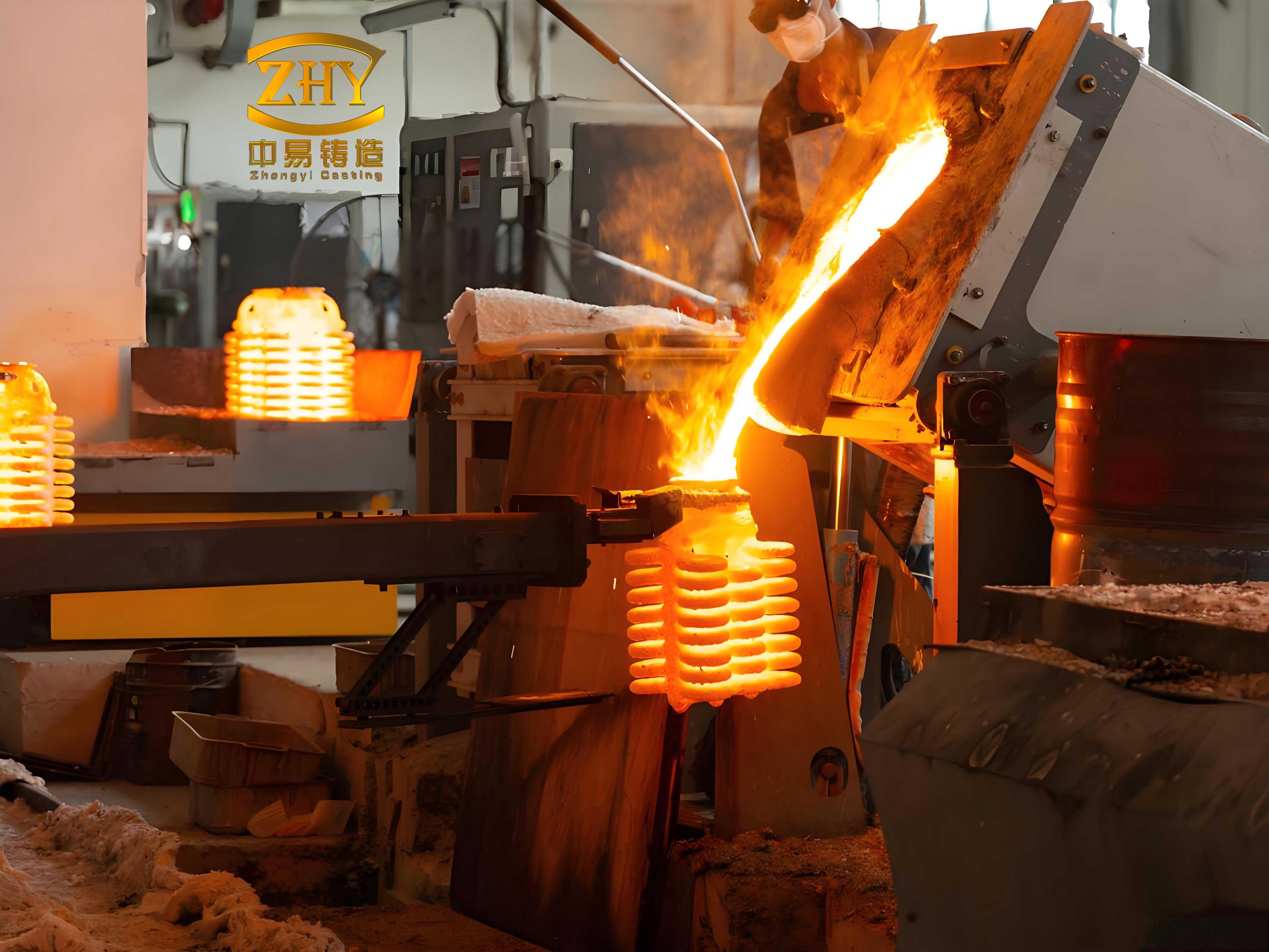
To de-risk the expensive and time-consuming trial-and-error approach in physical foundries, numerical simulation has become an indispensable tool. Software like ProCAST, based on computational fluid dynamics (CFD) and finite element methods (FEM), enables engineers to virtually simulate the entire casting process—filling, solidification, cooling, and the prediction of defects—before a single kilogram of alloy is melted. This study employs such simulation methodologies to systematically investigate and optimize the precision investment casting process for a high-Nb TiAl (Ti-45Al-8Nb) turbocharger turbine. We focus on comparing two fundamental process routes—gravity casting versus centrifugal casting—under different gating system designs (top-pouring vs. side-pouring). The primary objectives are to understand the filling behavior, identify the root causes of defect formation, and establish guidelines for producing sound, defect-free castings through precision investment casting.
Material Characteristics and Casting Challenges
The Ti-45Al-8Nb alloy belongs to the family of gamma-TiAl based intermetallics. Its microstructure, and consequently its properties, are highly sensitive to thermal history. The alloy solidifies through the peritectic reaction: Liquid + β → α. Upon further cooling, the α phase undergoes an ordering transformation to α₂ (Ti₃Al), and subsequent transformations lead to a final microstructure typically consisting of γ (TiAl) and α₂ lamellae within prior grains, often with some amount of β/B2 phase at grain boundaries depending on the cooling rate and Nb content. This complex solidification pathway contributes to the casting challenges.
The thermophysical properties of the alloy are critical inputs for an accurate simulation. These properties, which vary with temperature, were calculated using thermodynamic software (e.g., Pandat with appropriate databases) and are summarized in the table below. Key parameters include the thermal conductivity (k), density (ρ), specific heat capacity (Cp), enthalpy (H), liquidus and solidus temperatures, and dynamic viscosity (μ).
| Material | Thermal Conductivity, k (W/m·K) | Density, ρ (kg/m³) | Specific Heat, Cp (kJ/kg·K) | Enthalpy, H (kJ/kg) | Liquidus, TL (°C) | Solidus, TS (°C) | Viscosity, μ (10-3 Pa·s) |
|---|---|---|---|---|---|---|---|
| Ti-45Al-8Nb | 14.9 – 25.9 | 4213 – 3790 | 0.65 – 1.04 | 340 | 1585 | 1445 | 8.8 – 4.65 |
| ZrO₂-based Mold | 0.83 – 0.97 | 2780 | 0.44 – 0.85 | – | – | – | – |
The narrow freezing range (ΔT = TL – TS ≈ 140°C) is a double-edged sword. While it can reduce microsegregation, it also limits the time available for feeding liquid metal to compensate for solidification shrinkage, promoting the formation of isolated melt pockets that become shrinkage porosity. The relatively high viscosity of the molten TiAl alloy, especially near the solidus, directly impacts its fluidity. Fluidity length (Lf) can be approximated by integrating the velocity of the flow front until solidification occurs, a function of heat transfer and viscosity:
$$ \frac{dL_f}{dt} = v(t) $$
$$ \text{where solidification occurs when } T(L_f, t) \leq T_S $$
The heat extraction is governed by the heat transfer coefficient at the metal-mold interface and the mold’s thermal properties. The poor thermal conductivity of the ceramic mold, while beneficial for reducing thermal shock, can lead to slower overall cooling but also creates steep thermal gradients that influence the filling pattern and defect location.
Numerical Simulation Methodology
The simulation work was conducted using ProCAST, a commercial software package specializing in simulating casting processes. The methodology follows a systematic sequence: geometry definition, meshing, assignment of material properties, setting of boundary/initial conditions, solving the governing equations, and post-processing the results.
Geometric Modeling and Gating System Design: A 3D model of the turbocharger wheel was created. The wheel had a diameter of 100 mm, a height of 50 mm, and blades with a minimum thickness of approximately 0.5 mm. Two distinct gating system designs were modeled to study filling behavior:
1. Top-Pouring System: Features a central downsprue (25 mm diameter) directly connected to the top of the turbine hub. A pouring cup sits atop the sprue.
2. Side-Pouring System: Employs a tangential gate that introduces metal into the mold cavity at the periphery of the turbine. To leverage symmetry and reduce computational cost, a 90-degree sector (one-quarter) of the full mold was modeled for this configuration.
Governing Equations: The simulation solves the coupled equations of fluid flow, heat transfer, and solidification.
– Fluid Flow: The Navier-Stokes equations for incompressible, transient flow, often coupled with a volume-of-fluid (VOF) method to track the free surface.
$$ \nabla \cdot \vec{v} = 0 $$
$$ \rho \left( \frac{\partial \vec{v}}{\partial t} + (\vec{v} \cdot \nabla) \vec{v} \right) = -\nabla p + \mu \nabla^2 \vec{v} + \rho \vec{g} + \vec{S} $$
where $\vec{v}$ is velocity, $p$ is pressure, $\vec{g}$ is gravity, and $\vec{S}$ represents source terms (e.g., Darcy term for flow in the mushy zone: $\vec{S} = – \frac{\mu}{K} \vec{v}$, where $K$ is the permeability, a function of solid fraction).
– Heat Transfer: The energy conservation equation including latent heat release during solidification.
$$ \rho C_p \frac{\partial T}{\partial t} + \rho C_p (\vec{v} \cdot \nabla T) = \nabla \cdot (k \nabla T) + \dot{Q}_{latent} $$
where $\dot{Q}_{latent} = \rho L \frac{\partial f_s}{\partial t}$, $L$ is latent heat, and $f_s$ is solid fraction.
– Defect Prediction: Shrinkage porosity is predicted using criteria functions, such as the Niyama criterion ($G/\sqrt{\dot{R}}$), where $G$ is the temperature gradient and $\dot{R}$ is the cooling rate. Regions where this value falls below a critical threshold are prone to microporosity formation.
| Parameter | Value / Setting |
|---|---|
| Casting Alloy | Ti-45Al-8Nb |
| Mold Material | ZrO₂-based Ceramic |
| Pouring Temperature, Tpour | 1600 °C |
| Initial Mold Temperature, Tmold | Varied: 20, 200, 400, 600, 800 °C |
| Gravity Casting Pouring Velocity | 500 mm/s (initial) |
| Centrifugal Casting Speed | 400 rpm |
| Heat Transfer Coefficient (Metal-Mold) | Temperature-dependent function |
| Ambient Temperature | 25 °C |
Analysis of Gravity Casting Results
Simulations of the gravity casting process revealed a fundamental limitation when casting thin-sectioned TiAl components. Under the sole influence of gravitational head pressure, both gating systems failed to completely fill the mold cavity, resulting in misrun defects. The metal front solidified before reaching the extremities of the thin turbine blades.
Filling Performance and Mold Preheat: The side-pouring design demonstrated superior filling capability compared to the top-pouring design across all mold preheat temperatures. This can be attributed to the more favorable fluid dynamics: in side-pouring, the metal enters tangentially, promoting a swirling flow that distributes heat more evenly along the blade perimeter, whereas top-pouring leads to a central impingement and potentially more turbulent, heat-dissipating flow into the thin sections.
The simulation quantified the relationship between mold preheat temperature (Tmold) and filling percentage. The results, summarized in the table below, show a clear linear correlation. Increasing the mold preheat from 20°C to 800°C reduced the thermal shock and slowed the rate of heat extraction from the molten metal, thereby increasing its fluidity lifetime. For every 100°C increase in mold temperature, the filling percentage increased by approximately 4%.
| Mold Preheat Temperature (°C) | Top-Pouring Filling % | Side-Pouring Filling % |
|---|---|---|
| 20 | ~51.5 | ~72.2 |
| 200 | ~55.5 | ~76.2 |
| 400 | ~59.5 | ~80.2 |
| 600 | ~63.3 | ~84.2 |
| 800 | 67.1 | 88.2 |
This relationship can be conceptually modeled by considering the heat loss from the metal. The temperature drop of the metal front is proportional to the integral of heat flux over time. Preheating the mold reduces the initial heat flux (q ≈ h·ΔT), extending the time (tcrit) before the metal reaches the coherency temperature or solidus.
$$ \Delta T_{metal} \propto \int_0^{t_{crit}} q \, dt = \int_0^{t_{crit}} h \cdot (T_{metal}(t) – T_{mold}) \, dt $$
A higher initial $T_{mold}$ reduces the driving force $(T_{metal} – T_{mold})$, leading to a smaller $\Delta T_{metal}$ over the same flow distance, hence a longer flow length.
Despite the improvement at 800°C preheat, neither system achieved 100% fill. This highlights a critical constraint in precision investment casting of TiAl: there is a practical upper limit to mold preheating. Excessive preheat temperatures (e.g., >900-1000°C) dramatically increase the chemical reactivity between the molten TiAl and the ceramic mold, leading to severe surface contamination, formation of brittle alpha-case layers, and potential mold-metal reaction products that can be incorporated into the casting. Therefore, gravity casting alone, even with optimized gating and high preheat, appears insufficient for reliably producing complete, thin-walled TiAl turbine castings.
Analysis of Centrifugal Casting Results
To overcome the filling limitations of gravity, centrifugal casting was simulated. In this process, the mold is rotated at high speed, and the molten metal is introduced at the axis of rotation. The centrifugal force generated acts on every element of the liquid metal, pushing it radially outward into the mold cavities with a pressure significantly greater than that of gravity alone.
The centrifugal pressure (Pc) at a radius r from the axis of rotation is given by:
$$ P_c = \frac{1}{2} \rho \omega^2 (r^2 – r_0^2) $$
where $\rho$ is the density of the molten metal, $\omega$ is the angular velocity (rad/s), and $r_0$ is the inner radius (the metal free surface at the sprue). For a rotation speed of 400 rpm ($\omega = 400 \times \frac{2\pi}{60} \approx 41.89 \text{ rad/s}$), the pressure driving the filling can be orders of magnitude higher than gravitational pressure ($P_g = \rho g h$).
Filling Success: The simulations confirmed the efficacy of centrifugal casting. At 400 rpm, both the top-pouring and side-pouring gating systems successfully achieved complete filling of the intricate turbine blade geometry, regardless of the initial mold temperature (which was set to a typical preheat of ~600°C for subsequent analysis). This resolves the primary defect issue (misruns) associated with gravity precision investment casting of these alloys.
Shrinkage Porosity Distribution: With complete filling assured, the focus shifts to the formation and distribution of shrinkage porosity, which is the critical defect governing the mechanical integrity of the final casting. The simulation results revealed a stark contrast between the two gating designs.
1. Top-Pouring System: The shrinkage cavity and associated microporosity were concentrated in the central hub of the turbine and extended into the base of the downsprue. This is a classic result of poor thermal and feeding geometry. The hub and the attached sprue constitute the hottest, largest thermal mass in the system—they are the last to solidify. As the thin blades solidify rapidly, they draw liquid from the central reservoir. However, once the feeding path through the sprue-hub junction solidifies, the remaining liquid in the hub itself cannot be fed, leading to a large, concentrated shrinkage cavity. The predicted volume of this defect was significant, approximately 1.67 cm³.
2. Side-Pouring System: The shrinkage defects were distributed differently. They were primarily located within the thin turbine blades themselves, appearing as smaller, isolated pockets of porosity. The central hub showed a much lower propensity for major shrinkage. This distribution occurs because the side gate provides a more direct and shorter feeding path to the blade sections. However, the blades, due to their thin cross-section, solidify very rapidly. The metal in the blade tips can freeze before adequate feeding pressure from the centrifugal force can compensate for the solidification shrinkage occurring within the blade’s own volume, leading to localized microporosity. Crucially, the total predicted defect volume was far smaller, only about 0.08 cm³.
The governing criterion for porosity formation, the Niyama criterion ($NY = G/\sqrt{\dot{R}}$), helps explain this. In the top-pouring case, the central hub, while solidifying last, may have a relatively low thermal gradient G in its final stages, leading to a low NY value. In the blade regions of the side-pour casting, the extremely high cooling rate $\dot{R}$ can drive the NY value below the critical threshold, even with a moderately steep gradient.
| Feature | Top-Pouring Design | Side-Pouring Design |
|---|---|---|
| Filling Completion | Yes | Yes |
| Primary Defect Type | Major Shrinkage Porosity/Cavity | Distributed Microporosity |
| Primary Defect Location | Central Turbine Hub & Sprue Base | Within Turbine Blades |
| Estimated Defect Volume | ~1.67 cm³ | ~0.08 cm³ |
| Mechanical Implication | Catastrophic. Large defect at high-stress hub region acts as a major stress concentrator and crack initiator. | More manageable. Small, distributed defects are less critical but may affect high-cycle fatigue performance if located at blade surface. |
From a component performance perspective, the side-pouring design is markedly superior. A large shrinkage cavity at the turbine hub, where stresses from centrifugal loading and torque transmission are highest, would severely compromise the rotor’s structural integrity and lead to rapid failure. Distributed microporosity within the blades, while undesirable, is less likely to cause immediate catastrophic failure, though it would require careful non-destructive inspection and potentially a lower design stress allowable.
Process Optimization Strategies and Future Directions
The simulation study provides clear pathways for optimizing the precision investment casting of high-Nb TiAl turbocharger wheels. The key conclusions form the basis of a robust process strategy:
1. Mandate of Centrifugal Casting: For thin-walled, complex TiAl components, gravity pouring is inadequate. Centrifugal casting is essential to provide the necessary driving force for complete mold filling. The rotational speed is a critical parameter; it must be high enough to ensure filling but optimized to avoid excessive turbulence or mold stresses.
2. Gating System Design Philosophy: The side-pouring (tangential gating) design is overwhelmingly preferable to top-pouring. It promotes better temperature distribution, provides more direct feeding to critical thin sections, and, most importantly, shifts major shrinkage defects away from the highest-stress structural core of the component. Future optimization could involve simulating different gate dimensions, angles of entry, and the use of multiple tangential gates to further balance thermal gradients.
3. Synergistic Process Parameters: Mold preheat temperature remains a vital variable, even in centrifugal casting. An optimal preheat (likely in the range of 600-800°C) serves multiple purposes: it aids final filling of intricate details, reduces thermal stress in the ceramic shell, and can slightly modify the solidification sequence to benefit feeding. The pouring temperature must also be optimized—high enough for fluidity but not so high as to increase grain size, reactivity, and total shrinkage.
4. Advanced Feeding and Cooling Aids: Simulation can guide the use of active cooling or heating. For the side-pour design, applying localized cooling to the central hub (e.g., through the use of chill inserts in the mold) could accelerate its solidification, potentially turning it into a stronger feeding source for the blades for a longer duration (directional solidification toward the blades). Conversely, insulating the blade roots might help reduce the severity of microporosity there.
5. Material Development for Molds: The evolution of precision investment casting for TiAl is tied to mold material science. Developing ceramic shells with even lower reactivity and tailored thermal properties (e.g., graded conductivity shells) could allow for higher preheat temperatures or better control of thermal gradients, further reducing defects.
Future Directions in Simulation-Led Precision Investment Casting:
– Multi-Scale Modeling: Coupling macro-scale filling/solidification simulations with micro-scale models to predict actual microstructure (lamellar spacing, phase distribution) and link it directly to predicted local cooling rates.
– Probabilistic Defect Analysis: Moving beyond deterministic porosity prediction to assess the statistical distribution of pore size and location, which is more representative of real castings and crucial for probabilistic fatigue life prediction.
– Integration with Process Monitoring and Machine Learning: Using simulation data to train machine learning models that can quickly optimize gating and process parameters for new component geometries, reducing the need for full physics simulations every time.
– Simulation of Post-Casting Processes: Extending the simulation chain to include heat treatment (Hot Isostatic Pressing – HIP, and heat treatment) to model pore closure during HIP and the evolution of microstructure and residual stresses during subsequent annealing.
In conclusion, numerical simulation has proven to be a powerful lens through which to understand and optimize the challenging precision investment casting of high-Nb TiAl alloys. It unequivocally demonstrates that centrifugal casting is non-negotiable for achieving complete fills and that intelligent gating design, specifically side-pouring, is critical for managing solidification and minimizing structurally detrimental shrinkage defects. As simulation fidelity continues to improve and integrate with other digital tools, it will play a central role in accelerating the development and reliable industrial adoption of lightweight, high-performance TiAl components manufactured via precision investment casting, enabling their successful application in next-generation turbochargers and other critical rotating machinery.