
As a seasoned casting engineer specializing in machine tool components, I have dedicated years to refining production techniques for complex castings, particularly those used in precision machine tools. The machine tool casting industry faces persistent challenges in achieving high-quality, defect-free parts, especially for critical components like slip pillows (or rams) in milling machines and machining centers. These castings are integral to the structural integrity and accuracy of machine tools, demanding exceptional dimensional stability, surface finish, and internal soundness. In this comprehensive account, I will detail a systematic approach undertaken to overcome chronic defects in slip pillow castings, focusing on process innovations that significantly enhanced quality and profitability. Throughout this discussion, the term ‘machine tool casting’ will be emphasized to underscore its centrality in precision manufacturing.
The core challenge with slip pillow castings lies in their design and service requirements. They are typically elongated, box-like structures with complex internal ribbing, and all exterior surfaces are machined, leaving no room for remedial action on subsurface defects. The internal cavities are intricate, and the use of resin-bonded sand molds introduces a critical issue: the rapid evolution of gases when molten iron fills the mold. This, combined with the difficulty in implementing extensive slag-trapping mechanisms due to shape constraints, makes defects like inclusions and gas pores particularly prevalent and damaging. The economic impact is substantial, as scrap rates for such machine tool castings were historically high, sometimes reaching 100% for certain batches, as indicated in preliminary data.
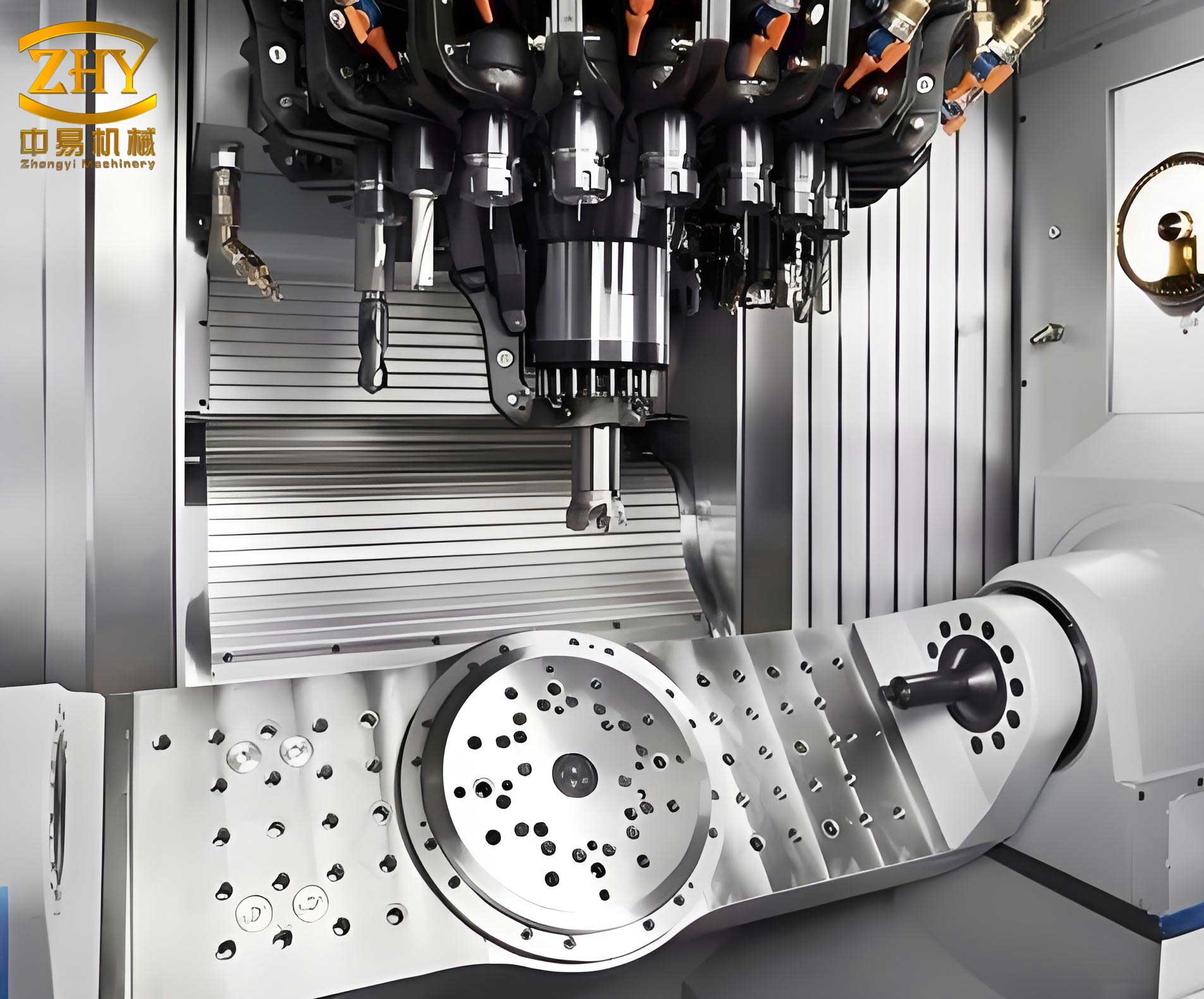
To quantify the problem and guide improvements, a detailed failure analysis was conducted. The primary defects were categorized, and their frequencies were meticulously recorded. The initial production data for several slip pillow models revealed alarmingly high scrap rates. This data is summarized in Table 1 below, which clearly illustrates the severity of the quality issue in our machine tool casting operations.
| Machine Tool Casting Model | Quantity Produced | Quantity Scrapped | Scrap Rate (%) |
|---|---|---|---|
| Gantry CNC Boring & Milling Machine (42200 Square Slip Pillow) | 13 | 6 | 46.15 |
| Gantry Machining Center (42160C Slip Pillow) | 4 | 4 | 100.00 |
| Gantry Machining Center (2740 Slip Pillow) | 4 | 3 | 75.00 |
| Gantry CNC Boring & Milling Machine (42125 Slip Pillow) | 4 | 2 | 50.00 |
A further breakdown of the defects responsible for this scrap is presented in Table 2. This analysis was crucial for pinpointing the root causes and directing our technical efforts.
| Defect Type | Occurrence Count | Percentage of Total Scrap (%) |
|---|---|---|
| Inclusions (Slag/Sand) | 4 | 26.67 |
| Gas Porosity | 5 | 33.33 |
| Shrinkage Porosity | 3 | 20.00 |
| Sand Erosion (Wash) | 3 | 20.00 |
The root cause analysis for these defects in machine tool castings led to several key insights. For inclusions, the primary contributors were residual loose sand in the mold cavity or core, insufficient core strength leading to erosion during pouring, and general mold wall instability under the hydraulic pressure of the molten metal. For gas porosity, the issues were twofold: inadequate venting of the mold cavity, especially in vertically poured configurations, and excessive gas generation from the resin-bonded sand due to suboptimal sand parameters (e.g., high fines content leading to over-use of binders). Shrinkage defects were primarily linked to inadequate feeding from risers and, in some cases, poor riser efficiency due to gas back-pressure (riser “boiling”).
The economic driver for solving these issues in machine tool casting is profound. Preliminary estimates suggested that reducing the scrap rate by just 5% for an annual production of 40,000 pieces could save approximately 290,000 currency units. Furthermore, improving process yield (metal yield) by 10% and eliminating certain cores could lead to combined annual savings exceeding 1 million currency units. This can be expressed through a generalized cost-saving model:
$$ \text{Annual Savings} = \Delta R_{scrap} \cdot P \cdot C_{unit} + \Delta Y \cdot P \cdot M_{iron} + S_{core} $$
Where:
- $\Delta R_{scrap}$ is the reduction in scrap rate (decimal),
- $P$ is the annual production volume,
- $C_{unit}$ is the cost per unit casting,
- $\Delta Y$ is the improvement in process yield (decimal),
- $M_{iron}$ is the cost of molten iron per unit weight,
- $S_{core}$ is the savings from core reduction.
Applying this model to our specific case, with $\Delta R_{scrap} = 0.05$, $P = 40,000$, and other terms as previously hinted, the total projected savings aligned with the reported figure. This formula is fundamental for evaluating any process change in machine tool casting.
Our improvement strategy was bifurcated into organizational/operational changes and fundamental process redesign. The first major initiative was the formation of a dedicated, specialized production cell for slip pillow castings. This cell consolidated core making, molding, and mold closing into one responsible team. This “specialist group” approach enhanced skill consistency, improved communication, and allowed for rapid in-process problem identification and resolution. It was a foundational step for implementing more sophisticated casting techniques for these critical machine tool castings.
The first technical solution implemented was the “Horizontal Molding, Vertical Pouring” (often called “flat-making, vertical casting”) method, designated as Scheme I. The logic was elegant: by constructing the mold horizontally for ease of core assembly and then rotating it to a vertical orientation for pouring, buoyancy forces would cause lighter impurities (slag, entrapped sand) to float upward. These impurities would then collect in a predetermined, non-critical area of the casting, which could be machined away later. This method showed immediate promise for controlling inclusion defects in machine tool castings. The mold rotation process, however, required meticulous control to prevent core shift.
Despite the improvement against inclusions, Scheme I did not fully resolve gas porosity. The vertical orientation, while good for slag flotation, constrained the available surface area for venting the mold cavity. The cross-sectional area of vent channels was often insufficient to handle the voluminous gas release from the resin sand. This led to the development and implementation of Scheme II: “Tilted Pouring.” In this configuration, the mold is set at a controlled angle (e.g., 15-30 degrees from horizontal) during pouring. This geometry provides a much larger effective area for gas escape through strategically placed vents and risers along the upper surfaces of the cavity. The tilt also aids in a smoother, more controlled filling sequence, reducing turbulence and secondary gas entrapment.
Parallel to these pouring method changes, several specific design and process parameters were optimized. For instance, the thickness of internal reinforcing ribs was increased from 12 mm to 15 mm to enhance core print stability and improve metal flow. Gating system design was refined to ensure laminar filling. Strict control over sand parameters was enforced to minimize binder usage and thus gas generation. The relationship between sand fineness, binder demand, and gas volume can be conceptually modeled as:
$$ V_{gas} \propto k_1 \cdot A_{sand} \cdot (R_{resin} + R_{catalyst}) $$
Where $V_{gas}$ is the volume of gas generated, $A_{sand}$ is the specific surface area of the sand (related to fineness), $R_{resin}$ and $R_{catalyst}$ are the addition ratios of resin and catalyst, and $k_1$ is a proportionality constant. By reducing fines (lowering $A_{sand}$) and optimizing the curing reaction, we effectively minimized $V_{gas}$ for our machine tool casting molds.
The results of implementing Scheme I (“Horizontal Molding, Vertical Pouring”) are shown in Table 3. While inclusion defects were mitigated, gas porosity remained a significant issue, indicating that the venting problem was not yet solved.
| Machine Tool Casting Model | Quantity Produced | Quantity Scrapped | Scrap Rate (%) | Predominant Defect |
|---|---|---|---|---|
| Gantry CNC Boring & Milling Machine (42200 Square Slip Pillow) | 4 | 2 | 50.00 | Gas Porosity |
| Gantry Machining Center (42160C Slip Pillow) | 11 | 7 | 63.64 | Gas Porosity |
The definitive breakthrough came with the full adoption of Scheme II, the “Tilted Pouring” method. The outcomes, detailed in Table 4, were dramatically different. The scrap rate plummeted, and defects like gross porosity and inclusions were virtually eliminated. Visual inspection after shakeout and during cleaning confirmed a marked improvement in surface and subsurface quality.
| Machine Tool Casting Model | Quantity Produced | Quantity Scrapped | Scrap Rate (%) |
|---|---|---|---|
| Gantry CNC Boring & Milling Machine (42200 Square Slip Pillow) | 8 | 1 | 12.50 |
| Gantry Machining Center (42160C Slip Pillow) | 2 | 0 | 0.00 |
The success of the tilted pouring technique for these challenging machine tool castings can be analyzed through fluid dynamics and heat transfer principles. The angle of tilt ($\theta$) optimizes the pressure head and the solidification gradient. A simplified model for the minimum vent area required ($A_{vent}$) to prevent gas back-pressure can be derived from the ideal gas law and the rate of gas generation:
$$ A_{vent} \geq \frac{\dot{V}_{gas} \cdot T_{pour}}{k_2 \cdot \sqrt{P_{atm} – P_{cavity}}} $$
Where $\dot{V}_{gas}$ is the gas generation rate, $T_{pour}$ is the pouring time, $P_{atm}$ is atmospheric pressure, $P_{cavity}$ is the pressure in the mold cavity, and $k_2$ is a constant. The tilted configuration naturally increases the perimeter length of the mold cavity’s upper boundary, allowing for a larger total $A_{vent}$ to be practically implemented through multiple vents and open risers. This directly addresses the core weakness of the vertical pouring scheme for gas-prone machine tool castings.
Furthermore, the improvement in process yield (metal yield) is a critical economic factor. The yield $\eta$ is defined as:
$$ \eta = \frac{W_{casting}}{W_{total metal poured}} \times 100\% $$
By optimizing the gating and risering system in conjunction with the tilted pour, we achieved a $\Delta \eta$ of approximately 10%. This directly reduces iron consumption and melting costs per machine tool casting produced. The cumulative financial impact, combining scrap reduction, yield improvement, and core cost savings, validated the entire project investment many times over.
In conclusion, the journey to perfecting the production of slip pillow machine tool castings underscores the importance of a holistic approach combining human resource management, rigorous process control, and innovative engineering principles. The establishment of a specialized production cell created the necessary platform for consistency and attention to detail. The evolution from a standard vertical pour to a carefully engineered tilted pouring process was the key technological leap that solved the intractable problems of gas porosity and inclusions. This methodology, centered on enhancing buoyancy-driven separation and maximizing venting capacity, has proven universally beneficial for complex, resin sand-cast machine tool components. The lessons learned and the models developed are now being applied to other challenging castings in our foundry, continuously pushing the boundaries of quality and efficiency in the machine tool casting sector. The future work involves further digital simulation of the tilted pouring process to optimize the angle $\theta$ for different casting geometries and the integration of real-time process monitoring to close the loop on quality control.