
In the pursuit of lightweighting in aerospace and aviation industries, magnesium alloys have gained significant attention due to their high strength-to-weight ratio. However, the inherent flammability of magnesium during melting and casting processes poses a critical challenge, particularly in sand casting applications. This review comprehensively examines the research progress in flame retardant technologies for magnesium alloys, focusing on both melting and casting stages, with an emphasis on sand casting processes. We explore the mechanisms, methodologies, and limitations of existing approaches, while proposing future directions for overcoming combustion issues in aerospace-grade resin-bonded sand casting.
The flammability of magnesium arises from its high reactivity with oxygen, especially at elevated temperatures. During sand casting, the interaction between molten magnesium and mold atmospheres can lead to violent oxidation and combustion, compromising casting quality and safety. While extensive studies have addressed flame retardation during melting, the casting phase—particularly in complex resin-bonded sand casting—remains underexplored. This article synthesizes current knowledge, highlighting the need for integrated strategies that account for the unique conditions of sand casting.
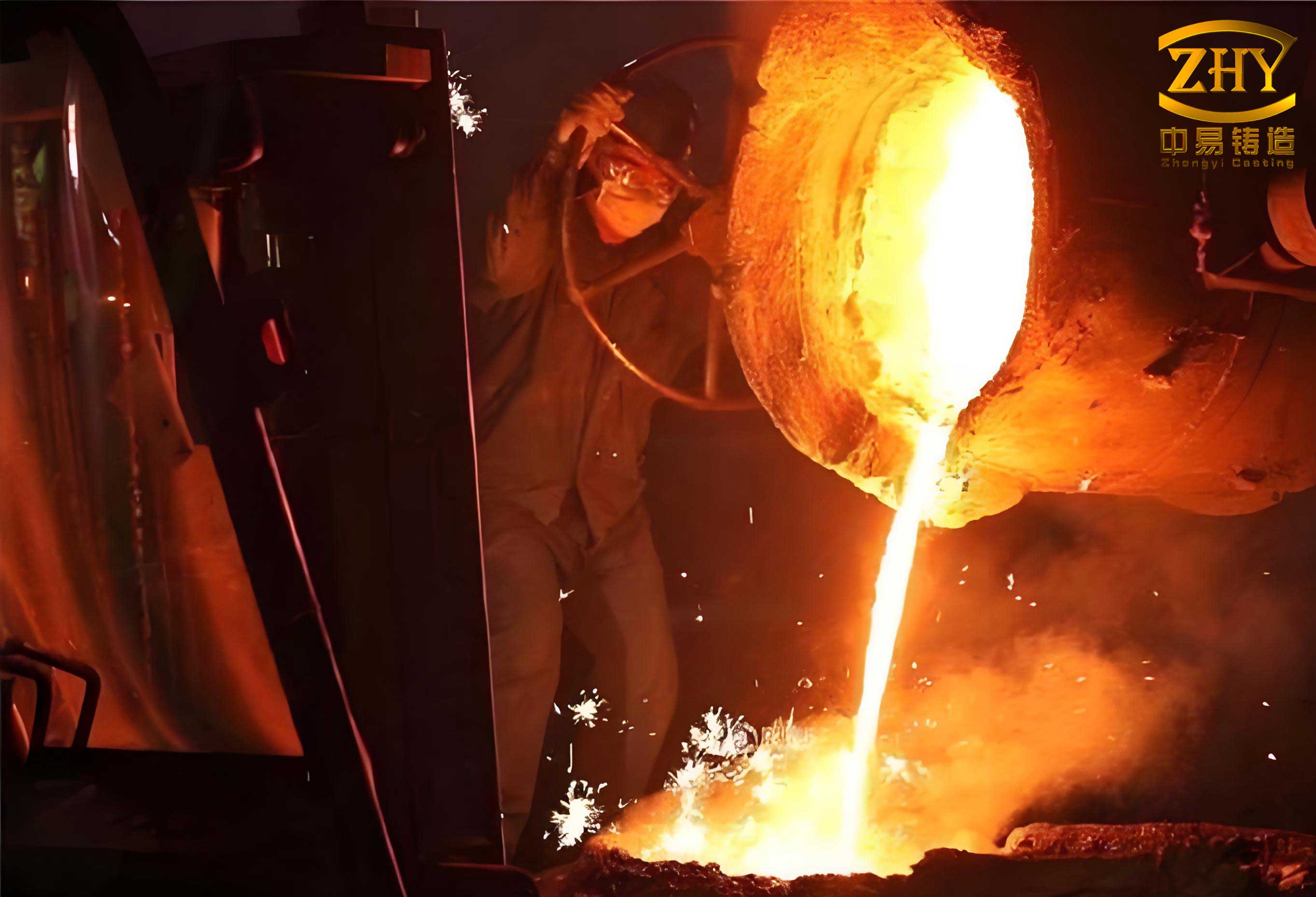
Flame Retardation During Melting: The melting process is a primary stage where magnesium alloys are exposed to oxidative environments. Three mainstream techniques have been developed: flux protection, gas shielding, and alloying modification.
1. Flux Protection: Traditional flux-based methods involve covering the melt with low-melting-point inorganic compounds that form a protective liquid layer. Common fluxes, such as RJ-series (e.g., RJ-2), comprise mixtures like MgCl₂, NaCl, KCl, BaCl₂, and CaF₂. The protective mechanism is based on physical isolation from air. However, fluxes introduce drawbacks, including secondary pollution, equipment corrosion, and degraded metallurgical quality. The reaction kinetics can be summarized by the formation of a barrier layer, but the exact composition varies with flux type. A generalized equation for flux action is:
$$ \text{Flux} + \text{Mg} \rightarrow \text{Protective Layer} $$
Despite effectiveness, environmental and operational concerns drive the search for alternatives in sand casting applications.
2. Gas Shielding: Gas protection methods utilize atmospheres to prevent oxidation. These are categorized into inert and reactive gases.
Inert Gases: Argon (Ar) is chemically inert with magnesium, but pure Ar fails to form a dense oxide film, allowing Mg vaporization. Thus, it is often mixed with small amounts of reactive gases like SO₂ or BF₃ to enhance protection. Nitrogen (N₂) is unsuitable due to its reaction with magnesium:
$$ 3\text{Mg} + \text{N}_2 = \text{Mg}_3\text{N}_2 $$
Mg₃N₂ is porous and non-protective, leading to continued combustion.
Reactive Gases: These gases react with magnesium to form dense, adherent oxide films. Common examples include CO₂, SO₂, and fluorine-containing gases like SF₆ and HFC-134a (1,1,1,2-tetrafluoroethane). The reaction with CO₂ forms a mixed oxide-carbonate layer:
$$ 2\text{Mg} + \text{CO}_2 = 2\text{MgO} + \text{C} $$
SF₆ has been widely used but is a potent greenhouse gas, prompting the adoption of HFC-134a. Studies show that HFC-134a offers superior flame retardation at casting temperatures, with a “residual effect” that prolongs protection even after gas removal. The surface film formation involves complex reactions, such as:
$$ \text{Mg} + \text{HFC-134a} \rightarrow \text{MgF}_2 + \text{Other Compounds} $$
Table 1 summarizes the key gas protection methods and their mechanisms.
| Gas Type | Examples | Mechanism | Advantages | Disadvantages |
|---|---|---|---|---|
| Inert | Ar (with additives) | Physical shielding; enhanced by reactive additives | Non-reactive; simple | Poor film formation; requires additives |
| Reactive | CO₂, SO₂ | Forms MgO-based films | Effective; low cost | Environmental concerns; corrosion |
| Fluorinated | SF₆, HFC-134a | Forms MgF₂-rich films | High efficiency; residual effect | Greenhouse gas impact; handling issues |
3. Alloying Modification: Adding specific elements to magnesium alloys can enhance flame resistance by promoting the formation of dense oxide scales. Key alloying elements include calcium (Ca), beryllium (Be), zinc (Zn), and rare earths (REs) like cerium (Ce), lanthanum (La), and yttrium (Y). For instance, Ca oxidizes to form CaO, which integrates into the MgO matrix, improving compactness. The effect can be expressed as:
$$ \text{Mg} + \text{Ca} + \text{O}_2 \rightarrow (\text{Mg,Ca})\text{O} \text{ (dense layer)} $$
RE elements are particularly effective due to their high oxygen affinity and ability to refine microstructures. Alloys such as Mg-Y-Ce demonstrate remarkable flame resistance, withstanding temperatures up to 900°C without protection. Combined additions, like Ce and Ca, synergistically improve both flame retardation and mechanical properties. Table 2 compares common alloying elements.
| Element | Typical Addition (wt%) | Flame Retardation Mechanism | Impact on Mechanics |
|---|---|---|---|
| Ca | 0.5-2 | Forms CaO, densifies oxide layer | May reduce ductility |
| Be | 0.001-0.01 | Thin BeO film; enhances oxidation resistance | Minimal effect at low levels |
| Zn | 1-6 | Promotes protective ZnO-MgO mixtures | Strengthens via solid solution |
| RE (e.g., Ce, Y) | 1-5 | Forms RE-rich oxides; refines grains | Improves strength and creep resistance |
While these melting-stage techniques are foundational, their direct application to sand casting is limited by interactions with mold materials and atmospheres.
Flame Retardation During Casting and Solidification: In sand casting, especially using resin-bonded sands, the mold cavity presents a dynamic environment where thermal decomposition gases can trigger combustion. This phase is critical for aerospace components, where large, complex geometries are produced via resin-bonded sand casting processes like PEP-SET.
The distinction between melting and casting protection lies in the atmosphere composition. During sand casting, the mold releases gases from binder decomposition, which may include CO₂, CO, NO, CH₄, and C₂H₆, depending on temperature. Research using Fourier-transform infrared spectroscopy has elucidated the sequential gas evolution: initially, NO, CO, and CO₂ peak, followed by hydrocarbons like CH₄ and C₂H₆. This atmosphere variability complicates flame control.
Traditional casting protection methods, such as argon shrouding in die casting, are impractical for large sand casting due to scale and complexity. Instead, active control of cavity atmospheres is proposed. Experimental setups simulating mold conditions have enabled direct observation of ignition processes. For example, pure magnesium exposed to PEP-SET resin sand decomposition gases shows progressive oxide growth, with thickness increasing with temperature and time. The oxidation kinetics can be modeled using parabolic rate laws:
$$ \Delta x^2 = k_p t $$
where $\Delta x$ is oxide thickness, $k_p$ is the parabolic rate constant, and $t$ is time. For magnesium in resin sand atmospheres, $k_p$ is influenced by gas composition, leading to varied ignition thresholds.
Key findings indicate that ignition in sand casting depends on critical temperature-gas concentration combinations. For Mg-Al alloys, the presence of CO₂ can suppress ignition, while hydrocarbons promote it. This has led to novel strategies like “hot spot control” in castings—designing thermal management to minimize high-temperature zones—and “active atmosphere control” by injecting inert or reactive gases into the mold cavity. However, these approaches are nascent and require optimization for resin-bonded sand casting.
Integrated Challenges in Aerospace Sand Casting: Aerospace magnesium alloy castings often utilize resin-bonded sand casting for its flexibility in producing large, intricate parts. The PEP-SET process, for instance, generates complex gas mixtures that challenge conventional flame retardants. Limitations of existing technologies include:
- Gas Protection Limitations: Gases like SF₆ or HFC-134a may not permeate complex mold cavities effectively, and their environmental impact is a concern.
- Alloying Constraints: While alloying improves flame resistance, it can alter mechanical properties, necessitating trade-offs in aerospace specifications.
- Mold Interaction: Resin decomposition gases are unavoidable, and their effects are not fully mitigated by melting-stage protections.
Thus, a holistic approach is needed, combining mold atmosphere analysis, alloy design, and in-situ protection. The ignition mechanism in sand casting can be described by a critical oxidation rate model:
$$ R_{\text{ignition}} = f(T, [O_2], [\text{decomposition gases}]) $$
where $R_{\text{ignition}}$ is the ignition rate, $T$ is temperature, and brackets denote concentrations. Research suggests that reducing localized temperatures and controlling gas fluxes are key to prevention.
Future Research Directions: To advance flame retardant technology for magnesium alloy sand casting, particularly in aerospace, we propose the following avenues:
- Mechanistic Studies: Deepen understanding of ignition kinetics in resin sand atmospheres using in-situ monitoring and computational fluid dynamics to simulate gas flows during pouring and solidification.
- Advanced Alloy Design: Develop multi-component alloys with optimized flame resistance and mechanical performance, leveraging machine learning for composition-property predictions.
- Smart Mold Technologies: Integrate gas injection systems or permeable coatings into sand casting molds to maintain protective atmospheres locally.
- Environmentally Friendly Gases: Explore alternatives to SF₆ and HFC-134a, such as diluted CO₂ mixtures or novel organic compounds with low global warming potential.
- Process Optimization: Combine thermal analysis with casting simulation to identify and mitigate hot spots, reducing ignition risks in complex geometries.
Table 3 outlines a research framework for addressing these challenges.
| Research Area | Key Objectives | Expected Outcomes |
|---|---|---|
| Ignition Mechanism | Quantify gas-magnesium reactions; identify critical thresholds | Predictive models for safe casting parameters |
| Alloy Development | Design alloys with >800°C ignition point and high strength | New magnesium grades for aerospace sand casting |
| Mold Atmosphere Control | Develop real-time gas monitoring and injection systems | Reduced combustion incidents; improved yield |
| Sustainability | Replace harmful gases; optimize flux-free processes | Greener sand casting practices |
Conclusion: Flame retardation in magnesium alloy sand casting is a multifaceted problem requiring integrated solutions across melting and casting stages. While melting protections like gas shielding and alloying offer foundations, the unique conditions of resin-bonded sand casting demand specialized approaches. Future progress hinges on elucidating ignition mechanisms in mold cavities and developing tailored technologies for aerospace applications. By combining advanced materials, process controls, and environmental considerations, we can overcome the combustion barrier, enabling safer and more reliable production of lightweight magnesium components through sand casting.
This review underscores the importance of continued innovation in sand casting flame retardant technology, with potential implications for broader metal casting industries. As research evolves, collaborative efforts between academia and industry will be crucial to translate findings into practical, scalable solutions for high-performance magnesium alloy castings.