
In the realm of lightweight structural materials, magnesium alloys stand out due to their exceptional properties, including low density, high specific strength, and excellent machinability. As a key player in the aerospace and automotive industries, I have witnessed a growing demand for components that are not only lighter but also more complex and precise. Traditional foundry technology often falls short when producing intricate, thin-walled parts, which is why investment casting has emerged as a pivotal solution. This article delves into the development of magnesium alloy investment casting, focusing on the challenges and innovations in metal-mold interactions, and explores how advanced foundry technology can overcome these hurdles to enable high-performance applications.
Magnesium alloys, with a density of approximately 1.74 g/cm³, are the lightest structural metals available today. Their high strength-to-weight ratio makes them ideal for reducing mass in aerospace systems, where every kilogram saved translates to significant fuel efficiency and operational benefits. In automotive applications, the integration of magnesium components can lead to substantial reductions in vehicle weight, thereby lowering emissions and improving sustainability. However, the reactive nature of magnesium poses significant challenges in foundry technology, particularly in processes like investment casting, where metal-mold reactions can compromise part quality. Through this discussion, we aim to shed light on the progress in mitigating these issues and advancing magnesium alloy investment casting foundry technology.
Overview of Magnesium Alloy Forming Techniques
Magnesium alloys can be processed through various forming methods, broadly categorized into casting and plastic deformation. Casting techniques dominate the industry, accounting for over 90% of magnesium alloy usage, due to their versatility and cost-effectiveness. Common casting methods include sand casting, die casting, and investment casting, each with distinct advantages. For instance, sand casting is suitable for large, low-volume productions, while die casting excels in high-volume manufacturing of components with good surface finish. Plastic deformation methods, such as extrusion and forging, offer superior mechanical properties but are limited by magnesium’s poor room-temperature ductility and higher processing costs. In our evaluation of foundry technology, investment casting stands out for its ability to produce complex, near-net-shape parts with minimal post-processing, making it a preferred choice for aerospace components that require precision and lightweight design.
| Casting Method | Advantages | Limitations | Typical Applications |
|---|---|---|---|
| Sand Casting | Versatile for large parts; low tooling cost | Poor surface finish; high porosity | Engine blocks; structural frames |
| Die Casting | High production rate; good dimensional accuracy | Limited to simple geometries; high equipment cost | Automotive housings; electronic enclosures |
| Investment Casting | Excellent for complex shapes; high precision | Susceptible to metal-mold reactions; longer cycle time | Aerospace turbines; medical implants |
The evolution of foundry technology has enabled the adoption of investment casting for magnesium alloys, leveraging its capability to form intricate geometries that are otherwise unachievable with conventional methods. This process involves creating a wax pattern, building a ceramic shell around it, and then melting out the wax to form a mold cavity for molten metal. The resulting castings exhibit dimensional accuracies within CT4-6 grades and surface roughness values as low as Ra 3.2 μm, meeting the stringent requirements of modern aerospace foundry technology.
Key Characteristics of Investment Casting in Foundry Technology
Investment casting, often referred to as lost-wax casting, offers unique benefits that align with the demands of advanced foundry technology for magnesium alloys. The process begins with wax pattern fabrication, which can be produced using traditional methods or additive manufacturing techniques like 3D printing. This flexibility allows for the creation of highly complex assemblies by welding individual wax components into a single unit. Subsequent steps include shell building, dewaxing, and firing, followed by molten metal pouring. One of the standout features of this foundry technology is its ability to achieve near-net-shape forming, reducing the need for extensive machining and material waste.
In our experience, investment casting foundry technology excels in producing thin-walled components with wall thicknesses as low as 0.5 mm and small features like sub-millimeter holes. This is particularly advantageous for aerospace applications, where weight reduction is critical. Moreover, the integration of simulation software in foundry technology allows for predictive modeling of filling and solidification processes, identifying potential defects such as shrinkage porosity or misruns early in the design phase. This proactive approach minimizes development time and cost, enhancing the overall efficiency of magnesium alloy foundry technology.
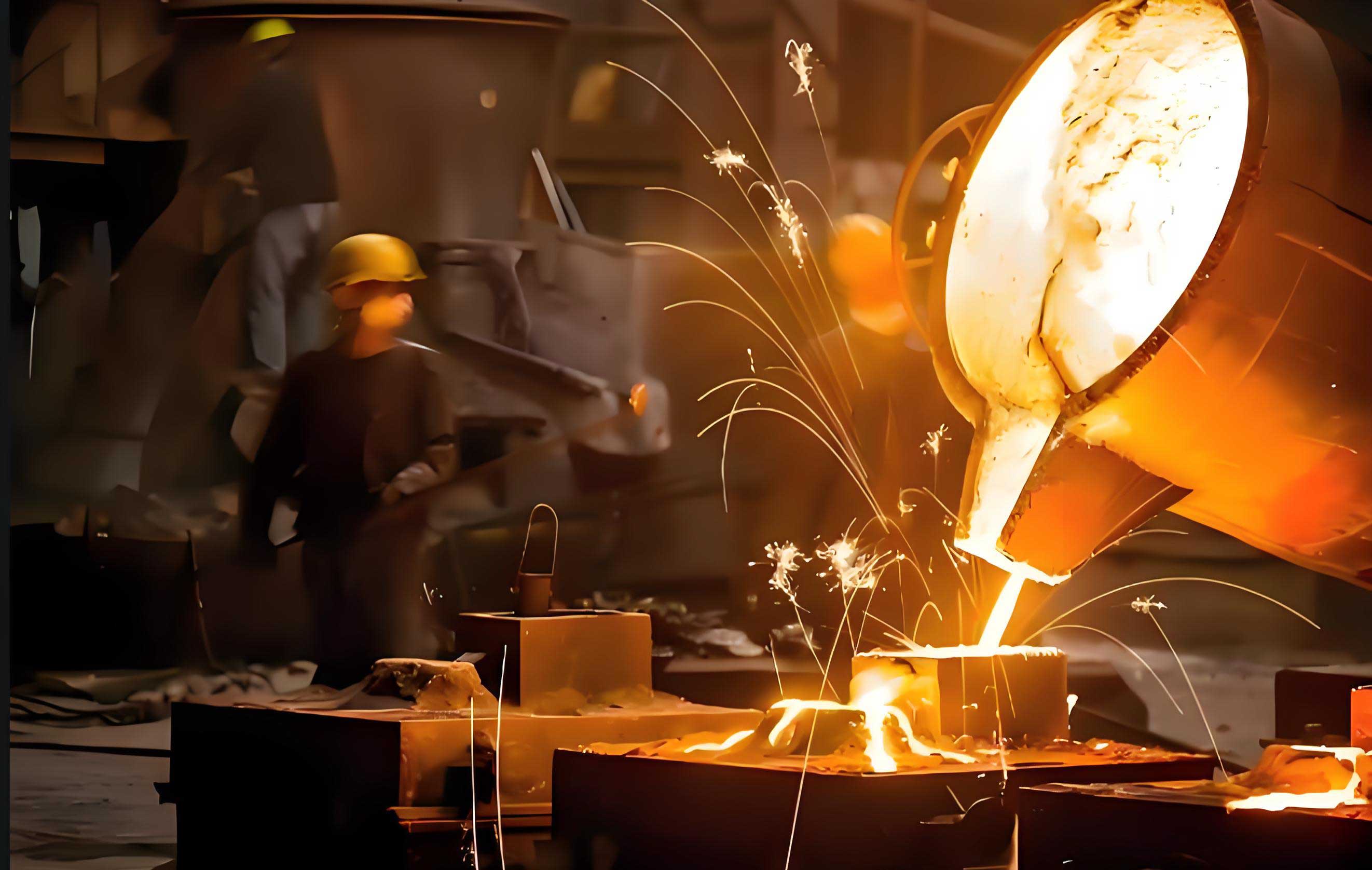
The table below summarizes the advantages of investment casting foundry technology compared to other methods, highlighting its relevance to magnesium alloy processing:
| Aspect | Benefit in Investment Casting | Impact on Magnesium Alloy Applications |
|---|---|---|
| Design Flexibility | Enables complex geometries and internal features | Ideal for integrated aerospace components |
| Dimensional Accuracy | High precision with tight tolerances | Reduces post-casting machining and cost |
| Surface Quality | Smooth surfaces with minimal roughness | Enhances fatigue resistance and aesthetics |
| Material Utilization | Near-net-shape forming minimizes waste | Supports sustainable foundry technology practices |
Metal-Mold Interface Reactions in Magnesium Investment Casting
The high reactivity of magnesium presents a significant challenge in investment casting foundry technology, leading to undesirable metal-mold interactions. When molten magnesium contacts the ceramic shell, it can undergo exothermic reactions with oxygen, water vapor, or oxide components in the mold material. These reactions not only degrade the casting surface but can also cause burning or incomplete filling. Based on thermodynamic principles, the propensity for such reactions can be evaluated using Gibbs free energy calculations. For example, the reaction between magnesium and silica can be expressed as:
$$2Mg + SiO_2 \rightarrow 2MgO + Si$$
This reaction is spontaneous at typical casting temperatures due to the negative Gibbs free energy change, underscoring the inherent instability in magnesium foundry technology. The Elingham diagram, which plots the standard Gibbs free energy of formation versus temperature, illustrates that most oxides have higher free energies than MgO, making them susceptible to reduction by magnesium. In practice, we have observed three primary types of interface reactions in magnesium investment casting foundry technology:
- Direct reaction between molten metal and mold constituents, leading to the formation of intermetallic compounds or gases.
- Decomposition of mold materials followed by reaction with magnesium, such as the release of oxygen from silicates.
- Interaction with residual atmosphere in the mold cavity, resulting in oxidation or hydrogen evolution.
To quantify these reactions, we can use the following general formula for the Gibbs free energy change, ΔG:
$$\Delta G = \Delta H – T\Delta S$$
where ΔH is the enthalpy change, T is the temperature in Kelvin, and ΔS is the entropy change. For magnesium oxidation:
$$2Mg + O_2 \rightarrow 2MgO \quad \Delta G^\circ = -1202 \, \text{kJ/mol} \, \text{at} \, 700^\circ\text{C}$$
This highly negative value indicates a strong driving force for reaction, necessitating protective measures in foundry technology. Our research has shown that the severity of these reactions increases with mold temperature and exposure time, emphasizing the need for optimized process parameters in magnesium investment casting foundry technology.
Protective Strategies in Magnesium Investment Casting Foundry Technology
To mitigate metal-mold reactions, several protective strategies have been developed in magnesium investment casting foundry technology. These can be broadly classified into gas protection, flux inhibitors, and mold material selection. Each approach aims to create a barrier between the molten magnesium and the mold environment, thereby preserving casting integrity.
Gas Protection Methods
Gas shielding is a widely adopted technique in foundry technology to prevent oxidation and reaction during pouring. Common gases include SF6, CO2, and SO2, often used in mixtures with inert carriers like argon or nitrogen. SF6, despite its environmental concerns, forms a protective layer of MgF2 on the metal surface through reactions such as:
$$2Mg + O_2 + SF_6 \rightarrow 2MgF_2(s) + SO_2F_2$$
This layer enhances the density of the native oxide film, reducing permeability to oxygen. In our trials with magnesium investment casting foundry technology, we found that a mixture of 1% SF6 in CO2 provided effective protection for shells made from SiO2 or ZrO2, resulting in smooth casting surfaces. However, due to the high global warming potential of SF6, alternatives like HFC-134a are being explored in sustainable foundry technology practices. The table below compares different gas protection methods:
| Gas Type | Mechanism | Advantages | Disadvantages |
|---|---|---|---|
| SF6 Mixtures | Forms MgF2 barrier | High effectiveness; wide usage | Greenhouse gas; regulated |
| CO2-Based | Displaces air; minor reaction | Low cost; readily available | Less effective alone |
| SO2 | Generates MgS compounds | Good protection; no GWP | Toxic; health hazards |
| HFC-134a | Environmentally friendly alternative | Non-toxic; effective | Higher cost; emerging technology |
Flux Inhibitors
Flux inhibitors, such as KBF4 and NaBF4, are incorporated into the mold system to release protective gases like BF3 upon heating. These compounds decompose at elevated temperatures, forming a gaseous shield that prevents metal-mold reactions. For instance, the decomposition of KBF4 can be represented as:
$$KBF_4 \rightarrow KF + BF_3$$
In foundry technology applications, we have tested various incorporation methods, including mixing inhibitors into slurry or post-coating the shell. However, challenges arise during preheating, where premature decomposition can reduce efficacy. For example, immersing shells in saturated NaBF4 solutions before preheating to 450°C showed promising results in minimizing interface reactions. Boron-based inhibitors, such as boric acid, undergo thermal decomposition to form B2O3, which reacts with MgO to create a protective glaze:
$$H_3BO_3 \rightarrow H_2O + HBO_2 \rightarrow H_2B_4O_7 \rightarrow 2B_2O_3 + H_2O$$
$$3MgO + B_2O_3 \rightarrow 3MgO \cdot B_2O_3$$
This reaction sequence highlights the importance of inhibitor stability in foundry technology processes. Our experiments indicate that sulfur-based compounds, like pyrite, offer superior inhibition due to their higher decomposition temperatures and effective barrier formation.
Mold Material Selection
Choosing appropriate mold materials is critical in magnesium investment casting foundry technology to reduce reactivity. Traditional materials like Al2O3 and ZrSiO4 are prone to reaction with magnesium, as predicted by thermodynamic analysis. Alternative materials such as Y2O3-coated shells have demonstrated excellent resistance due to their high stability. The Gibbs free energy for Y2O3 is more negative than that of MgO, making it less likely to be reduced:
$$\Delta G_f^\circ (Y_2O_3) < \Delta G_f^\circ (MgO)$$
In our foundry technology trials, Y2O3 coatings applied to shell interiors successfully prevented reactions in AZ91D-1CaO alloys, yielding high-quality thin-walled castings. Additionally, materials like CaZrO3 exhibit better thermal stability compared to silicates, as they avoid silicon-related reactions. The following table summarizes key mold materials and their performance in magnesium investment casting foundry technology:
| Material | Thermal Stability | Reactivity with Magnesium | Recommendations |
|---|---|---|---|
| Al2O3 | Moderate | High; forms MgAl2O4 | Use with inhibitors; not ideal for high temps |
| ZrSiO4 | Good | Moderate; wetting issues | Suitable for complex shapes; requires gas protection |
| CaZrO3 | Excellent | Low; minimal reaction | Preferred for precision castings; higher cost |
| Y2O3 Coatings | Very High | Very low; effective barrier | Ideal for reactive alloys; needs adhesion improvement |
Current Research and Developments in Foundry Technology
Recent advancements in magnesium investment casting foundry technology focus on optimizing process parameters and integrating novel techniques. For instance, in-situ melting methods, where magnesium chips are melted directly within the mold under controlled atmospheres, have shown potential in reducing oxidation and improving casting quality. This approach leverages rapid solidification in thin-shell molds to minimize metal-mold interaction times. In our studies, we found that refining fluxes containing MgCl2, KCl, and CaF2 can lower melting temperatures and enhance surface finish, further advancing foundry technology for magnesium alloys.
Moreover, computational modeling has become an integral part of modern foundry technology, enabling the simulation of fluid flow, heat transfer, and stress distribution during casting. By inputting parameters such as pouring temperature and mold preheat, we can predict defect formation and optimize gating systems. For example, the governing equation for heat transfer during solidification can be expressed as:
$$\frac{\partial T}{\partial t} = \alpha \nabla^2 T + \frac{Q}{\rho c_p}$$
where T is temperature, t is time, α is thermal diffusivity, Q is heat source, ρ is density, and c_p is specific heat. Such models help in fine-tuning foundry technology processes to achieve desirable microstructures and mechanical properties.
Looking ahead, the integration of additive manufacturing with investment casting foundry technology promises to revolutionize the production of large, complex magnesium components. By 3D printing wax patterns or even direct shell fabrication, we can reduce lead times and expand design possibilities. Additionally, environmental considerations are driving research into green inhibitors and recyclable mold materials, aligning foundry technology with sustainable development goals.
Conclusion
In conclusion, magnesium alloy investment casting represents a cutting-edge frontier in foundry technology, offering unparalleled advantages for producing lightweight, complex components in aerospace and other high-performance sectors. Despite challenges posed by metal-mold reactions, ongoing research into protective gases, inhibitors, and advanced mold materials has significantly improved process reliability. As foundry technology continues to evolve, we anticipate further innovations that will enhance the efficiency and sustainability of magnesium casting, solidifying its role in the future of manufacturing. Through collaborative efforts in research and development, the full potential of magnesium alloys in investment casting foundry technology can be realized, paving the way for next-generation applications.