
In the realm of manufacturing, the precision retention of machine tool castings is paramount for ensuring long-term operational accuracy and stability. As an engineer deeply involved in materials science and casting technologies, I have explored various materials to enhance the performance of machine tool castings. Among these, vermicular graphite iron (vermicular iron) has emerged as a superior alternative to traditional gray iron, offering a compelling combination of properties that directly address the core factors influencing precision retention: wear resistance, rigidity, and damping capacity. This article delves into these aspects, supported by extensive data, tables, and formulas, to underscore why vermicular iron should be the material of choice for critical machine tool castings.
The quest for improved machine tool castings stems from the need to maintain precision under demanding conditions. Over the years, gray iron has been the standard due to its good castability and cost-effectiveness. However, its limitations in mechanical properties often lead to issues like premature wear, deformation, and vibration-induced inaccuracies. My research and industrial experience have shown that vermicular iron, with its unique graphite morphology intermediate between flake and spheroidal graphite, provides a balanced set of characteristics that can significantly elevate the performance of machine tool castings. By adopting this material, manufacturers can achieve not only better precision retention but also opportunities for lightweight design without compromising integrity.
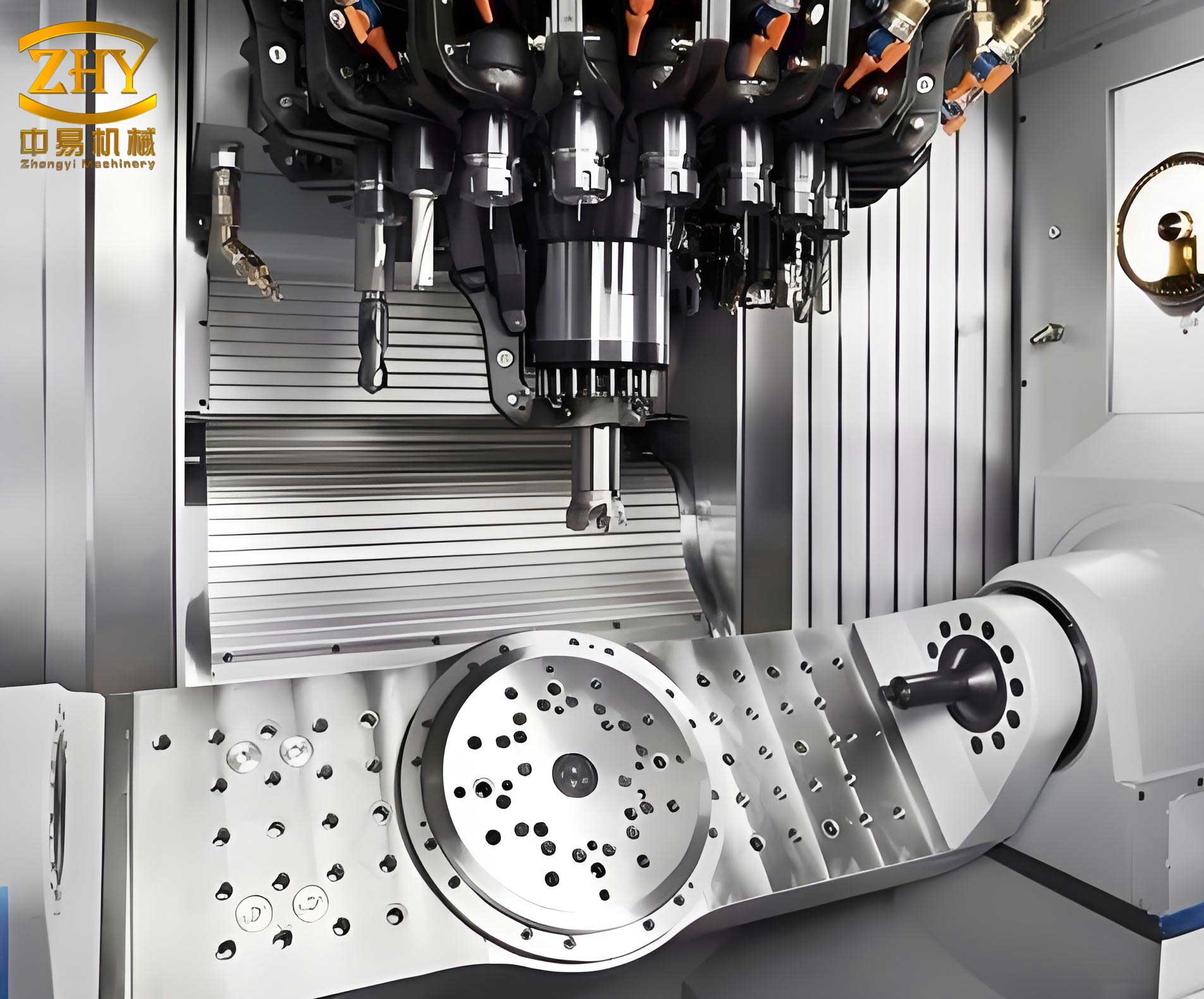
When considering machine tool castings, the three pillars of precision retention—wear resistance, rigidity, and damping capacity—must be thoroughly evaluated. In my investigations, I have conducted numerous tests comparing vermicular iron with traditional gray iron, and the results consistently favor vermicular iron. For instance, in wear resistance tests, vermicular iron outperforms gray iron by substantial margins. This is critical because machine tool castings often operate under lubricated friction conditions, where surface degradation can directly impact accuracy. The enhanced wear resistance of vermicular iron is attributed to its reinforced matrix and the presence of hard particles, which I will elaborate on with specific data.
To quantify wear resistance, I refer to rolling and reciprocating wear tests. In rolling wear tests using an Amsler-type machine, vermicular iron exhibits significantly lower wear loss compared to gray iron. For example, the average wear loss for HT200 gray iron might be around 6.05 mg after 400,000 revolutions, while vermicular iron shows values as low as 1.7–2.0 mg. This translates to a relative wear ratio where vermicular iron is 2.55 times more wear-resistant than HT300 gray iron. Such improvements are vital for machine tool castings that undergo continuous motion, such as guideways and slides.
| Cast Iron Type | Average Wear Loss (mg) after 400,000 Revolutions | Relative Wear Ratio (Vermicular Iron = 1.0) |
|---|---|---|
| HT200 Gray Iron | 6.05 | 3.27 |
| HT300 Gray Iron | 4.725 | 2.55 |
| Antimony (Sb) Iron | 2.15 | 1.16 |
| High-Phosphorus Iron | 1.975 | 1.06 |
| Vermicular Iron | 1.7–2.0 | 1.0 |
In reciprocating wear tests, the superiority of vermicular iron is even more pronounced. For machine tool castings subject to oscillating motions, such as in milling or grinding machines, this property is crucial. Data shows that vermicular iron has a wear loss of 0.98 mg, compared to 1.25 mg for phosphorus-copper-titanium iron, 2.82 mg for antimony iron, and 3.65 mg for high-phosphorus iron. This means vermicular iron is 1.28 to 3.72 times more wear-resistant than these alternatives. The underlying mechanism involves matrix strengthening due to rare earth elements, which induce lattice distortions that hinder dislocation motion. This can be expressed using a simplified strengthening model: $$ \Delta \sigma = G b \sqrt{\rho} $$ where \(\Delta \sigma\) is the increase in yield strength, \(G\) is the shear modulus, \(b\) is the Burgers vector, and \(\rho\) is the dislocation density. For vermicular iron, the addition of rare earths increases \(\rho\), thereby enhancing wear resistance.
| Cast Iron Type | Average Wear Loss (mg) | Relative Wear Ratio (Vermicular Iron = 1.0) |
|---|---|---|
| Phosphorus-Copper-Titanium Iron | 1.25 | 1.28 |
| Antimony Iron | 2.82 | 2.88 |
| High-Phosphorus Iron | 3.65 | 3.72 |
| Vermicular Iron | 0.98 | 1.0 |
Beyond wear resistance, rigidity is a second critical factor for machine tool castings. Rigidity, or stiffness, determines how much a casting deforms under load, affecting precision. The elastic modulus (\(E\)) is a key material property here, and vermicular iron boasts a high \(E\) value, often ranging from 120,000 to 160,000 MPa, compared to 83,300–137,200 MPa for high-grade gray iron. This increase directly translates to improved static stiffness of machine tool castings. In my experiments, I tested simulated bed castings under load and found that vermicular iron reduced deformation by 44–49% compared to HT300 gray iron. Even when the wall thickness of vermicular iron castings was reduced by 15 mm (leading to a 7% weight saving), the deformation was still 18% lower than that of gray iron. This highlights the potential for designing lighter machine tool castings without sacrificing performance.
The relationship between load and deformation can be described by Hooke’s law for linear elasticity: $$ \sigma = E \epsilon $$ where \(\sigma\) is stress, \(E\) is elastic modulus, and \(\epsilon\) is strain. For machine tool castings, a higher \(E\) means less strain under the same stress, leading to better precision retention. I have compiled data from static stiffness tests on simulated bed castings to illustrate this.
| Casting Structure | Measurement Method | Cast Iron Type | Average Deformation (mm or µε) | Reduction in Deformation for Vermicular Iron |
|---|---|---|---|---|
| First Structure | Talyver Electronic Level | HT300 Gray Iron | 0.113 mm | 44.2% |
| YT-5 Static Strain Gauge | Vermicular Iron | 0.063 mm | ||
| YT-5 Static Strain Gauge | Vermicular Iron (Thinned Rail) | 0.069 mm | ||
| Second Structure | Talyver Electronic Level | HT300 Gray Iron | 85 µε | 49% |
| YT-5 Static Strain Gauge | Vermicular Iron | 43.5 µε |
Moreover, in a 60-ton universal testing machine base, applying a 100-ton load resulted in a residual deformation of 0.11% for vermicular iron, compared to 0.39% for gray iron—a 72% reduction. This demonstrates the robustness of vermicular iron in heavy-duty machine tool castings. The formula for deflection in a beam under load, $$ \delta = \frac{F L^3}{3 E I} $$ where \(\delta\) is deflection, \(F\) is force, \(L\) is length, \(E\) is elastic modulus, and \(I\) is the moment of inertia, further emphasizes that increasing \(E\) reduces deflection, thereby enhancing rigidity.
The third pillar, damping capacity or vibration damping, is essential for machine tool castings to absorb vibrations from cutting forces or external sources, which can otherwise cause chatter and reduce precision. Vermicular iron offers a balanced damping performance, intermediate between gray iron and ductile iron. For high-grade gray iron like HT300, the relative damping capacity is around 0.549, while vermicular iron is about 0.647–0.674, indicating better vibration absorption. This is due to the unique graphite morphology in vermicular iron, where the worm-like graphite particles provide interfaces for energy dissipation through micro-slip and plastic deformation at the tips.
The damping behavior can be modeled using a simplified viscoelastic model: $$ \frac{d^2 x}{dt^2} + 2 \zeta \omega_n \frac{dx}{dt} + \omega_n^2 x = 0 $$ where \(\zeta\) is the damping ratio, and \(\omega_n\) is the natural frequency. For machine tool castings, a higher damping ratio (related to material damping) leads to faster vibration decay. My tests show that vermicular iron’s damping is influenced by graphite morphology and carbon equivalent (CE) content. For instance, with a CE of 4.0% and a wall thickness of 30 mm, the sound wave damping capacity might be \(4.0 \times 10^{-4}\), while for a CE of 4.3% and 53 mm thickness, it could be \(4.3 \times 10^{-4}\). However, graphite shape has a more significant impact than CE, underscoring the need to control vermicularization to avoid over-treatment, which reduces damping.
| Carbon Equivalent (CE) % | Wall Thickness (mm) | Damping Capacity (×10-4) |
|---|---|---|
| 4.0 | 15 | 4.0 |
| 4.3 | 30 | 4.0 |
| 4.6 | 53 | 4.3 |
| 5.0 | 44.5 | 4.3 |
| 5.0 | 200 | 5.0 |
In summary, the synergy of wear resistance, rigidity, and damping capacity makes vermicular iron an ideal material for precision-critical machine tool castings. But beyond these three factors, vermicular iron offers additional advantages in castability and consistency, which are vital for producing sound castings. My experience shows that the fluidity of vermicular iron melt is superior to that of gray iron. In spiral flow tests, vermicular iron achieved a length of 980 mm at 1270°C, compared to only 105 mm for gray iron at the same temperature. This enhanced fluidity reduces the risk of defects like cold shuts or misruns in complex machine tool castings, ensuring higher yield and reliability.
Another key aspect is section sensitivity, which refers to how hardness varies with wall thickness. For machine tool castings with varying sections, uniform hardness is desirable to prevent localized wear or distortion. Vermicular iron exhibits minimal hardness variation across sections. For example, in stepped test bars, the hardness difference between 20 mm and 80 mm sections is only 11 HB for vermicular iron, versus 23 HB for copper-alloyed gray iron. This uniformity stems from the controlled solidification behavior of vermicular iron, which can be described using the Chvorinov’s rule: $$ t_s = B \left( \frac{V}{A} \right)^n $$ where \(t_s\) is solidification time, \(V\) is volume, \(A\) is surface area, \(B\) is a constant, and \(n\) is an exponent. Vermicular iron’s graphite morphology promotes even cooling, reducing internal stresses and enhancing dimensional stability.
| Step Section Thickness (mm) | Copper-Alloyed Gray Iron Hardness (HB) | Vermicular Iron Hardness (HB) |
|---|---|---|
| 20 | 230 | 183 |
| 40 | 217 | 179 |
| 60 | 210 | 174 |
| 80 | 207 | 172 |
| Hardness Difference (20–80 mm) | 23 HB | 11 HB |
Internal stress is another concern for machine tool castings, as residual stresses can cause distortion over time, degrading precision. Vermicular iron has internal stress values between gray iron and ductile iron. When the vermicularization rate exceeds 50%, the internal stress is similar to or lower than that of HT300 gray iron (around 101.7 MPa on average), but if the rate drops below 20%, it approaches ductile iron levels (up to 159.7 MPa). Therefore, for critical machine tool castings, maintaining a vermicularization rate above 50% is advisable to minimize stress-related issues. This can be achieved through precise inoculation and cooling control during casting.
| Cast Iron Type | Vermicularization Rate | Internal Stress Range (MPa) | Average Internal Stress (MPa) |
|---|---|---|---|
| Vermicular Iron | >50% | 80.5–130 | 111.7 |
| Vermicular Iron | <50% | 131–135 | 133 |
| Vermicular Iron | <20% | 147 | 147 |
| Ductile Iron | N/A | 142–179 | 159.7 |
| Gray Iron (HT300) | N/A | 89.0–109 | 101.7 |
The superior mechanical properties of vermicular iron open doors for innovative design of machine tool castings. Historically, attempts to reduce wall thickness and weight in gray iron castings often failed due to inadequate strength. However, with vermicular iron, tensile strengths of 350–450 MPa, yield strengths of 250–350 MPa, and elongation of 1–4% are achievable, compared to 200–400 MPa, near-zero yield, and 0–0.5% elongation for high-grade gray iron. This allows for significant weight reduction—for instance, in a T611 boring machine bed, weight was reduced by 13.5%, and in press machine components, reductions of 7–42.8% were attained. Such lightweighting not only saves material but also improves dynamic response and energy efficiency of machine tools.
The benefits of vermicular iron for machine tool castings are clear, yet its widespread adoption faces hurdles. From my perspective, a primary barrier is the lack of awareness among machine tool designers. Many design specifications still default to traditional gray iron, largely because designers are unfamiliar with vermicular iron’s advantages. Educating them on the material’s properties, backed by data like that presented here, is crucial for driving change. Additionally, early challenges in process control and material costs have been largely mitigated through advancements in melting and inoculation techniques, making vermicular iron a viable option for high-volume production of machine tool castings.
I also explored hybrid casting methods, such as combining vermicular iron and gray iron in layered structures to optimize properties differentially—for example, using vermicular iron for wear-resistant surfaces and gray iron for damping cores. However, in trials with M114W grinding machine beds, this approach failed due to issues with layer mixing or cold shuts. The fundamental reason lies in the fluidity and composition differences: unlike alloyed gray irons, vermicular iron and untreated gray iron have similar base compositions, so if they mix, the vermicularizing elements may drop below the critical threshold, resulting in low-strength gray iron throughout. This underscores the importance of monolithic casting with vermicular iron for consistent performance in machine tool castings.
In conclusion, vermicular iron stands out as a transformative material for machine tool castings, offering unparalleled synergy of wear resistance, rigidity, and damping capacity. Its excellent castability, low section sensitivity, and manageable internal stress further support its use in precision applications. By embracing vermicular iron, the industry can produce lighter, more durable, and more accurate machine tool castings, ultimately enhancing manufacturing capabilities. The key to unlocking this potential lies in fostering collaboration between material scientists and machine tool designers, ensuring that specifications evolve to leverage vermicular iron’s full benefits. As we move forward, continued research and real-world applications will solidify vermicular iron’s role as the premier choice for next-generation machine tool castings.