
The journey of molten metal transforming into a complex, high-integrity component is a cornerstone of modern manufacturing. Among various casting techniques, sand casting reigns supreme for its versatility, cost-effectiveness, and ability to produce parts ranging from intricate engine blocks to massive industrial machinery. The reliability and performance of these final sand casting products are inextricably linked to the controlled solidification of metal within the mold. As the industry pushes towards lighter, stronger, and more geometrically complex parts, the traditional trial-and-error approach to process design becomes economically and temporally prohibitive. This has propelled Computer-Aided Engineering (CAE) simulation to the forefront, allowing engineers to virtually peer inside the casting process to predict defects, optimize parameters, and ensure quality before a single mold is made.
However, the fidelity of these digital twins hinges on the accuracy of their input parameters. While material properties and initial conditions are often obtainable, one boundary condition remains notoriously elusive: the Interfacial Heat Transfer Coefficient (IHTC). This coefficient quantifies the heat transfer rate across the dynamic interface between the solidifying casting and the mold. In sand casting products, this interface is not static. As the metal cools and contracts, and the sand mold (and especially internal sand cores) heats and potentially expands, a microscopic air gap forms and evolves. This gap presents a significant thermal resistance, dramatically altering the cooling rate. The IHTC is therefore a complex function of material properties, interfacial pressure, surface roughness, and, critically, the geometry of the casting itself. Unlike in permanent mold casting, directly measuring this evolving gap in a sand mold is nearly impossible. Consequently, accurate IHTC data for sand casting, particularly for core-bound internal surfaces, has been sparse, often forcing simulations to rely on estimated constants, which compromises predictive accuracy.
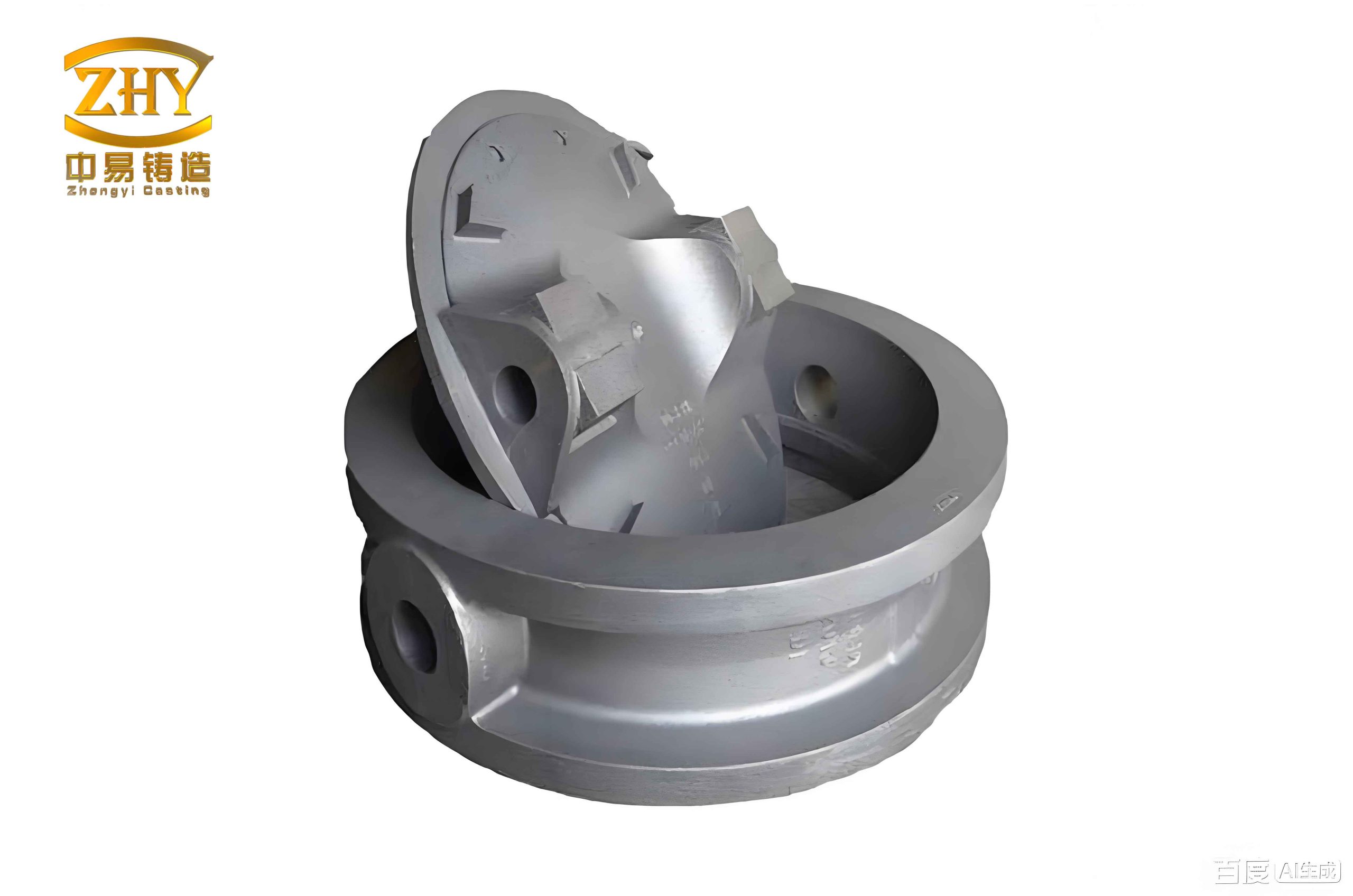
This work addresses this critical knowledge gap by presenting a comprehensive experimental and numerical investigation into the IHTC for ZL101 aluminum alloy cast in resin-bonded sand molds. We move beyond simple geometries to systematically study how the shape and dimensions of a casting—specifically, plate-like sections and annular rings with internal cores—govern the IHTC’s behavior throughout solidification. Our goal is to replace estimations with reliable, geometry-aware IHTC data, thereby elevating the precision of CAE simulations for sand casting products.
The Core Challenge: Defining and Determining the IHTC
At its heart, the IHTC (h) is a macroscopic representation of the combined heat transfer mechanisms—conduction, convection, and radiation—across the casting-mold interface. It is defined by Newton’s law of cooling:
$$ q = h (T_{\text{casting}} – T_{\text{mold}}) $$
where \( q \) is the heat flux density (W/m²), and \( T_{\text{casting}} \) and \( T_{\text{mold}} \) are the temperatures at the interface on the casting and mold sides, respectively. The central difficulty is that \( h \) is not a material constant; it is a dynamic parameter that evolves as the interface condition changes from perfect contact upon pouring to a gap-dominated state during solidification and cooling.
Solving for \( h \) directly is an “inverse heat conduction problem” (IHCP). These problems are mathematically “ill-posed,” meaning small errors in measured temperature data can lead to large, unstable fluctuations in the calculated result. Our methodology employs a robust approach to navigate this instability:
- Temperature Measurement: Thermocouples are embedded at known locations within both the casting and the sand mold/core during the pour.
- Mathematical Modeling: A one-dimensional transient heat conduction model is built for the sand mold and core.
- Inverse Algorithm: The Beck nonlinear estimation technique is used. This method, known for its stability, works by iteratively adjusting the unknown boundary heat flux \( q(t) \) at the interface until the temperatures calculated by the model match the temperatures measured by the embedded thermocouples within the sand.
- Calculation of IHTC: Once the interfacial heat flux \( q \) and the corresponding interface temperatures are known, the IHTC \( h \) is calculated directly from its defining equation.
This process allows us to back-calculate the thermal history at the interface itself, a region impossible to instrument directly without disturbing the very phenomenon we wish to measure.
Experimental Design: Probing Geometry’s Influence
To isolate the effect of geometry on the IHTC, we designed and instrumented four distinct casting configurations. All castings used ZL101 aluminum alloy, poured at 705°C, with molds made from furan resin-bonded sand. The key variables were the casting shape and the confinement provided by sand cores.
| Casting Type | Key Dimensions (mm) | Primary Investigation Focus |
|---|---|---|
| Flat Plate | Thickness: 50, Planar: 150 x 150 | Baseline 1D heat transfer; unrestricted contraction. |
| Annular Ring 1 | Inner Radius (Core): 30, Outer Radius: 80, Height: 150 | Effect of a small, highly confined internal core. |
| Annular Ring 2 | Inner Radius (Core): 50, Outer Radius: 100, Height: 150 | Effect of a moderately sized internal core. |
| Annular Ring 3 | Inner Radius (Core): 70, Outer Radius: 120, Height: 150 | Effect of a large internal core, approaching a thin-walled cylinder. |
Thermocouples were placed strategically. For the plate and the outer mold of the rings, thermocouples measured temperatures at the casting interface and at distances of 6mm, 14mm, and 22mm into the sand. For the internal sand cores, an identical array measured temperatures from the inner casting interface into the core. This symmetrical data collection was crucial for the one-dimensional inverse analysis.
Mathematical Framework: The Inverse Model
The cornerstone of this study is the robust mathematical model developed to solve the IHCP. The transient temperature field in the sand mold or core is governed by the heat conduction equation. For a control volume in a generalized 1D geometry (which applies to both the plate and the radial heat flow in the ring), the energy balance using the finite volume method leads to a system of equations.
For a generic internal node \( i \) in the sand, the discretized equation is:
$$ T_i^{p+1} \left[ 1 + S_1(i) + S_2(i) \right] = T_i^p + S_1(i) T_{i-1}^{p+1} + S_2(i) T_{i+1}^{p+1} $$
where \( p \) denotes the time step, and \( S_1(i) \) and \( S_2(i) \) are geometry-dependent coefficients containing thermal properties (density \( \rho \), specific heat \( C_p \), conductivity \( k \)), time step \( \Delta t \), and spatial step \( \Delta x \). For the annular rings, these coefficients account for the changing cross-sectional area for heat flow:
$$ S_1(i) = \frac{\Delta t \cdot k}{\rho C_p \Delta x} \cdot \frac{A_{in}(i)}{V(i)}, \quad S_2(i) = \frac{\Delta t \cdot k}{\rho C_p \Delta x} \cdot \frac{A_{out}(i)}{V(i)} $$
Here, \( A_{in}(i) \) and \( A_{out}(i) \) are the inflow and outflow areas for node \( i \), and \( V(i) \) is its volume. This formulation accurately captures the unique radial heat flow in sand casting products with cored features.
The boundary node (i=1) adjacent to the casting incorporates the unknown interfacial heat flux \( q \):
$$ T_1^{p+1} \left[ 1 + S_2(1) \right] = T_1^p + S_2(1) T_2^{p+1} + S_q \cdot q^p $$
where \( S_q \) is a coefficient scaling the heat flux input. The Beck algorithm iteratively adjusts the sequence of heat flux values \( q^p \) to minimize the difference between the model-predicted temperatures and the actual thermocouple readings at interior sand points. The resulting \( q^p \) and the measured casting surface temperature \( T_{\text{casting}}^p \) directly yield the IHTC time history:
$$ h^p = \frac{q^p}{T_{\text{casting}}^p – T_1^p} $$
Results and Discussion: The Geometry-Dependent Dance of Heat Transfer
The analysis of the experimental data and the inverse calculation outputs reveals a clear and significant influence of casting geometry on the IHTC. The findings are best understood by separating the behavior at the external mold interface from that at the internal core interface.
1. External Mold Interface (Flat Plate & Ring Outer Surface)
The IHTC evolution for the flat plate serves as a baseline. It exhibits a characteristic “S-shaped” curve when plotted against the casting surface temperature.
- High-Temperature Plateau (Above Liquidus ~615°C): The metal is fully liquid, and the sand is in close contact. The IHTC remains relatively constant at a high value (approximately 108 W/m²°C for the plate).
- Transition Zone (Between Liquidus and Solidus ~555°C): As solidification proceeds, the casting contracts, pulling away from the mold and creating an air gap. The thermal resistance of this gap increases, causing the IHTC to drop steadily.
- Low-Temperature Plateau (Below Solidus): Once solidification is complete, the gap width stabilizes, and the IHTC settles to a near-constant lower value (approximately 61 W/m²°C for the plate).
For the outer surface of the annular rings, the trend is similar, but the absolute values are affected by the ring’s curvature and restraint. Compared to the freely contracting plate, the ring’s geometry provides some mechanical restraint against contraction. This restraint limits the growth of the interfacial gap, resulting in a higher IHTC. This effect is more pronounced for rings with smaller outer diameters, which are more rigid. The table below summarizes the findings:
| Casting Geometry | Max IHTC (W/m²°C) | Min IHTC (W/m²°C) | Observation |
|---|---|---|---|
| Flat Plate (Baseline) | 108 | 61 | Classic “S-curve” with unrestricted contraction. |
| Ring, Rout = 120mm | 103 | ~65 | Similar to plate; larger diameter reduces restraint. |
| Ring, Rout = 100mm | 127 | ~75 | Increased restraint from smaller diameter raises IHTC. |
| Ring, Rout = 80mm | 131 | 83 | Highest external IHTC due to greatest mechanical restraint. |
2. Internal Sand Core Interface
The behavior at the core interface is fundamentally different and more complex. Here, two opposing phenomena occur simultaneously: the casting contracts away from the core, while the core itself heats up and expands *towards* the casting.
- Early Stage: The initial heat flux and IHTC are extremely high because the core has a small thermal mass, especially for the 30mm radius core. The peak IHTC recorded was 263 W/m²°C for the 30mm core, significantly higher than any external surface value.
- Mid to Late Stage: As the core heats up rapidly, its expansion can counteract the casting’s contraction, effectively reducing the interfacial gap or even maintaining contact for longer. This leads to a sustained higher IHTC throughout solidification. Furthermore, the core’s temperature can eventually surpass the casting temperature, causing a brief period of negative heat flux (heat flowing from core back into the casting).
- Geometry Effect: The smaller the core radius, the more pronounced this effect. The core heats faster, expands more relative to its size, and provides greater confinement. Consequently, the “S-curve” is both elevated and stretched towards the solidus temperature, maintaining a high IHTC deeper into the solidification process. This has critical implications for predicting solidification fronts and porosity in cored sections of sand casting products.
| Core Radius (mm) | Max IHTC (W/m²°C) | Min IHTC (W/m²°C) | Key Behavior |
|---|---|---|---|
| 70 | 110 | ~70 | Behavior begins to resemble an external surface; larger thermal mass. |
| 50 | 183 | ~110 | Clear core effect: elevated and sustained IHTC. |
| 30 | 263 | 144 | Extreme core effect: very high IHTC, prolonged contact, potential for negative heat flux. |
3. Validation and Simulation Accuracy
The ultimate test of the derived IHTC data is its performance in a commercial CAE software. We conducted a validation simulation for a ring casting (Rin=60mm, Rout=110mm) not included in the inverse analysis dataset. The simulation in ProCAST used three different IHTC boundary conditions derived from our work:
- The plate-derived IHTC for the bottom surface.
- The ring-outer-surface-derived IHTC for the external cylindrical surface.
- The ring-core-derived IHTC for the internal cylindrical surface.
The simulated cooling curve at a critical point was compared against the actual experimental thermocouple data from the casting. The results showed remarkable agreement, with a maximum deviation of only 17°C during the entire cooling history. This level of accuracy is a substantial improvement over simulations using constant or poorly estimated IHTC values and conclusively validates the reliability of the inverse methodology and the generated geometry-specific IHTC curves. This directly translates to more accurate prediction of solidification time, shrinkage porosity, and thermal stresses in complex sand casting products.
Conclusion and Implications for Industry
This study successfully demystifies the complex interfacial heat transfer phenomena in sand casting, with a focused analysis on the critical role of geometry. The key conclusion is that the Interfacial Heat Transfer Coefficient is not a universal constant but a dynamic, geometry-dependent parameter that follows a predictable “S-curve” pattern against temperature. The most significant findings are:
- External surfaces exhibit IHTC behavior primarily governed by casting contraction, with mechanical restraint from the casting geometry (like smaller ring diameters) leading to higher IHTC values by limiting gap formation.
- Internal core surfaces present a unique and more intense thermal interaction. The competing effects of casting contraction and core thermal expansion result in significantly higher and more sustained IHTC values, especially for small-diameter cores. This must be accounted for to accurately simulate solidification in cored cavities.
- The developed inverse heat conduction method, combining targeted experimentation with the robust Beck nonlinear algorithm, is a powerful and reliable tool for extracting accurate IHTC data applicable to real-world CAE simulation.
The practical implication for foundries and engineers designing sand casting products is profound. By utilizing geometry-aware IHTC data—such as the curves generated for plate-like sections and various cored diameters—the precision of casting process simulation can be drastically improved. This enables:
- Reduced Defects: More accurate prediction and elimination of shrinkage porosity and hot tears, especially in difficult-to-feed cored sections.
- Optimized Tooling: Better design of risers, chills, and cooling channels based on realistic cooling rates.
- Faster Development: A significant reduction in the costly and time-consuming prototype iteration cycle.
- Enhanced Performance: The ability to design lighter, stronger castings with confidence in their internal soundness and mechanical properties.
In essence, moving from guesswork to geometry-specific knowledge of interfacial heat transfer empowers a new level of precision and control in sand casting, ensuring that the virtual model faithfully predicts the behavior of the physical metal, leading to higher quality, more reliable, and more efficiently produced sand casting products.